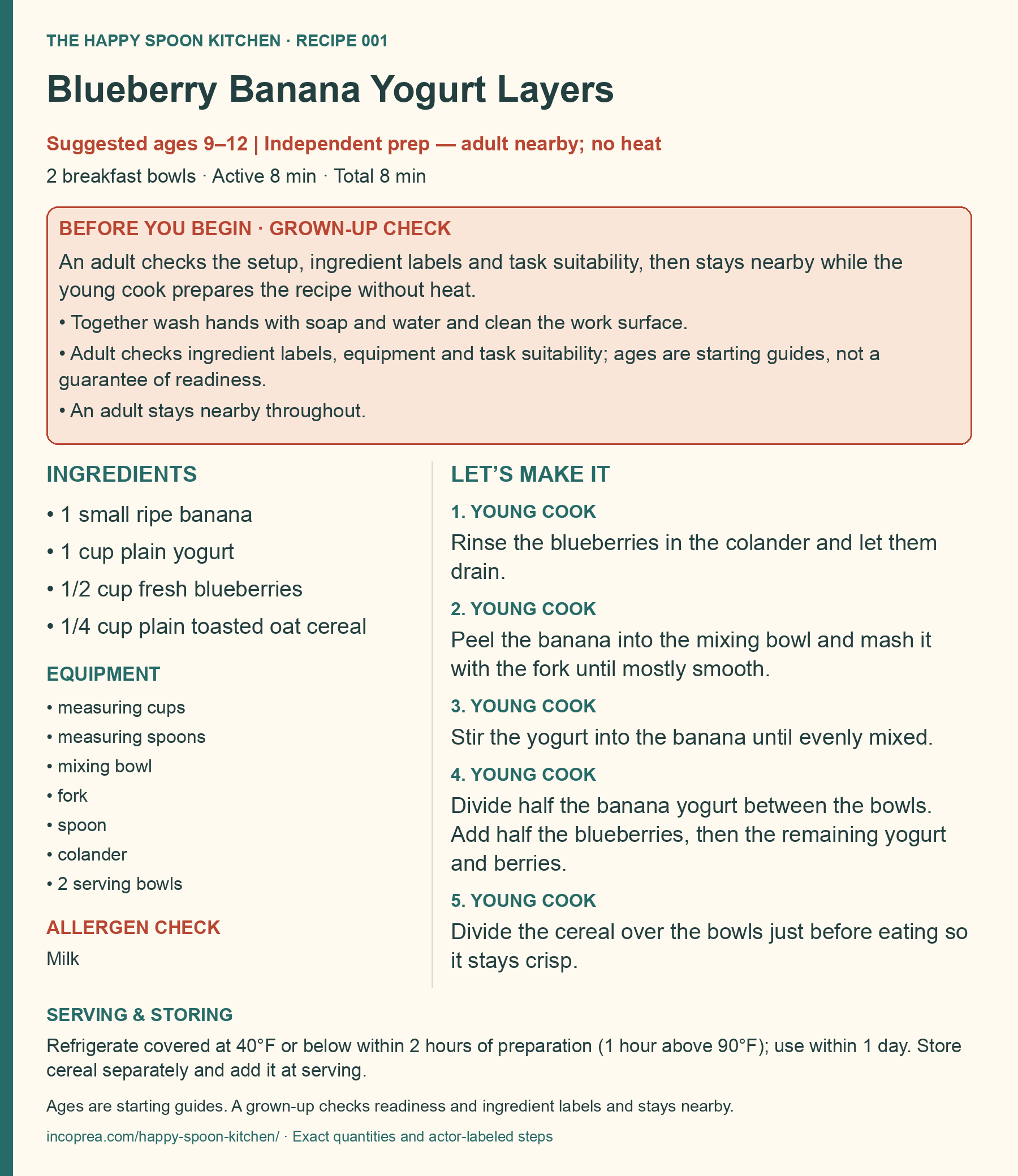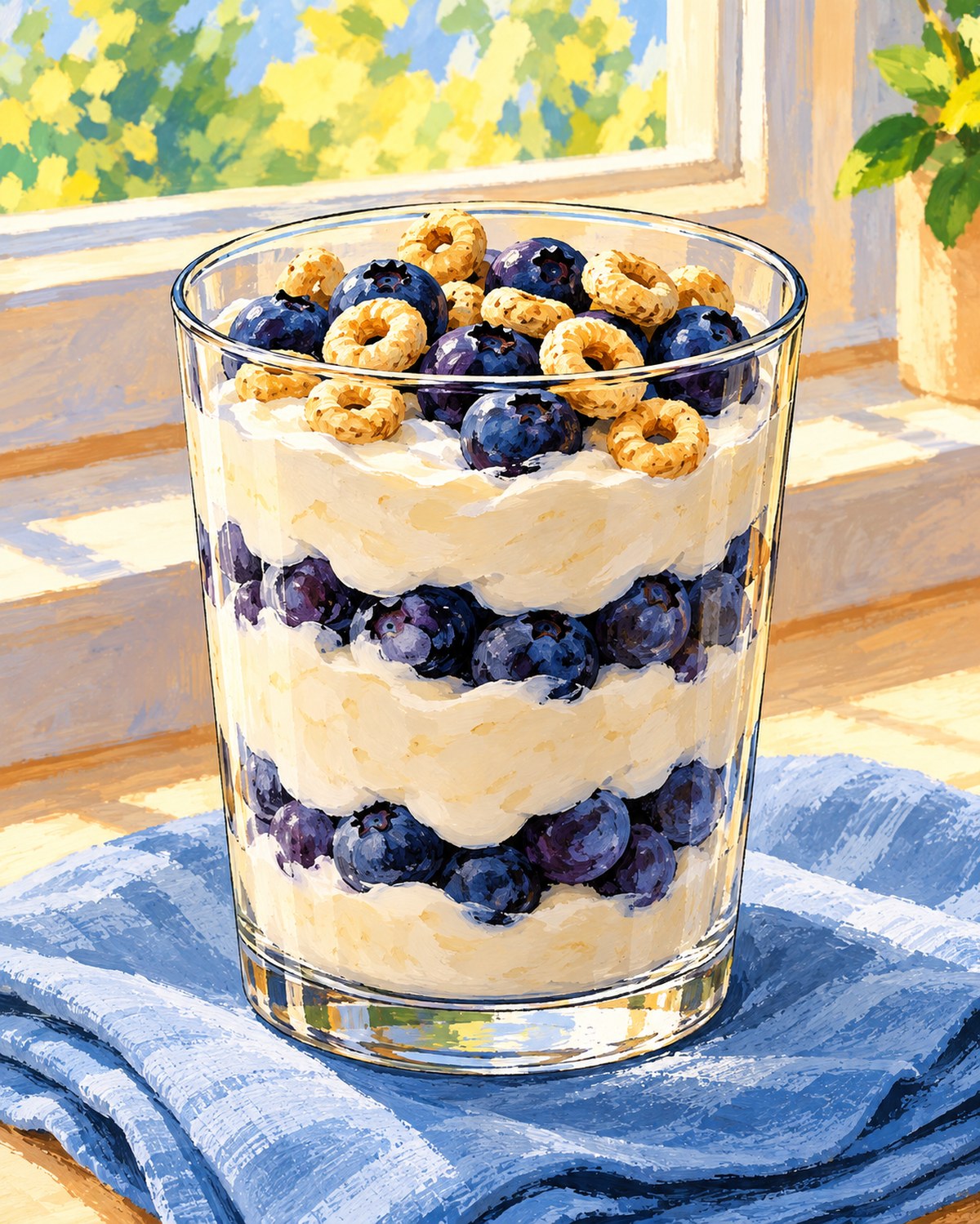
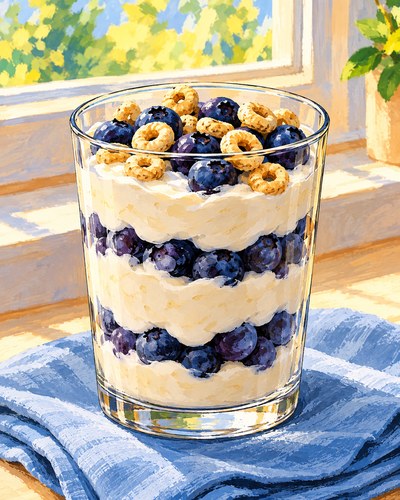
Blueberry Banana Yogurt Layers
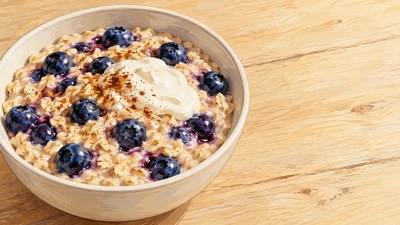
Blueberries stay in bright little pockets when you layer them instead of stirring everything together. Mash the banana into the yogurt first, then build two bowls with a little cereal on top for crunch.
100 Recipes for Young Cooks
A good first recipe is one you want to eat. Start with a bowl to stir, a sandwich to build or a dip to mash, then try a warm dish with a grown-up. These 100 recipes turn ordinary ingredients into breakfasts, lunches, snacks, dinners and treats while teaching one useful kitchen skill at a time.
Find something delicious
A recipe for your day
Mix, build, stir, share.
100 of 100 recipes

Blueberries stay in bright little pockets when you layer them instead of stirring everything together. Mash the banana into the yogurt first, then build two bowls with a little cereal on top for crunch.

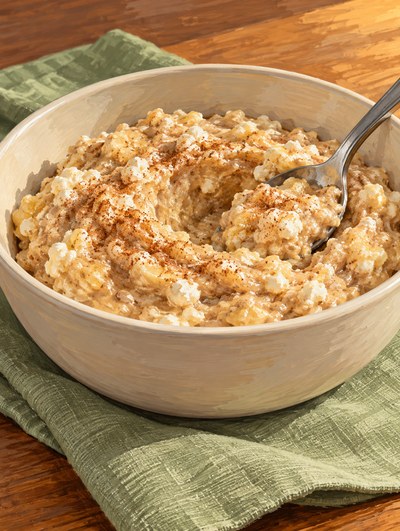
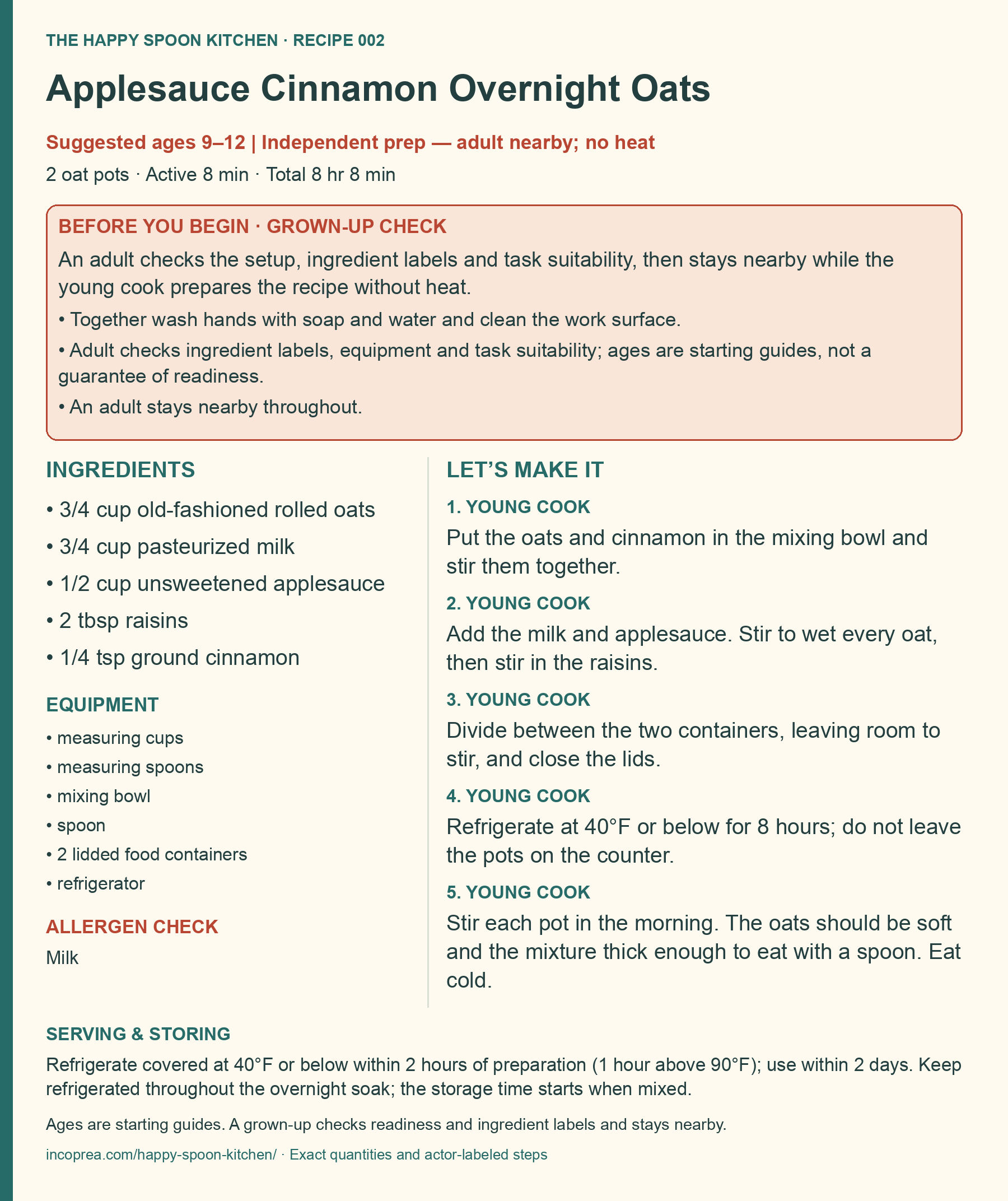
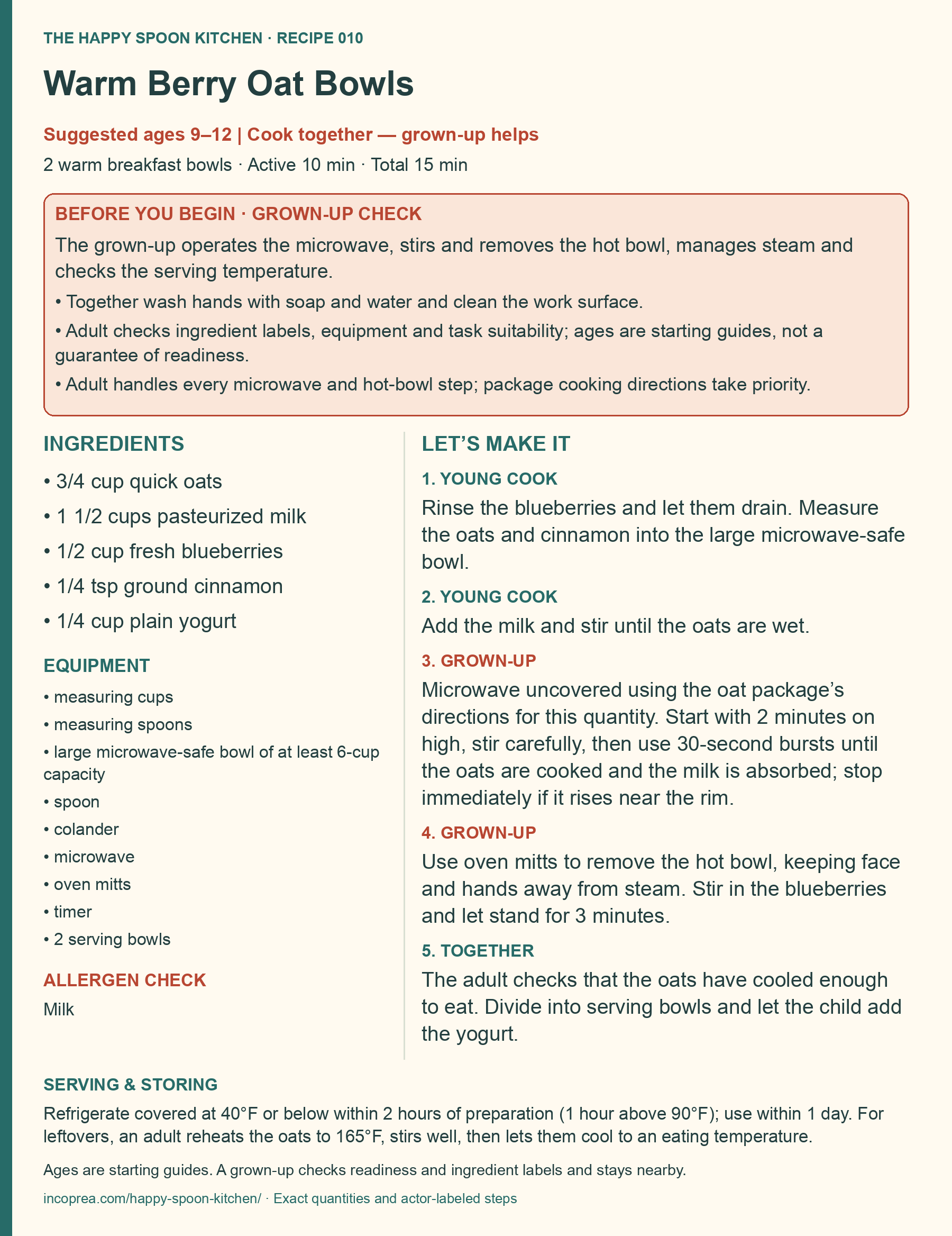
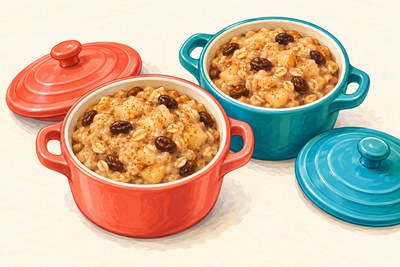
The refrigerator does the waiting here. Oats soften in milk and applesauce while you sleep, leaving a spoonable breakfast with cinnamon and raisins. Make it before bedtime and check the texture in the morning.

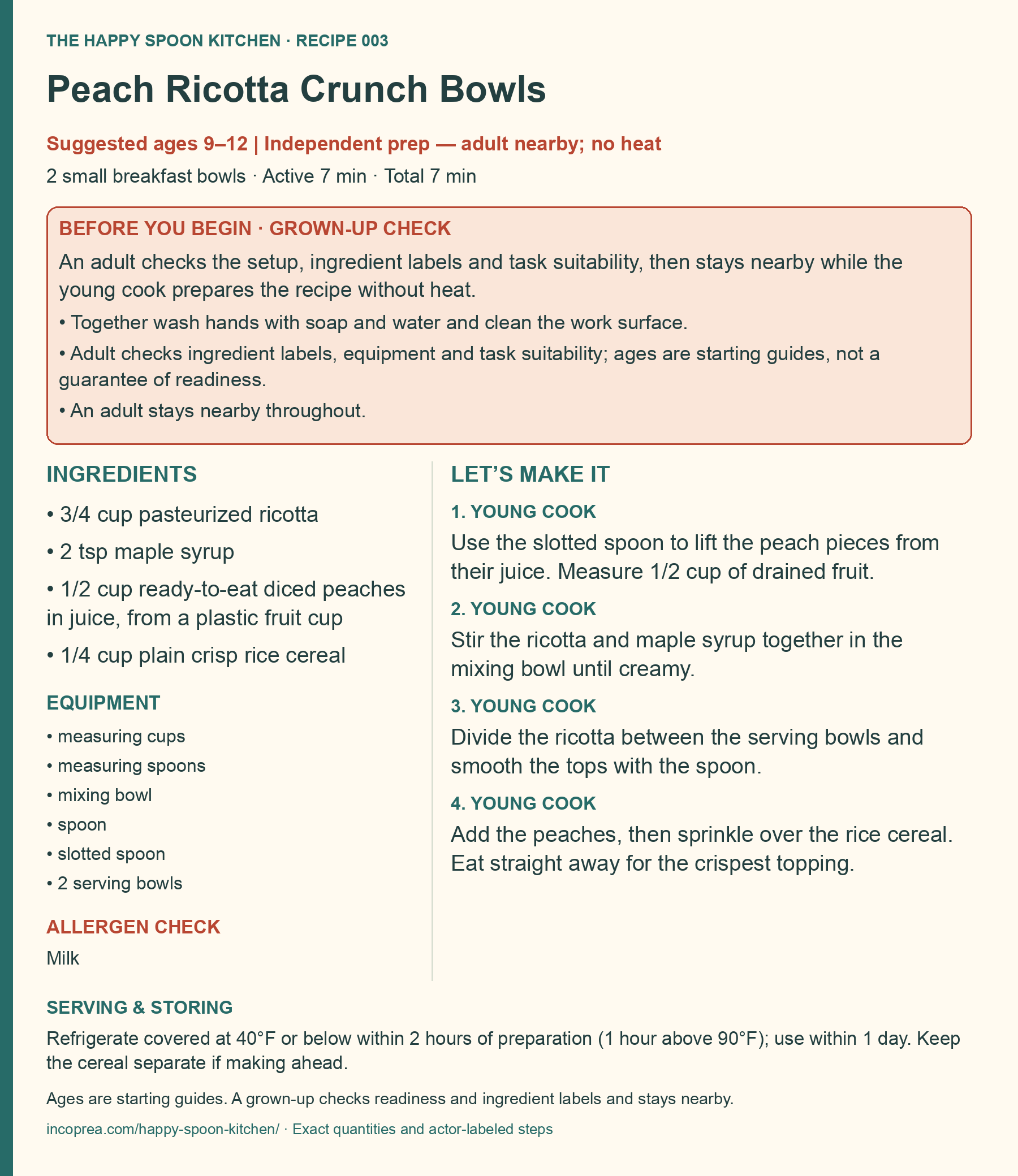
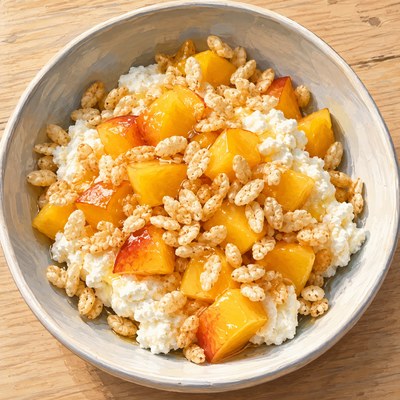
Ricotta makes a soft base for juicy peach pieces. A small spoonful of maple syrup loosens it just enough to swirl, while crushed rice cereal gives the top a delicate crunch. No slicing is needed when the peaches come ready diced.

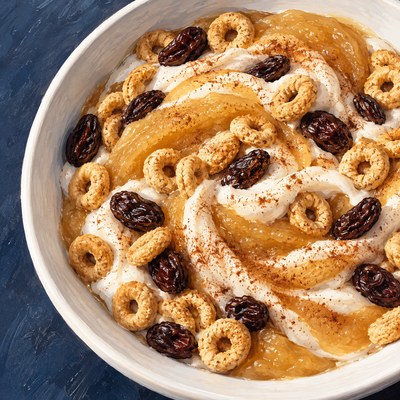
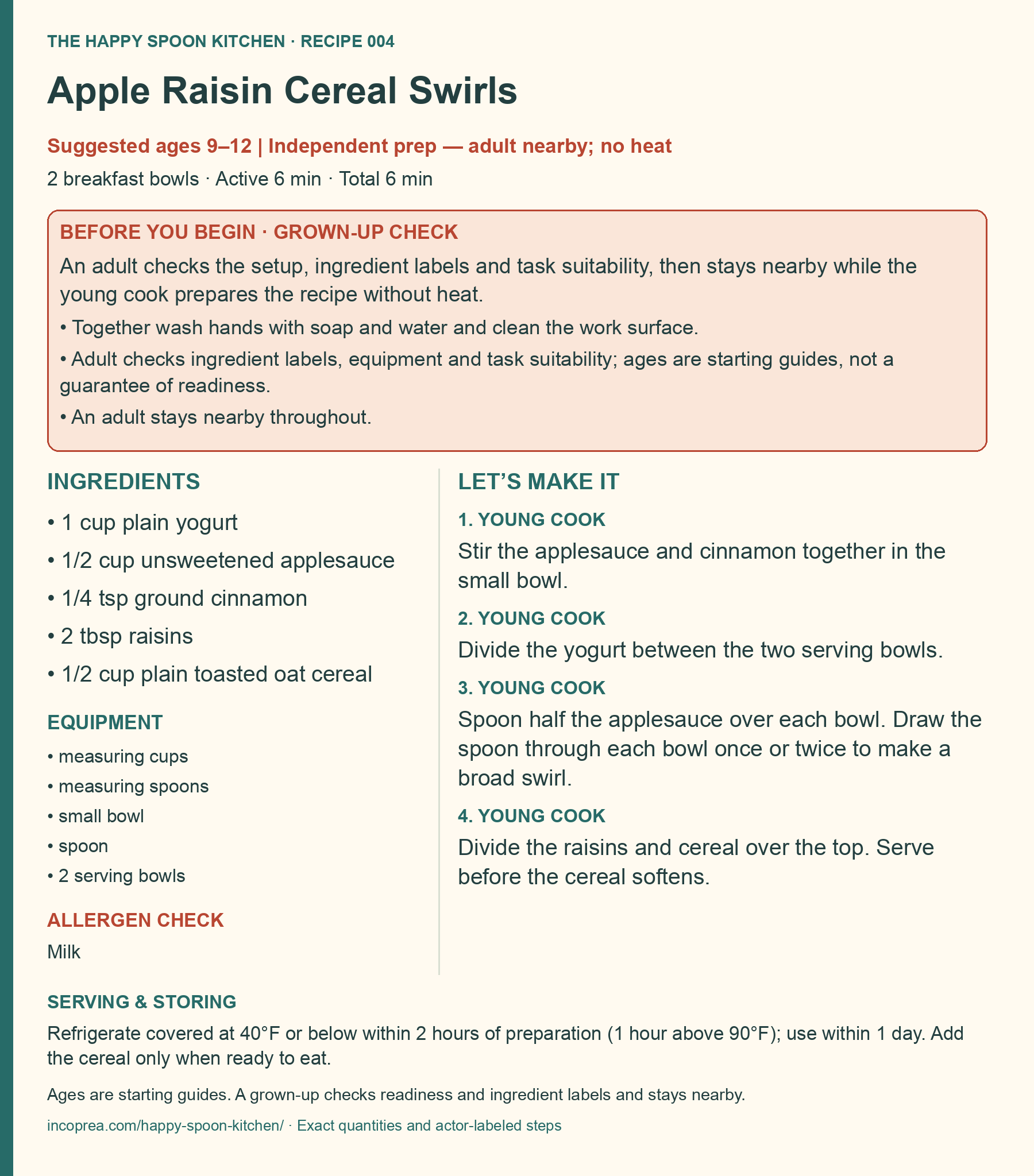
Applesauce can become a stripe through yogurt rather than disappearing into it. These bowls use one slow turn of the spoon to make a swirl, then finish with raisins and cereal. Every scoop has a slightly different balance.

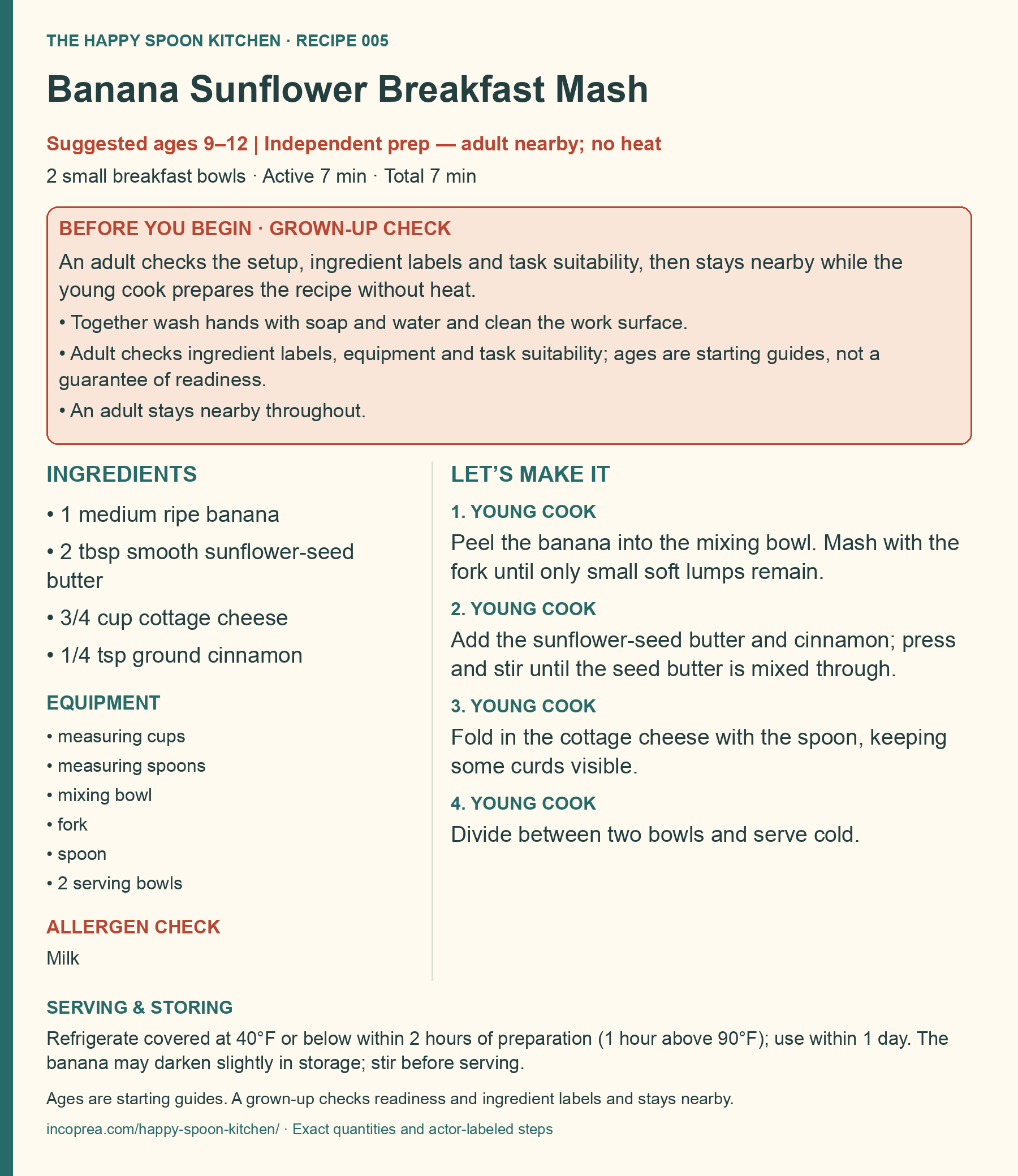
A ripe banana makes sunflower-seed butter easier to stir. Cottage cheese adds soft curds, and a little cinnamon brings the flavors together. This is a useful fork recipe: press first, then stir, rather than trying to squash everything at once.

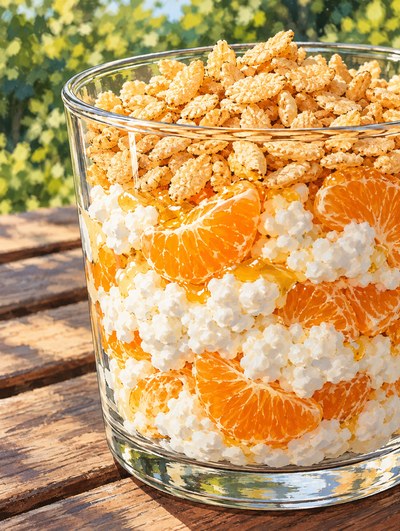
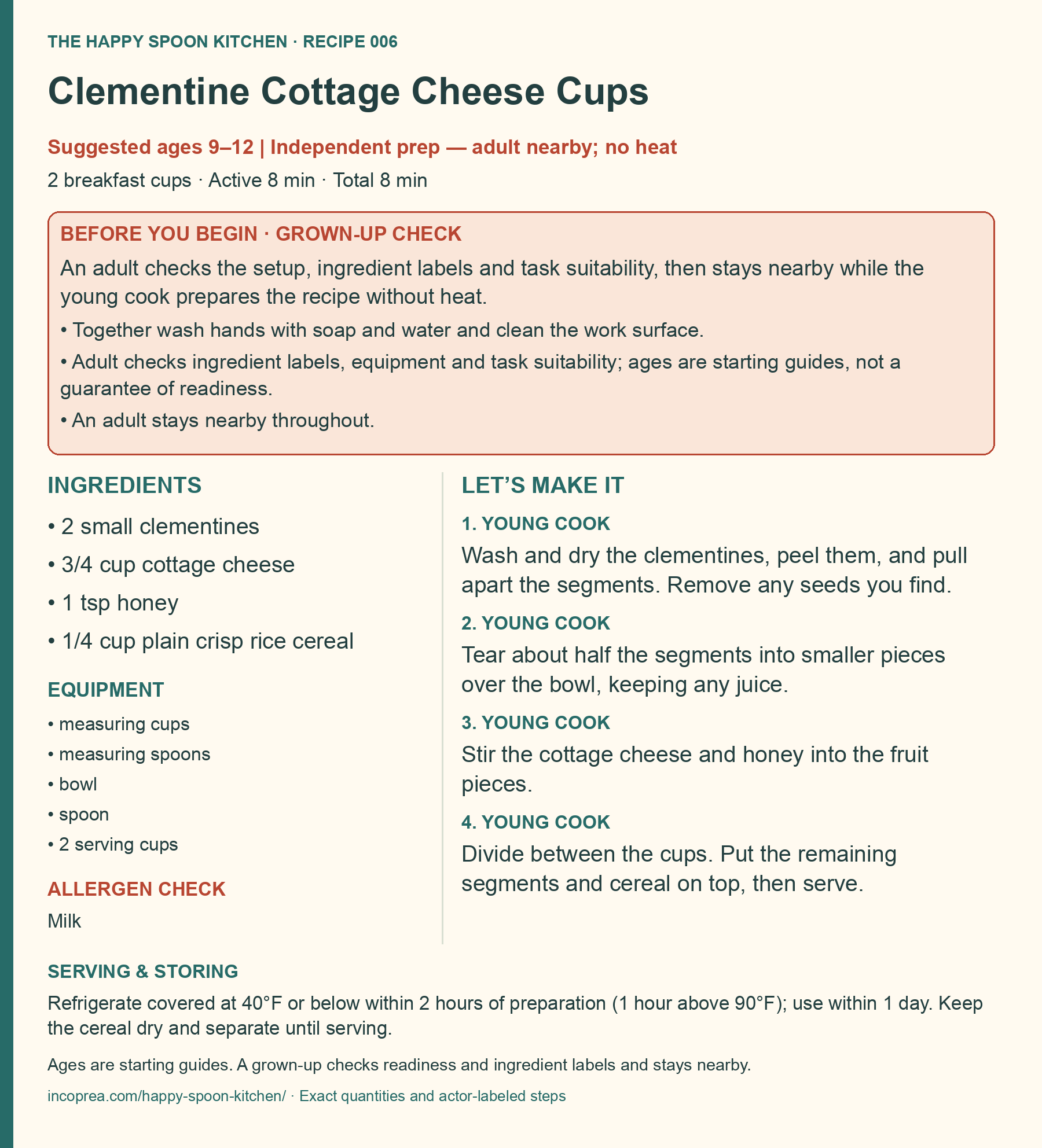
Clementines separate into their own little portions, making them handy for a no-knife breakfast. A few segments are torn smaller and folded into cottage cheese; the rest sit on top with a scattering of crisp cereal.

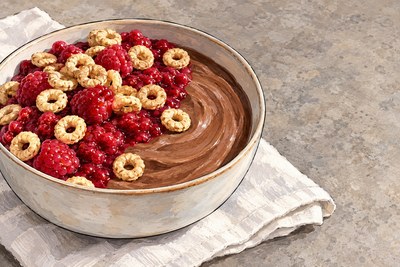
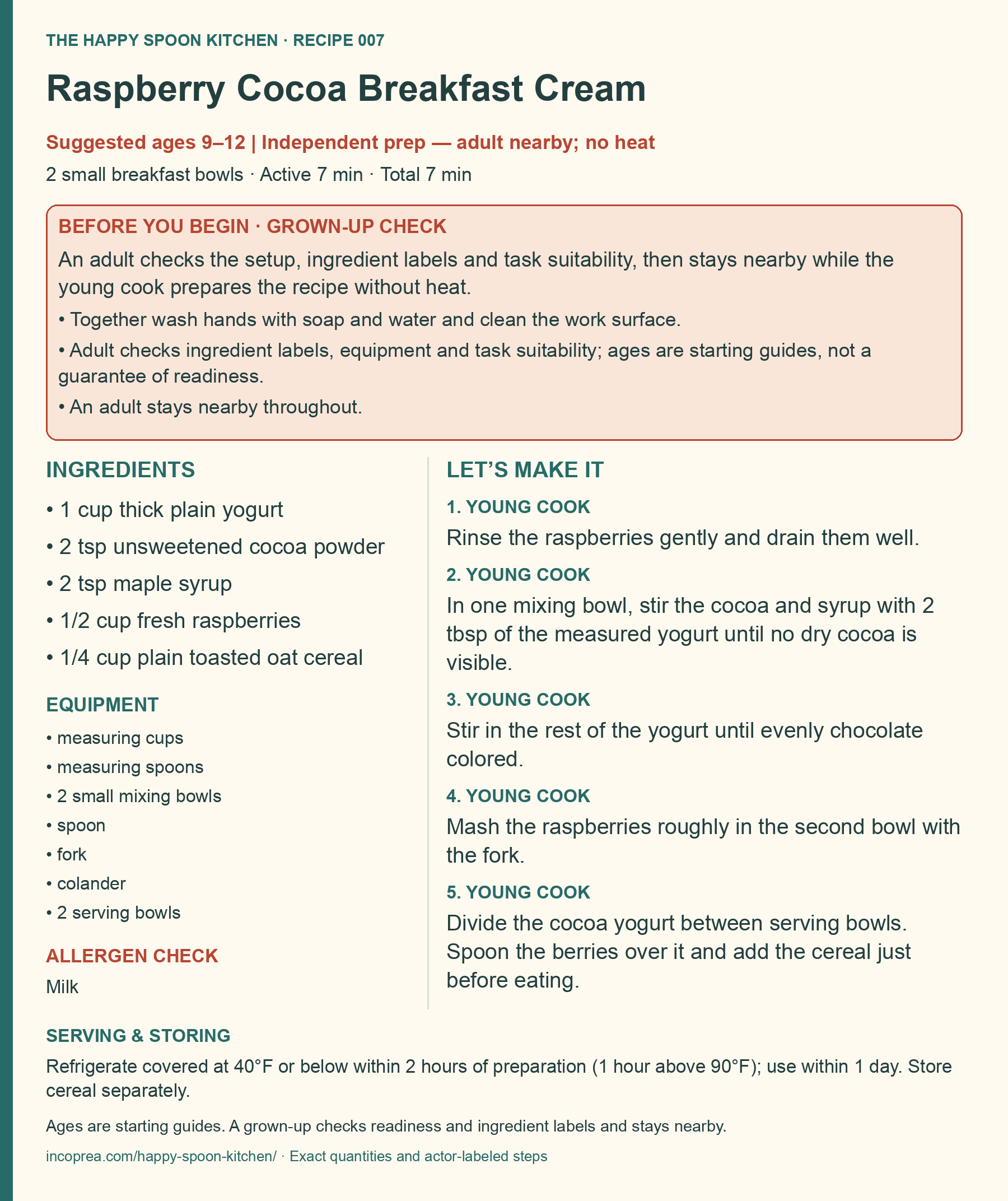
Cocoa tastes smoother when you mix it with a little yogurt before adding the rest. A fork turns raspberries into a quick pink topping, so these bowls have a chocolate-colored base and a bright fruit finish without a blender.

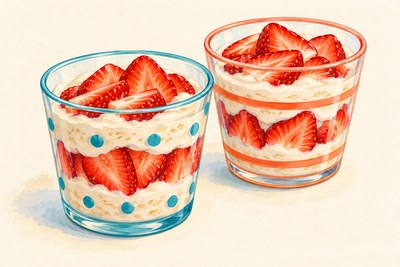
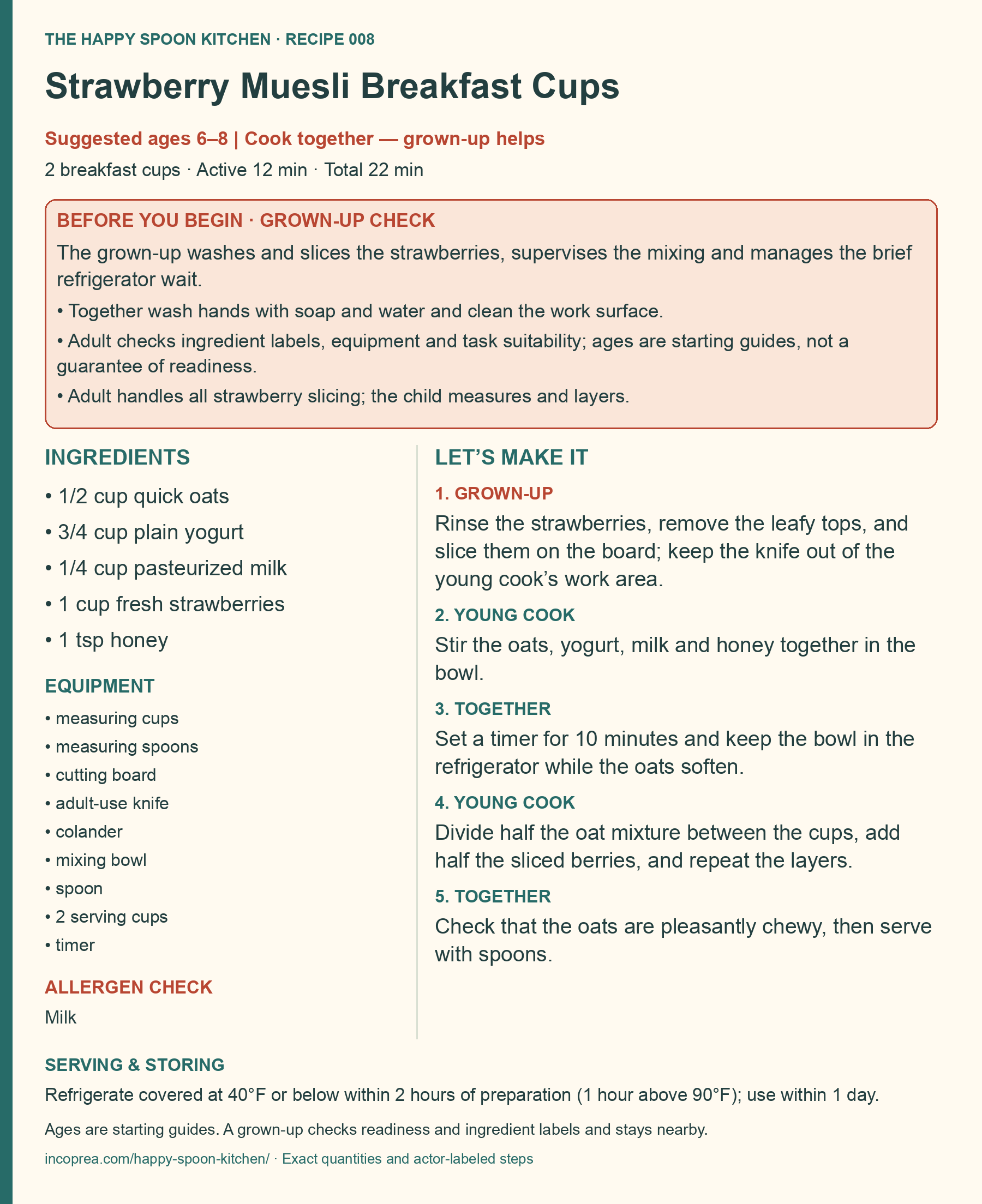
These cups bring together chewy oats, soft strawberries and creamy yogurt. A grown-up slices the berries while the young cook measures and layers. Ten minutes is enough to soften quick oats slightly; the cereal should still have a little chew.

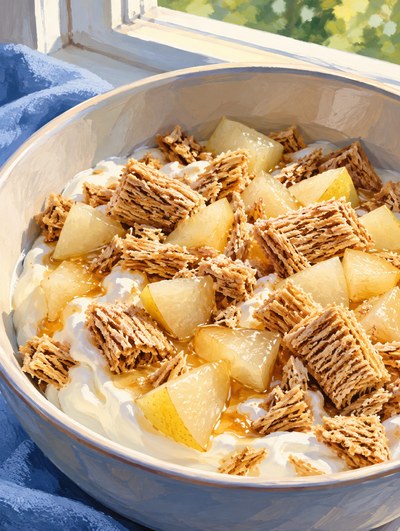
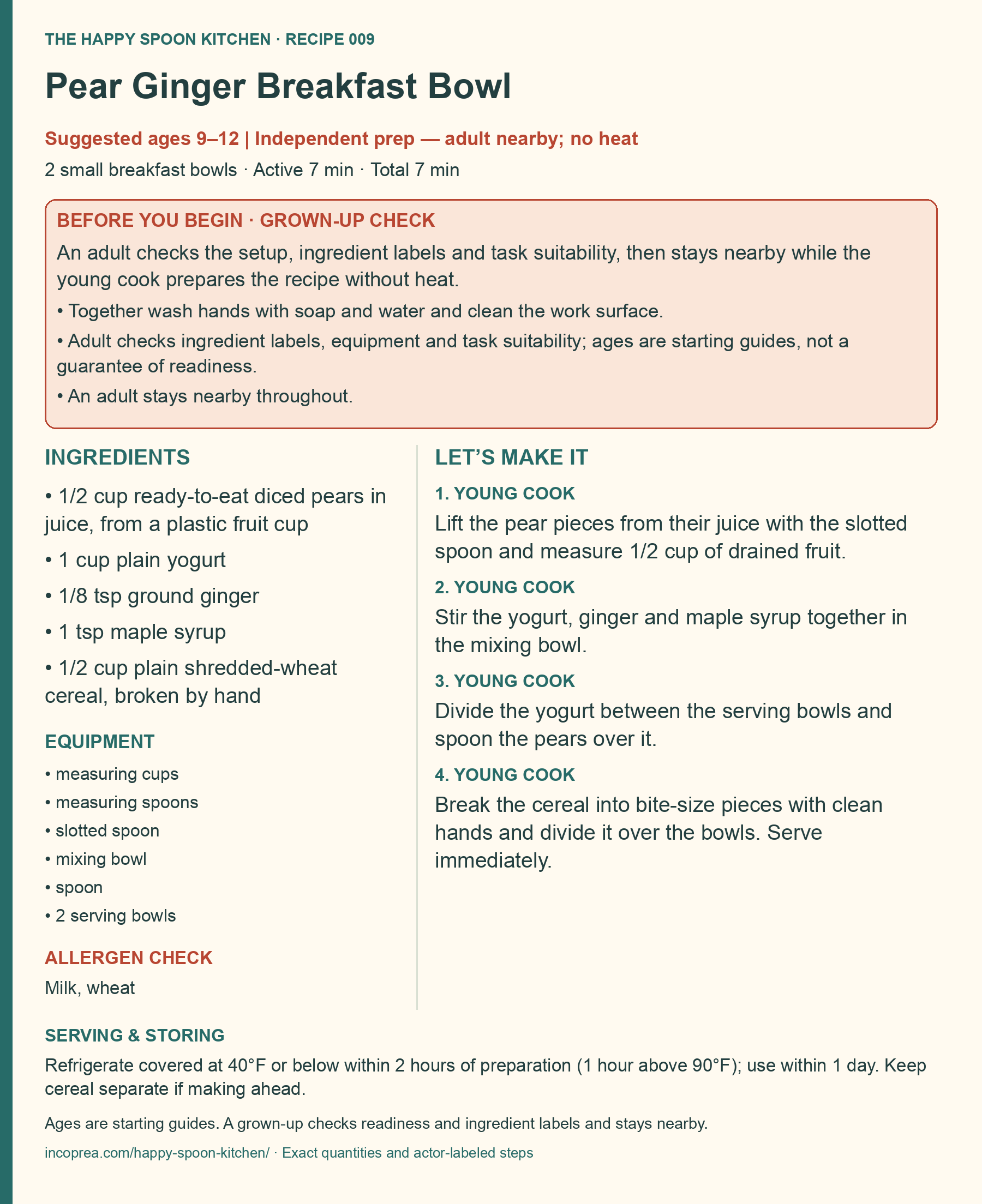
A pinch of ginger gives mild pear pieces a new flavor without making the bowl hot. Ready-diced fruit means the young cook can focus on measuring, draining and combining. Add the wheat cereal at the end so its shape stays crisp.

An adult handles the microwave while the young cook measures oats and prepares the toppings. Use a large bowl because oats can rise as they heat. The final rest thickens the porridge, and cool yogurt makes a pleasant contrast on top.

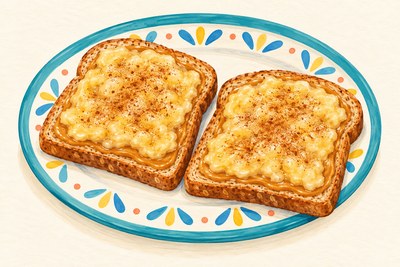
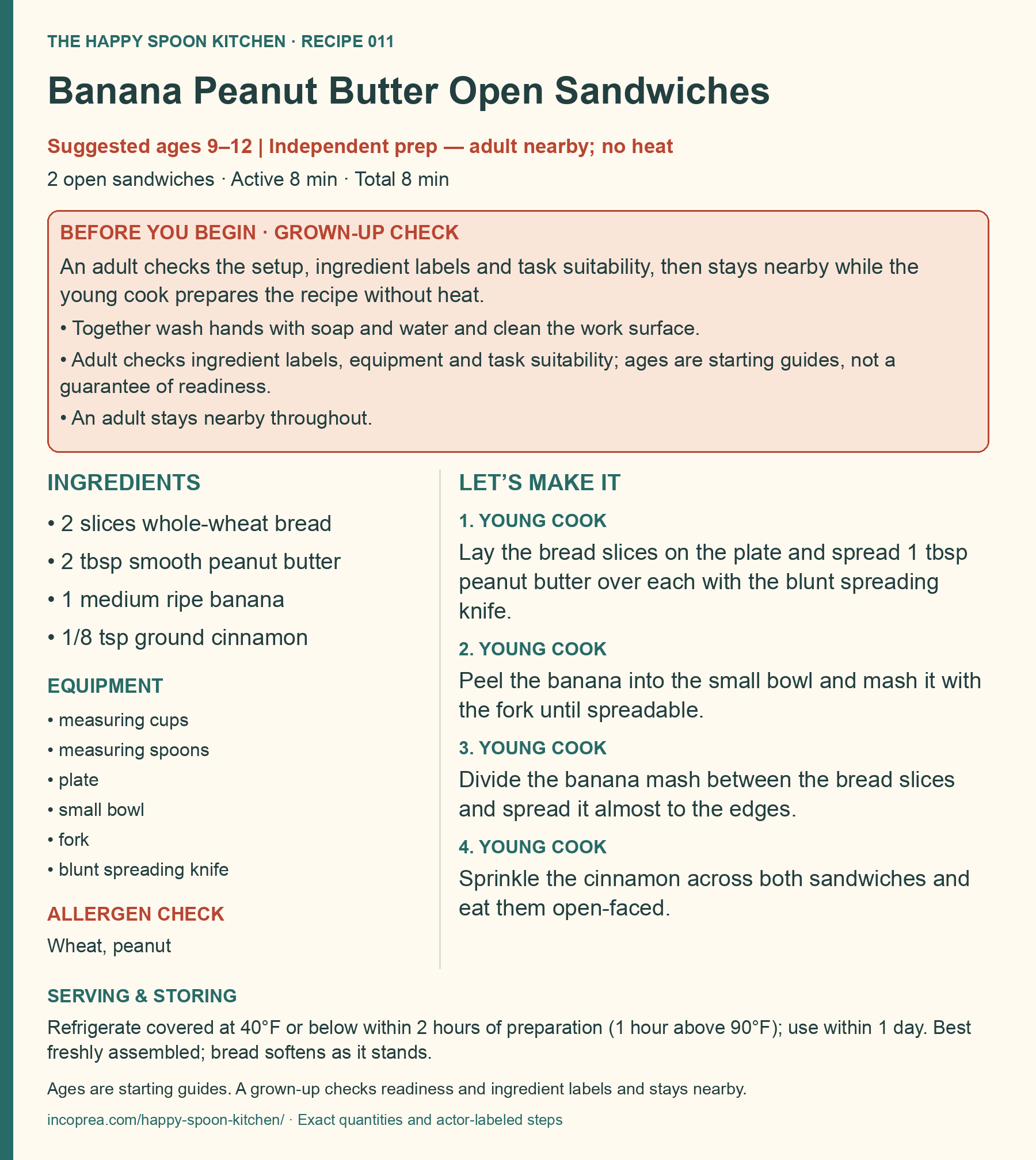
Mashing banana with a fork turns it into a soft topping that stays put. Spread peanut butter underneath so the bread has a rich base, then finish with a light dusting of cinnamon. No toaster is needed.

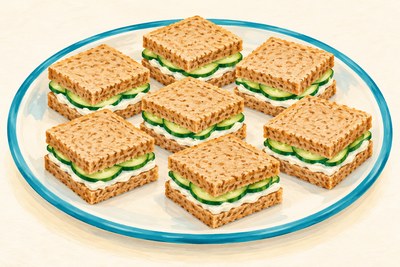
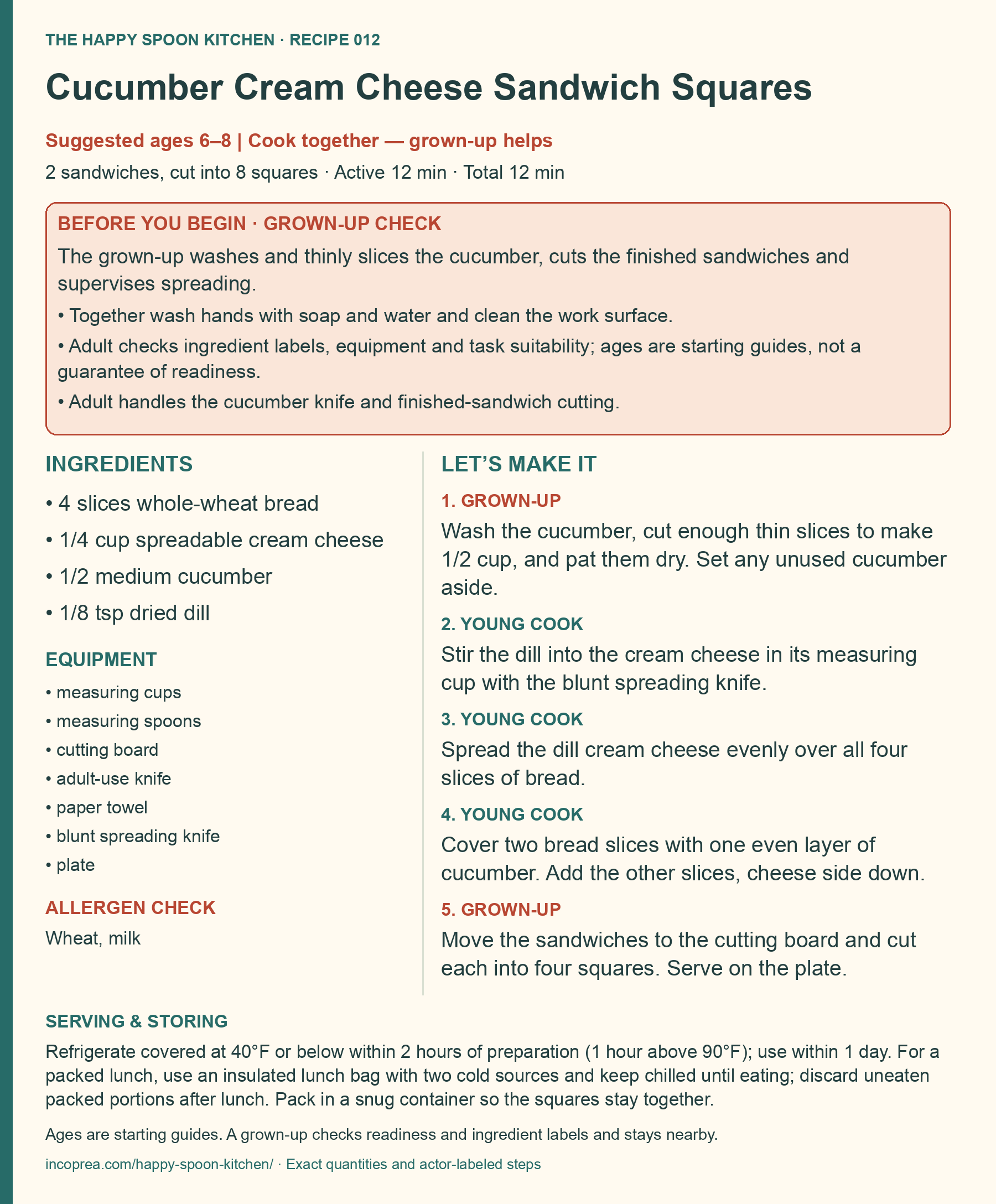
Thin cucumber slices make a cool, crisp middle for a soft sandwich. The adult does the slicing and final cutting; the young cook spreads cream cheese and arranges an even layer so every square has some crunch.

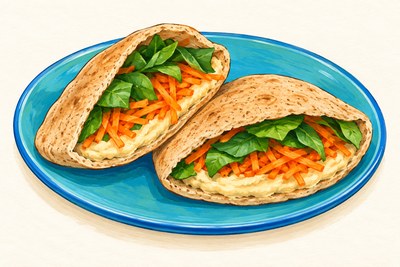
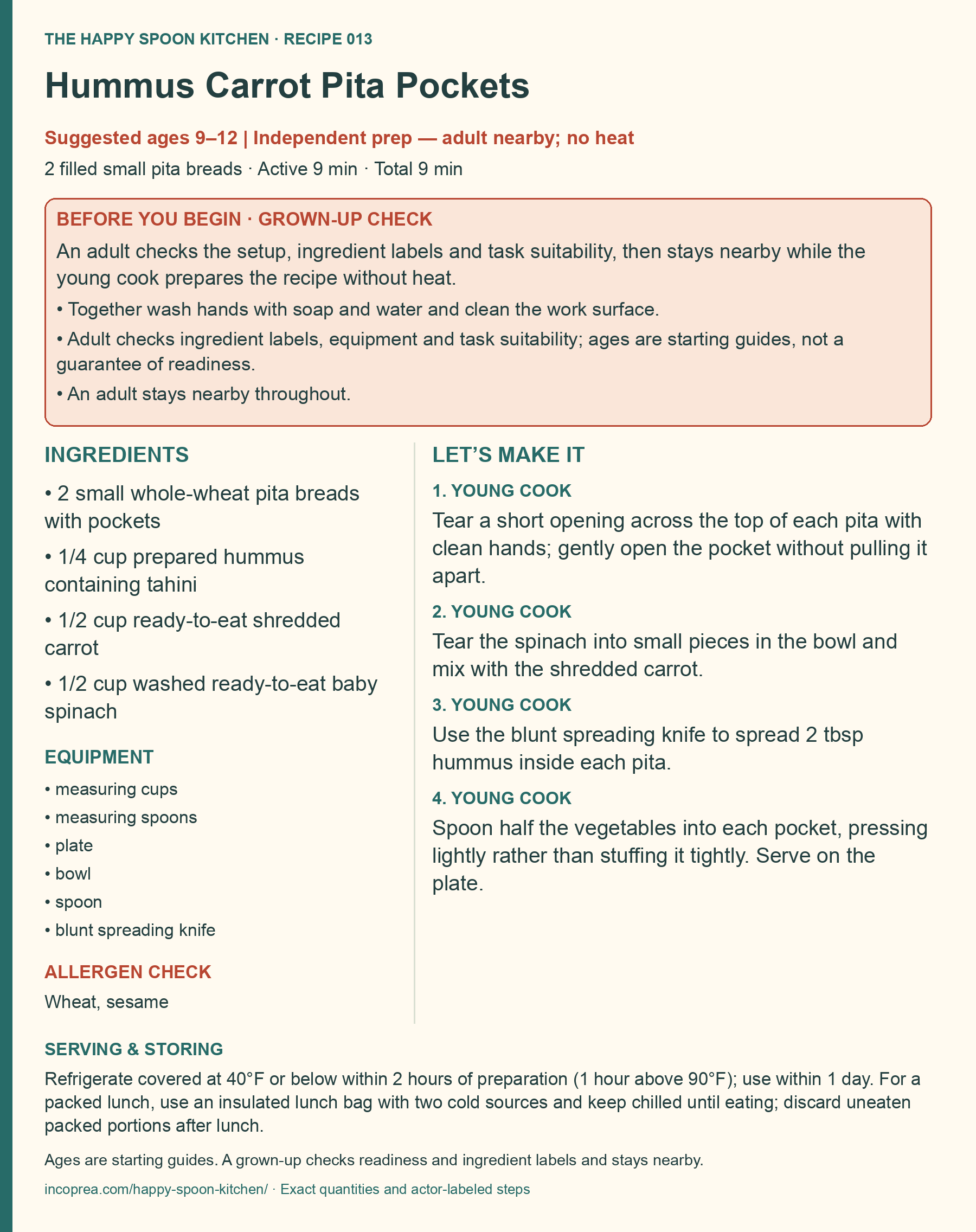
A pocket is a useful way to keep crunchy shreds together. These small pitas hold hummus, ready-shredded carrot and torn spinach. Spread inside before filling, and the hummus helps the vegetables stay in place.

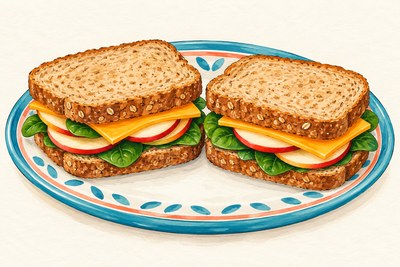
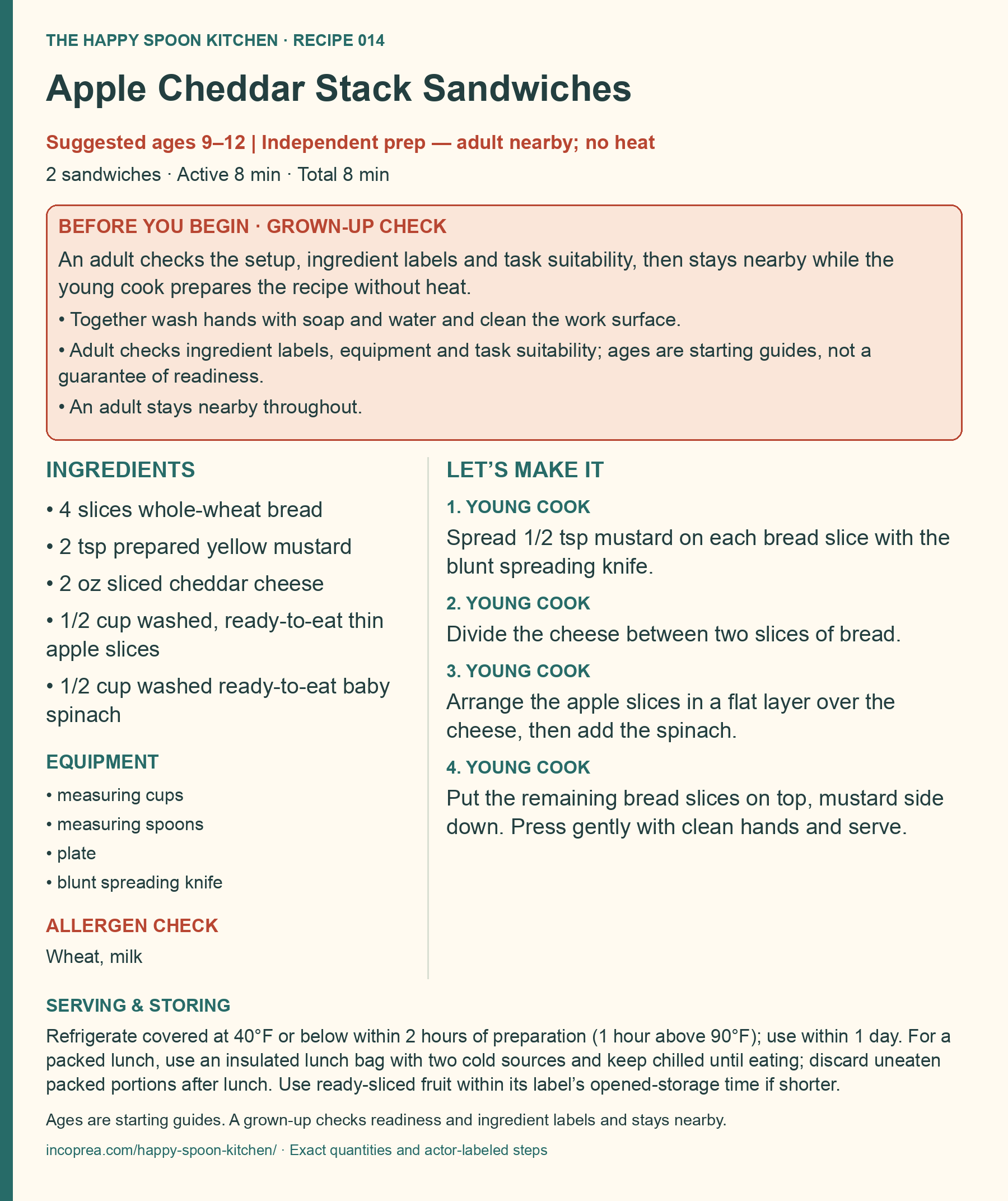
Ready-sliced apples bring a juicy crunch to cheddar sandwiches. A very thin layer of mustard keeps the flavor gentle. Choose flexible, thin apple slices and arrange them flat so the sandwich closes without wobbling.

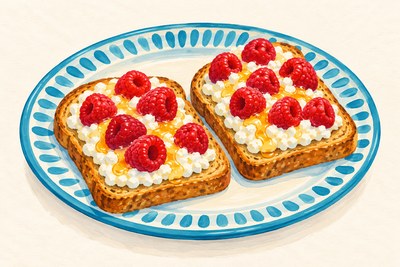
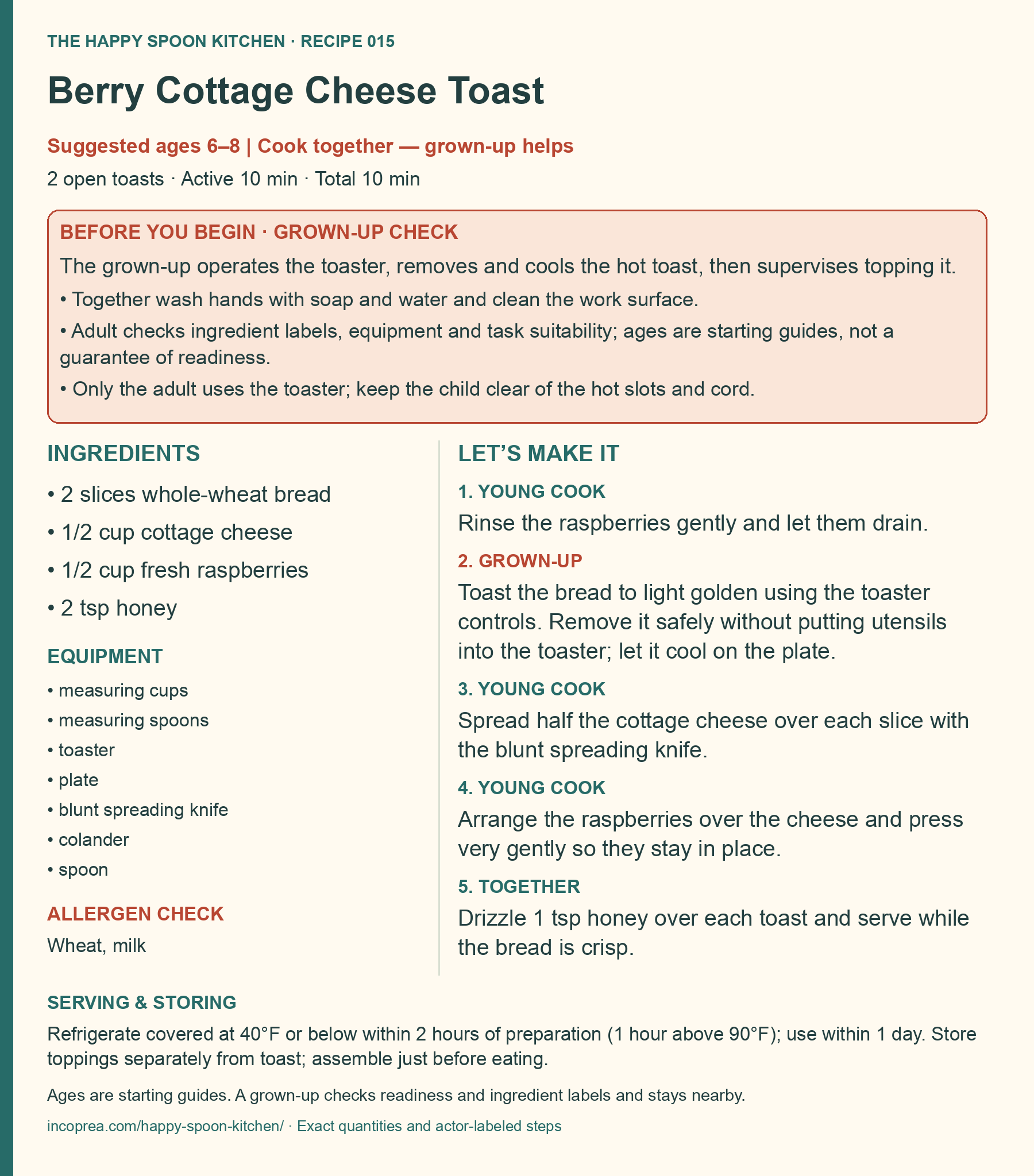
A crisp slice of toast can hold a soft topping without becoming heavy. Here, cottage cheese is spread while the toast cools slightly, and raspberries are gently pressed on top. The grown-up handles the toaster from start to finish.

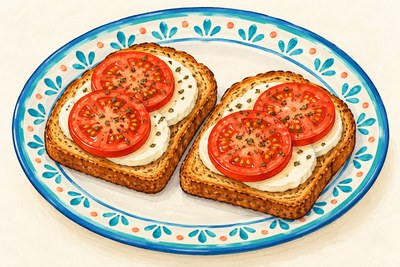
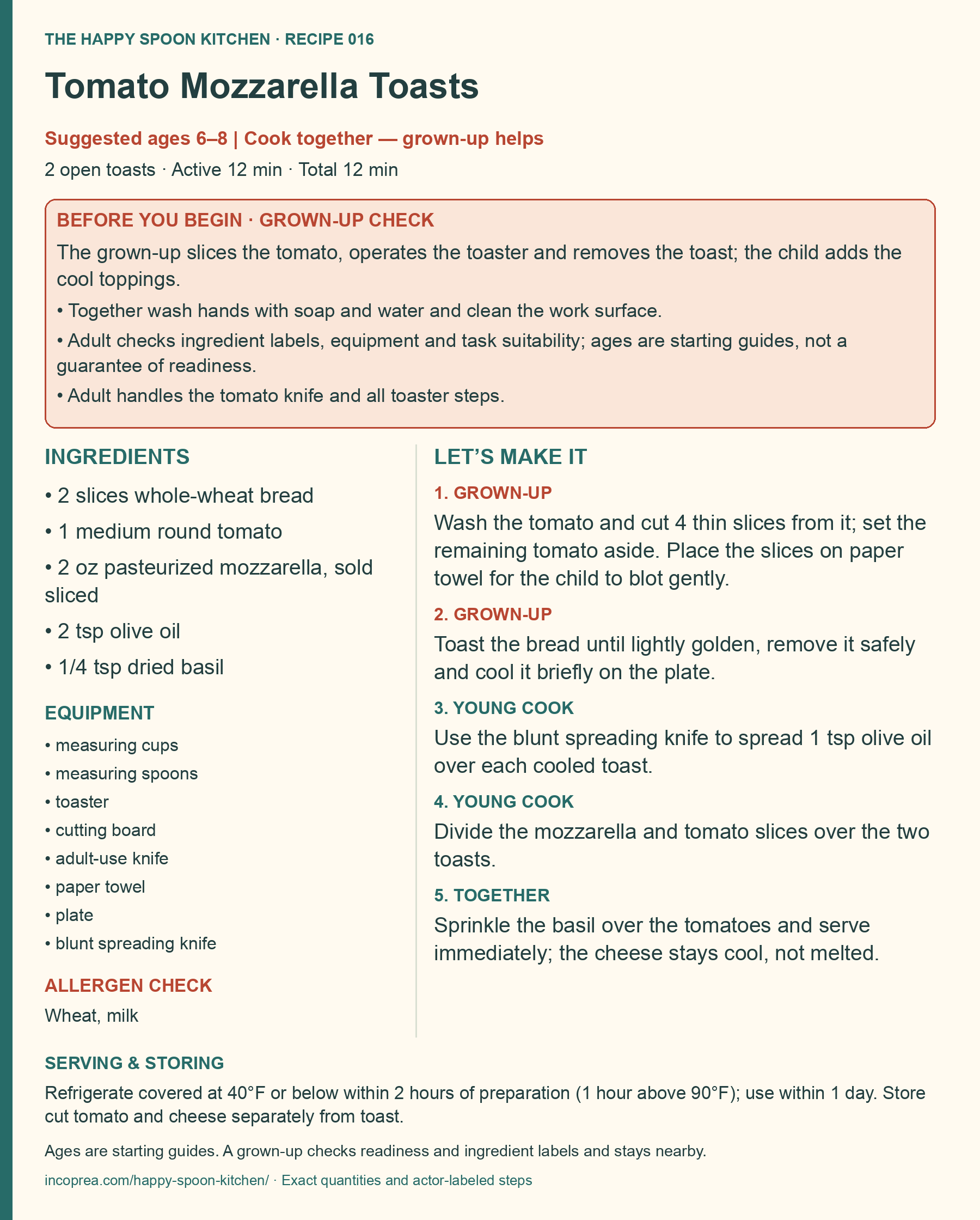
Tomato, mozzarella and a little dried basil make a simple toast topping. Let the adult handle the tomato knife and toaster. The young cook can blot the juicy tomato, arrange the cheese and learn why damp toppings go on at the last minute.

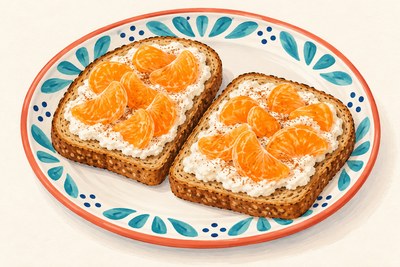
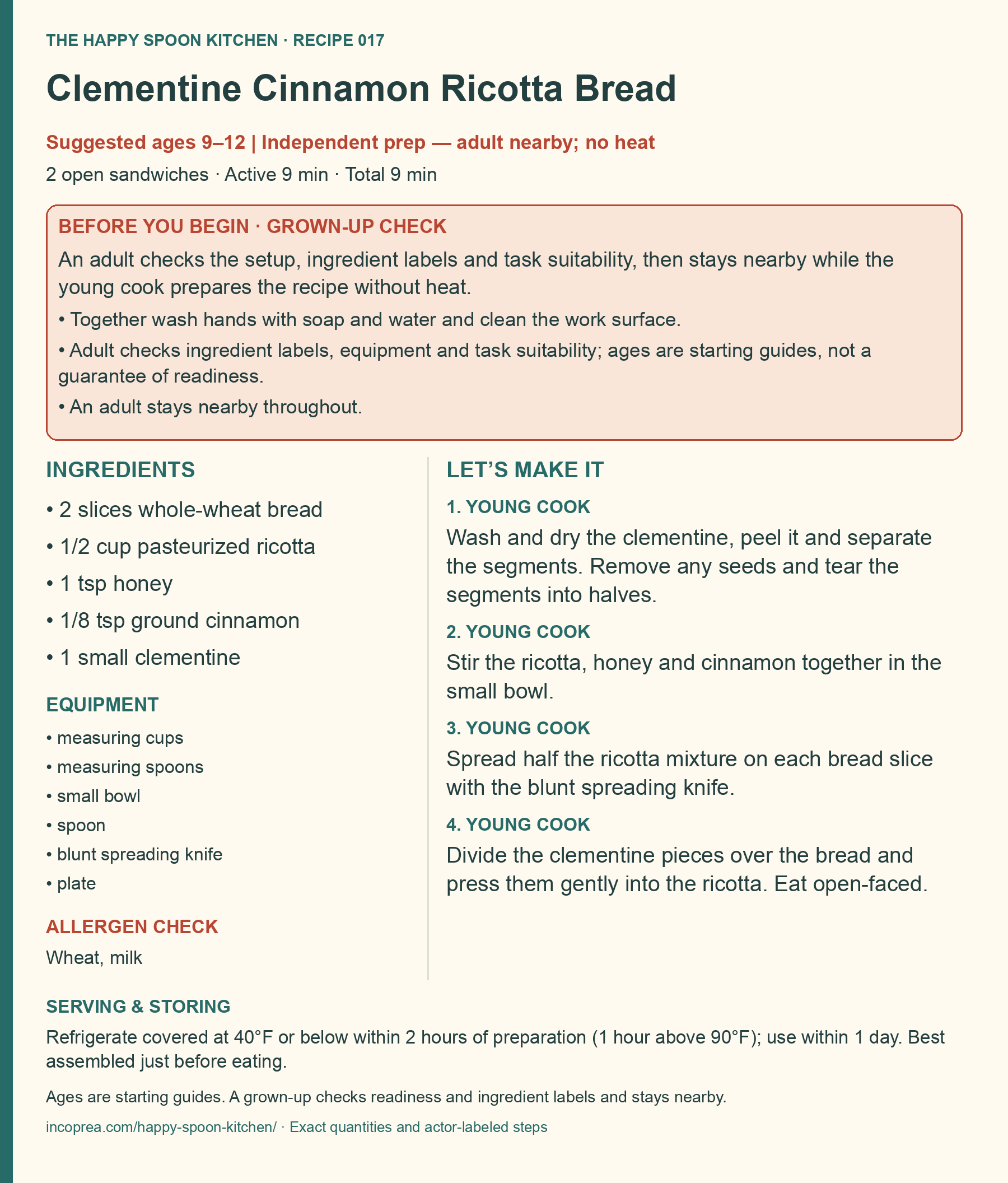
Clementine segments make bright little arches on a creamy slice of bread. Stir honey and cinnamon into ricotta, then build the topping without heat or sharp tools. Tearing the segments in half makes them easier to spread across each slice.

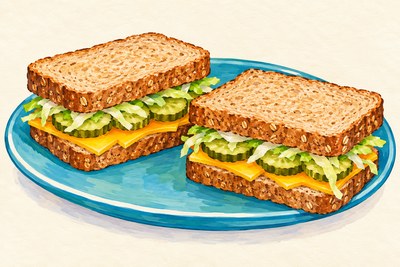
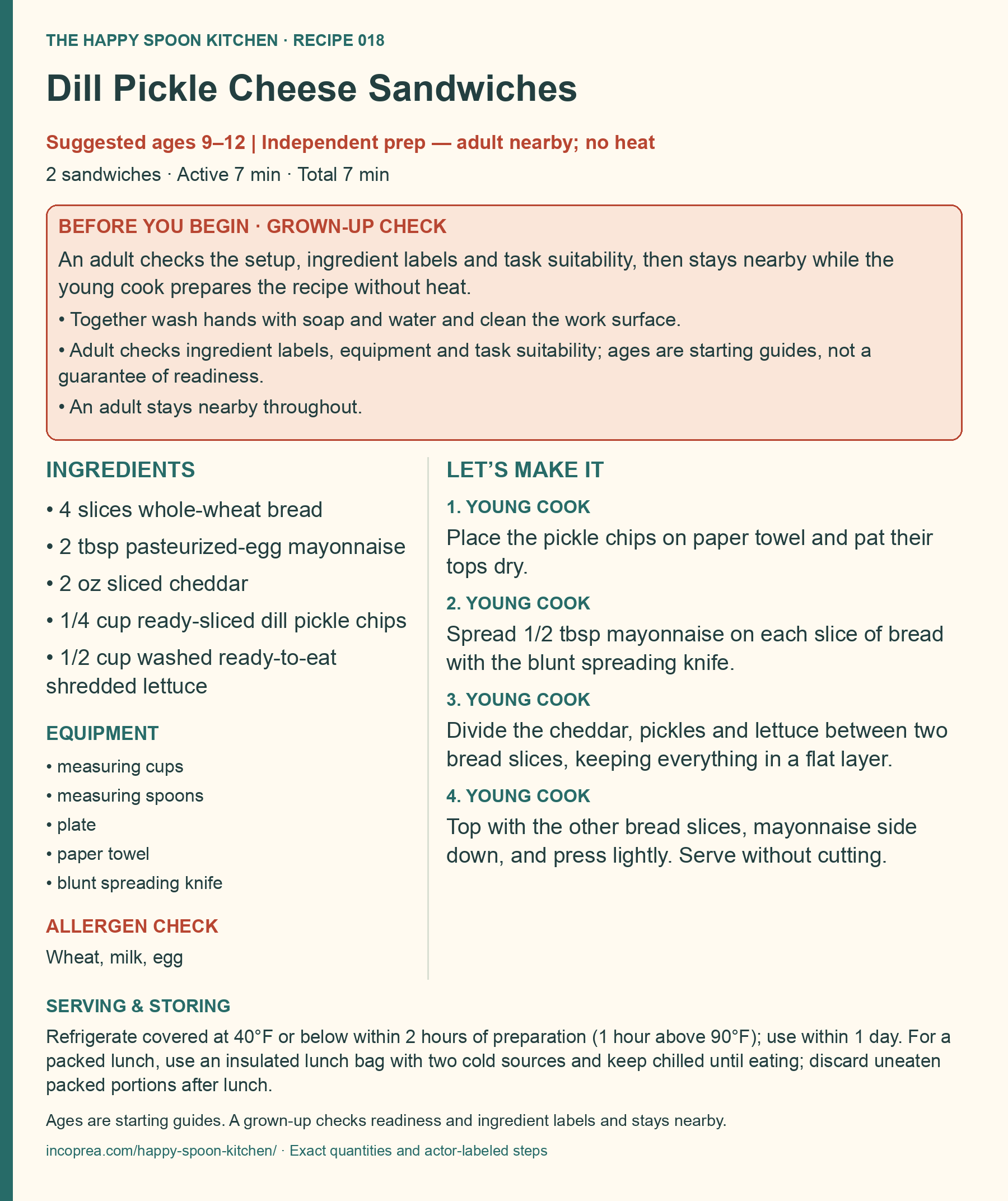
A little pickle gives a cheese sandwich a bright, tangy crunch. Ready-sliced pickle chips keep the preparation simple. Pat them dry and spread the mayonnaise thinly so the finished sandwich stays neat enough to pick up.

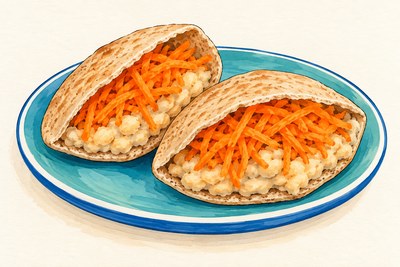
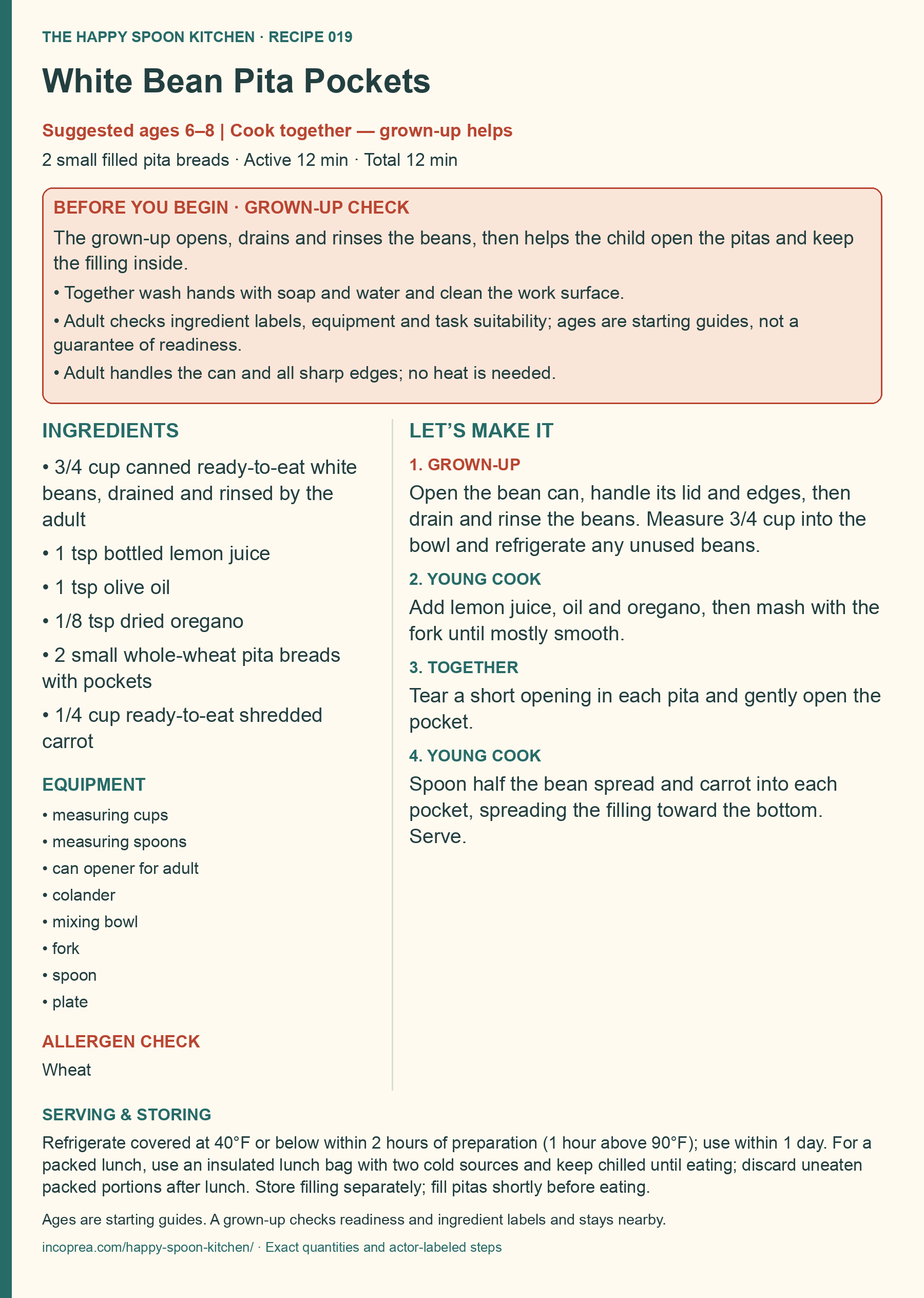
Soft white beans mash into a lemony spread that holds grated carrot inside a pita. The adult opens and drains the beans. The child mashes the filling and gently opens the pitas; this version needs no hot equipment.

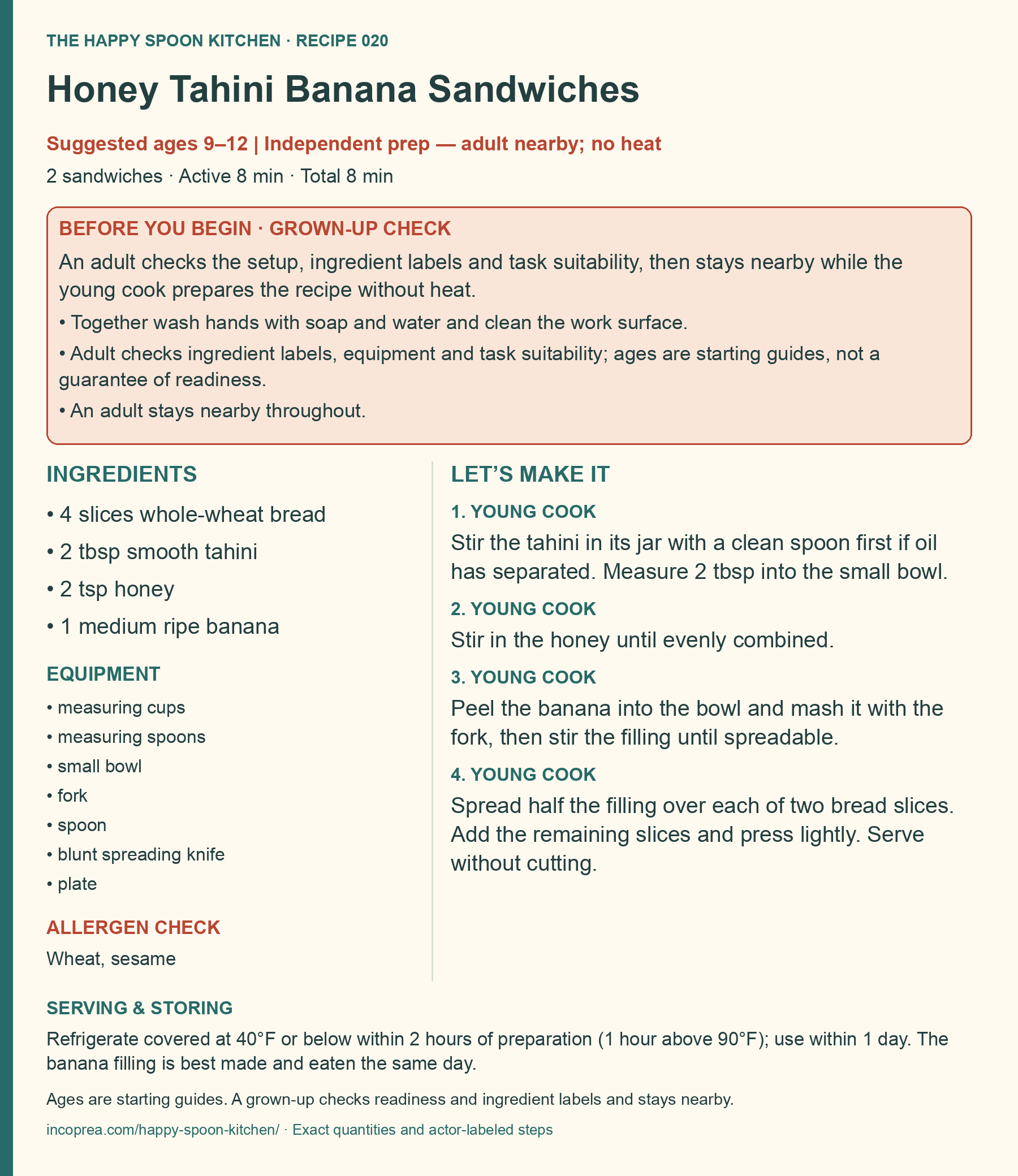
Tahini is sesame-seed paste with a gently nutty flavor. A little honey balances it, and mashed banana keeps the filling soft. The young cook can do every preparation step with a spoon, fork and blunt spreading knife.

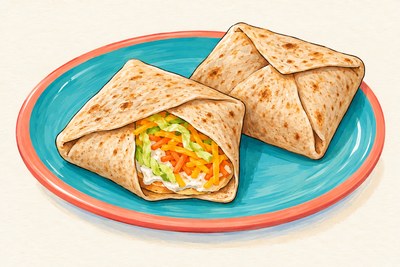
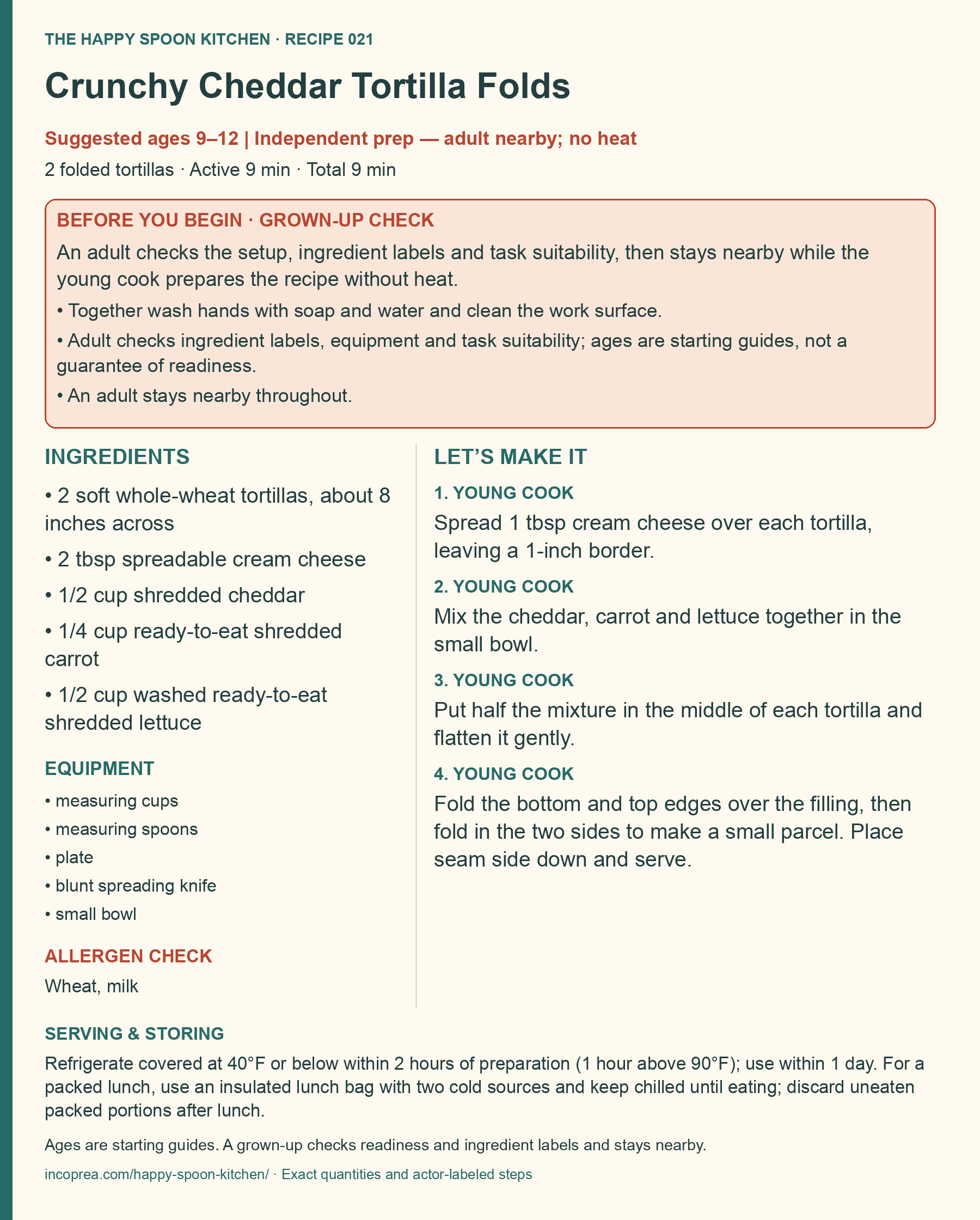
Soft tortillas can turn into neat folded pockets without heating or cutting. Cream cheese helps hold cheddar and crunchy vegetables in place. Keep the filling in the middle so there is room to fold the edges over it.

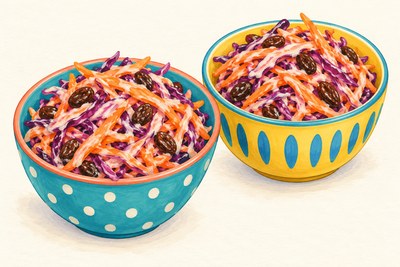
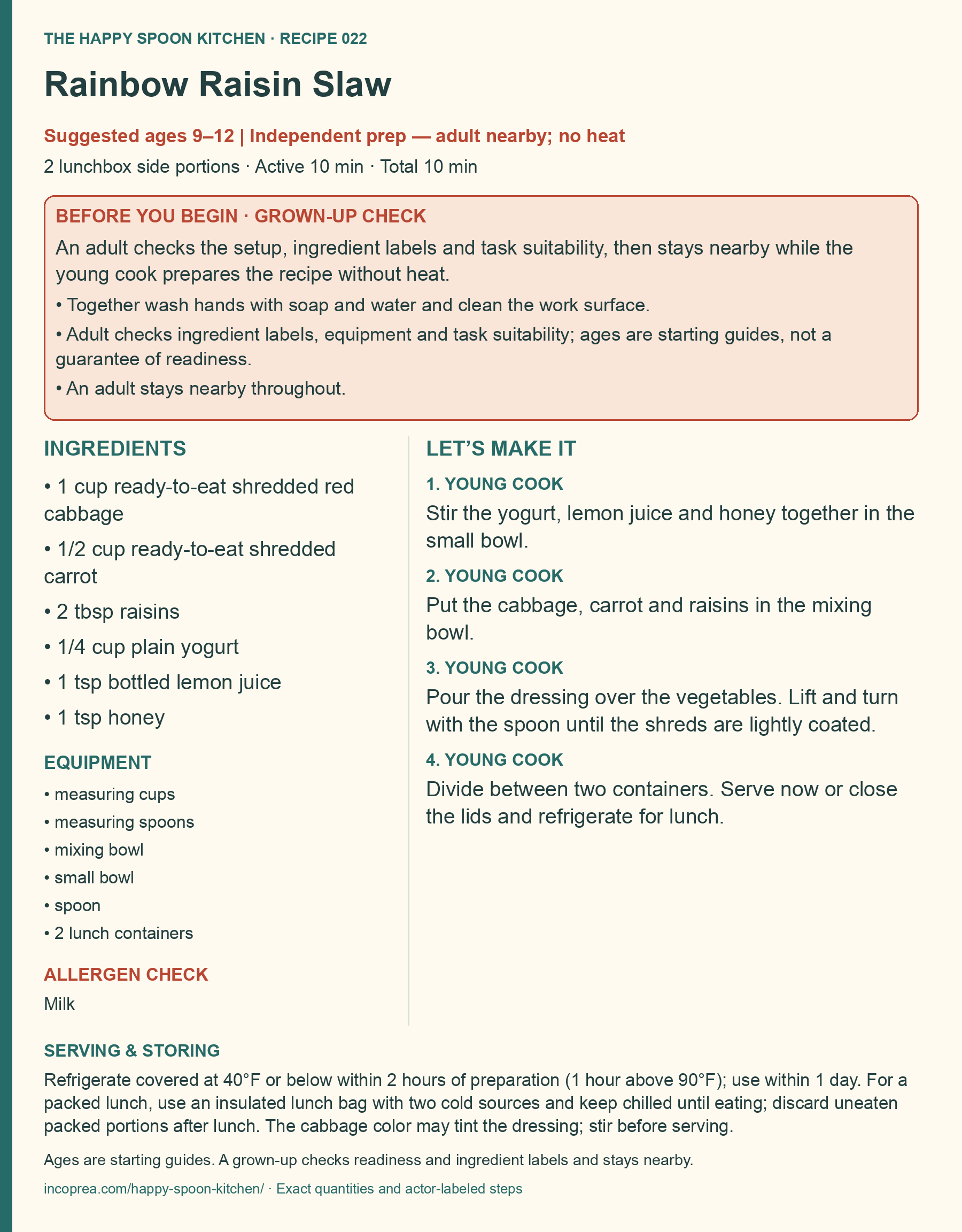
Shredded cabbage and carrot make a colorful salad that needs no knife. Raisins bring little chewy spots, while lemony yogurt lightly coats the shreds. Stir from the bottom so the dressing reaches more than just the top layer.

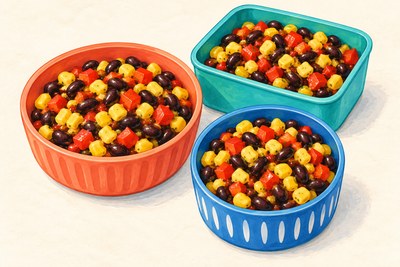
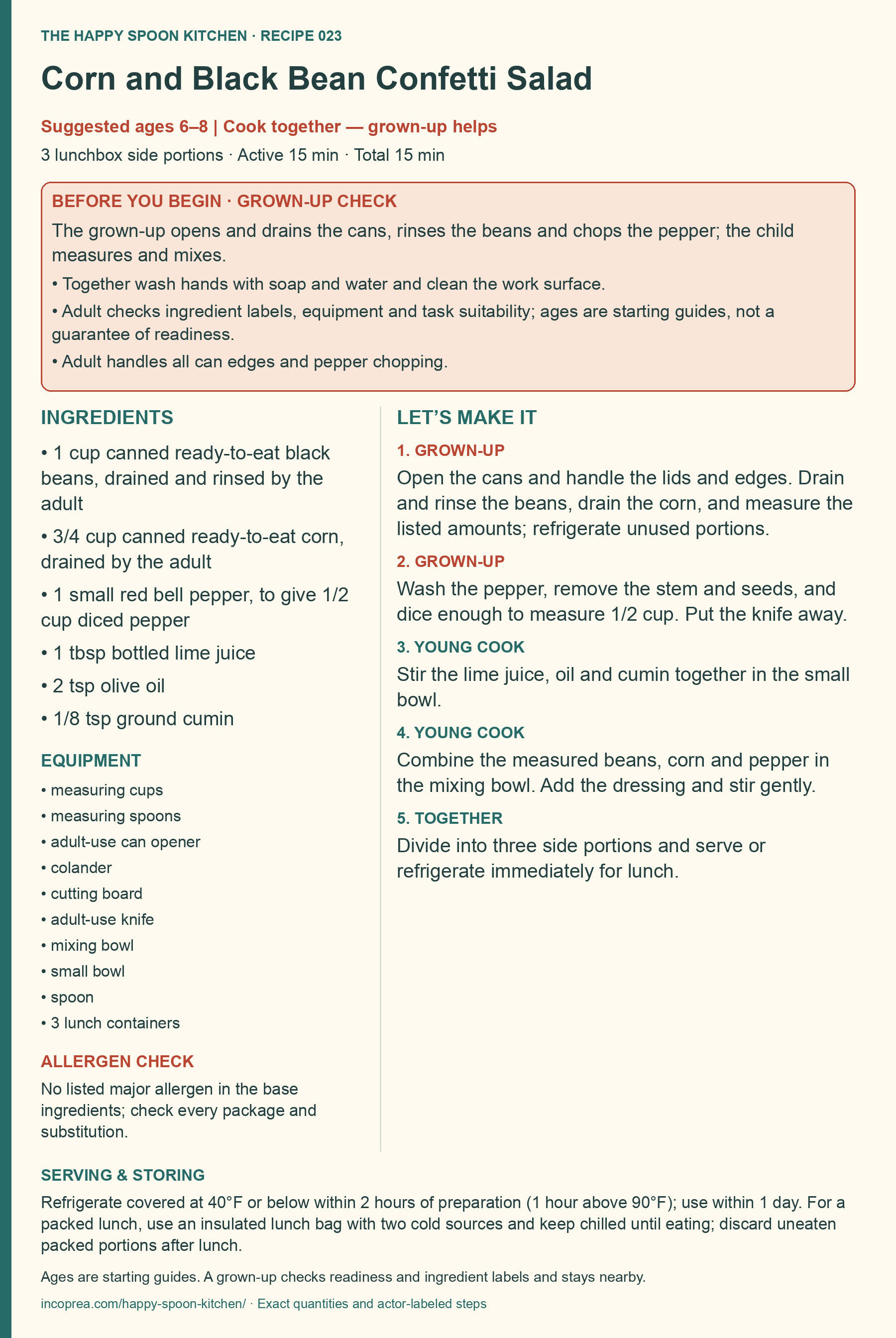
Corn and beans make an easy scoopable salad. The grown-up opens the cans and chops a pepper while the young cook measures the dressing. Little pieces matter here: they help a spoonful carry several colors at once.

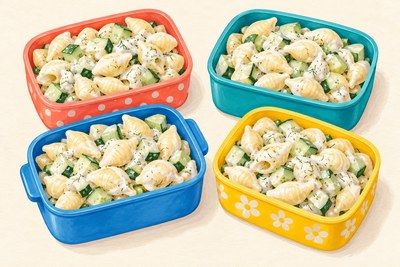
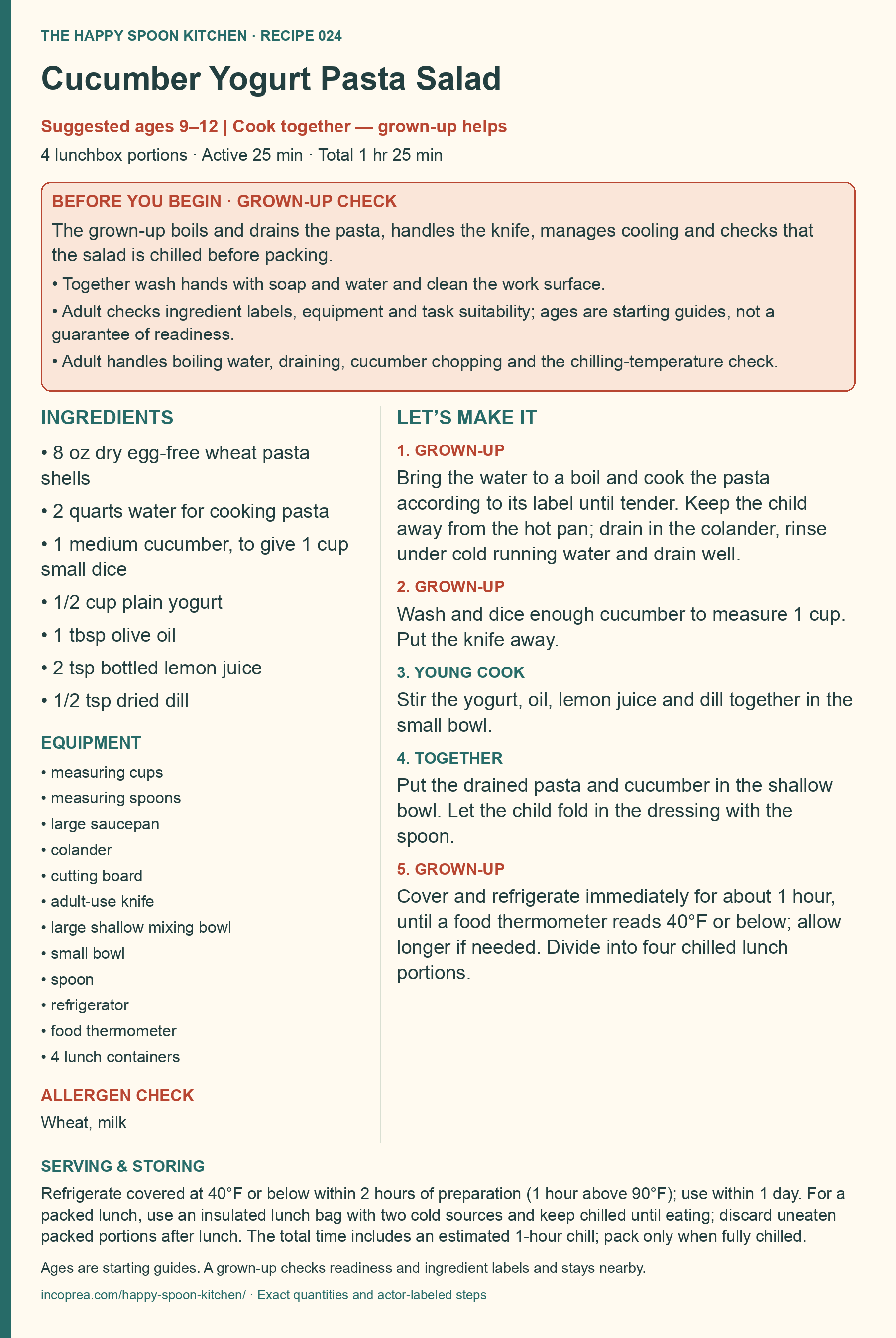
Small pasta shells catch a creamy dressing inside their curves. The adult cooks, drains and cools the pasta and dices the cucumber. The young cook makes the dressing and folds everything together, then the salad chills before it is packed.

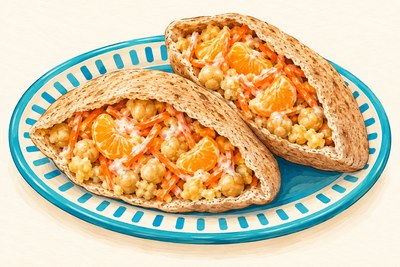
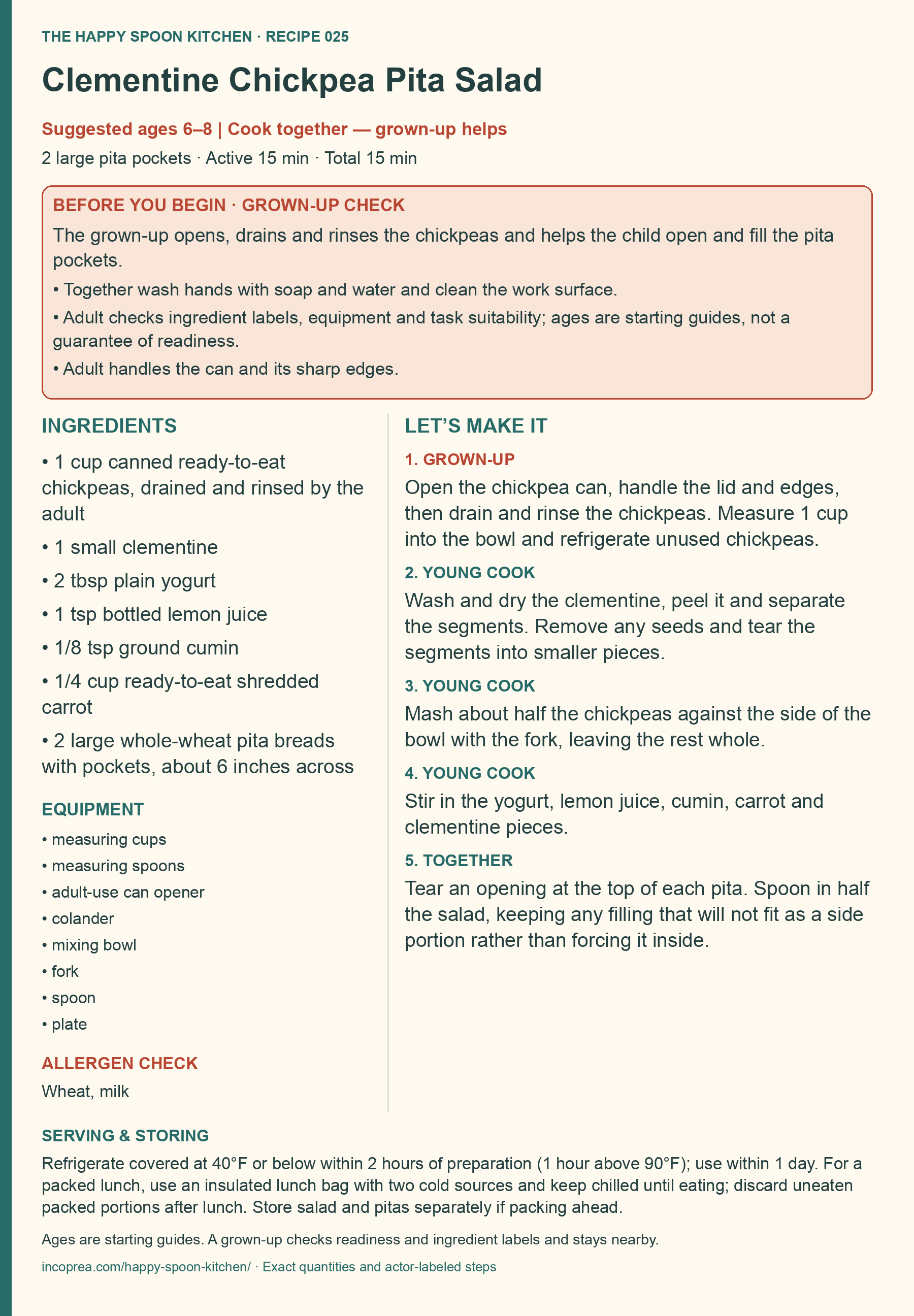
Chickpeas and torn clementine segments make a filling with soft, juicy and crunchy parts. A little yogurt binds the chickpeas without hiding their shape. The adult opens the can; the young cook peels, stirs and fills the pitas.

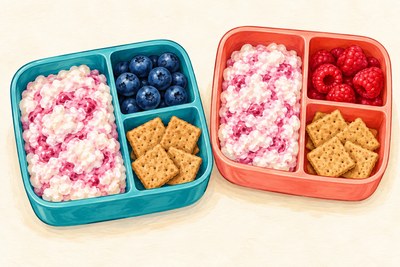
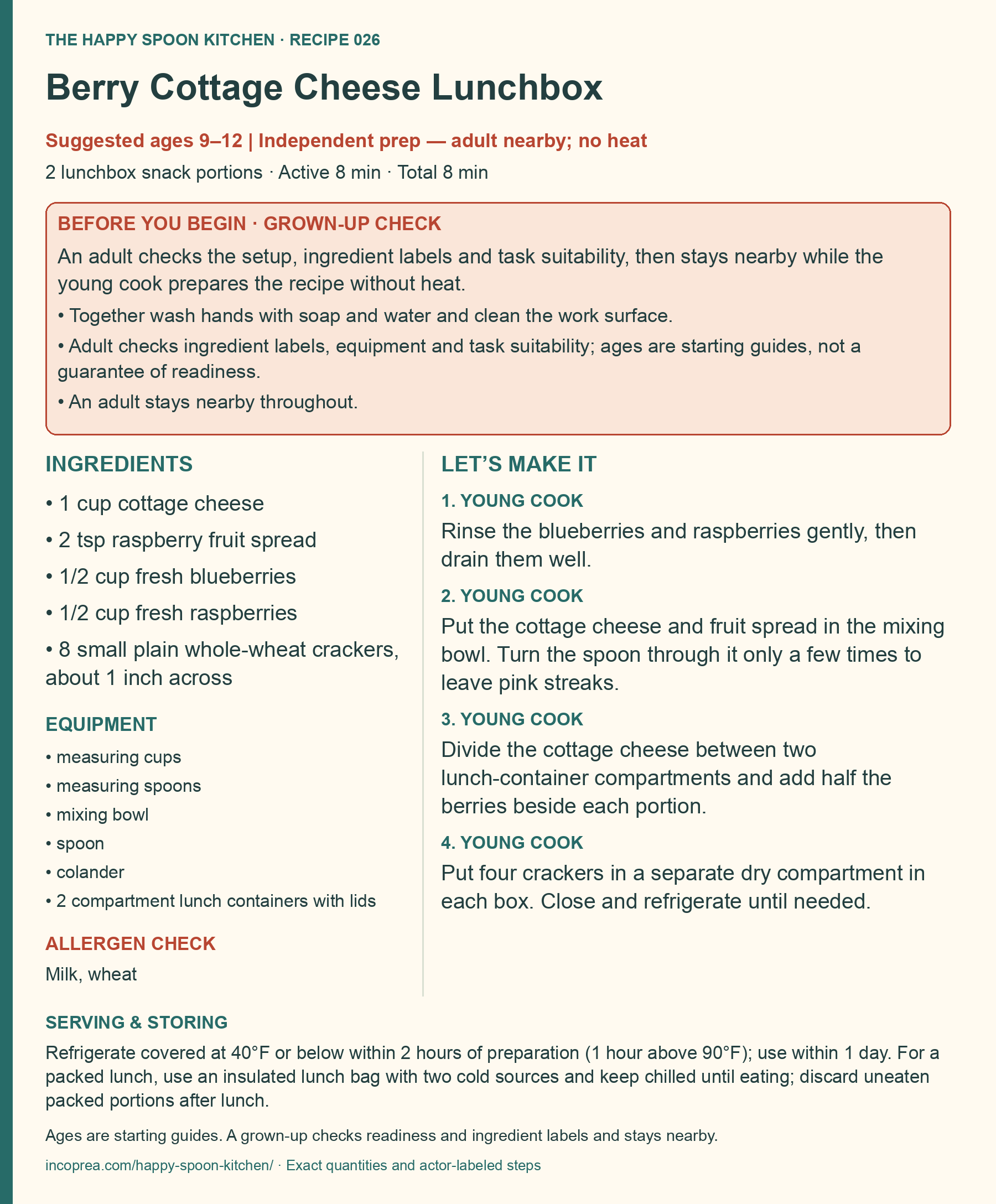
A lunchbox can keep crisp and creamy foods separate until you are ready for them. Swirl a little berry fruit spread through cottage cheese, add fresh berries beside it, and put the crackers in their own dry compartment.

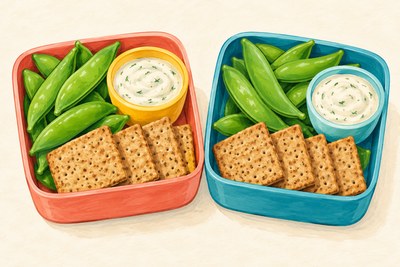
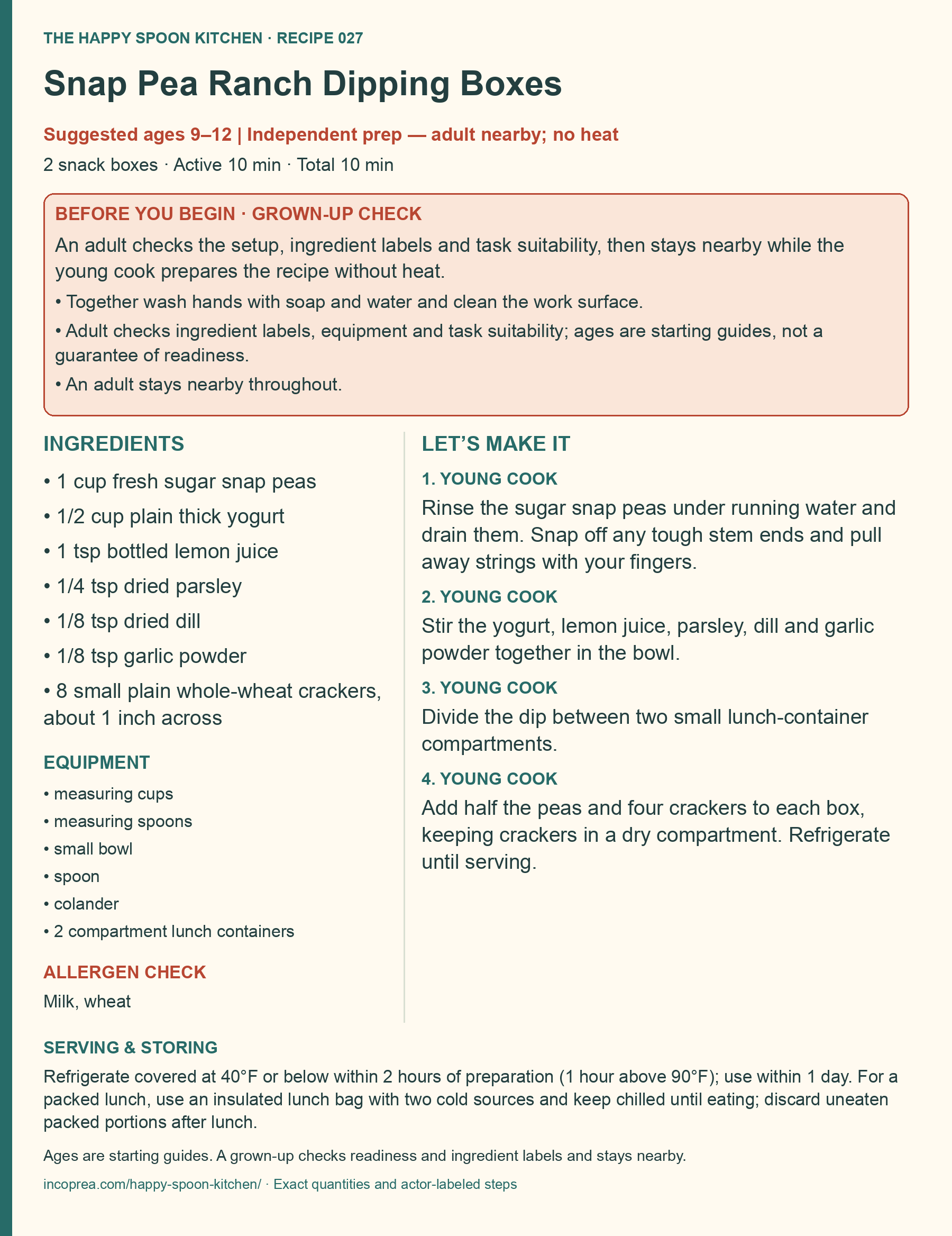
Fresh sugar snap peas have their own crisp handles. Stir a simple herby yogurt dip, remove any tough strings from the peas by hand, and pack the crackers separately. This snack box is about matching a crisp dipper to a thick dip.

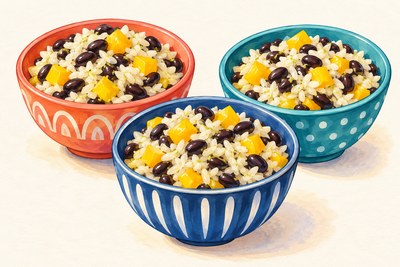
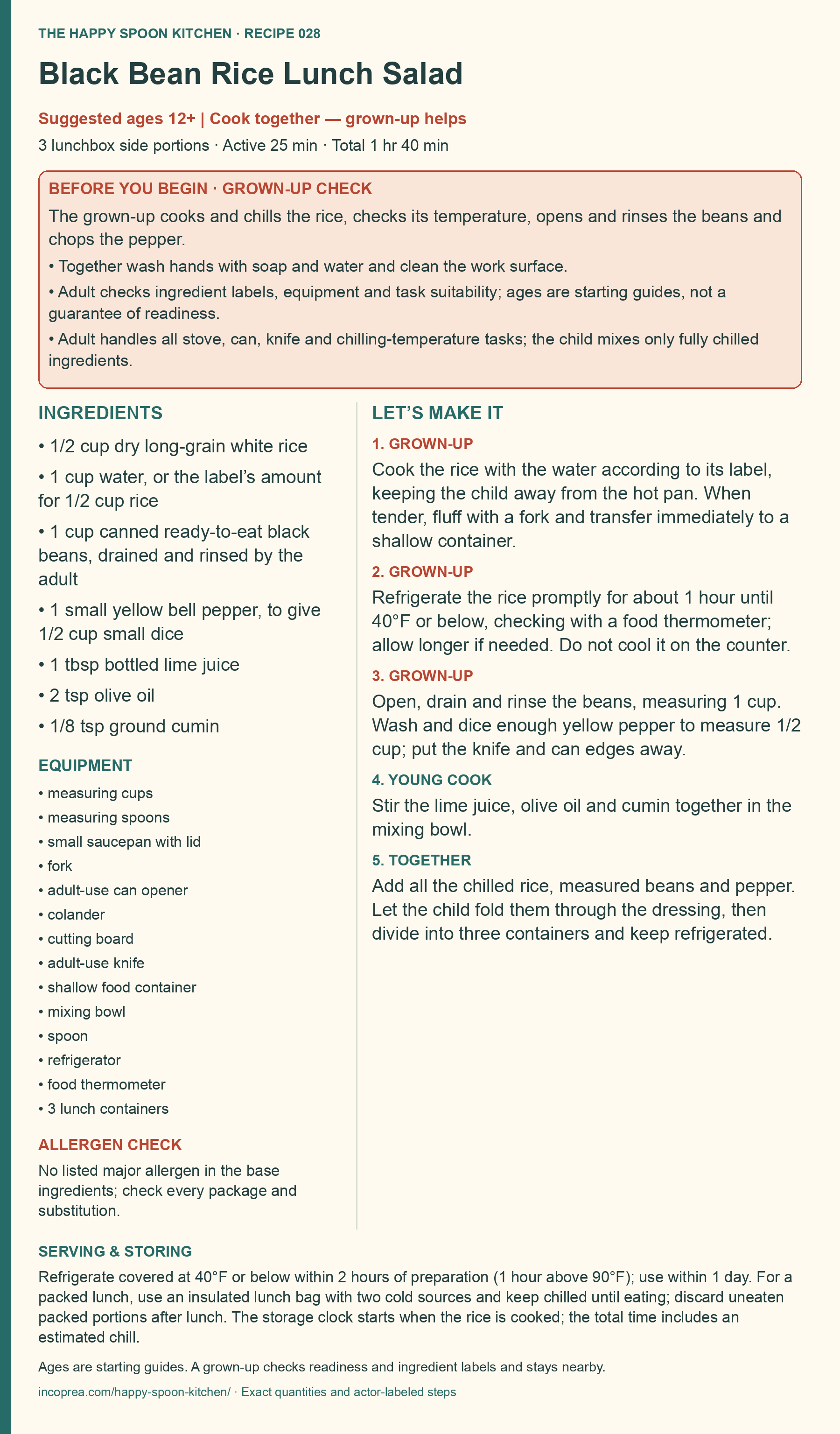
This is a cook-ahead lunch salad, with the grown-up in charge of rice, hot water and the bean can. Once the rice is thoroughly chilled, the young cook can fold in beans and pepper with a mild lime dressing.

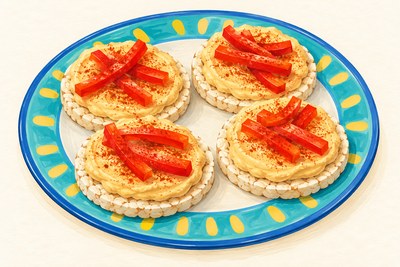
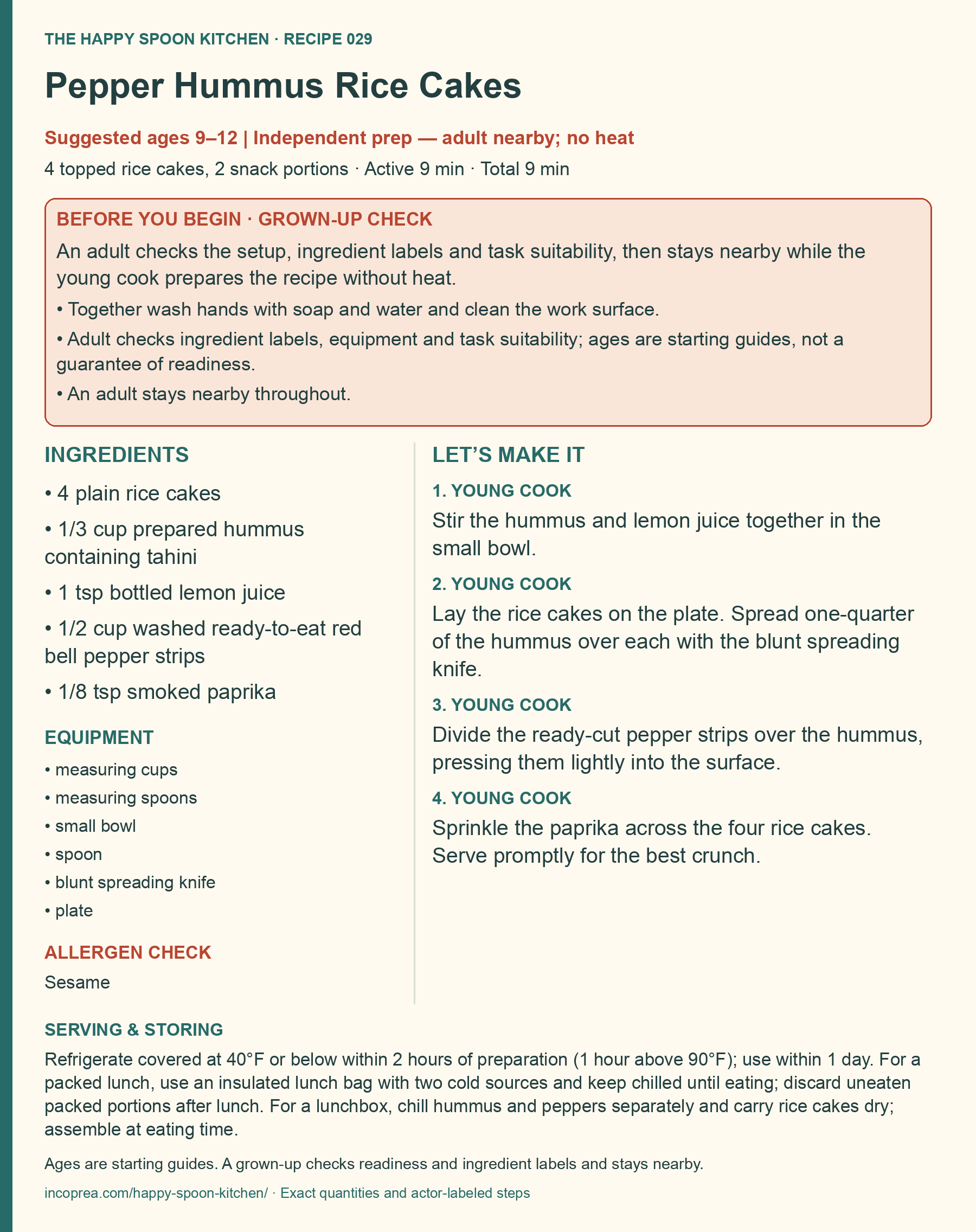
Rice cakes make a light, crisp base for creamy hummus and sweet pepper strips. There is no cutting when the peppers are sold ready to eat in strips. Build these just before lunch rather than letting the rice cakes soften overnight.

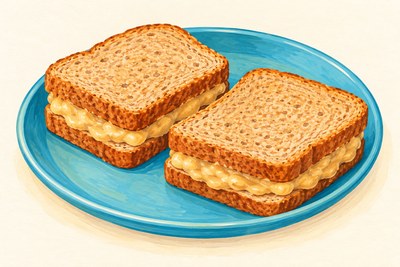
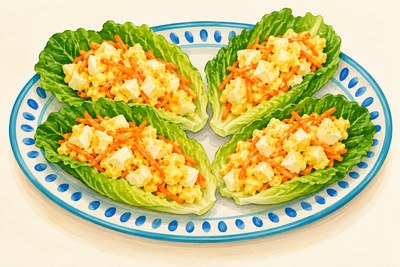
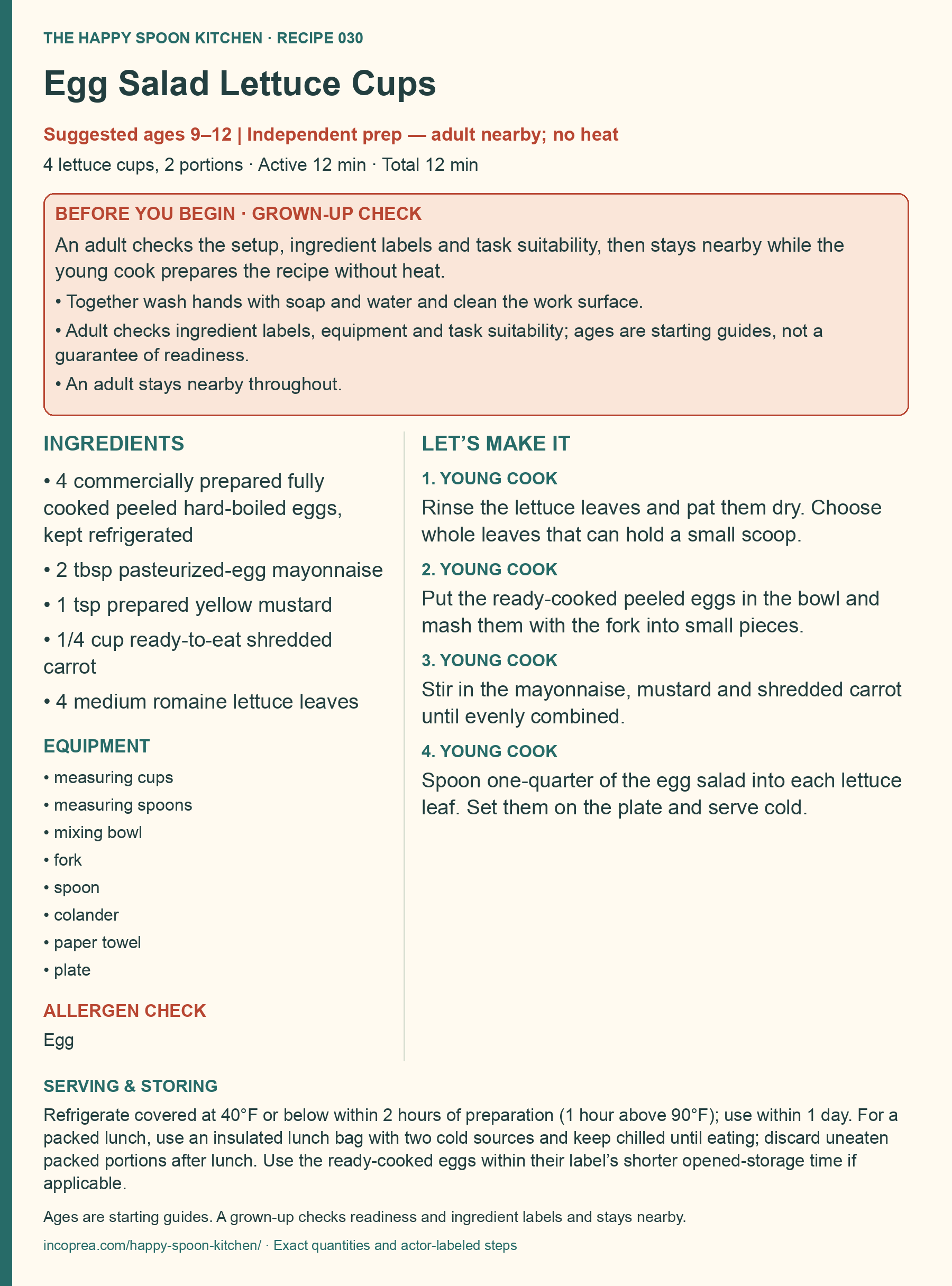
Ready-cooked, peeled eggs let this recipe stay entirely cold. Mash them with a fork, add a small amount of dressing, and scoop the salad into lettuce leaves. The result is soft in the middle with a fresh, crisp edge.

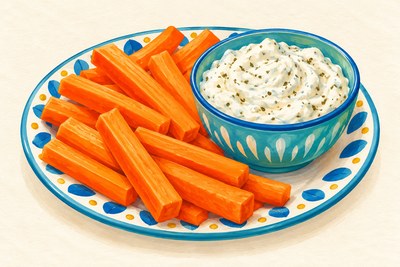
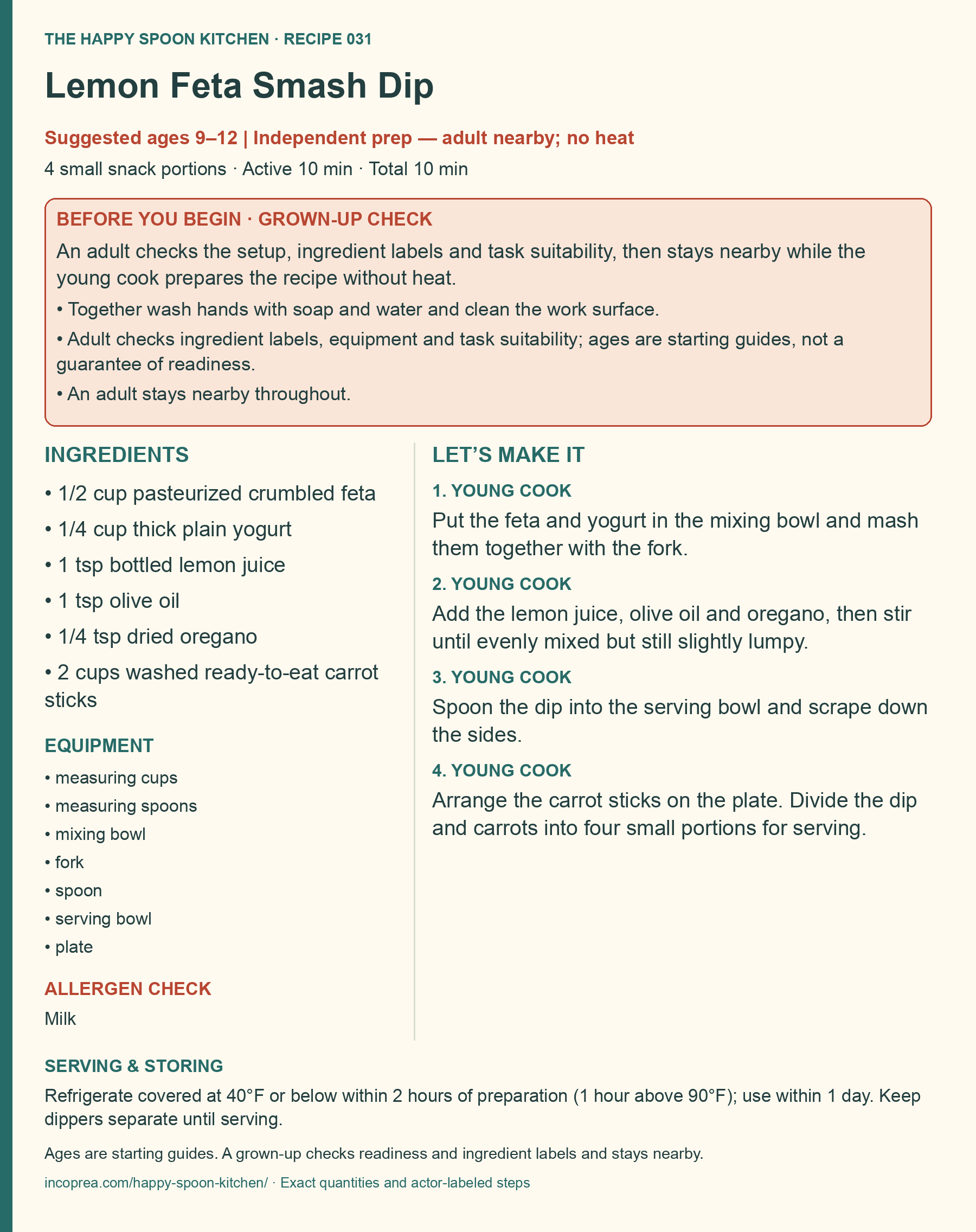
Crumbled feta gives this dip a pleasantly bumpy texture. Mash it with thick yogurt rather than trying to make it perfectly smooth. A little lemon and oregano bring the flavors together, and ready-cut carrots are sturdy enough for scooping.

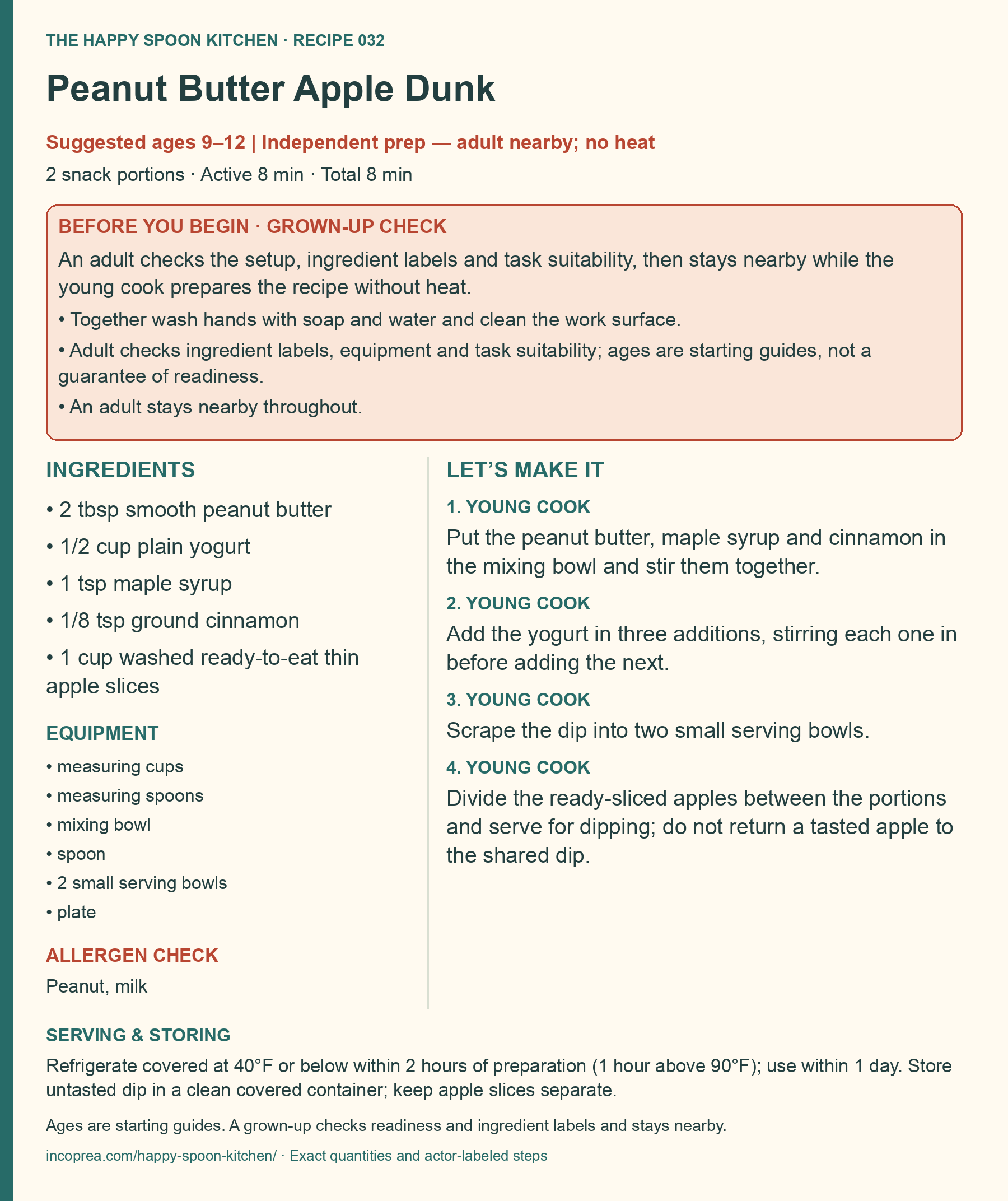
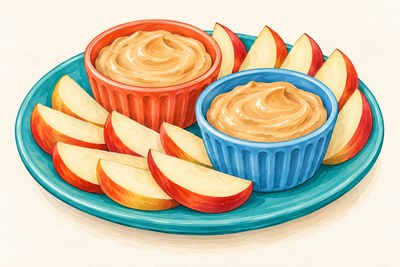
Peanut butter can be too thick to dip into straight from the jar. Yogurt loosens it into a creamy mixture that clings to a thin apple slice. Stir the thicker ingredient first, then add the yogurt a spoonful at a time.

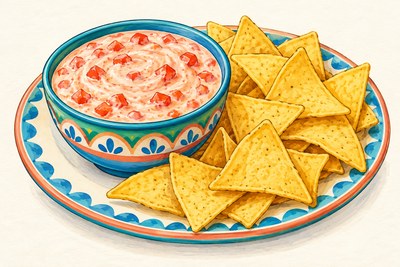
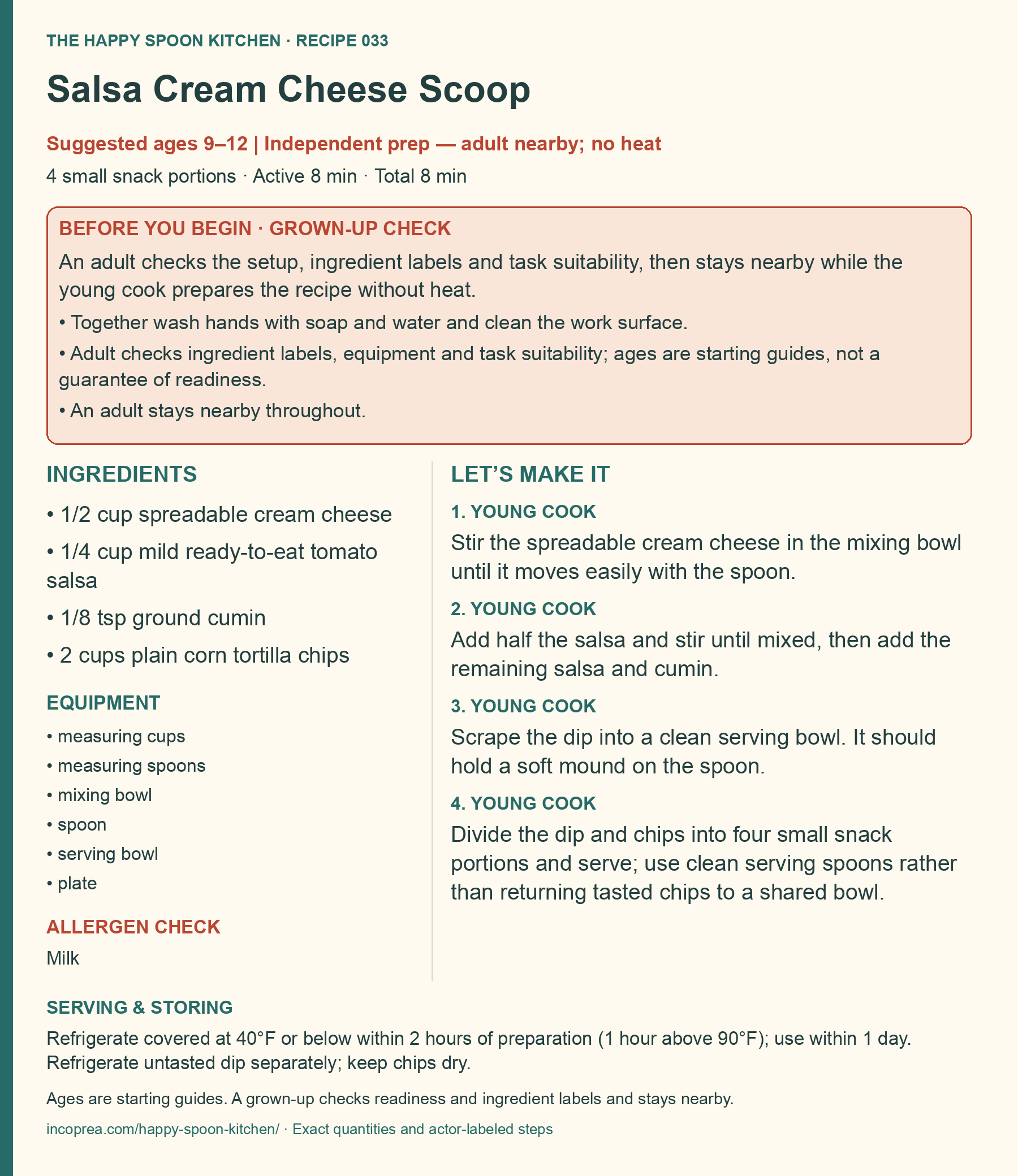
Mild salsa makes a quick speckled dip when it meets spreadable cream cheese. Add the salsa in stages so the mixture stays thick enough for a corn chip. A few larger salsa pieces are part of the texture, not a mixing mistake.

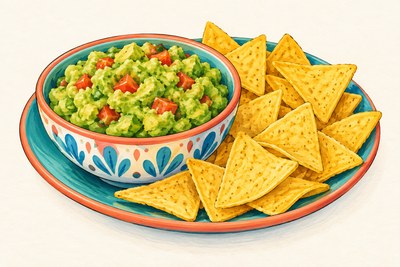
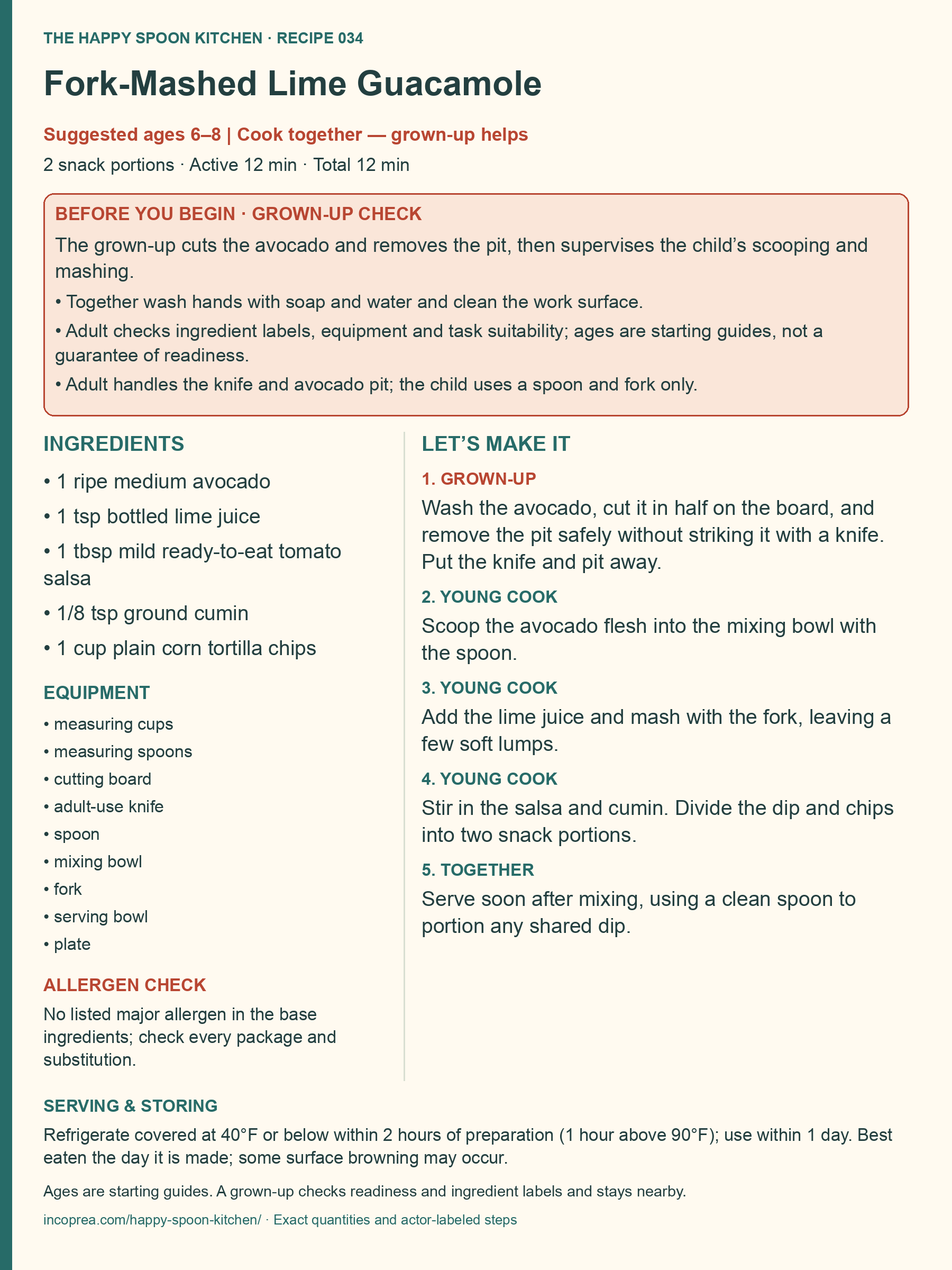
A ripe avocado can become a chunky dip with just a fork. The grown-up handles the knife and pit; the young cook scoops, mashes and stirs. A little lime and mild salsa add flavor without needing a pile of chopped ingredients.

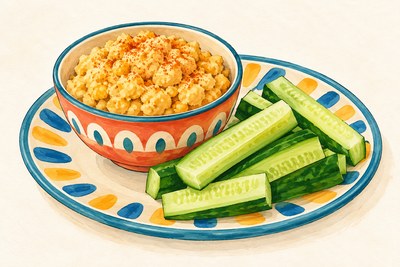
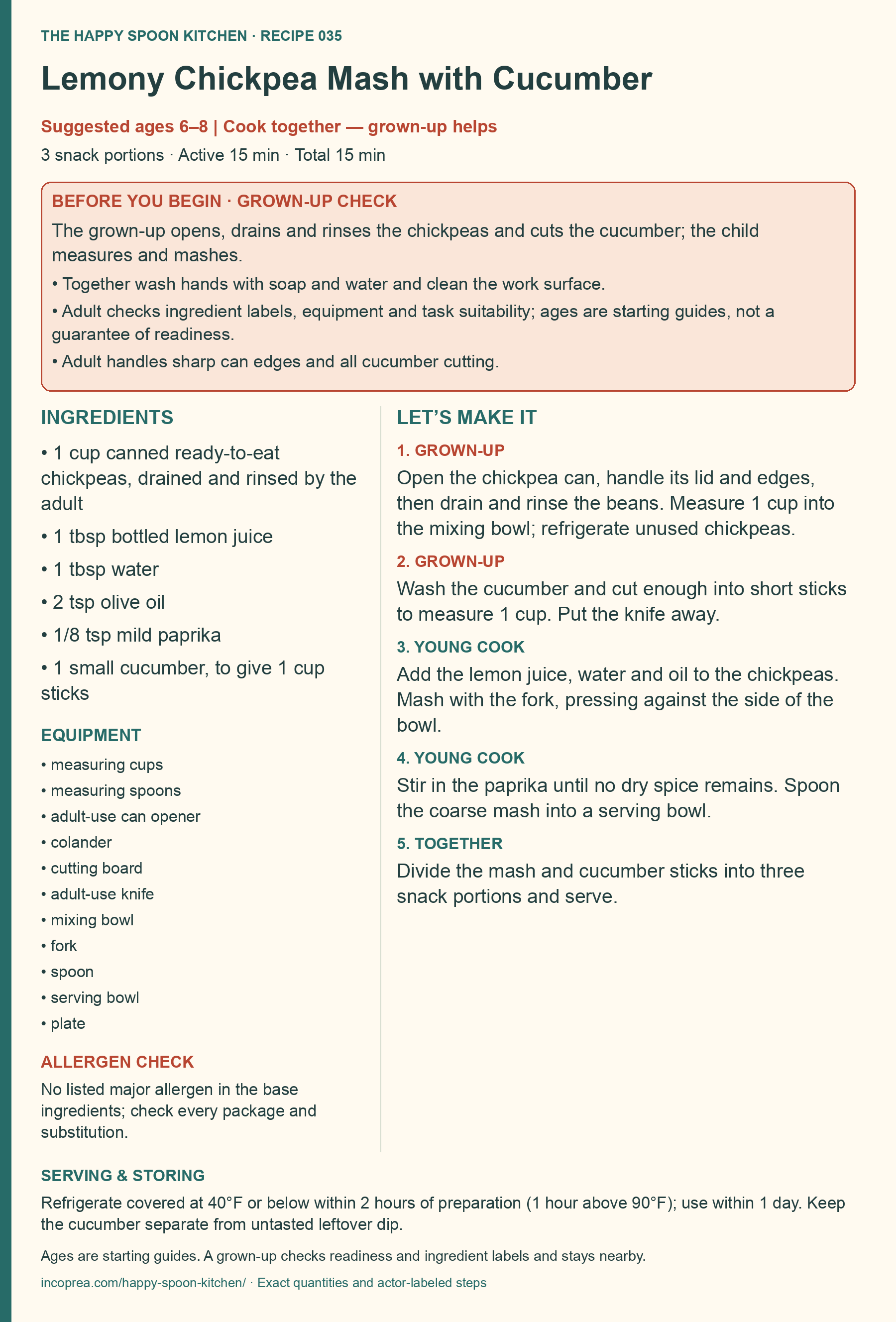
This chickpea dip is meant to be rustic rather than silky. The adult takes care of the can and cucumber knife while the young cook mashes the beans. A little measured water makes them easier to spread without washing out the lemon flavor.

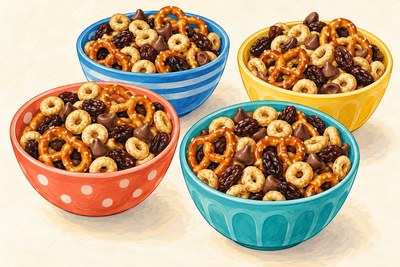
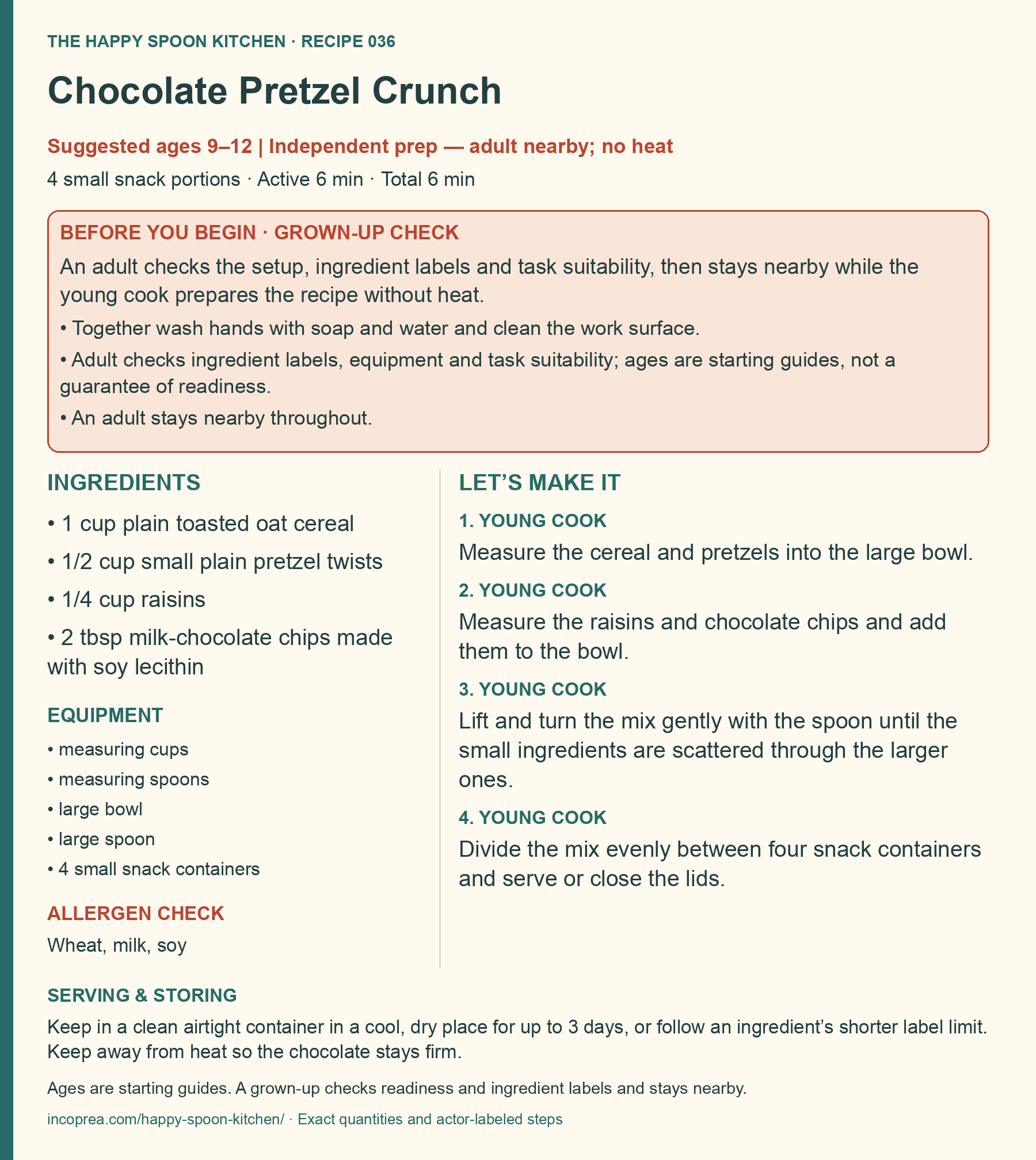
This snack mix is a measuring game with a tasty finish. Big cereal loops and pretzels make the base, while raisins and little chocolate chips fill the gaps. Toss gently so the pretzels stay in pieces rather than turning into crumbs.

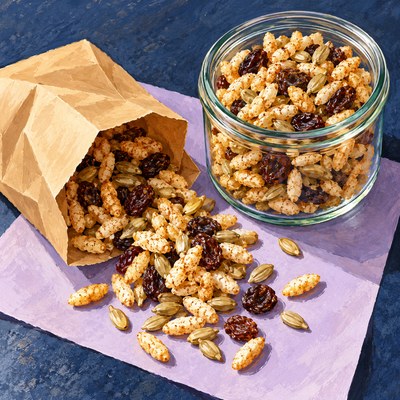
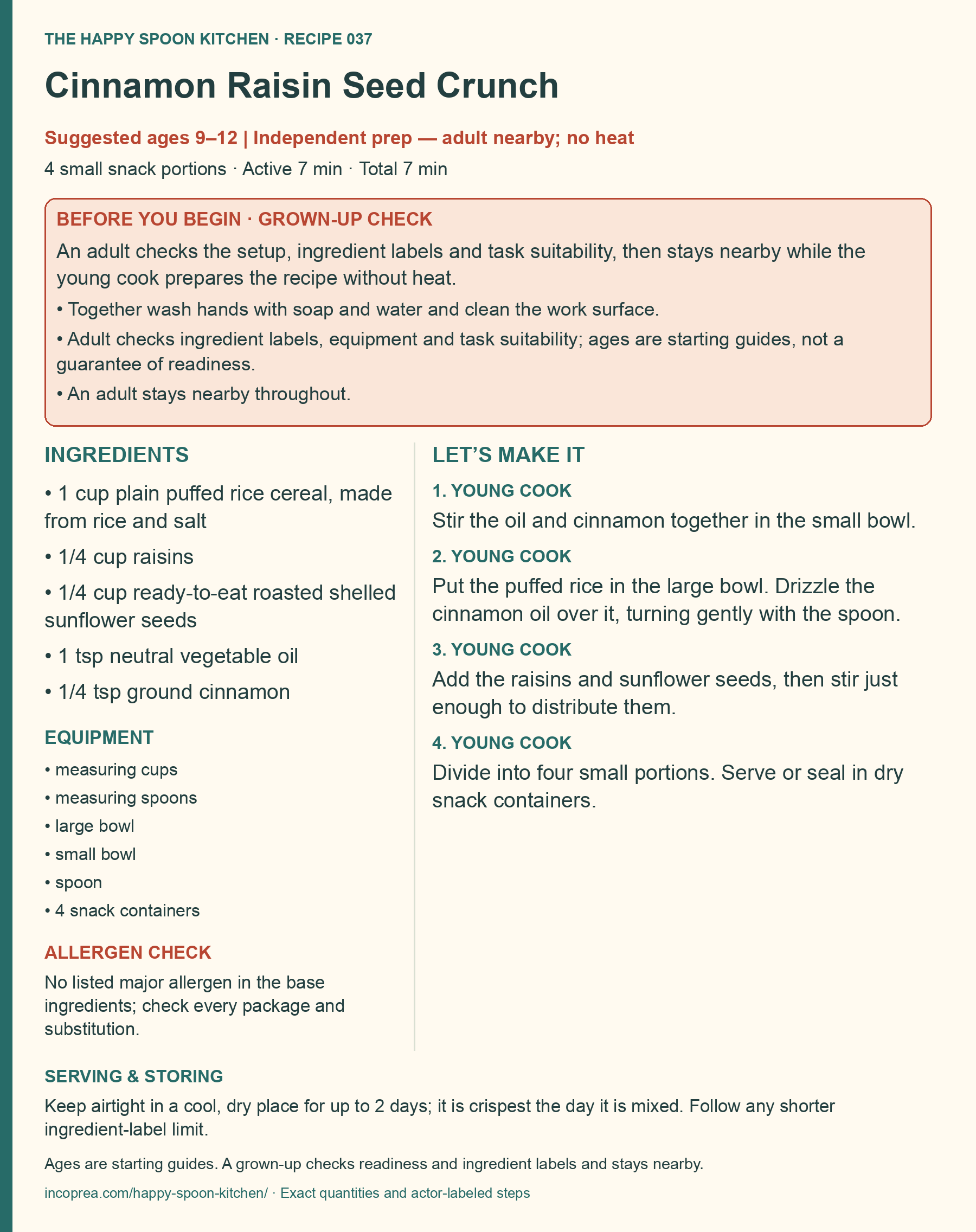
A tiny amount of oil helps cinnamon cling to puffed rice. Stir the spice into the oil before it meets the cereal, then add chewy raisins and ready-roasted sunflower seeds. Keep the mixing light so the puffed grains do not get crushed.

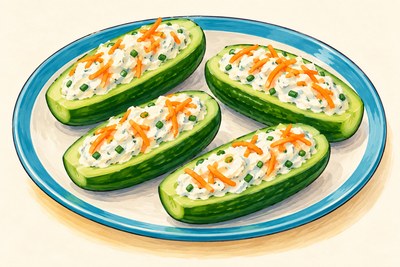
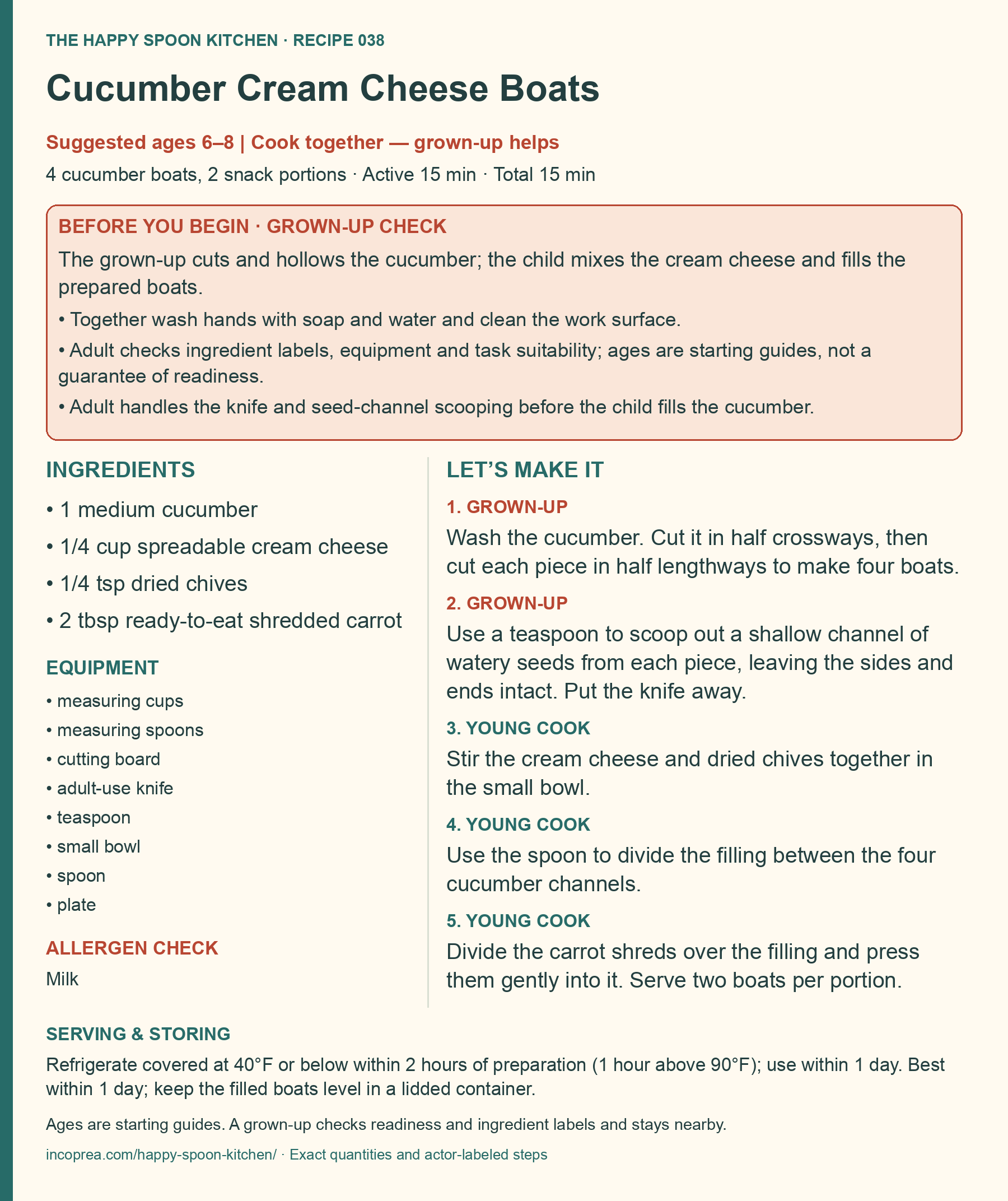
A cucumber can hold its own filling after the watery seeds are scooped out. The adult shapes the boats, and the young cook mixes a mild chive cream cheese and adds carrot shreds. There is no need for toothpicks, flags or sails.

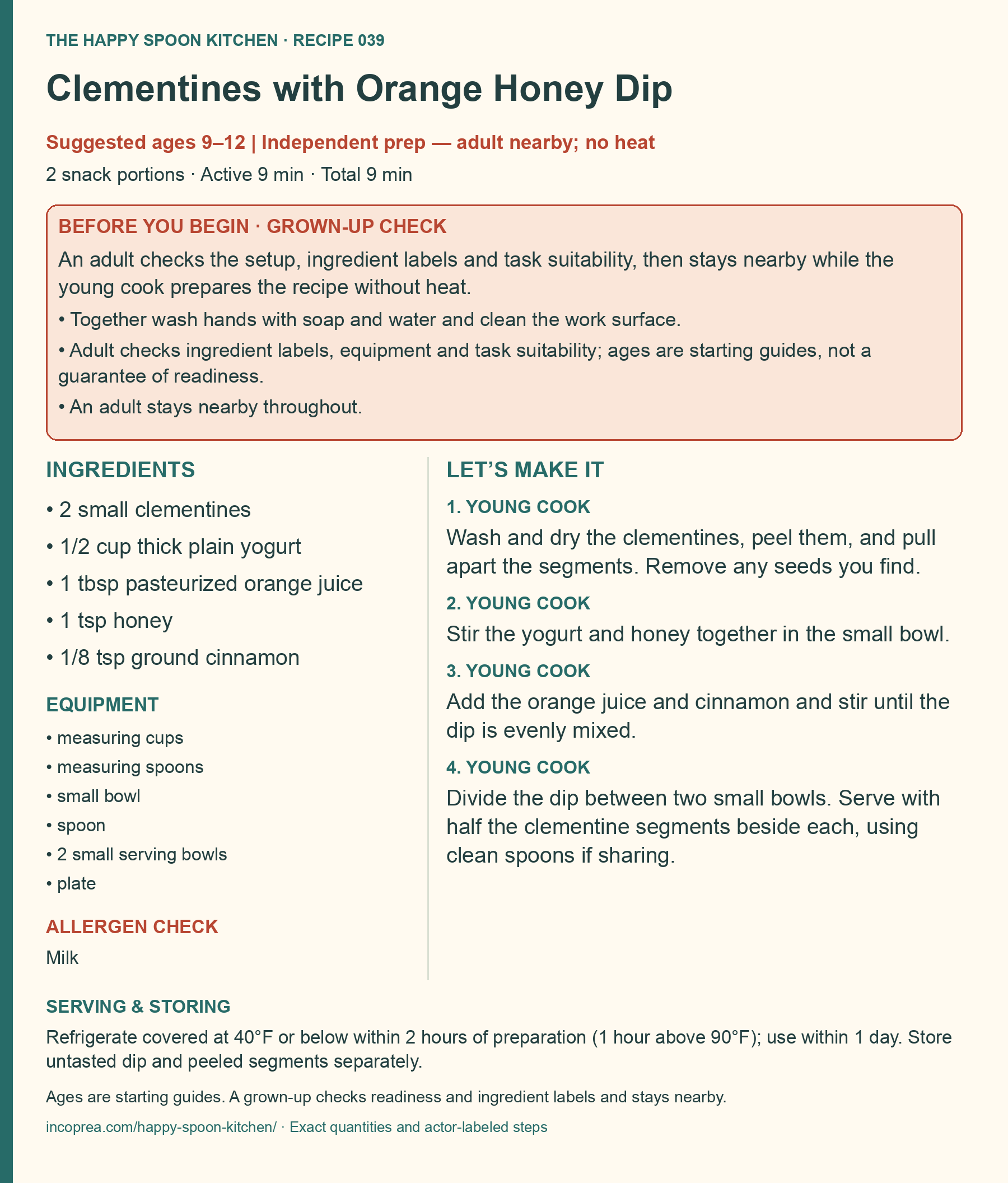
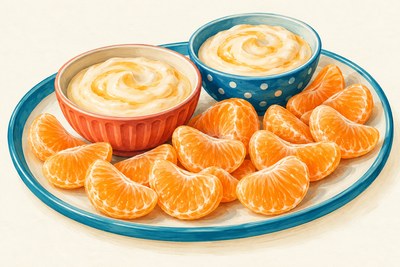
Clementines are both the dipper and the bright orange flavor idea. Bottled orange juice loosens thick yogurt by a small measured amount, while honey rounds it out. The child peels the fruit and stirs the dip without using a knife.

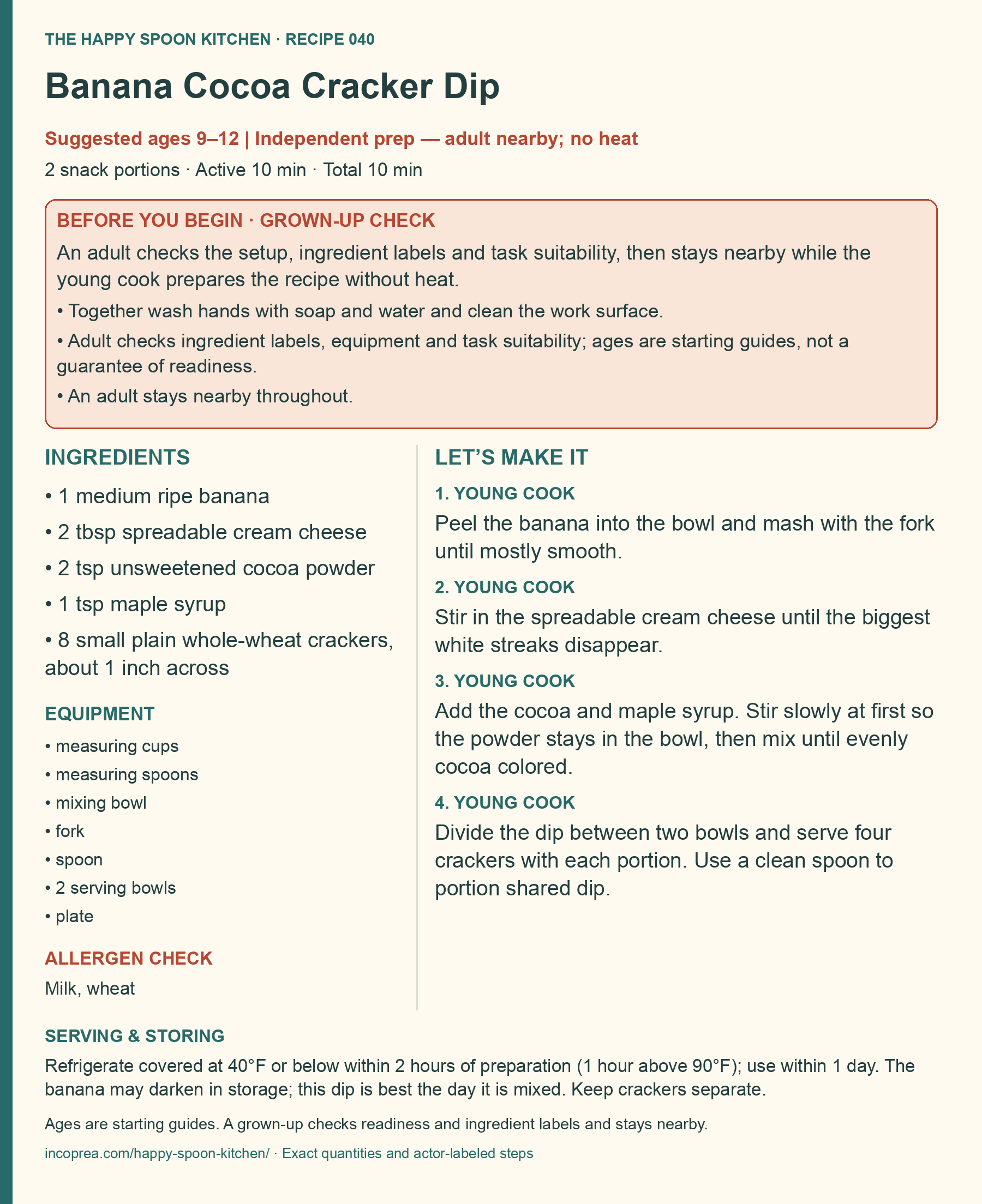
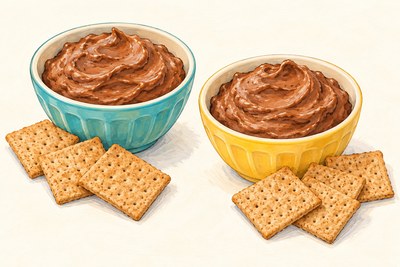
A banana helps make a soft cocoa dip without melting chocolate. Mash it well before stirring in cream cheese, then work in the cocoa until no dry spots remain. Plain crackers give the smooth dip a crisp partner.

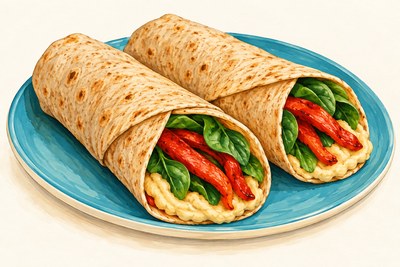
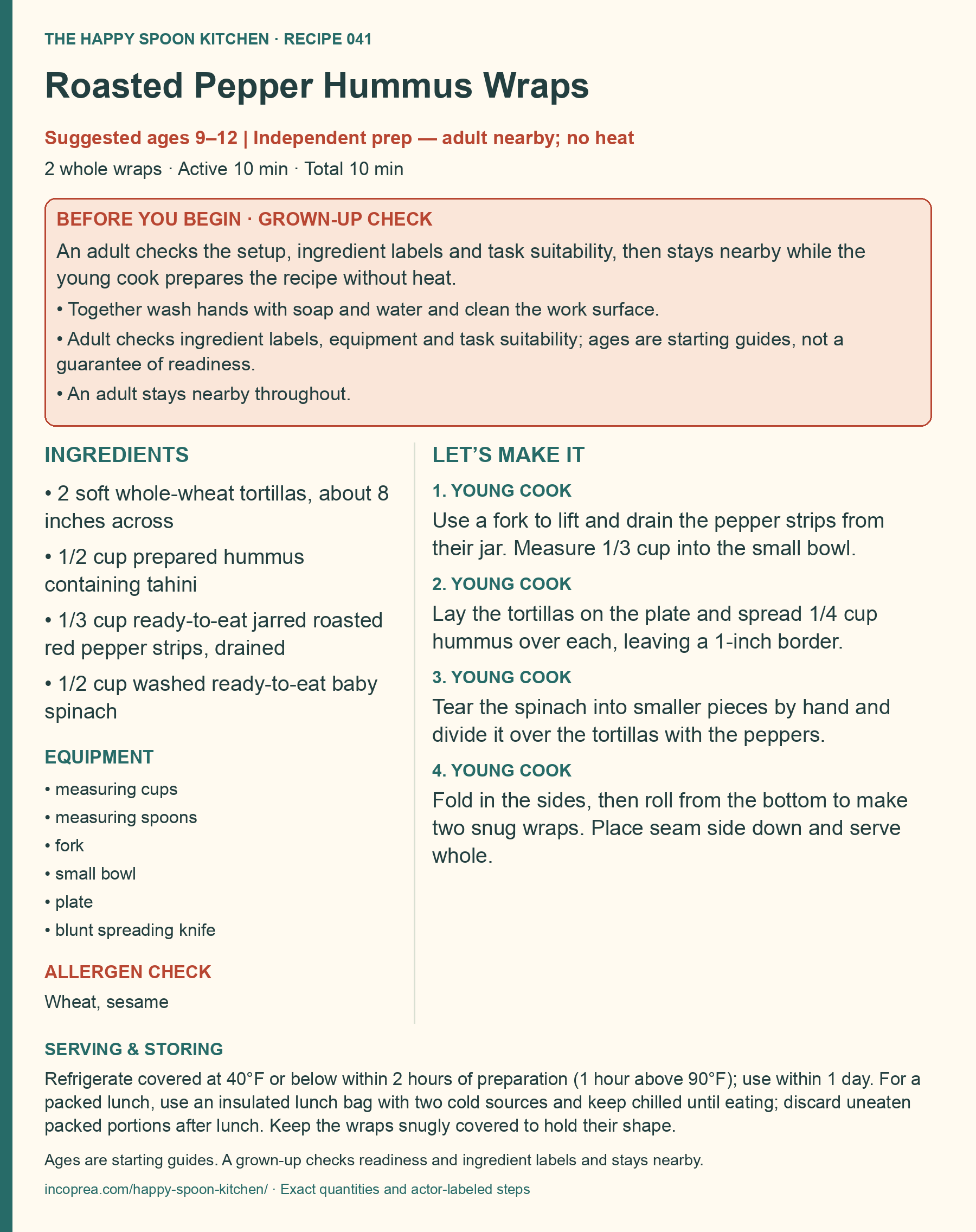
Jarred roasted peppers are soft enough to fold into a wrap without chopping. Drain them with a fork, tear the spinach by hand and spread the hummus first. A clear border around the tortilla gives the filling somewhere to go as you roll.

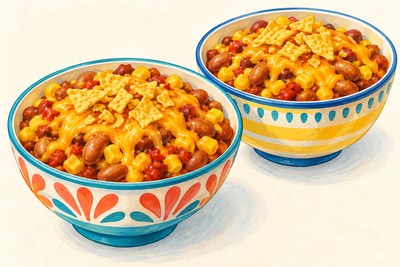
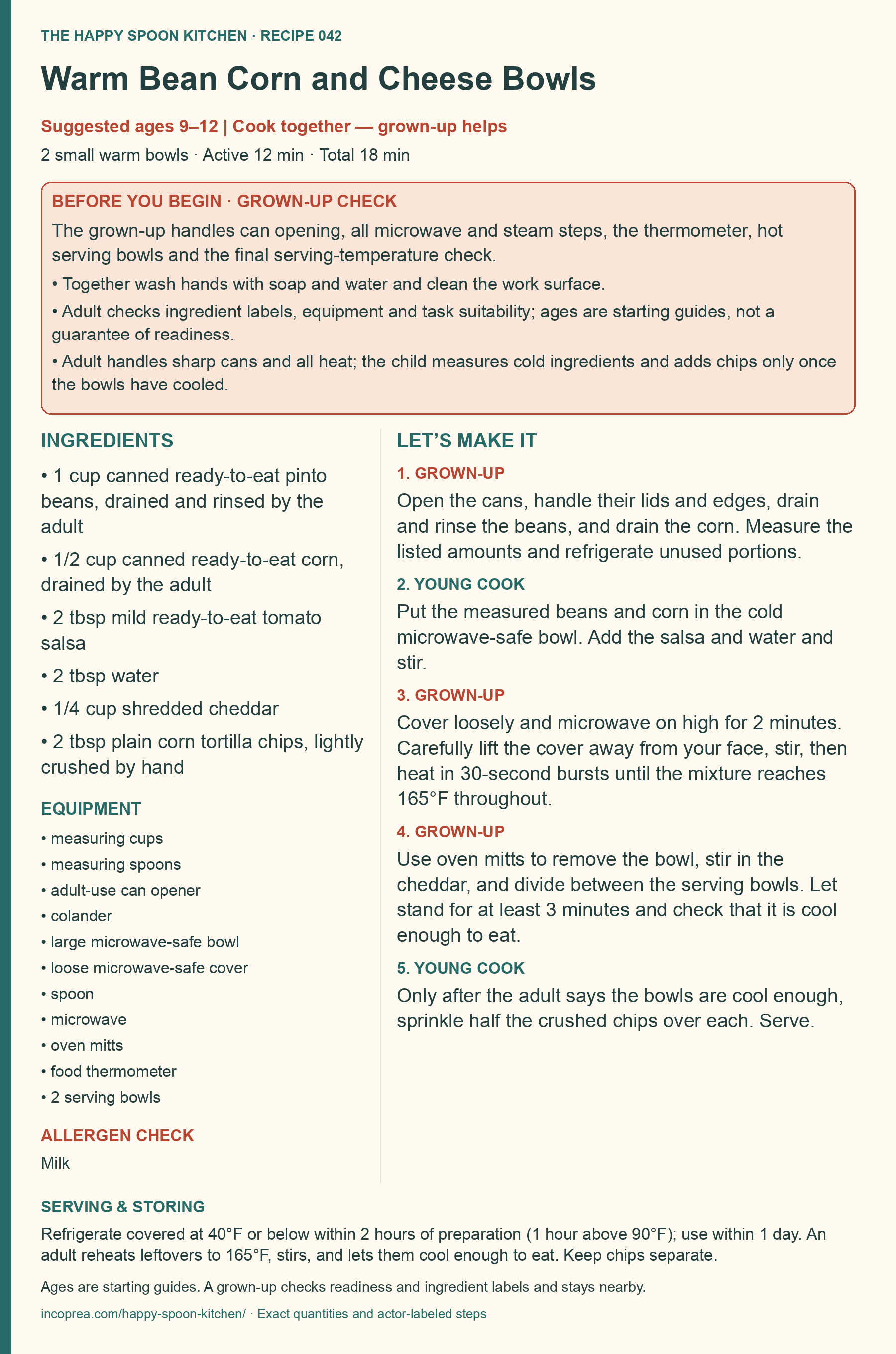
Ready-to-eat beans and corn make a quick warm bowl when an adult handles the microwave. The young cook measures the cold ingredients; the grown-up heats, stirs and adds the cheese. A few corn chips finish each bowl with crunch.

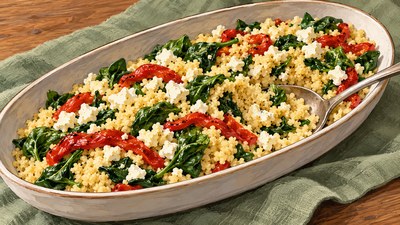
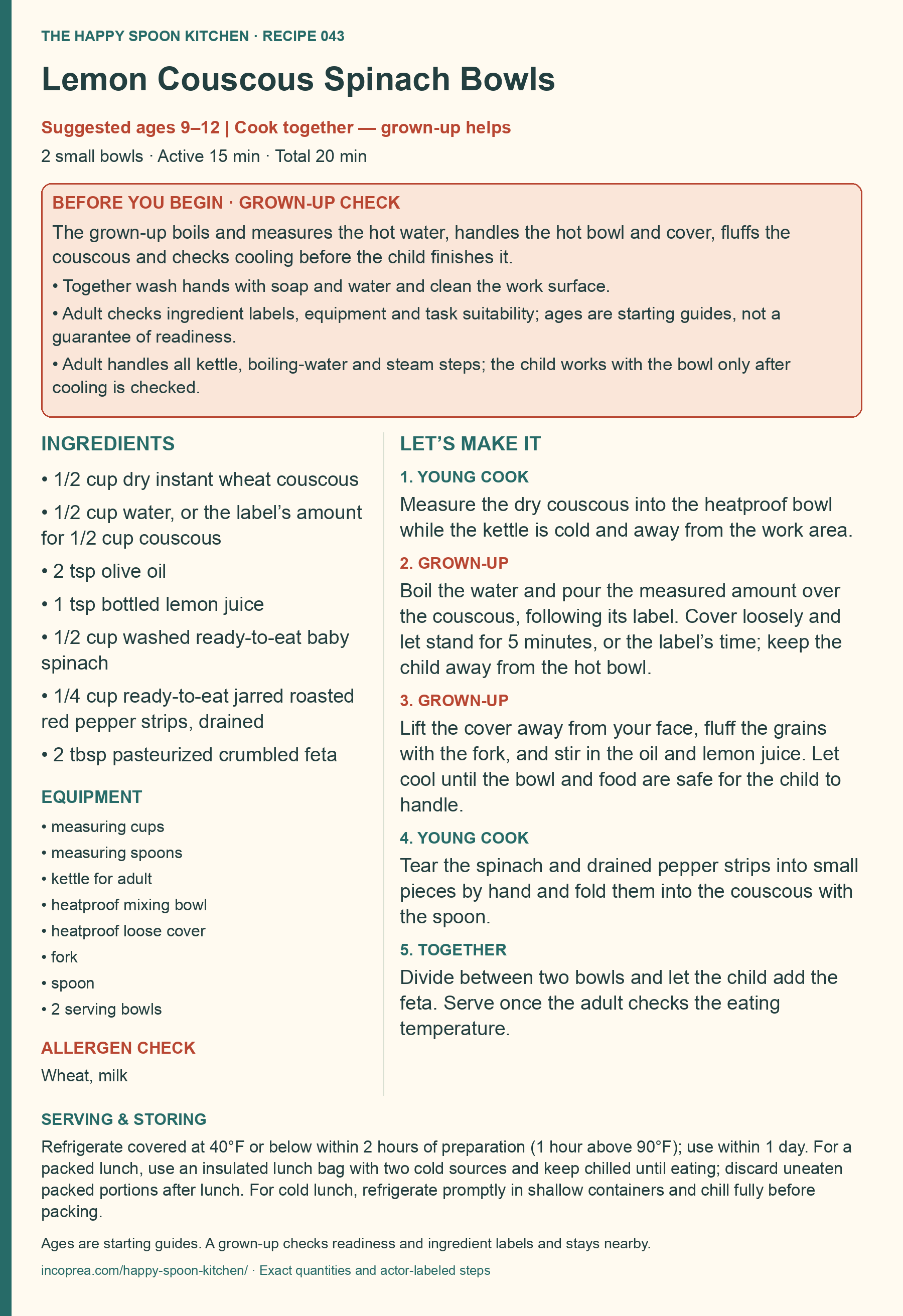
Couscous softens while it stands in hot water, so the grown-up handles the pouring and steam. After the grains are fluffy and cool enough to touch safely, the young cook can stir in spinach, roasted pepper and crumbled feta.

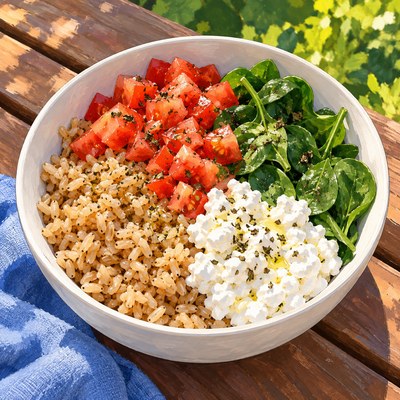
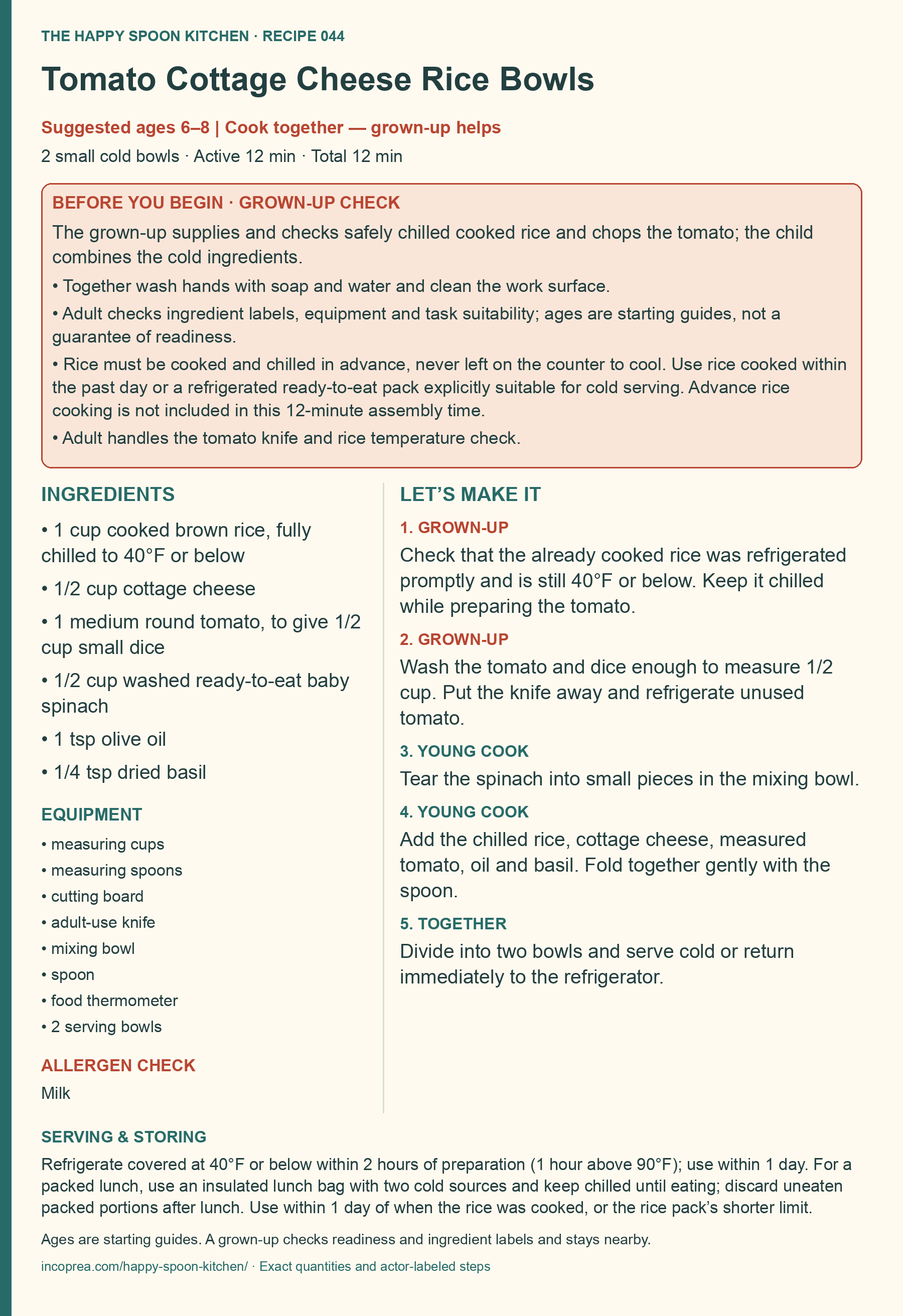
This is an assembly recipe using rice that is already cooked and fully chilled. The adult checks the rice and chops a round tomato; the young cook folds together the cool ingredients. Cottage cheese makes a soft dressing without needing mayonnaise.

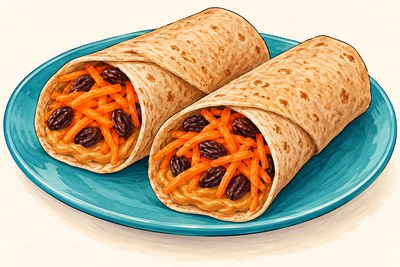
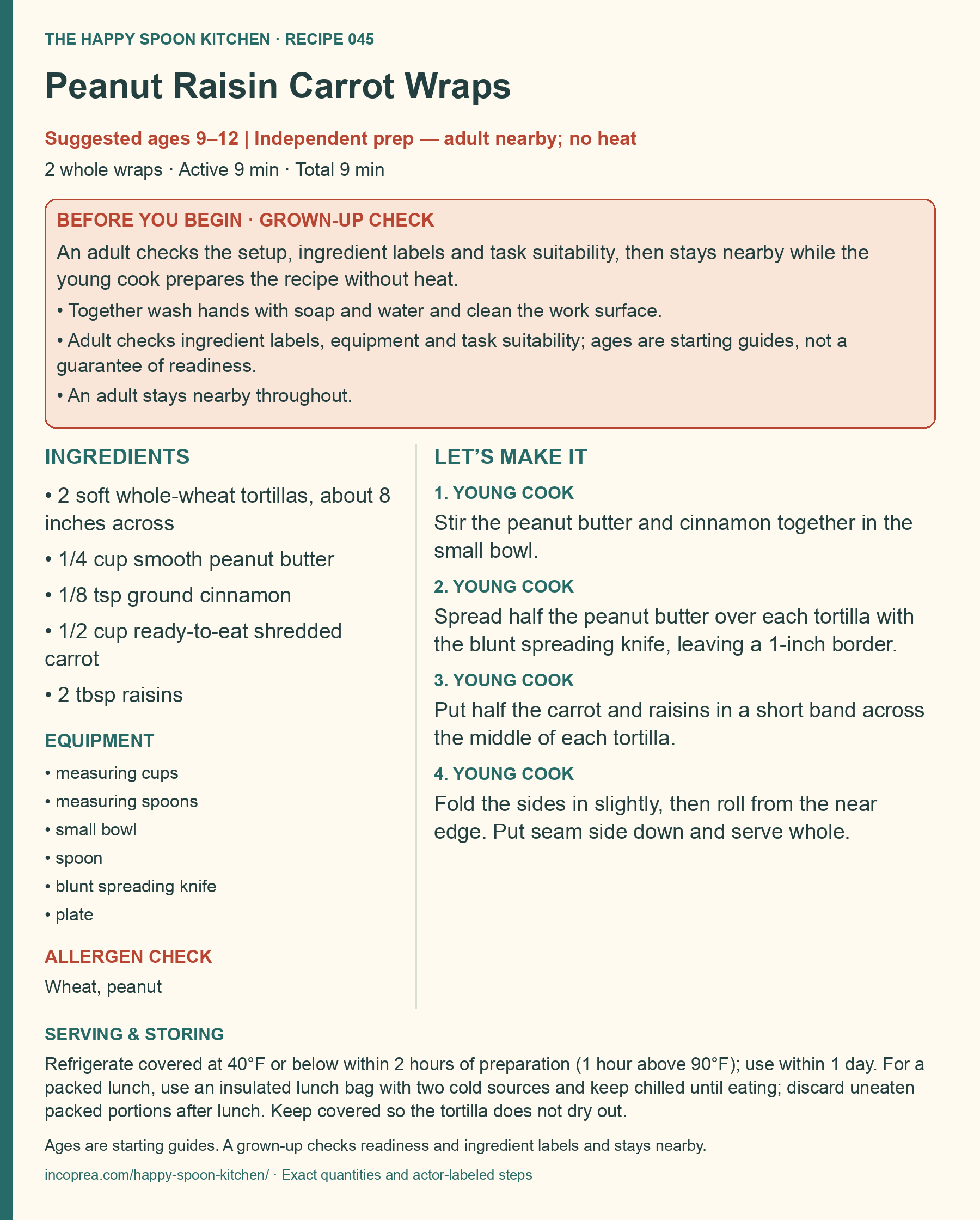
Peanut butter holds sweet raisins and crunchy carrot shreds inside these simple wraps. A little cinnamon is stirred into the spread first. Roll from the near edge and tuck in the sides so the loose shreds stay inside.

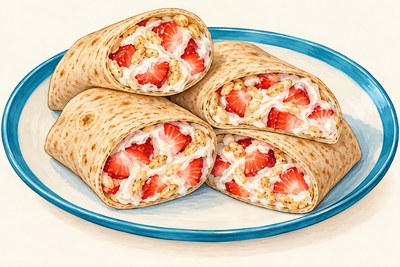
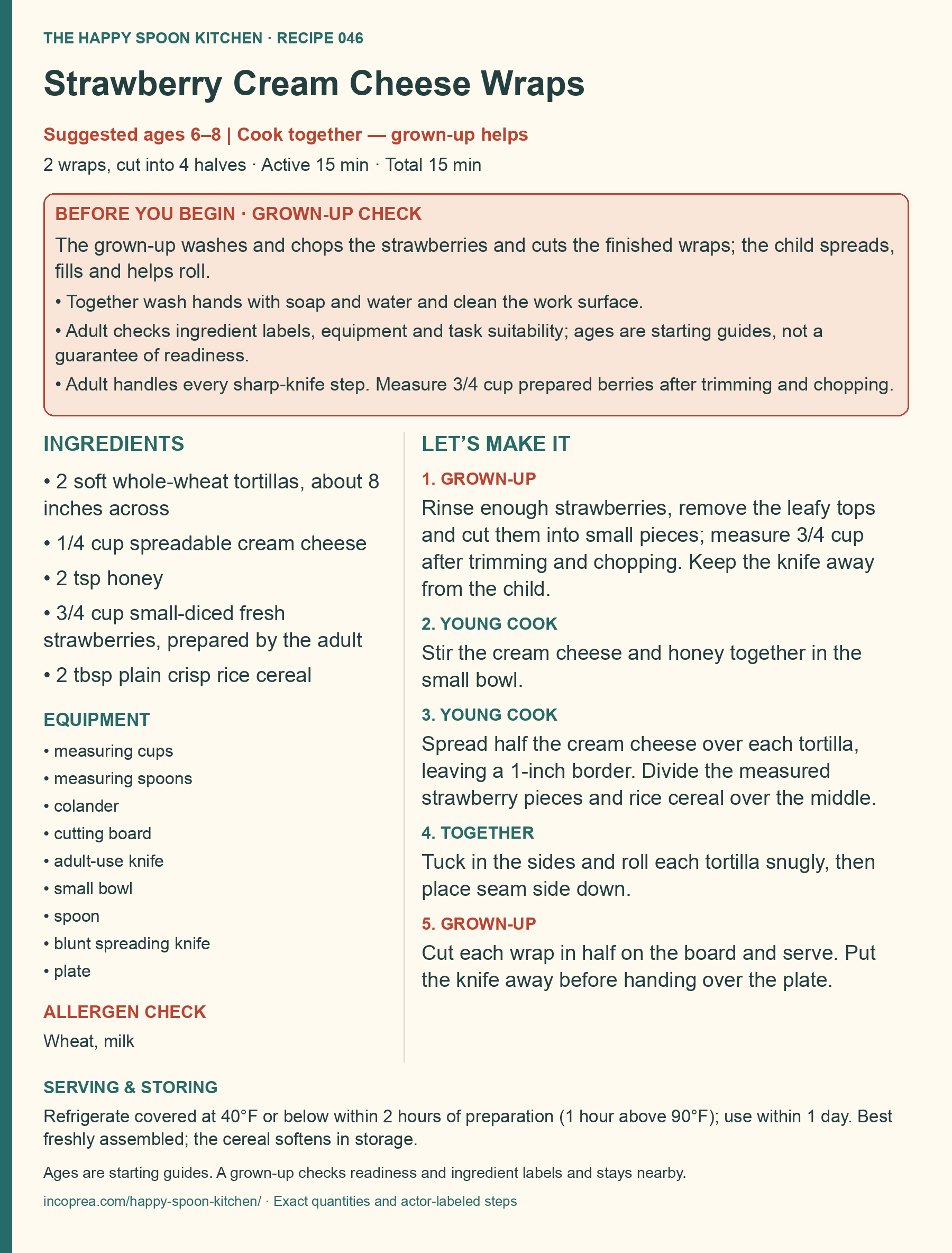
Small strawberry pieces are easier to roll than large slices. The grown-up takes care of the berry knife and final cutting, while the young cook makes a honey cream cheese spread. A little crisp rice cereal adds a delicate crunch just before serving.

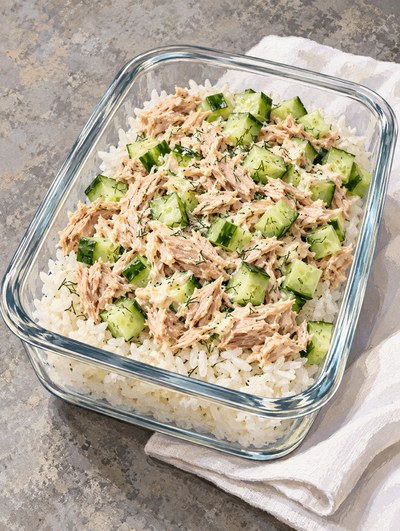
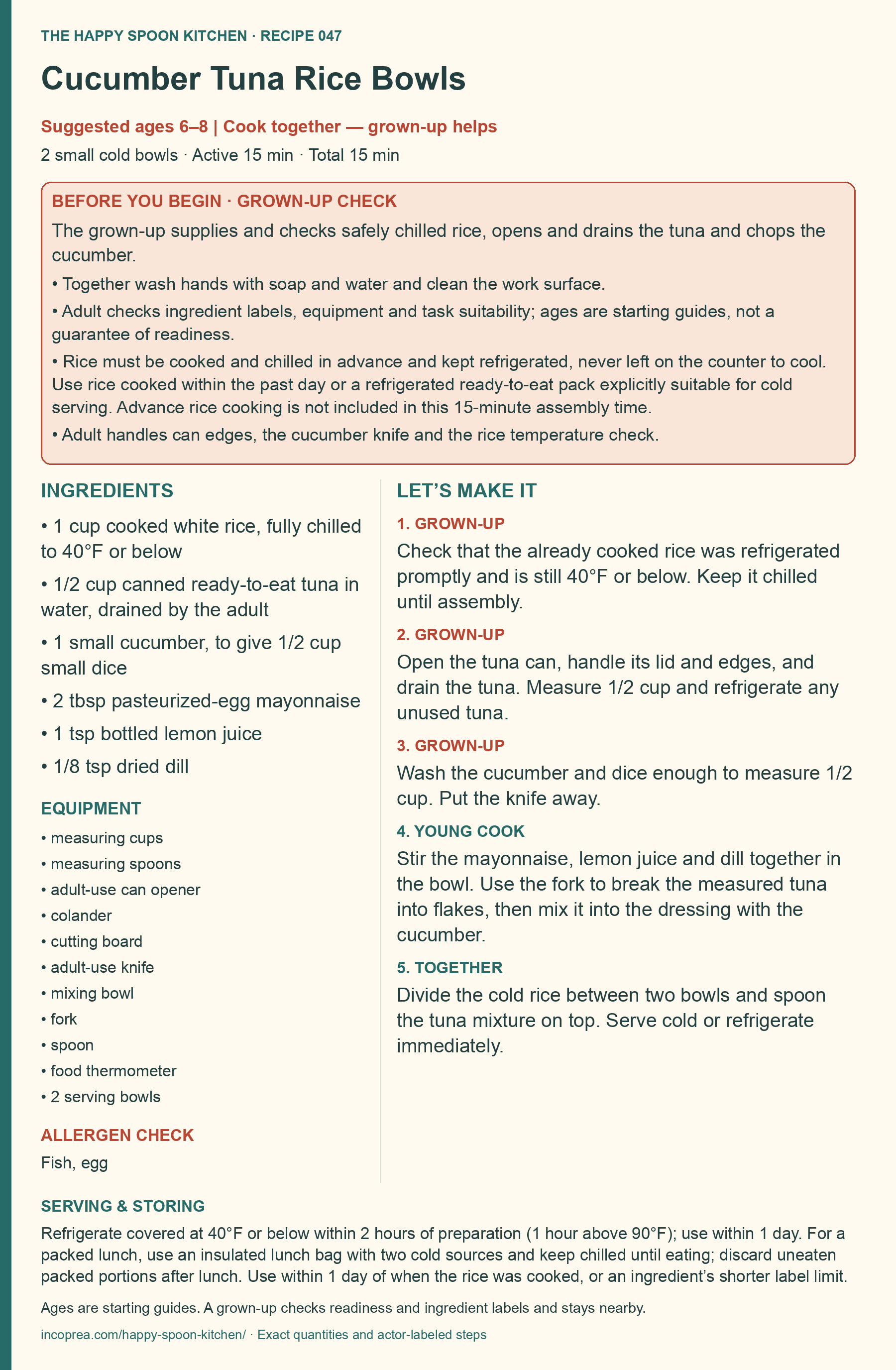
Cool rice gives this tuna mixture a soft base, and diced cucumber adds a fresh crunch. This recipe starts with rice already cooked and chilled. The adult checks that rice, opens the can and handles the cucumber knife; the young cook makes the dressing.

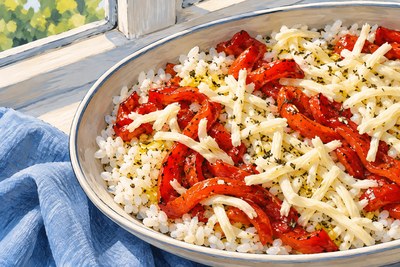
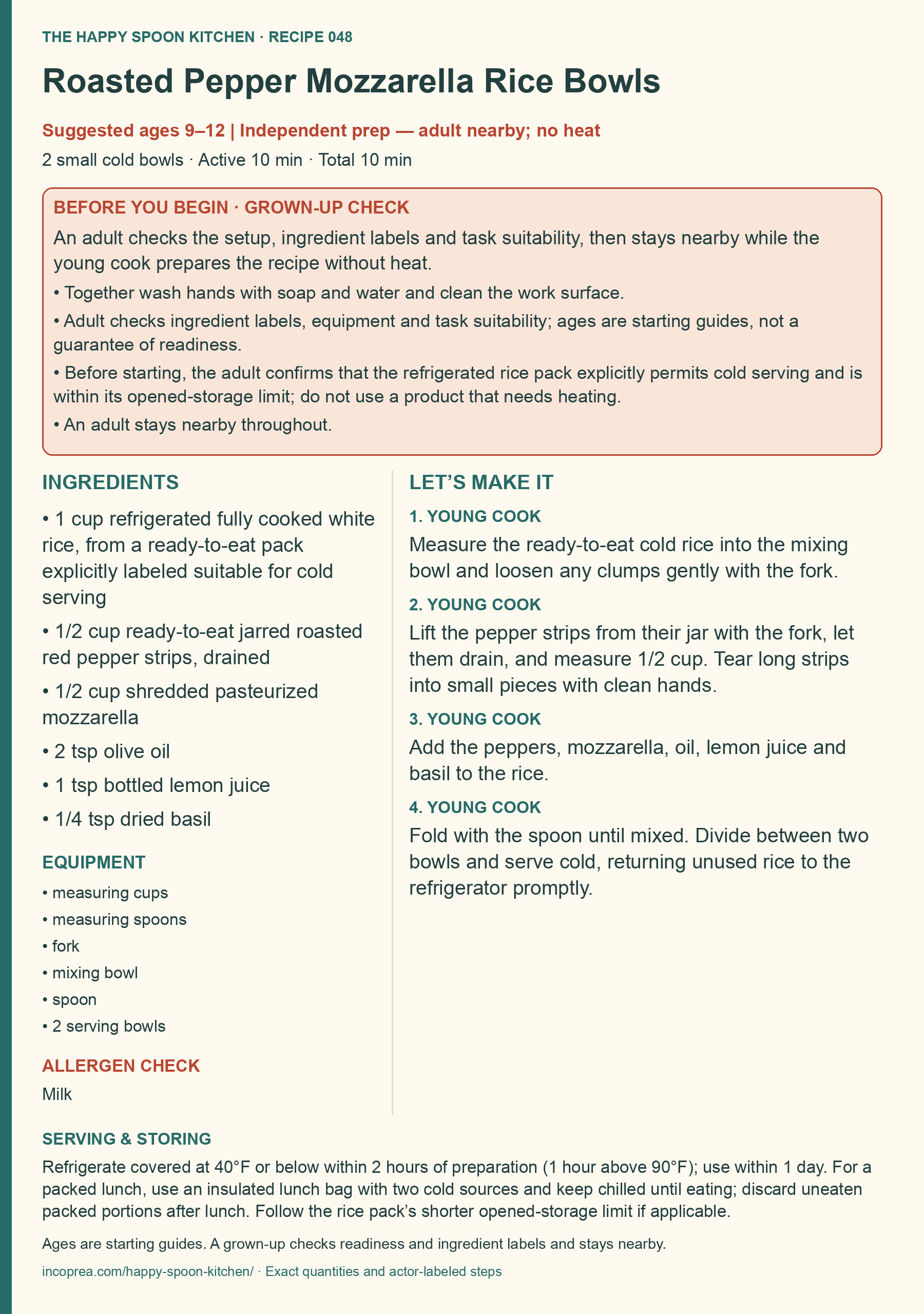
A ready-to-eat cold rice pack makes this a true no-heat assembly recipe. Choose one whose label explicitly allows cold serving; a pack that requires heating does not belong here. Soft roasted peppers and shredded mozzarella turn the grains into a colorful bowl.

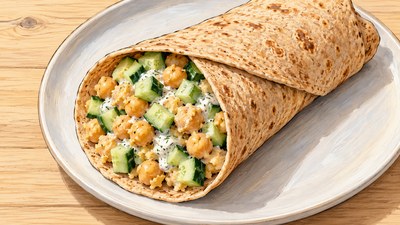
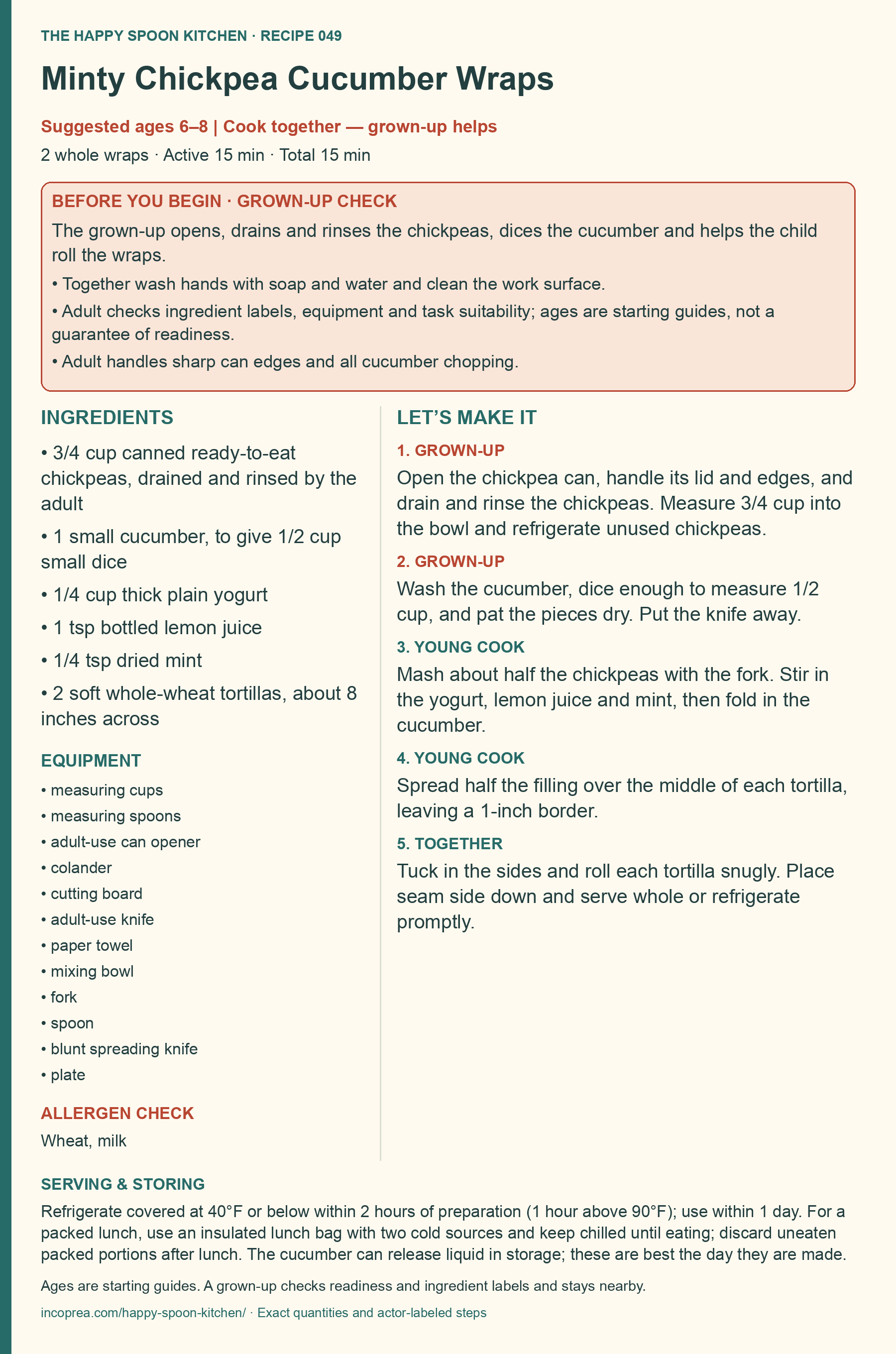
A partly mashed chickpea filling is easier to keep inside a wrap than loose beans. Cool cucumber and dried mint give the filling a fresh flavor. The adult handles the can and knife, and the young cook can mash, stir and roll.

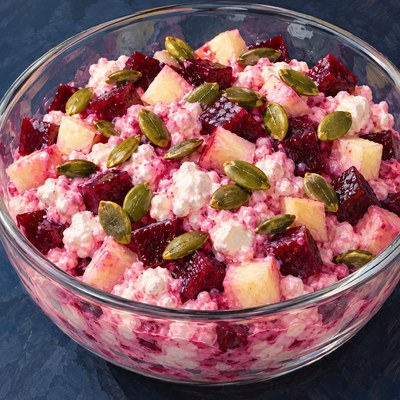
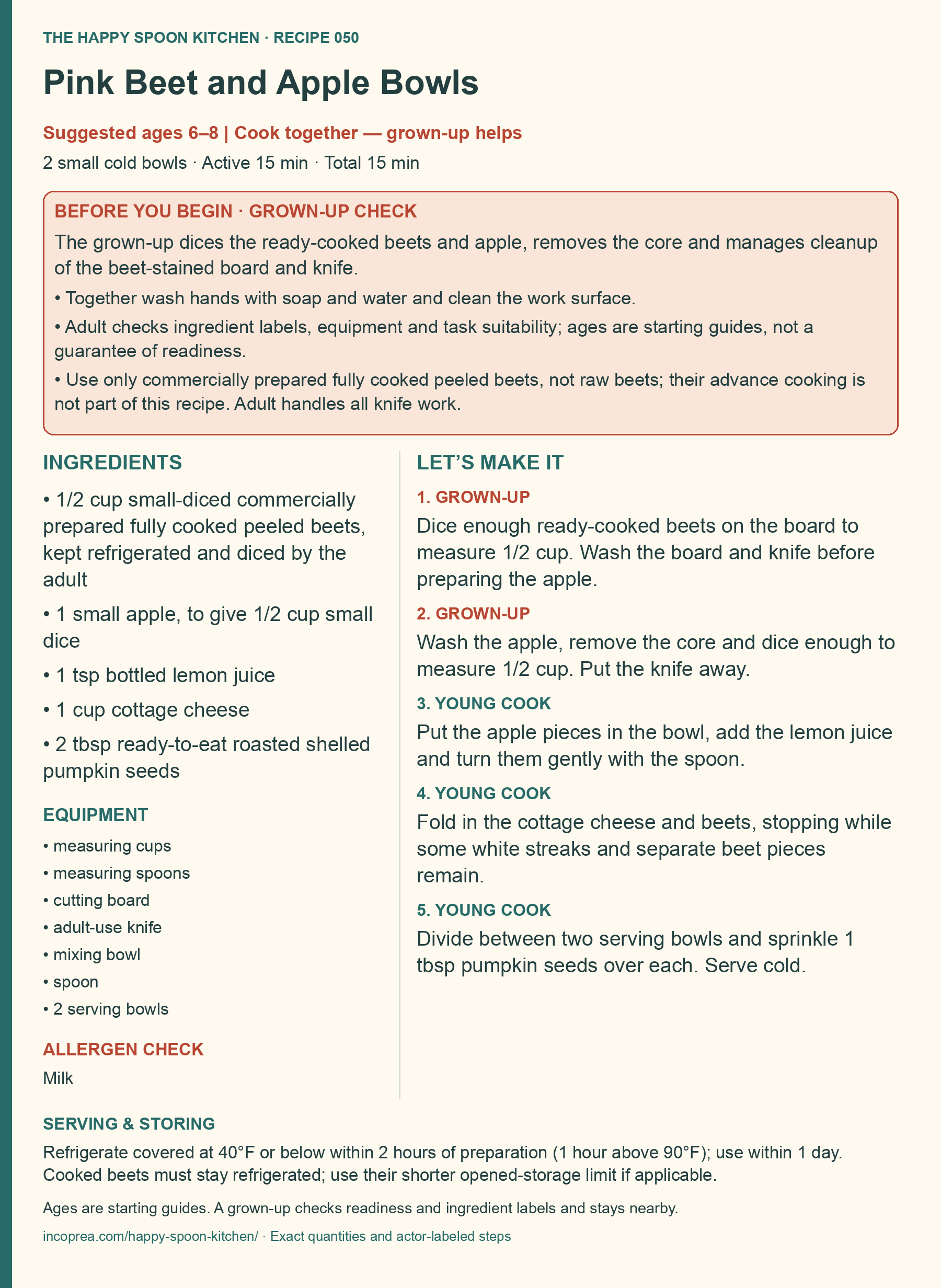
A few cooked beet pieces can turn cottage cheese pink as you fold them through. The adult cuts the beets and apple; the young cook adds lemon and watches the color change. Pumpkin seeds give the soft bowl a little crispness.

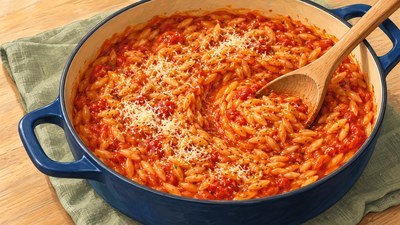
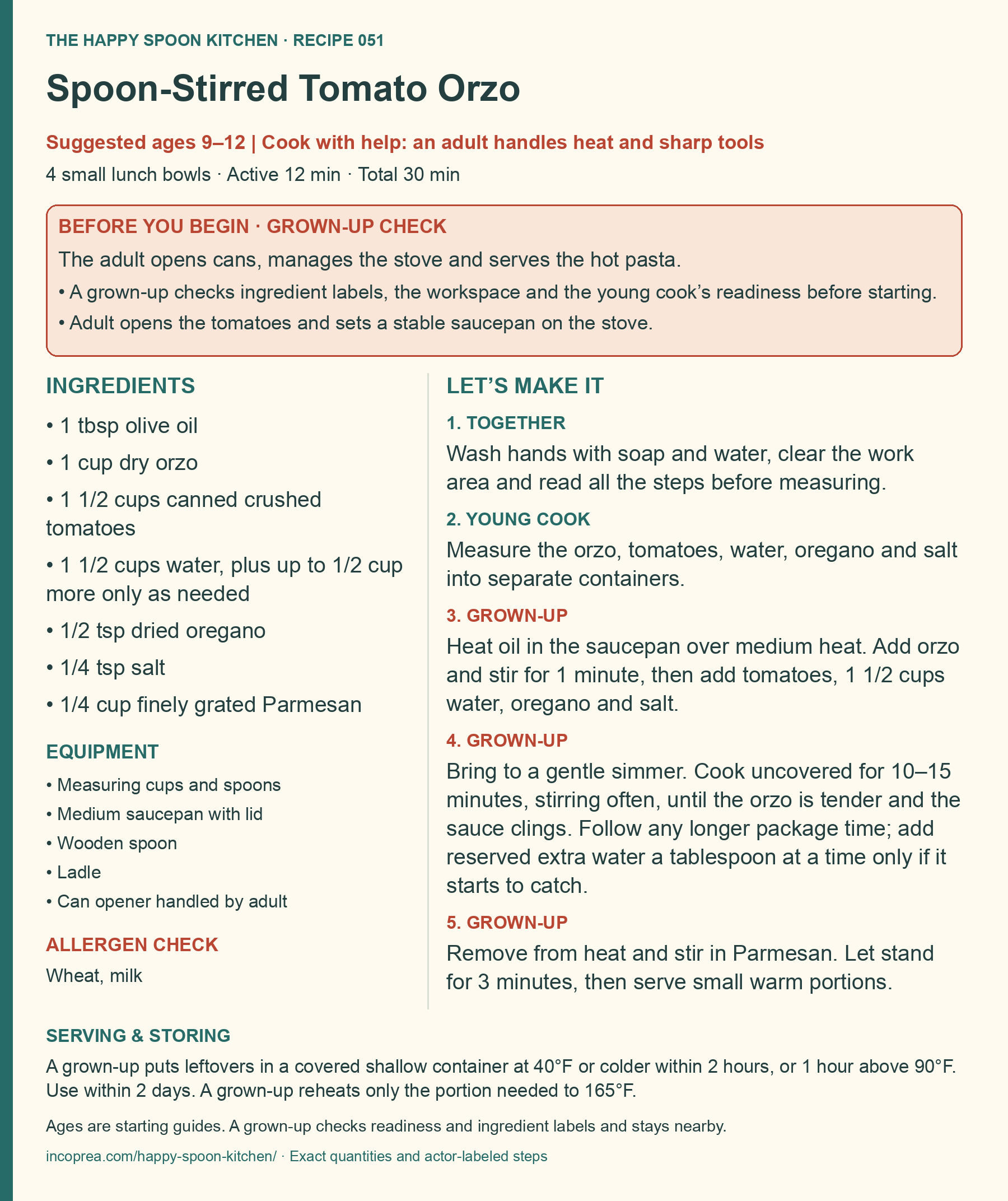
Orzo looks like rice but cooks like pasta. Here it simmers directly in a tomato broth, so the sauce and pasta finish together. Stirring from the bottom keeps the tiny pieces from sticking.

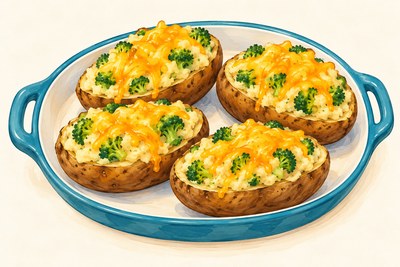
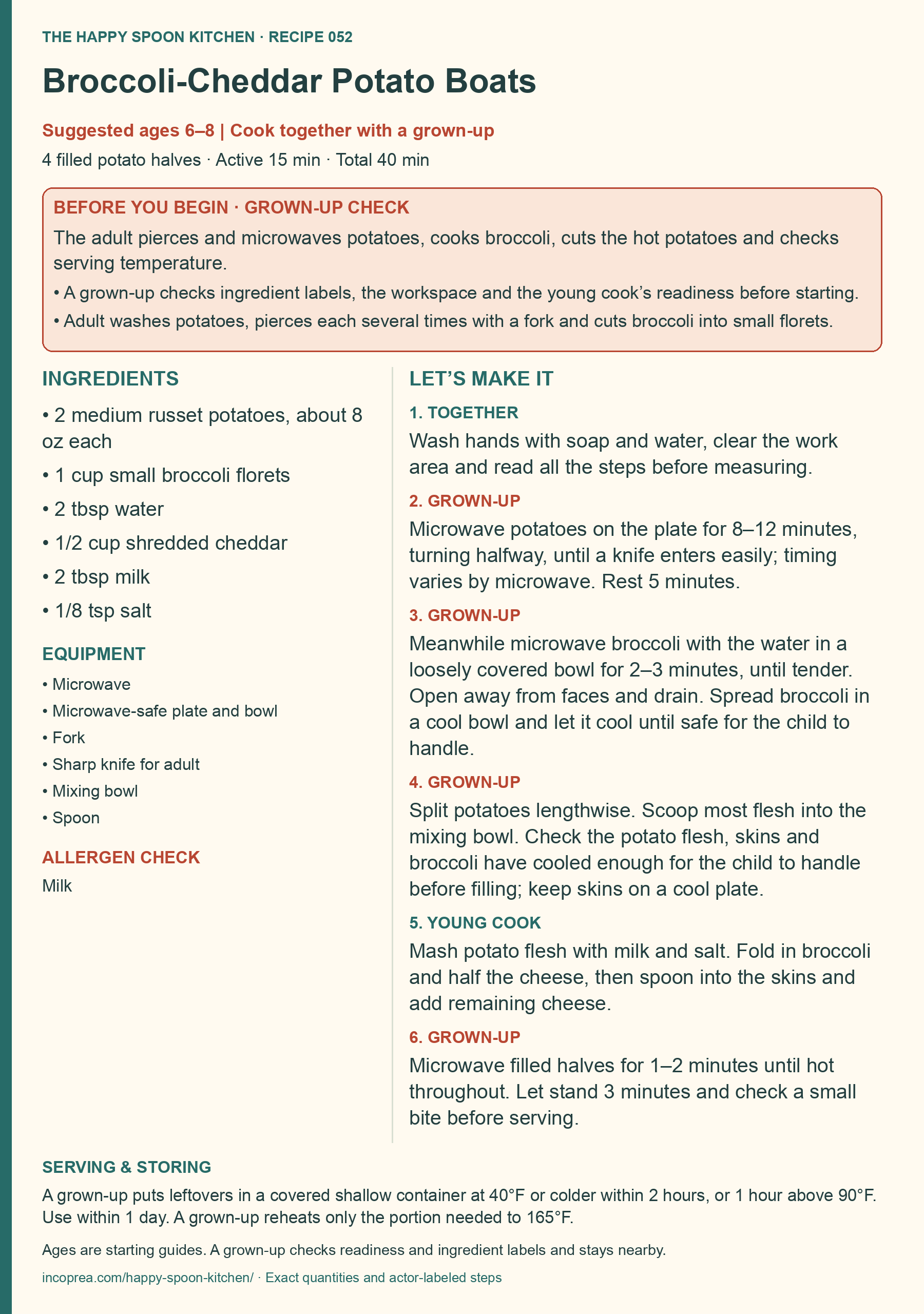
A fluffy potato makes its own edible bowl. Young cooks can mash the cooled middle and fold in cheese while the grown-up handles the hot skins. Small broccoli pieces mix through the filling instead of sitting in one large clump.

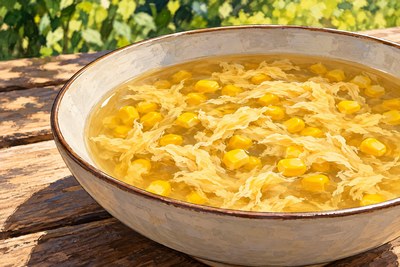
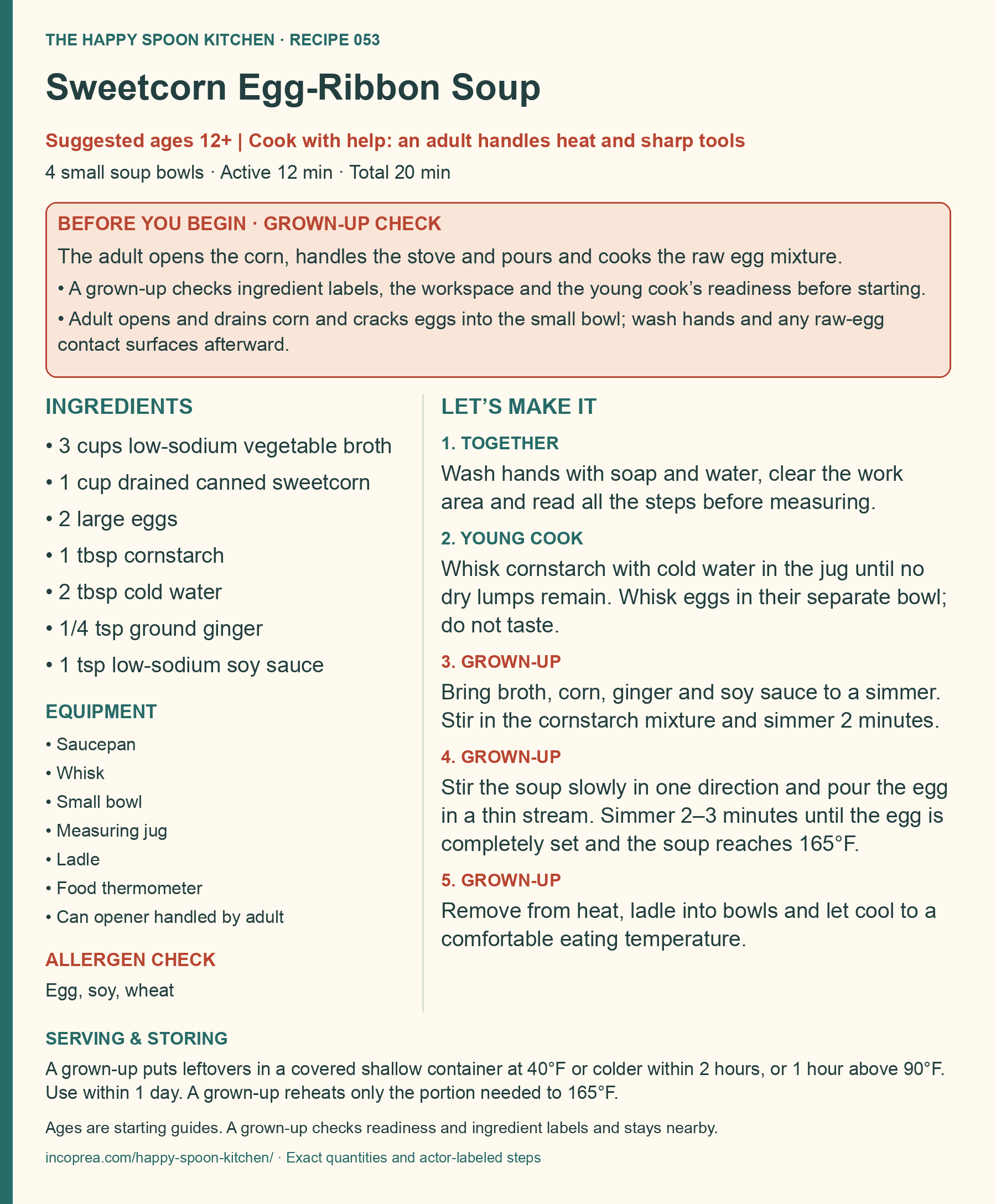
A thin stream of beaten egg turns into soft ribbons in hot broth. The young cook practices measuring and whisking away from the stove; the grown-up makes the ribbons and checks that the egg is fully cooked.

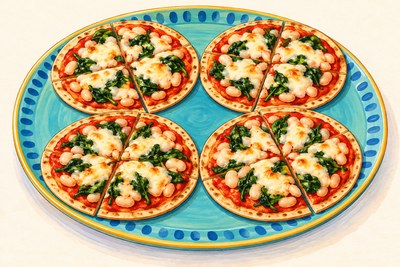
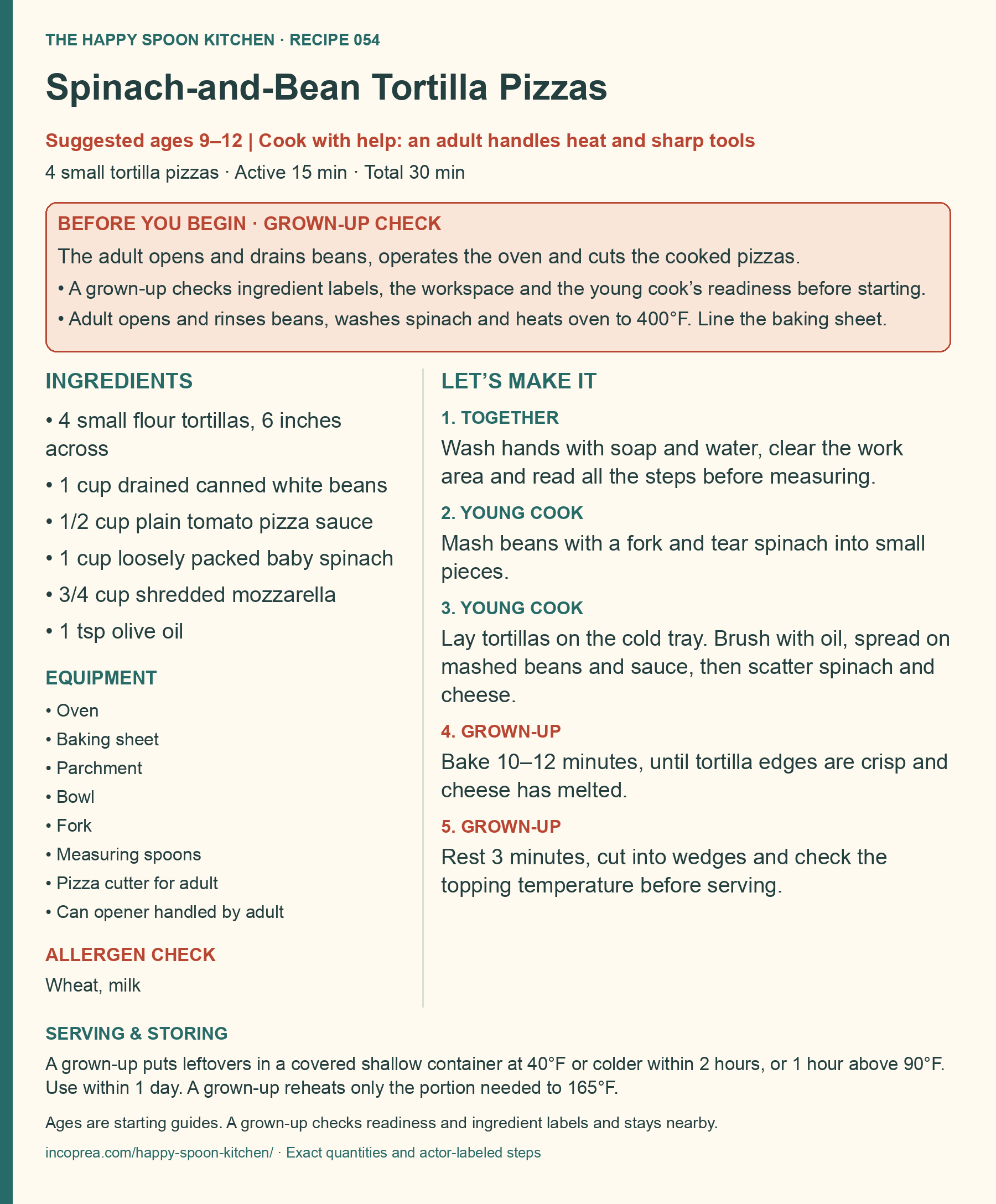
A thin tortilla becomes a crisp pizza base without dough making. Mashed beans help the topping stay in place, and torn spinach fits between the cheese shreds. Keep toppings light so the centers can crisp.

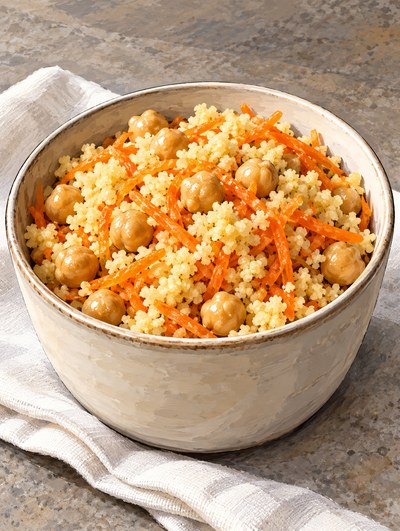
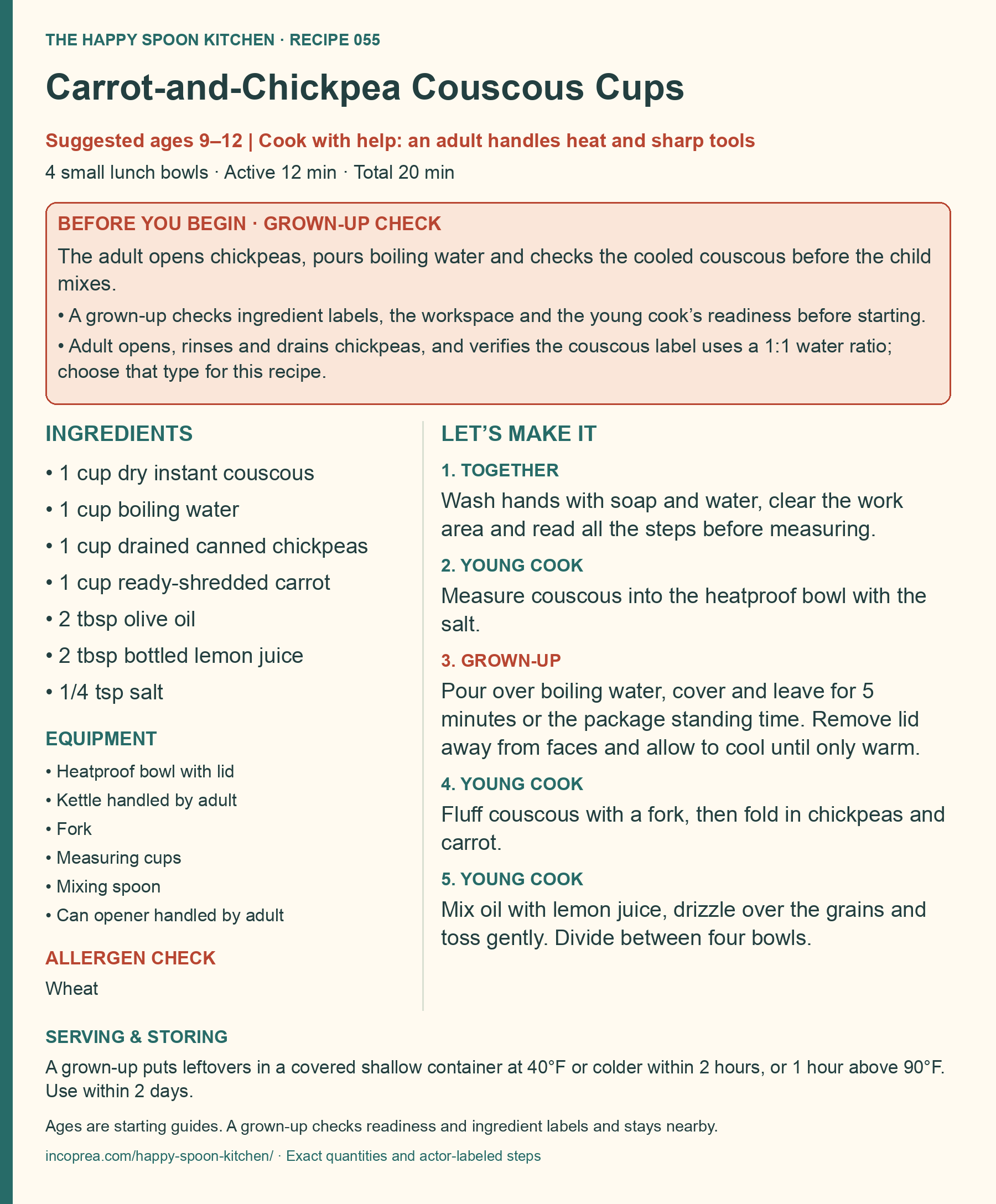
Couscous swells while it stands under a lid. After the grown-up handles the boiling water, a fork loosens the little grains and makes space for chickpeas and sweet grated carrot. Lemon keeps the simple dressing bright.

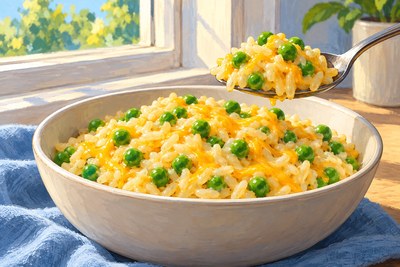
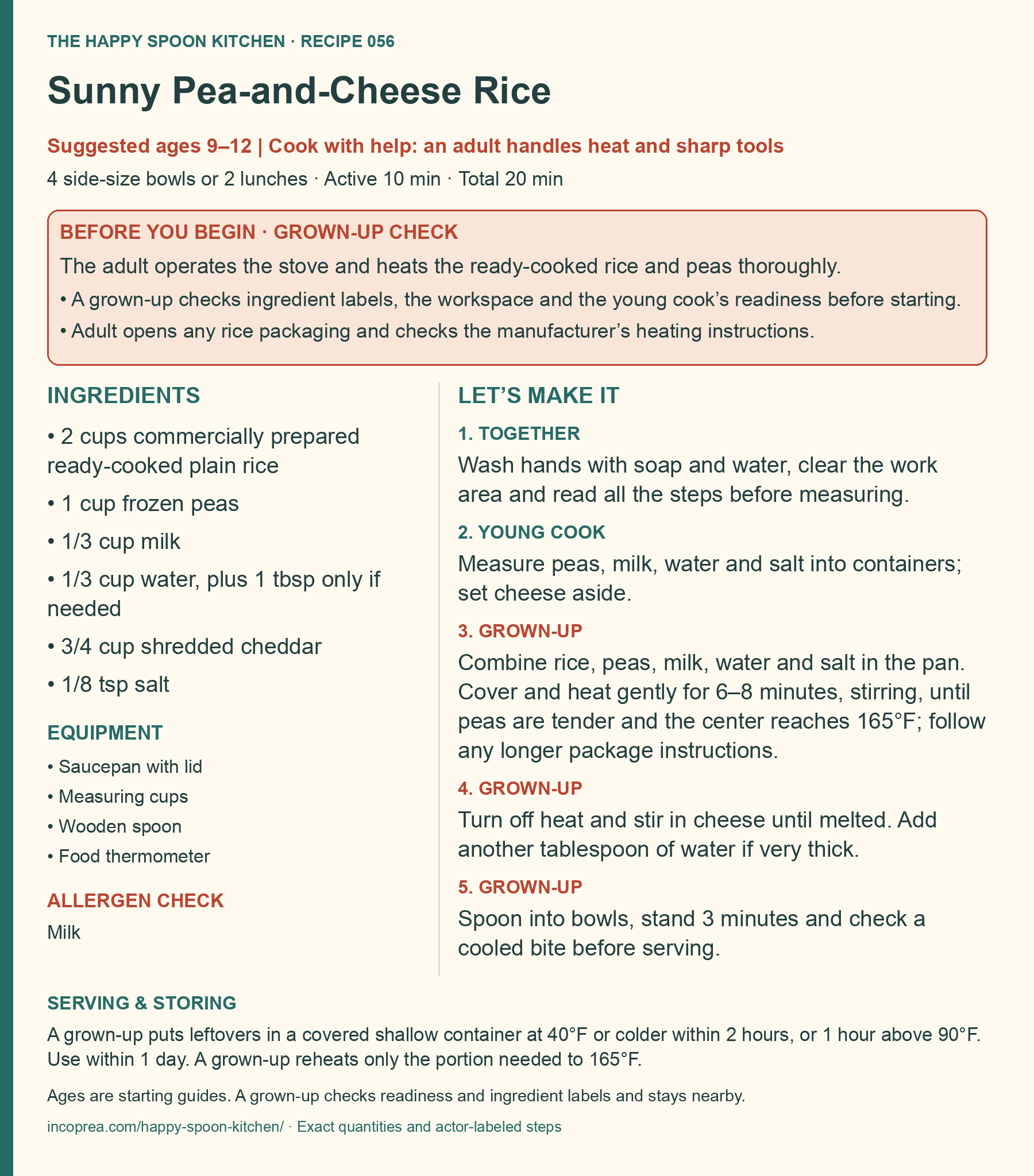
This is a quick way to turn ready-cooked rice into a soft, cheesy lunch. Peas bring little green dots, while milk helps the cheese coat the grains. Ready-cooked means cooked already, never ordinary dry rice.

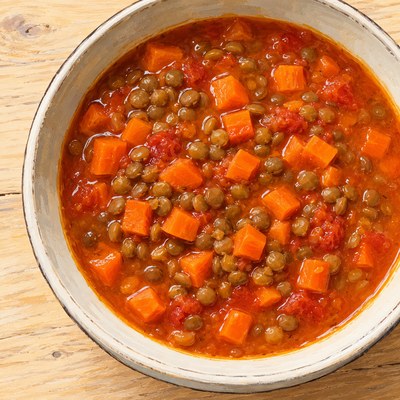
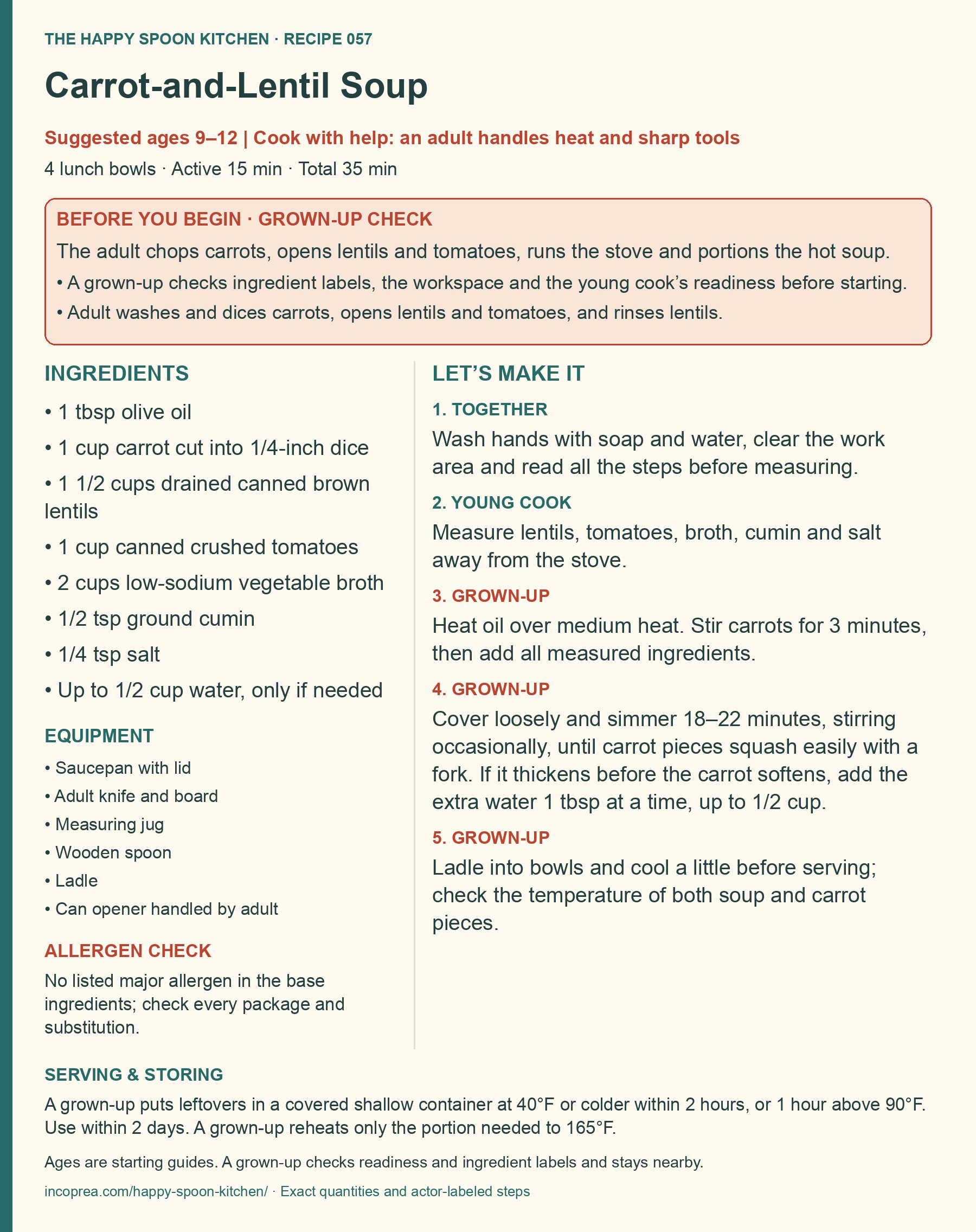
Small carrot pieces soften quickly in this chunky soup. Ready-cooked lentils make the recipe manageable on a school day. Nothing needs blending: the young cook can see how vegetables change as they simmer.

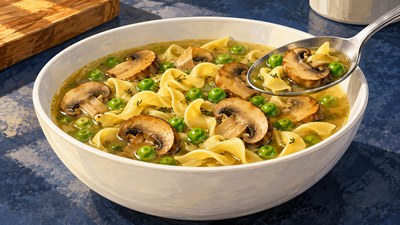
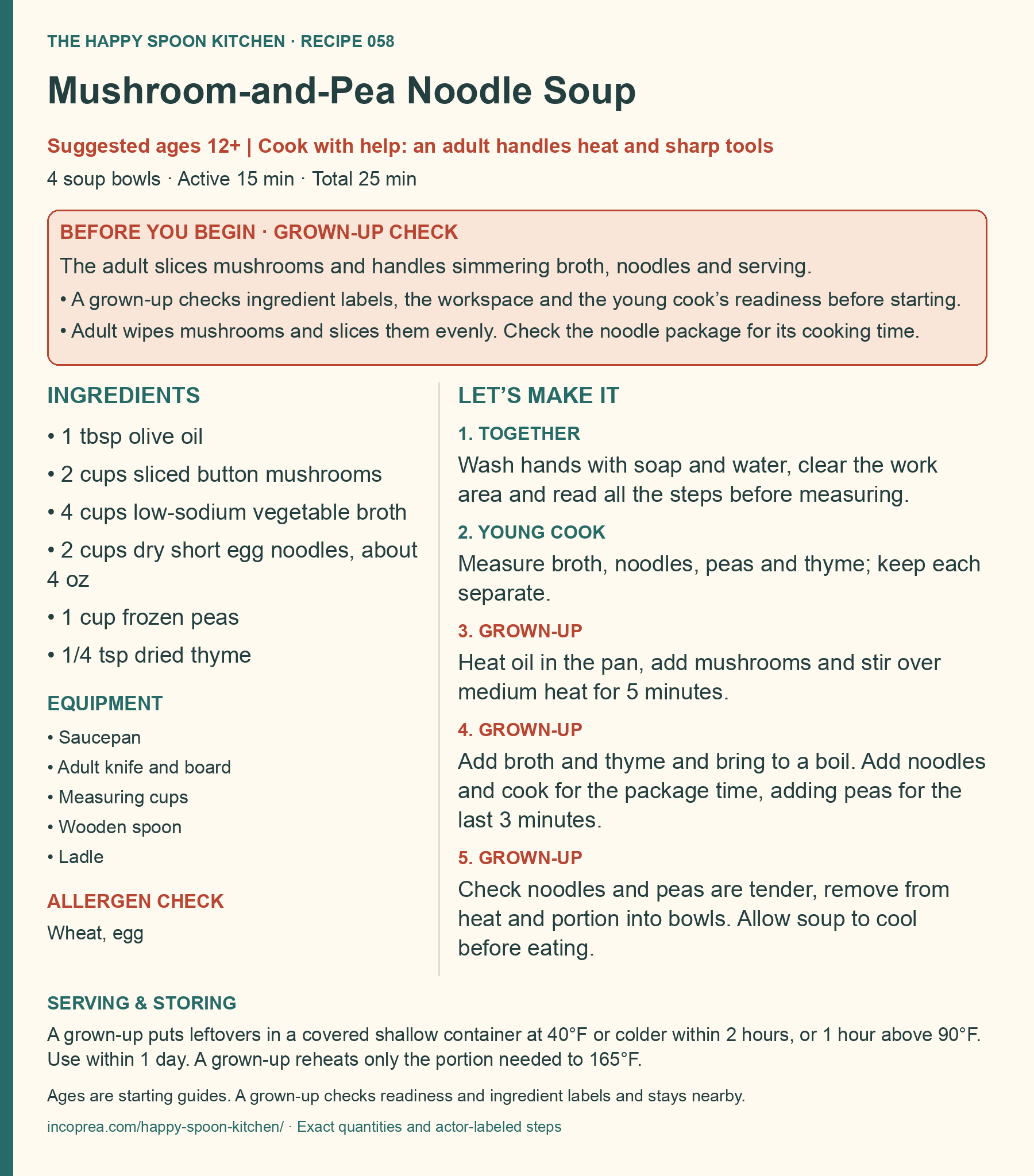
Short egg noodles are easier to scoop than long strands. Mushrooms simmer first so they become tender before the noodles go in. The young cook reads the packet timing and gets the bowls ready.

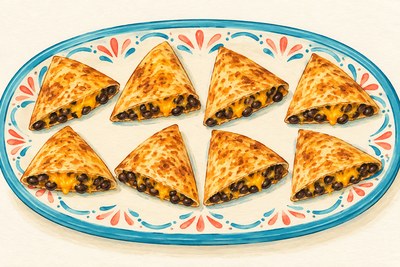
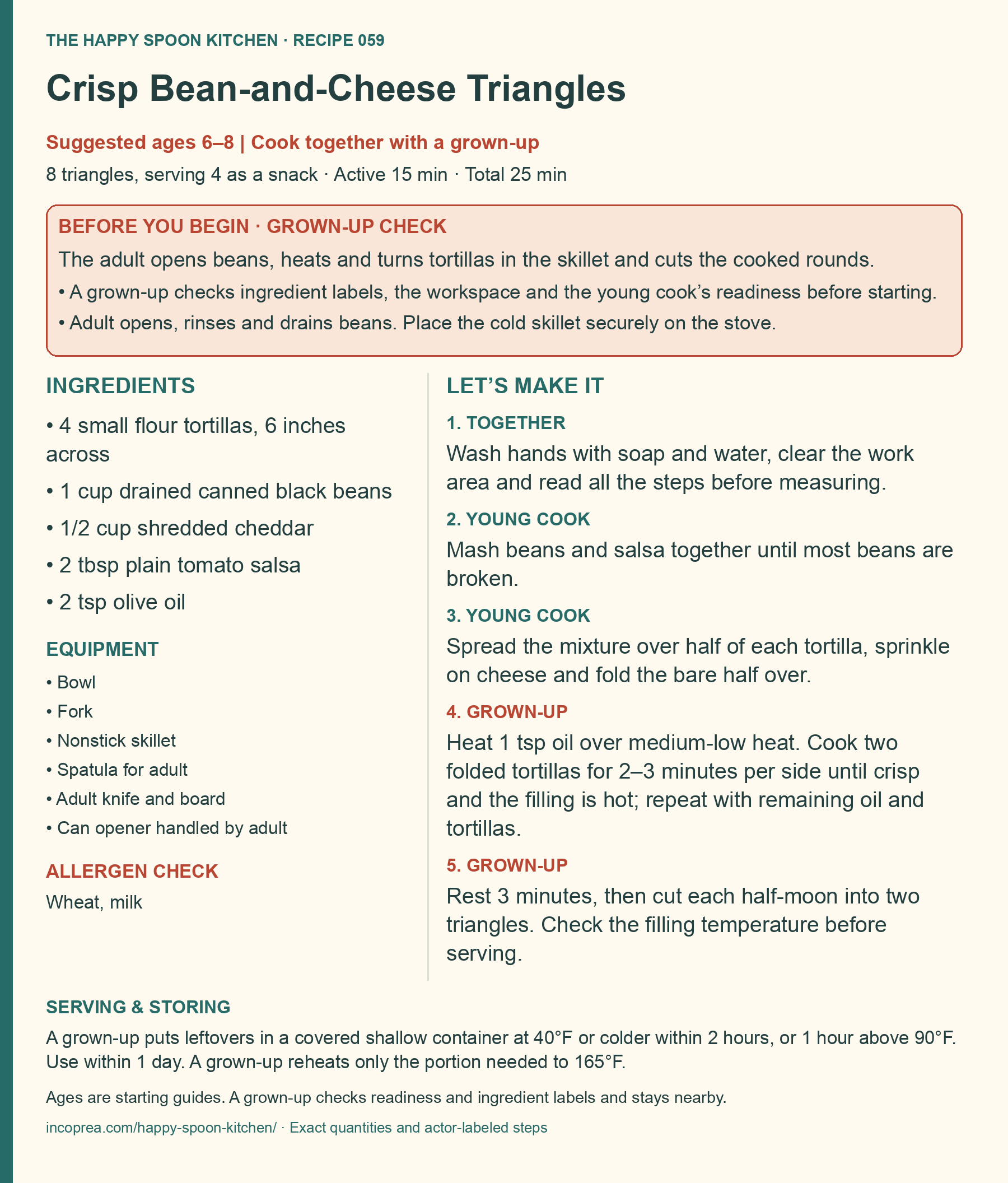
These folded tortillas have a thin layer of beans and cheese inside. Spreading the filling to the fold keeps every bite interesting. The grown-up cooks one at a time so the young cook can watch the cheese melt from a safe spot.

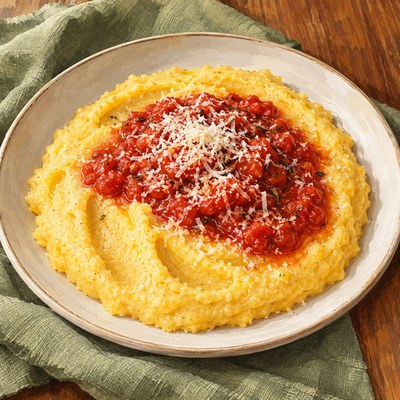
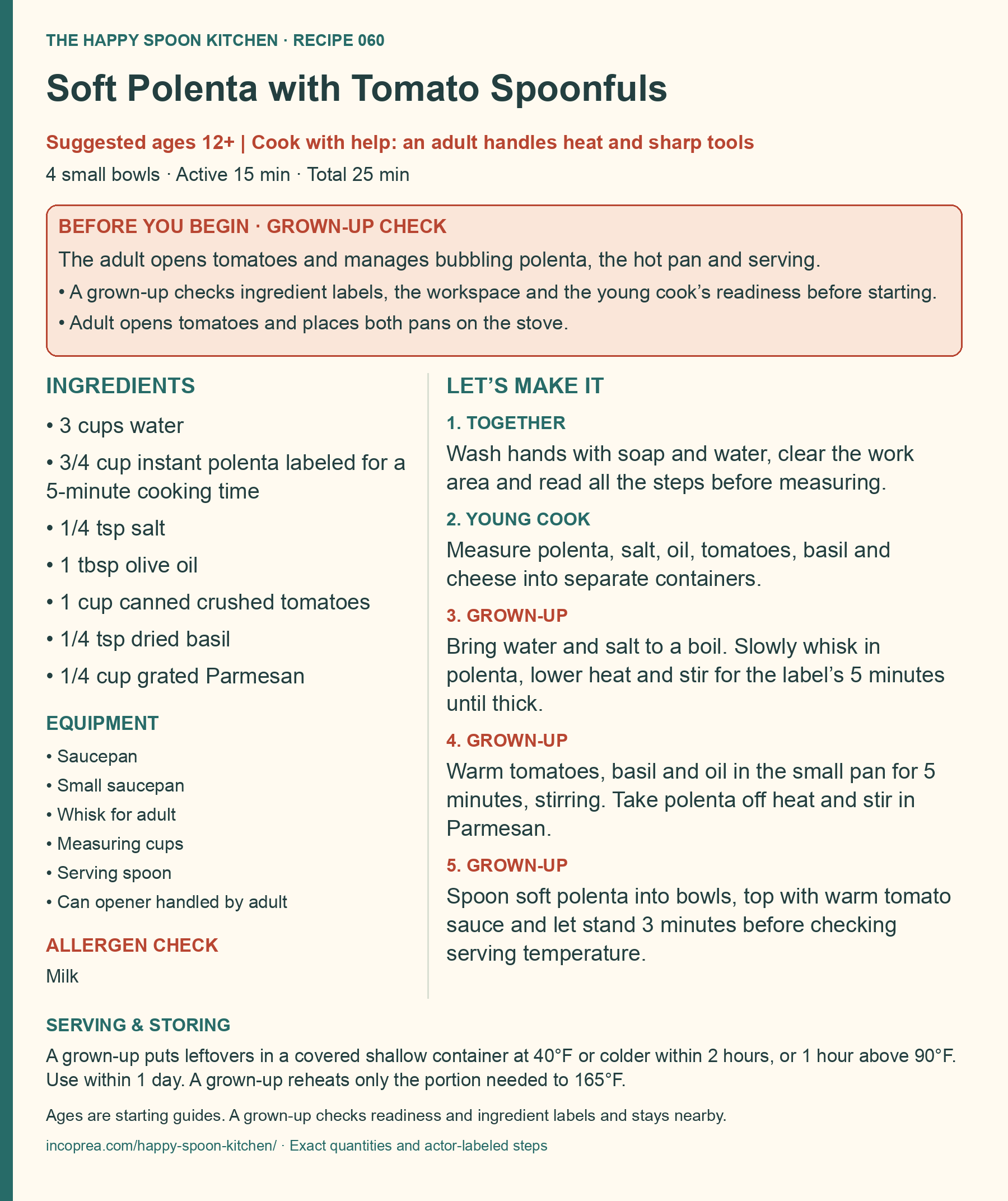
Instant polenta turns cornmeal into a soft base for a tomato topping. It can bubble and spit, so stirring at the stove is the grown-up’s job. Young cooks measure the yellow grains and compare the thin starting liquid with the thick finish.

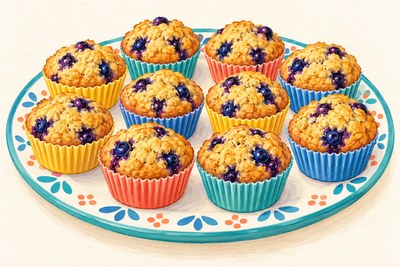
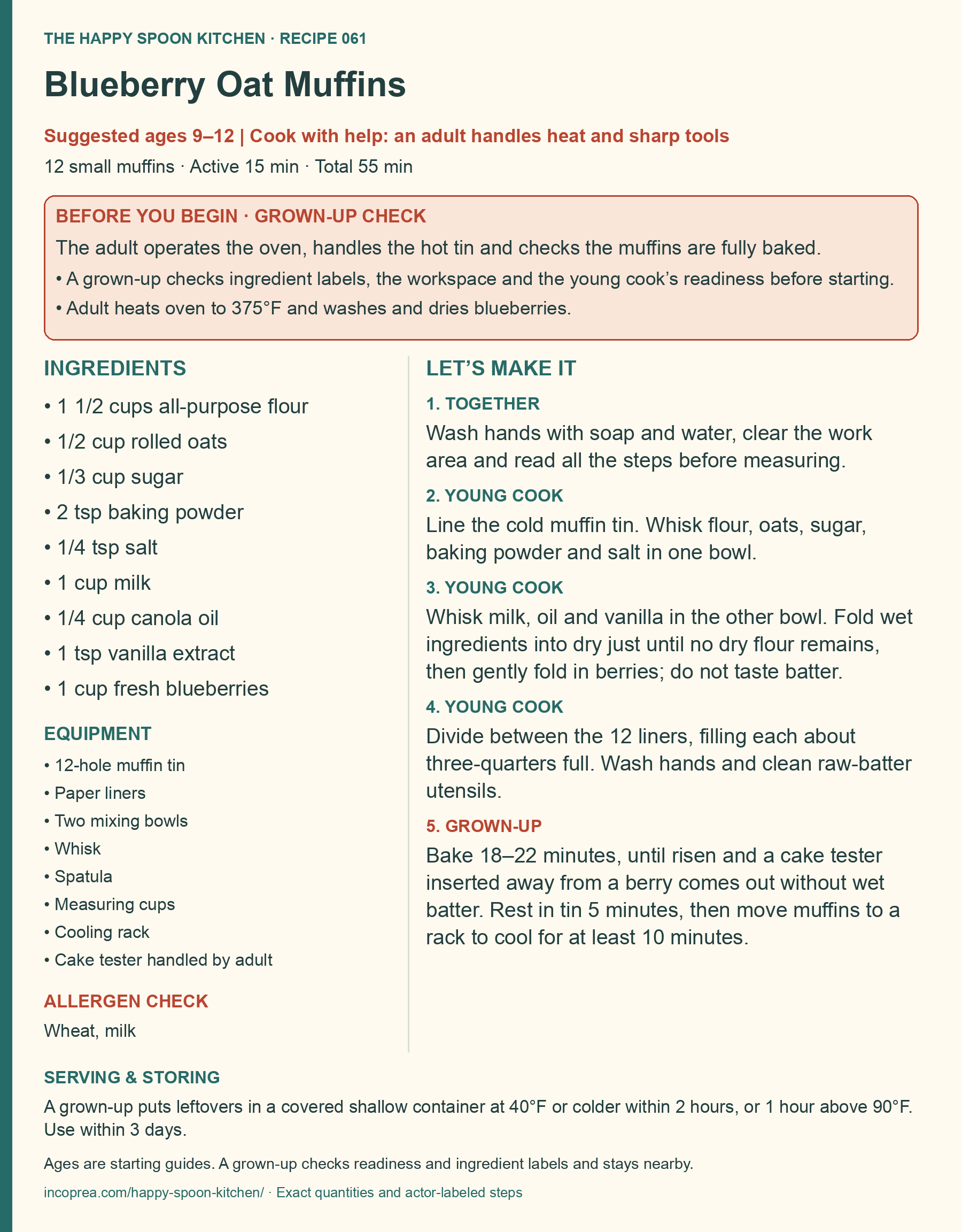
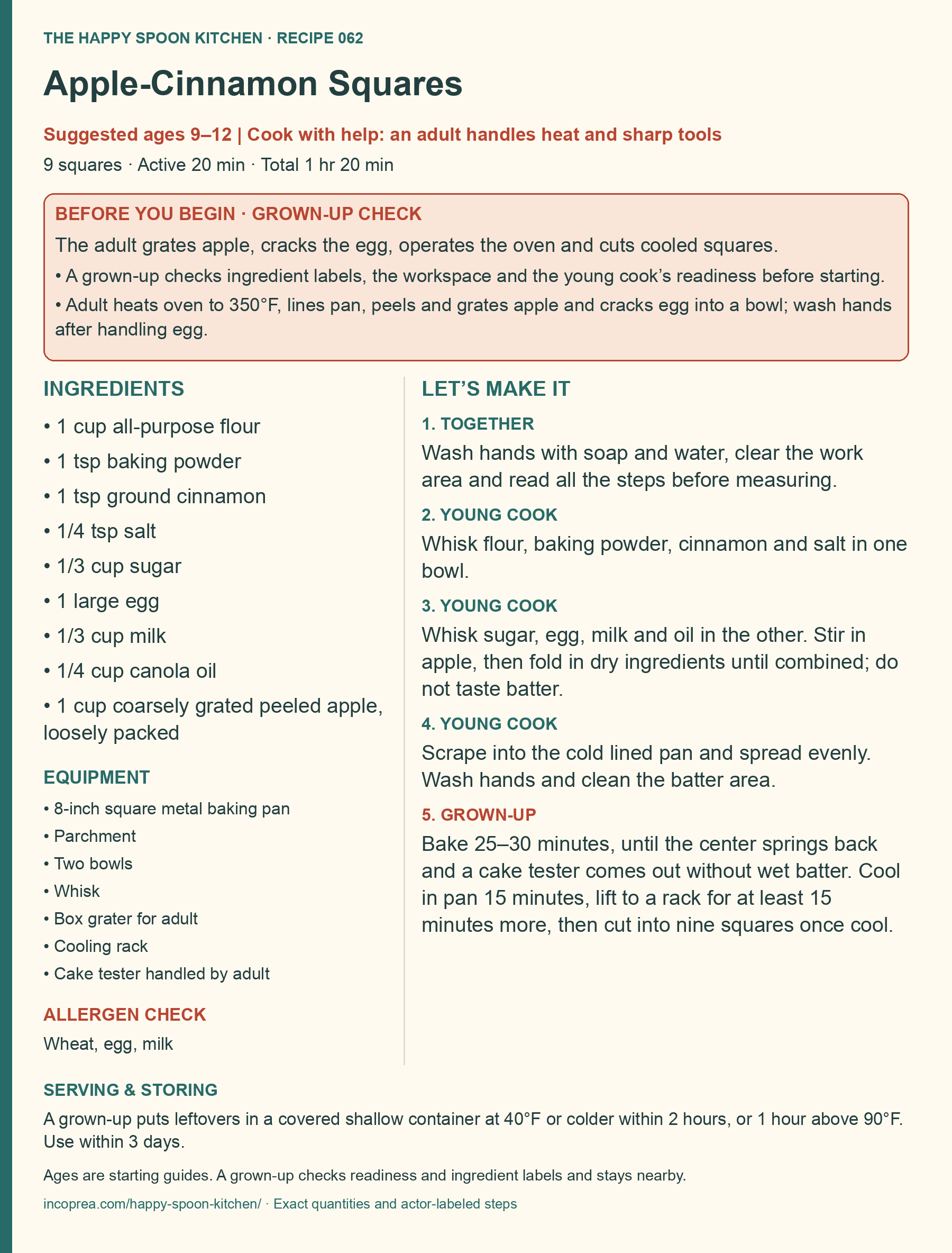
A few lumpy folds make a softer muffin than lots of energetic beating. Blueberries add juicy pockets, and oats give the tops a little texture. This egg-free batter still contains raw flour, so save tasting for the cooled muffins.

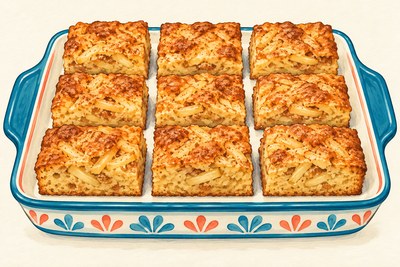
Grated apple adds moisture throughout these small cake squares. The young cook mixes the batter while the adult prepares the apple. Cinnamon flavors the cake itself, so it needs no icing or extra decoration.

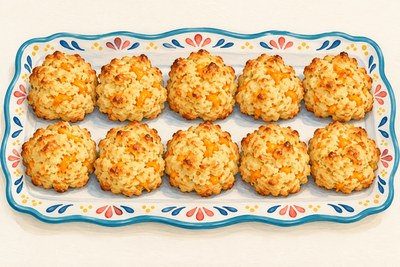
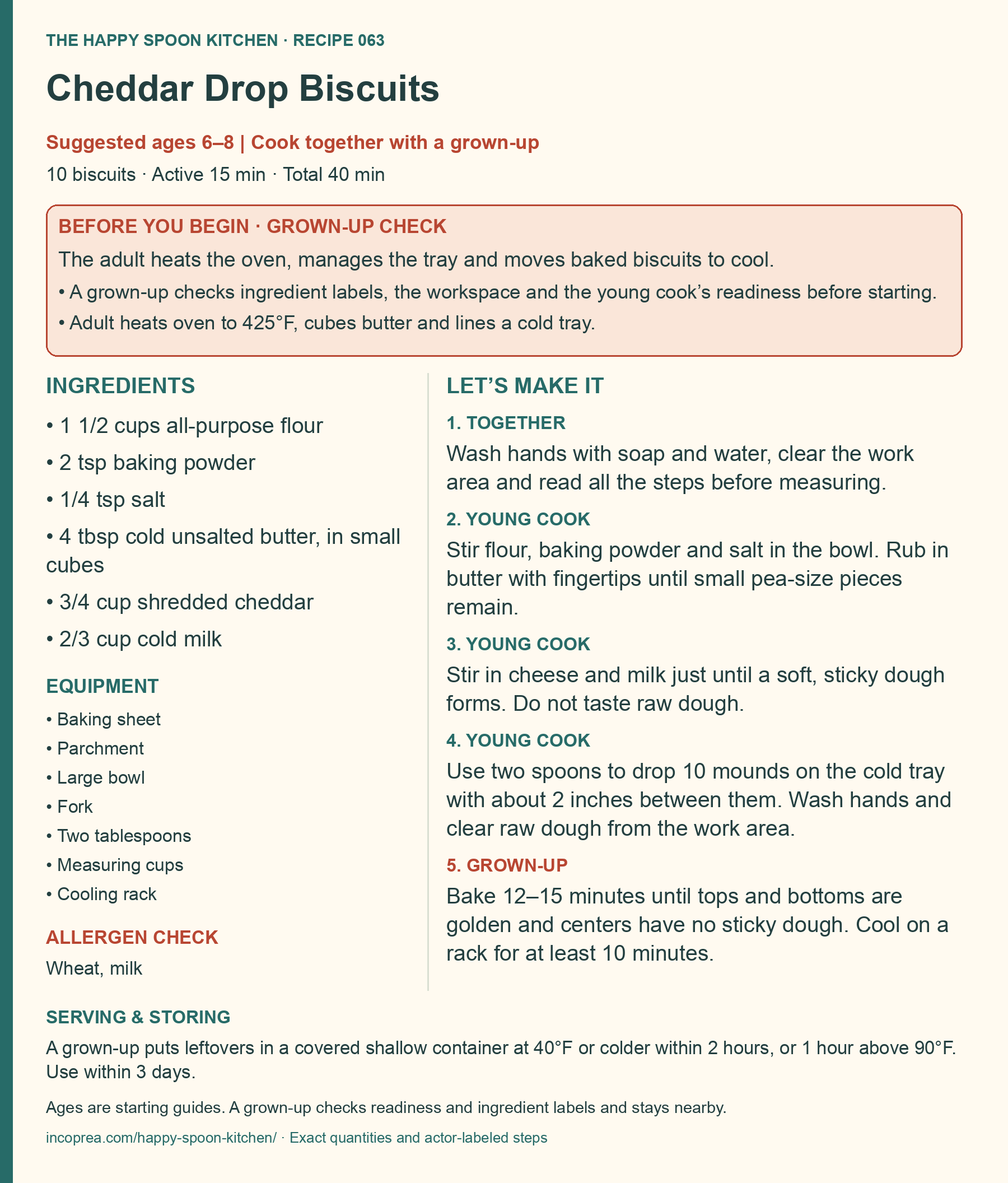
Drop biscuits need no rolling pin or sharp cutter. Two spoons make little mounds, and cold butter gives them a tender crumb. Keep the cheese evenly mixed so each biscuit gets some.

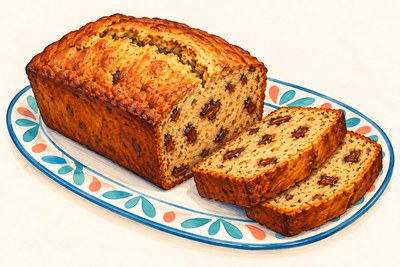
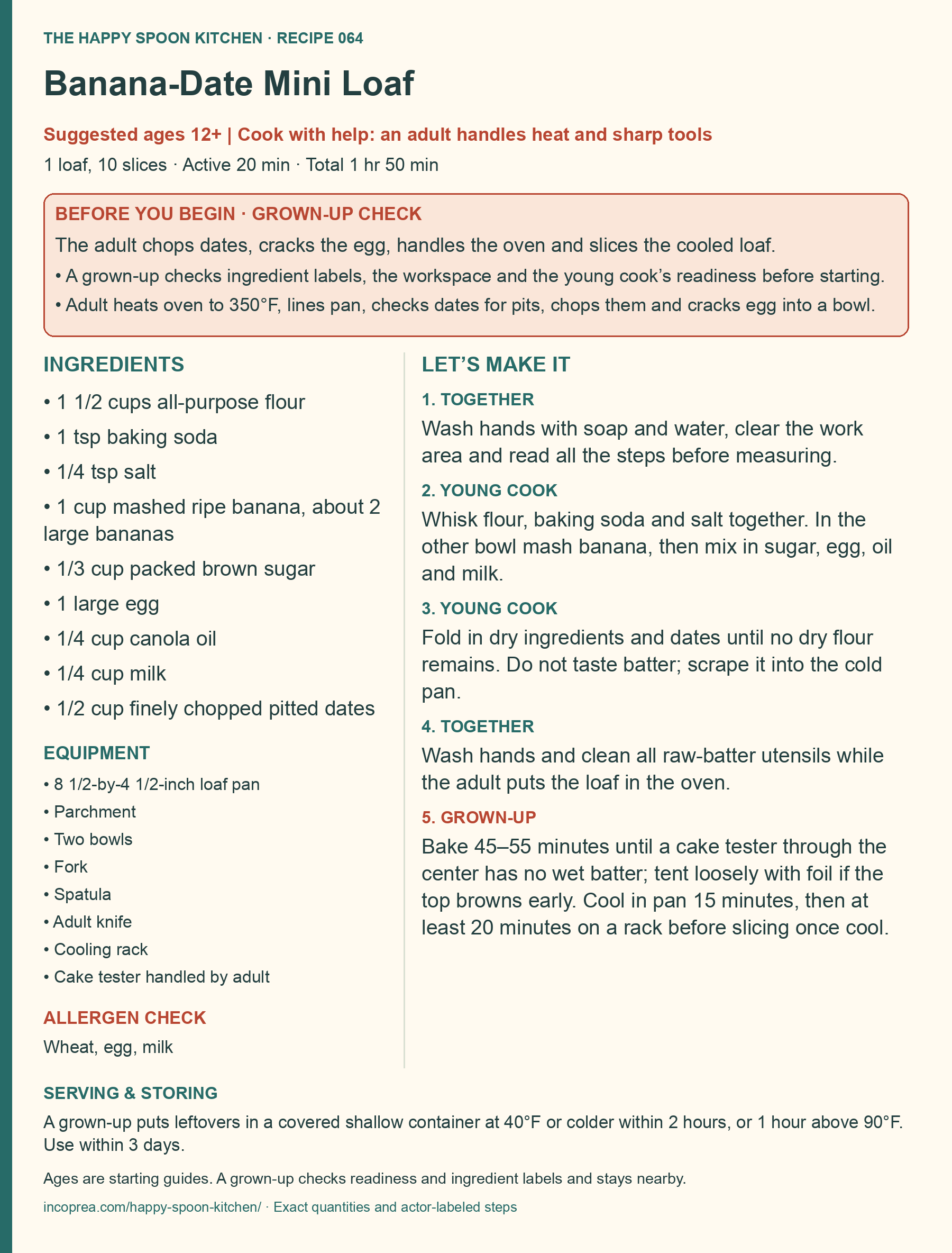
Very ripe banana is soft enough to mash with a fork. Chopped dates add chewy spots without a frosting layer. A loaf takes longer than muffins because the heat has farther to travel to its center.

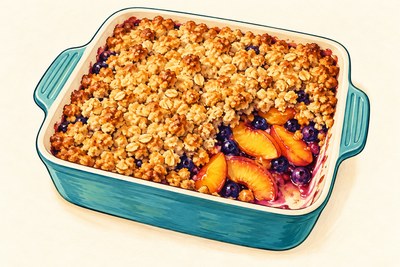
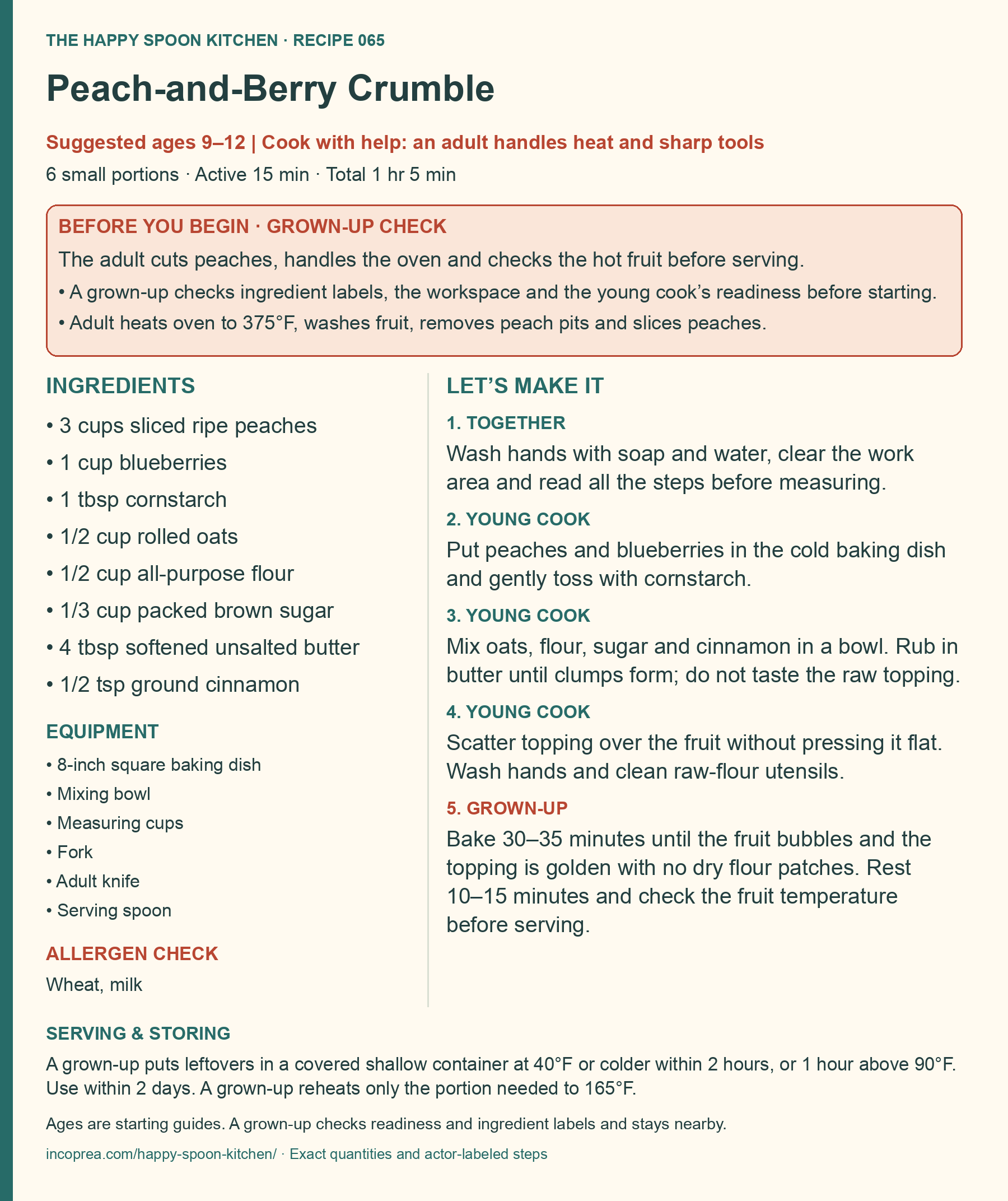
A crumbly oat topping is easier to make than pastry. Fruit juices bubble around the edges as it bakes, while the top turns golden. Let the dish rest before serving because the fruit stays hot longer than the crumbs.

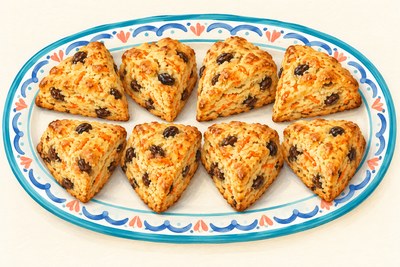
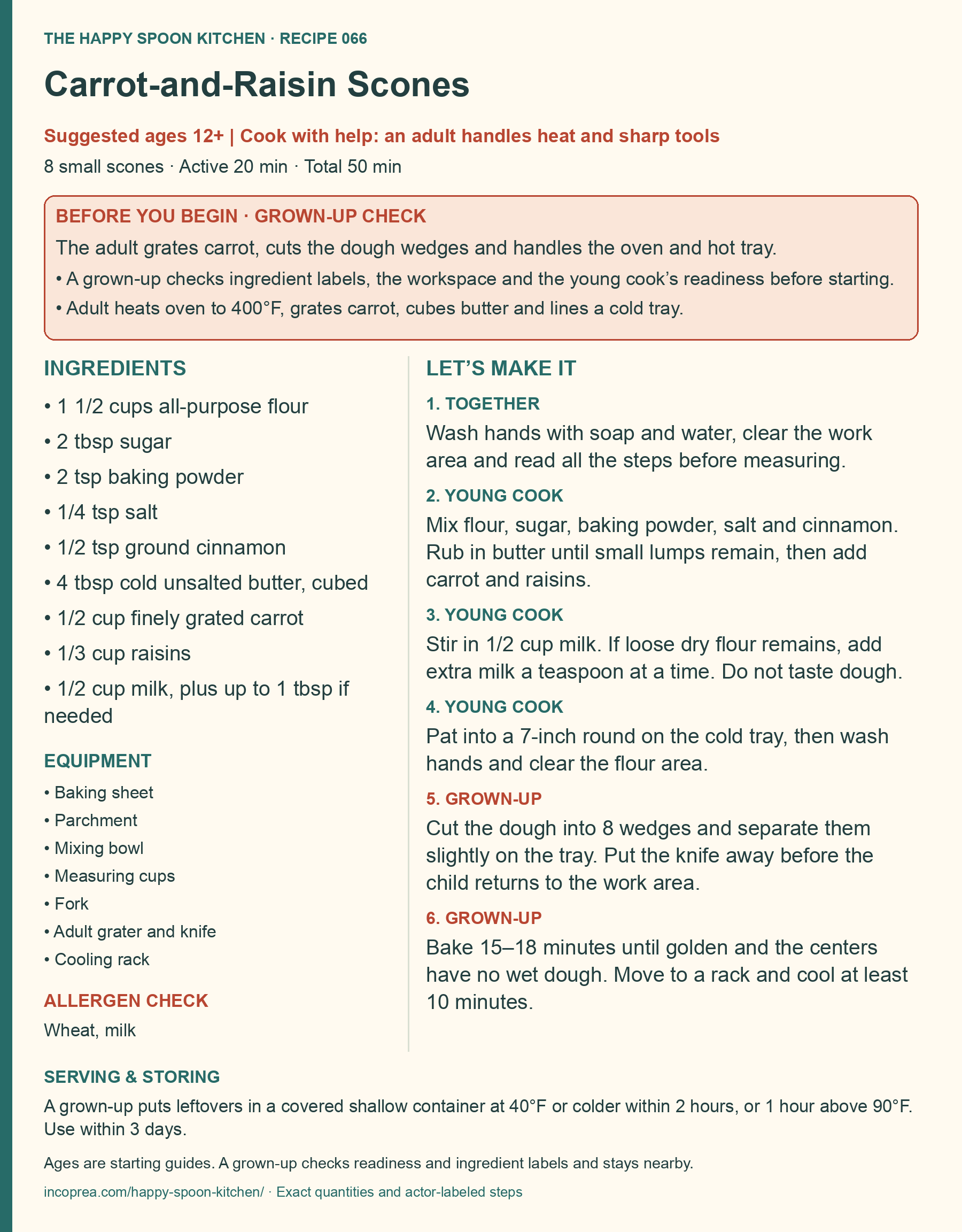
Carrot shreds and raisins make these gently sweet scones interesting inside. The dough is patted into one round on the tray, then an adult cuts the wedges. A light touch helps the baked scones stay tender.

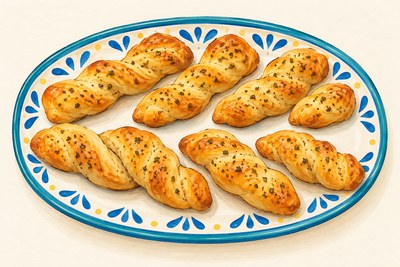
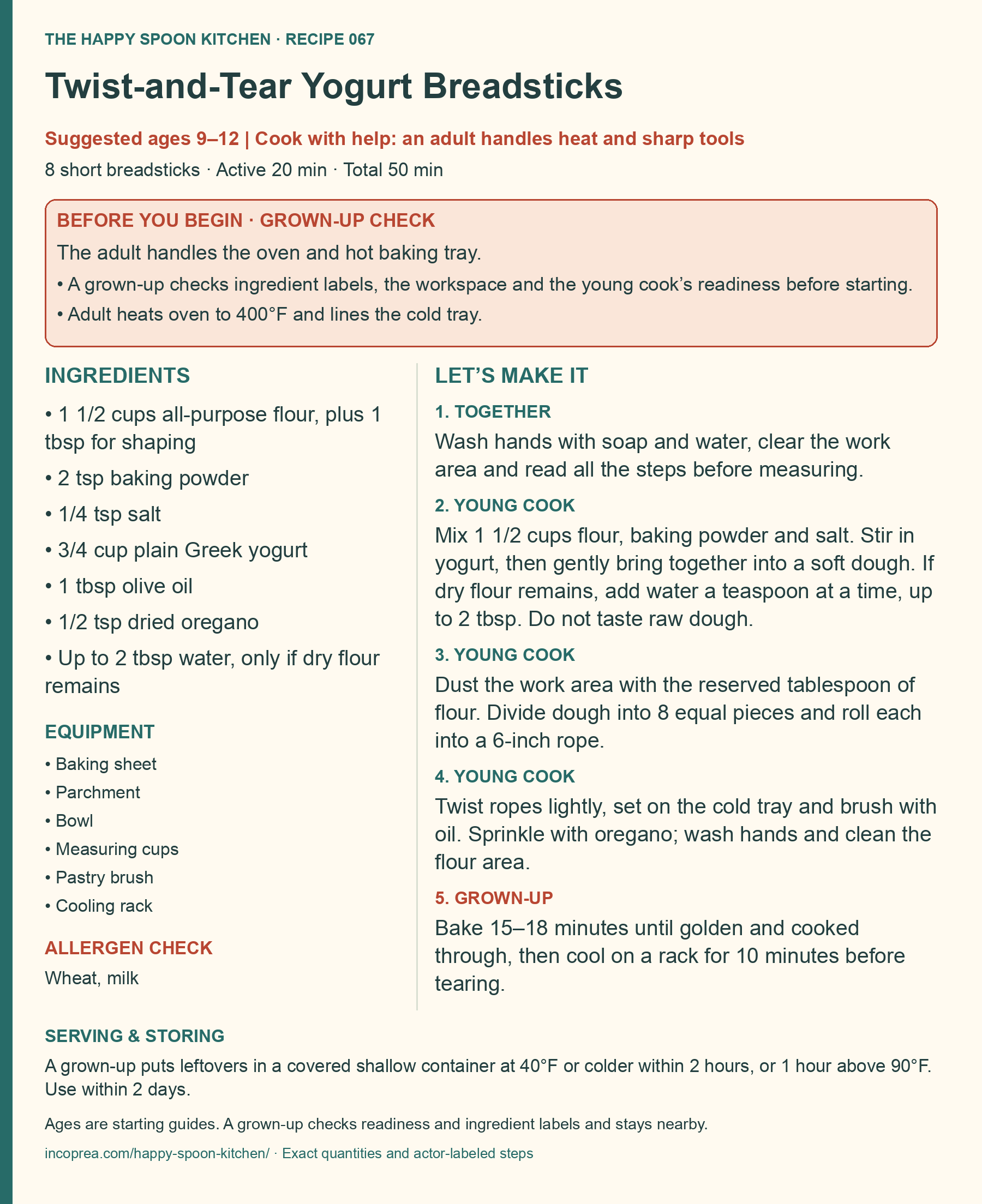
Yogurt and baking powder make a quick dough without yeast. The young cook rolls eight short ropes, then gives each a gentle twist. These are breadsticks for tearing and dipping, with a soft middle rather than a cracker crunch.
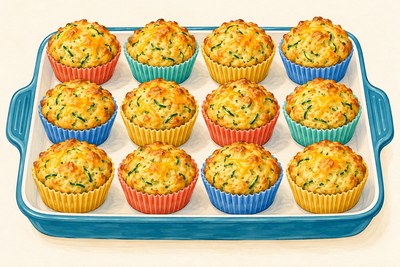
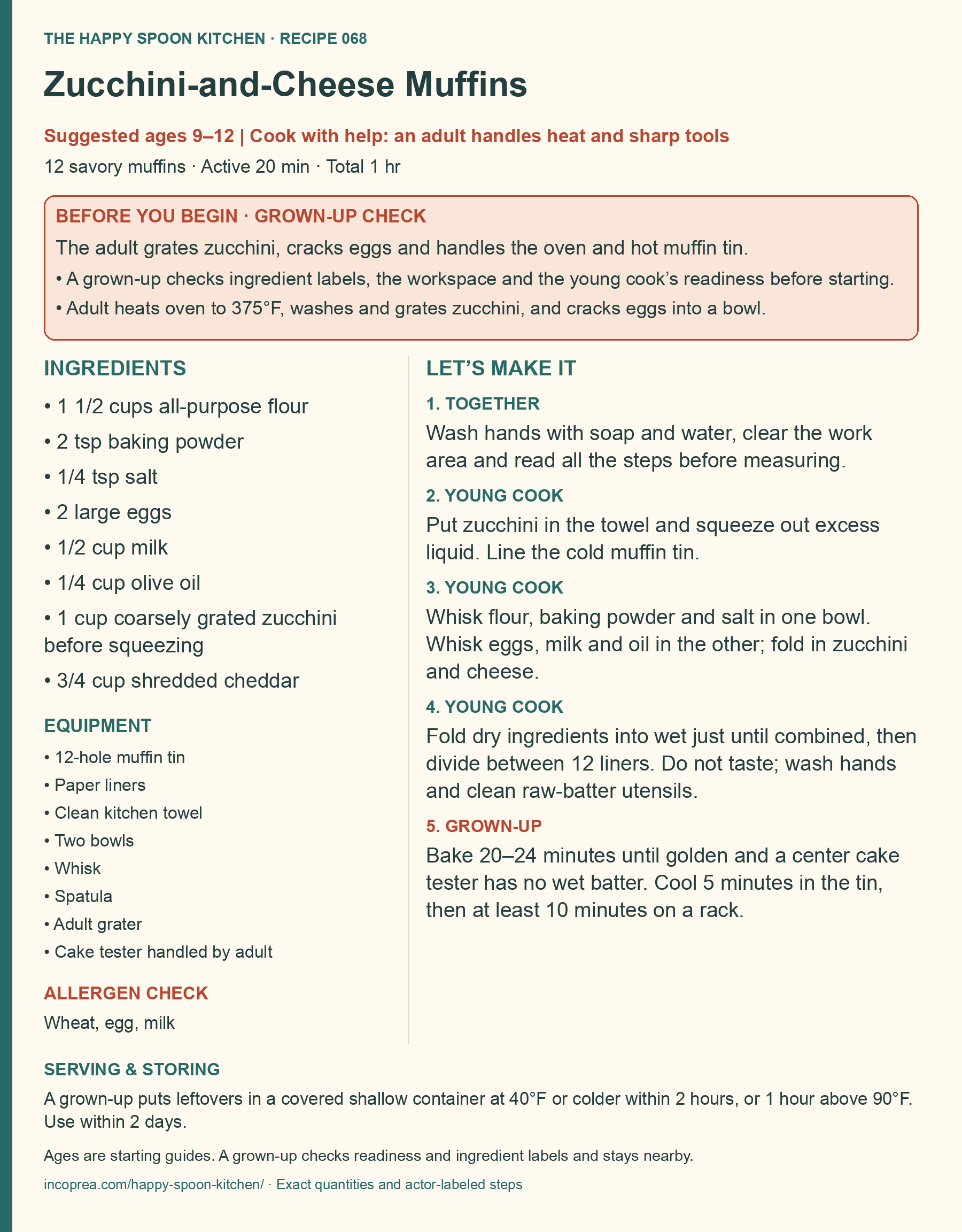
Squeezing grated zucchini keeps these savory muffins from becoming soggy. Cheese adds flavor through the crumb. The young cook folds the batter gently and divides it between the cups while the tin is still cold.

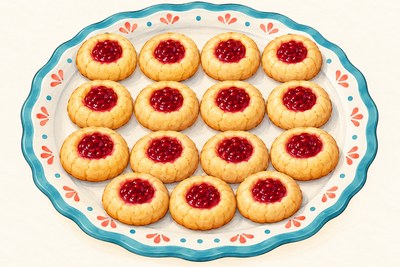
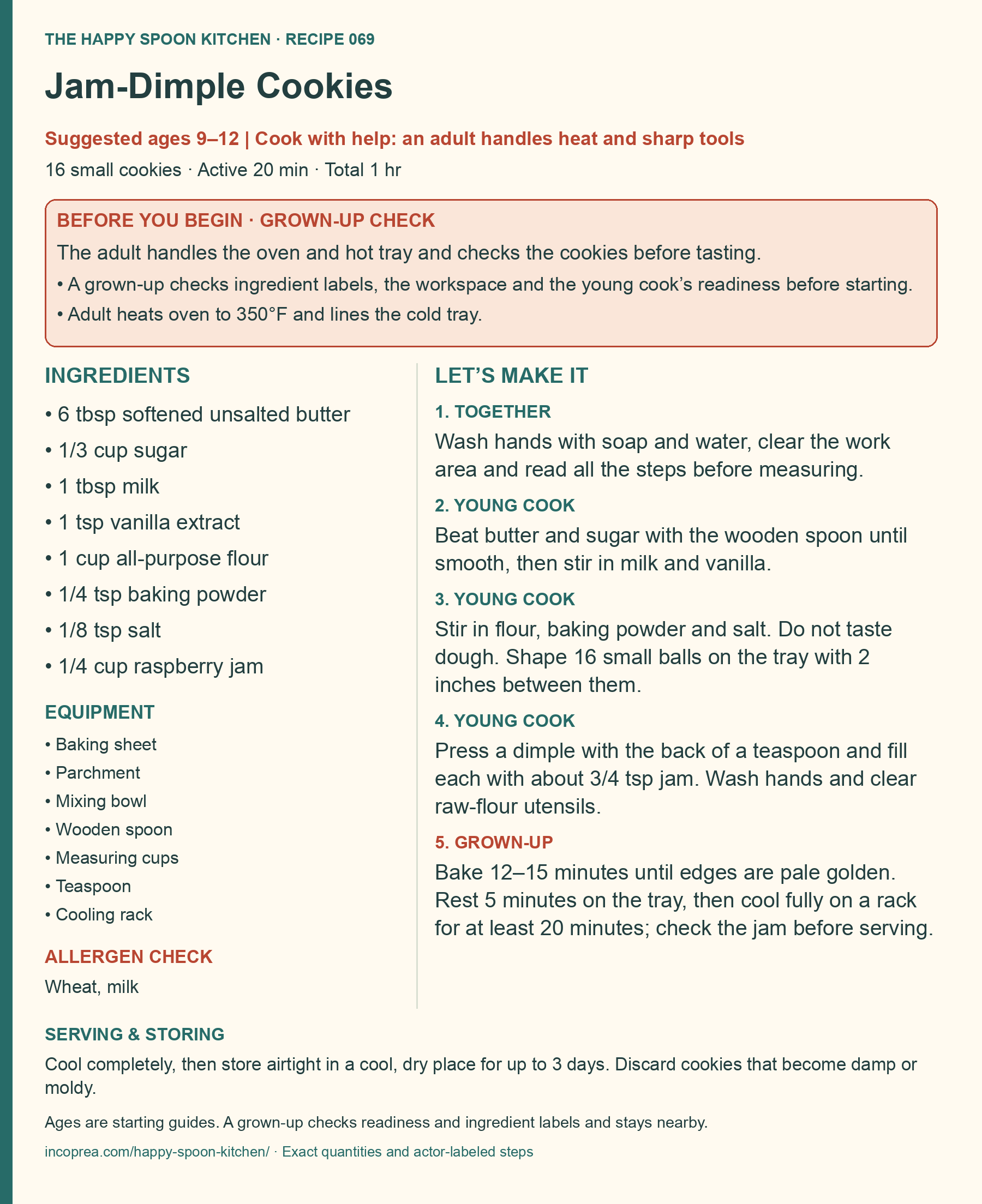
A small spoon makes a neat dimple for jam in each cookie. Soft butter mixes easily without a machine. The jam can be much hotter than the cookie after baking, so both need time to cool.

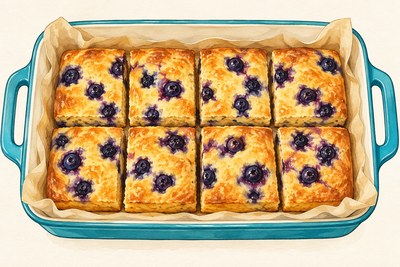
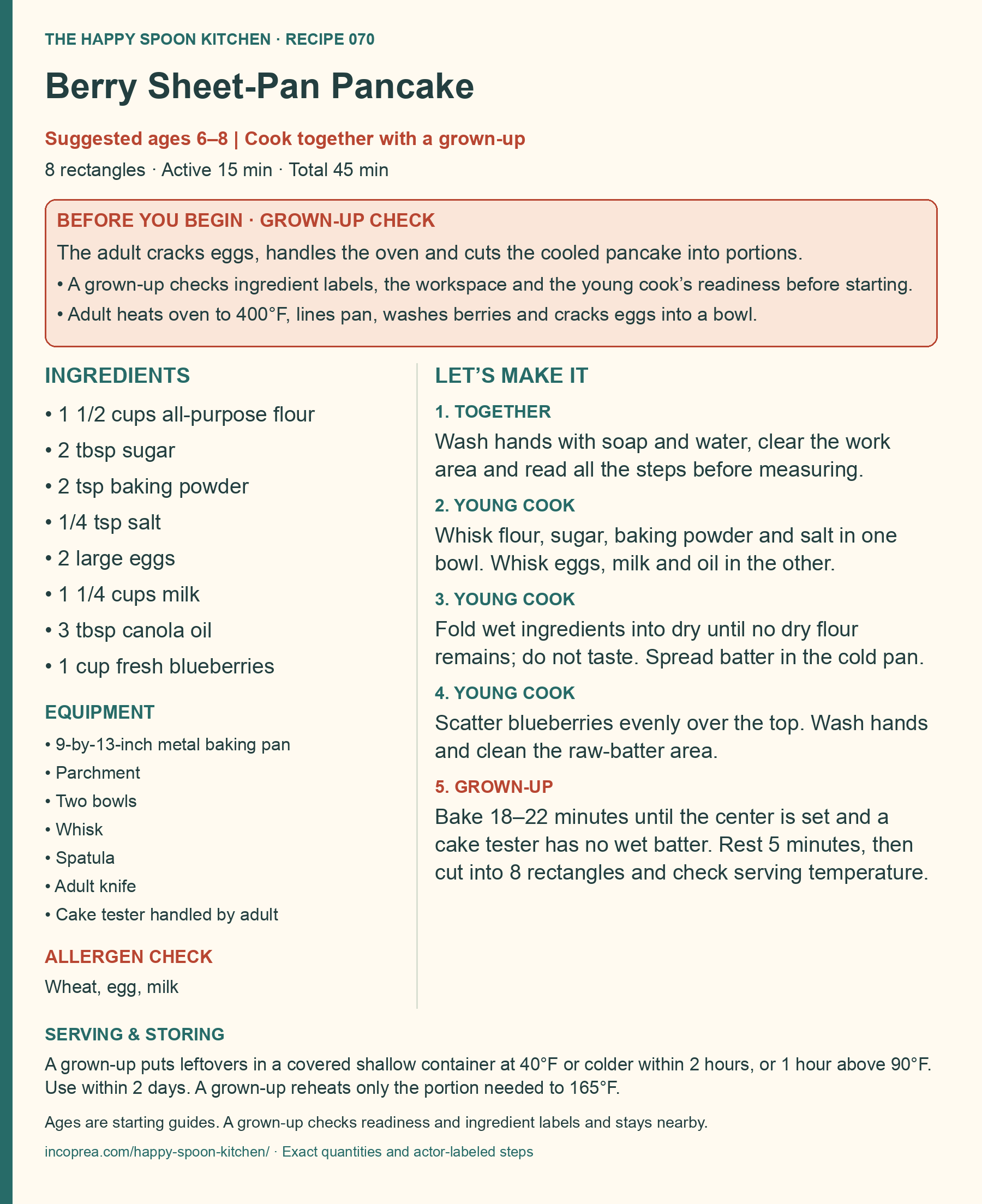
One baked pancake feeds several people without flipping. The young cook scatters berries over the batter while the tray is cold. Use a rimmed pan so the batter stays contained, and wait for the center to set before cutting.

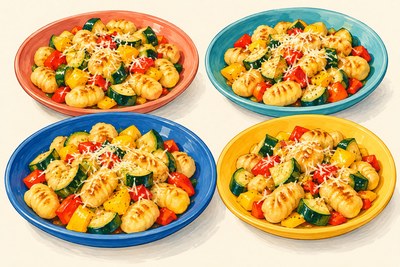
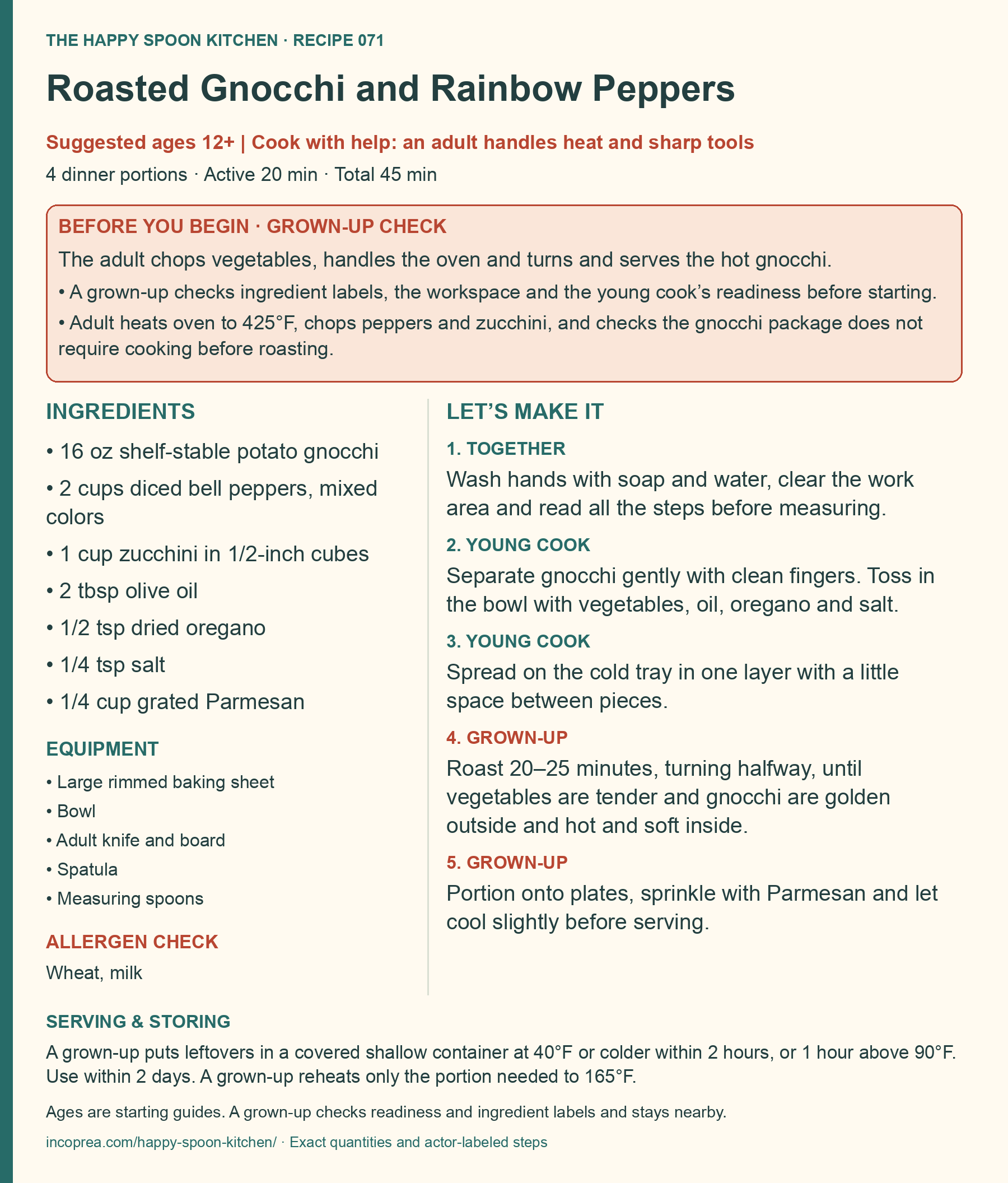
Shelf-stable gnocchi can roast on a tray with vegetables rather than boil in a pot. The outside becomes lightly golden while the middle stays soft. Leave some space between pieces so they roast instead of steaming in a heap.

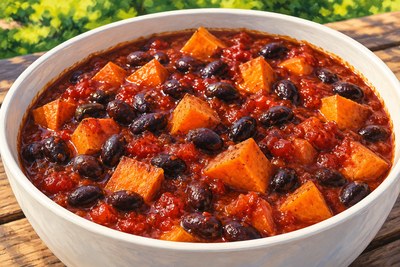
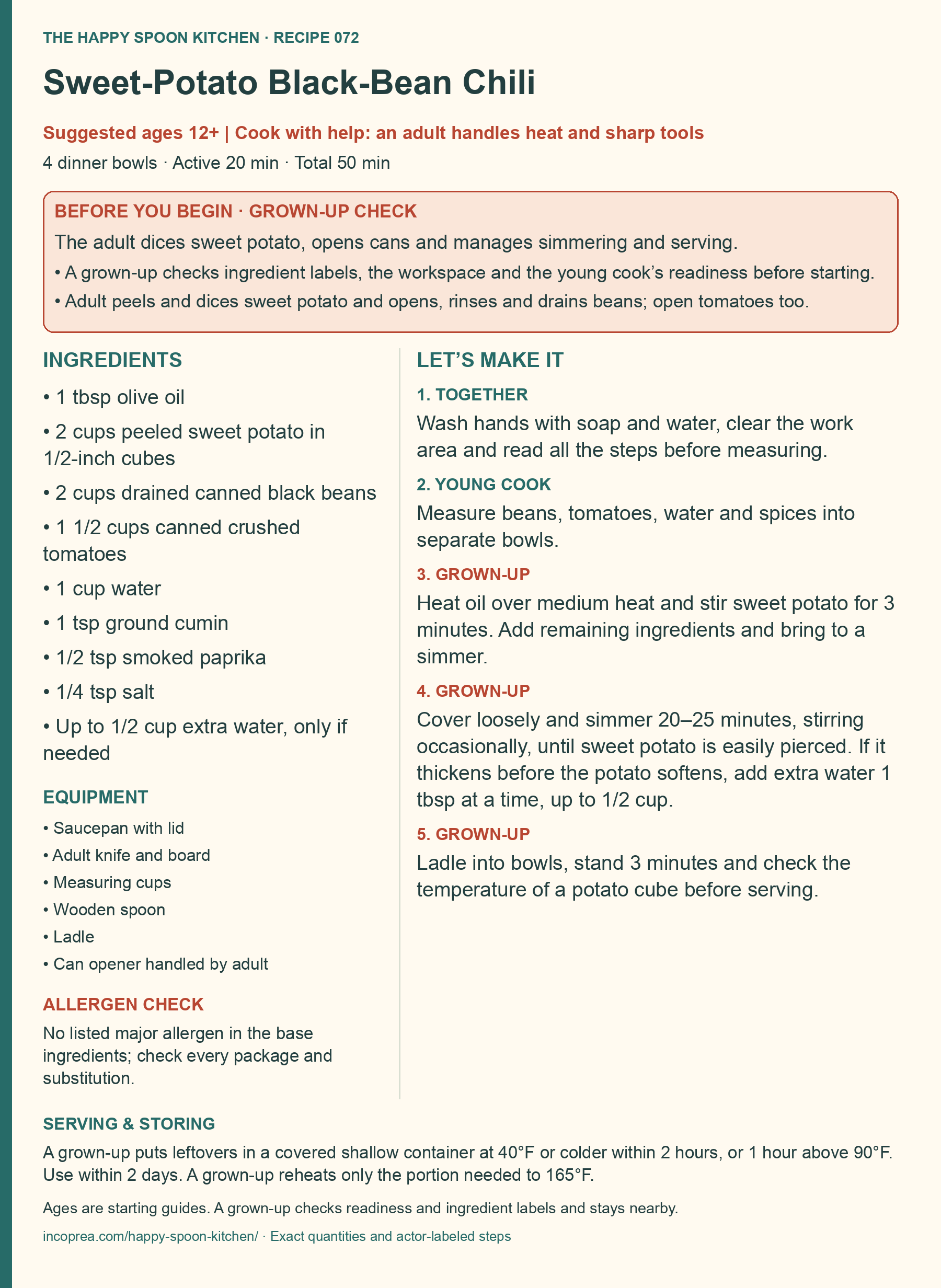
Sweet potato makes this bean chili hearty without meat. Small cubes soften in the tomato broth and keep their shape if stirred gently. The young cook measures the spices before any heat goes on.

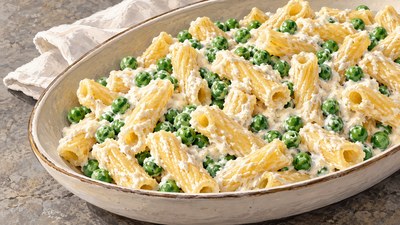
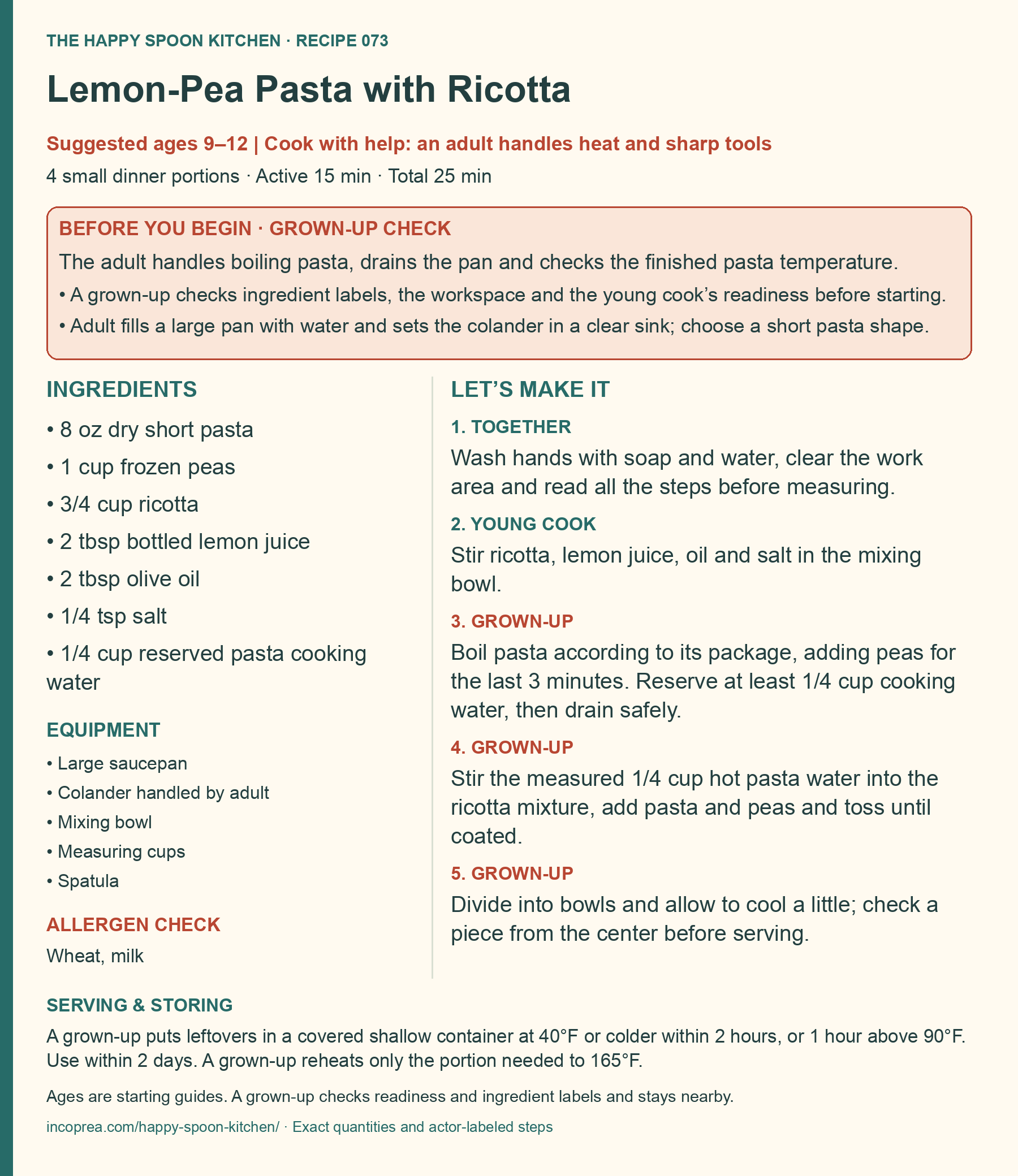
Ricotta makes a gentle sauce when loosened with a little pasta water. Peas cook in the same pan near the end. The young cook mixes the cool sauce ingredients away from the stove while the adult handles the boiling pot.

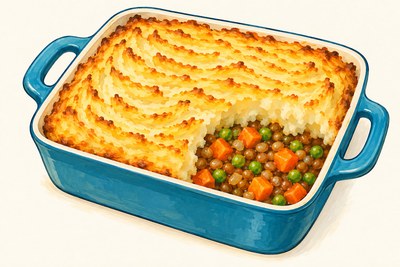
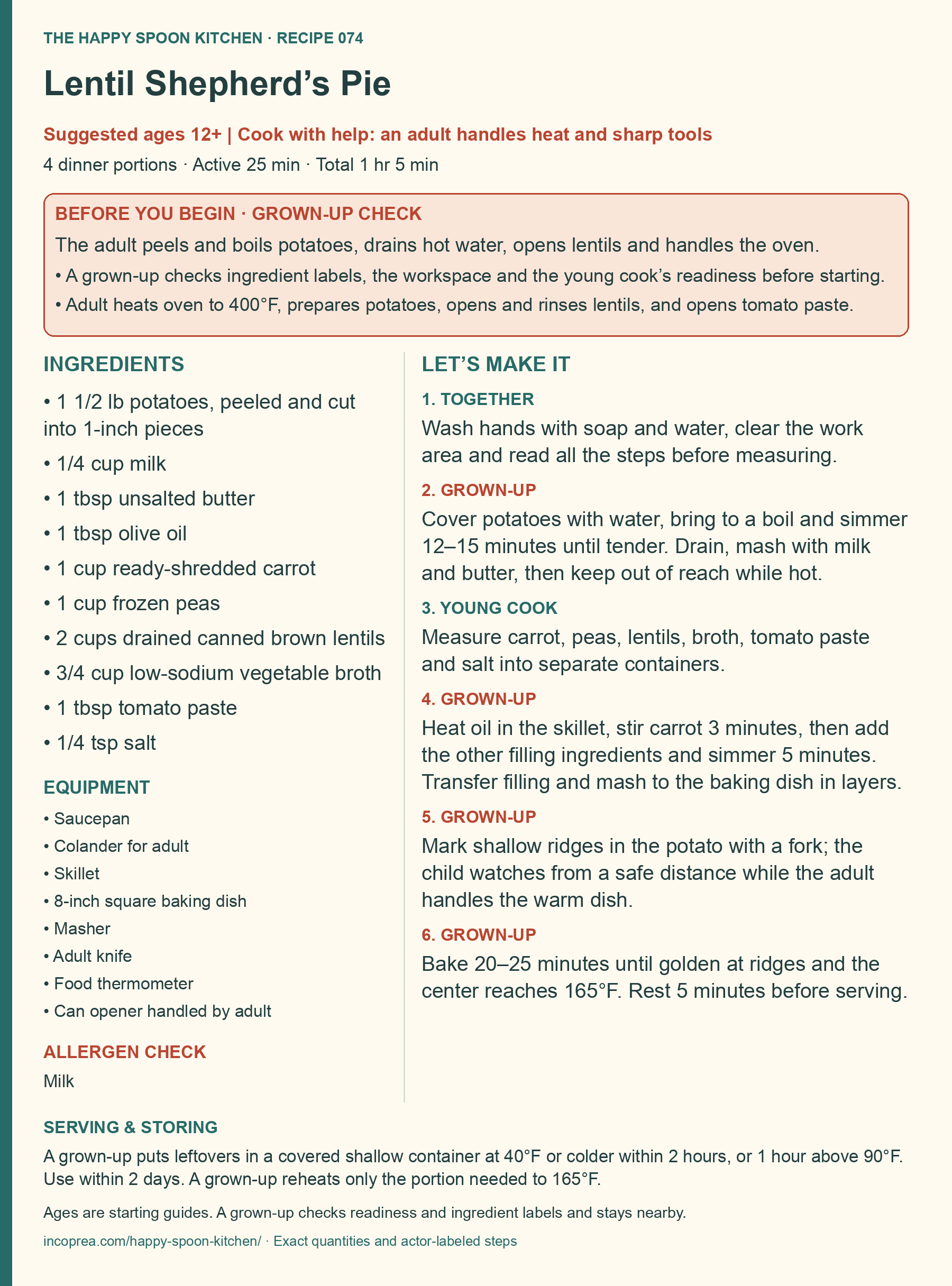
A soft potato lid covers a lentil-and-vegetable filling. This pie has no pastry. The young cook makes little ridges in the mash while the baking dish is cool enough to handle, then the grown-up bakes it until the center is hot.

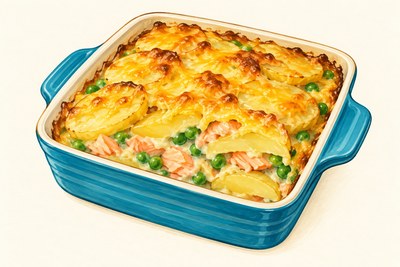
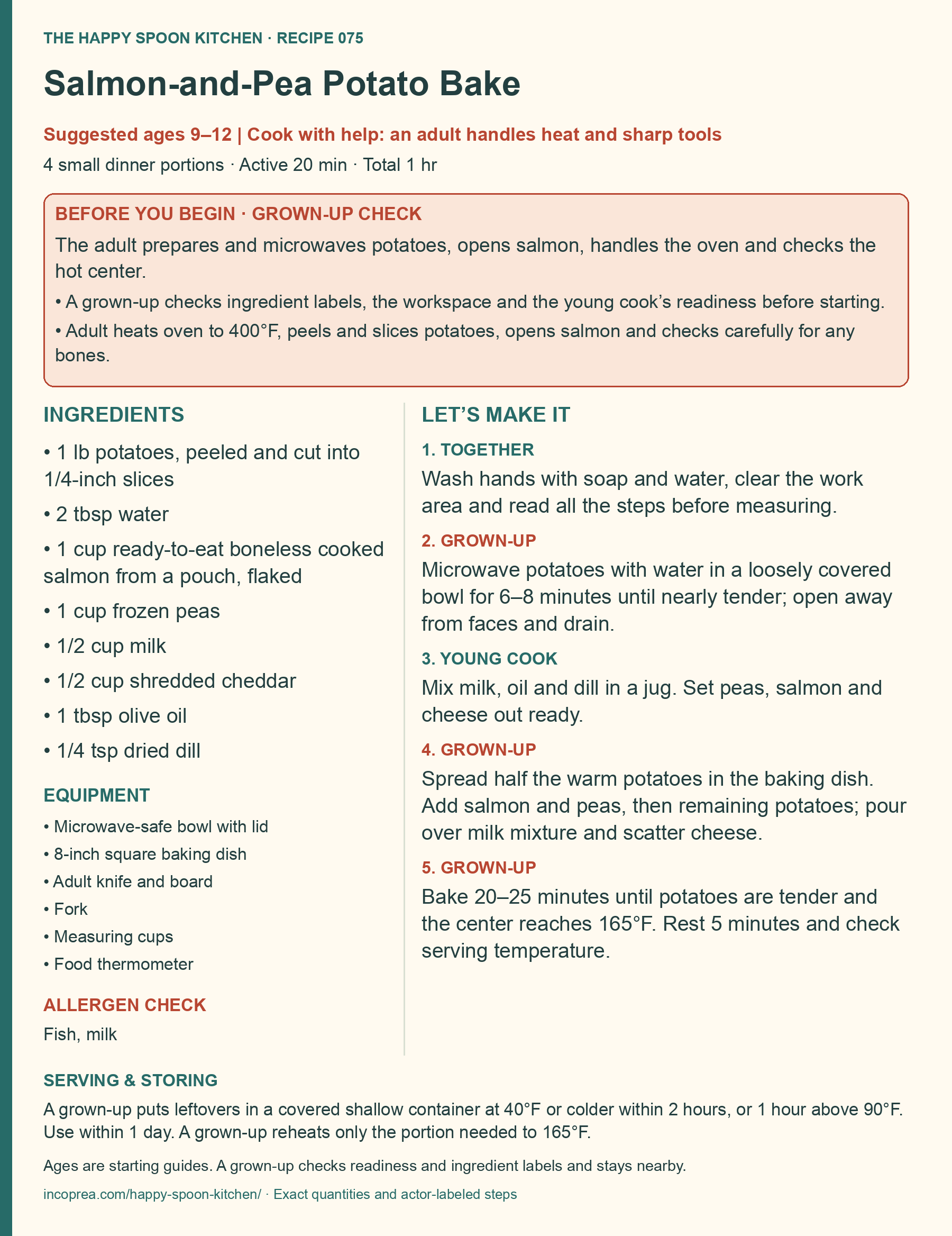
Ready-to-eat salmon and peas tuck between thin potato pieces in this simple bake. The potatoes get a head start in the microwave. Use boneless salmon and let the grown-up check it before young cooks help assemble.

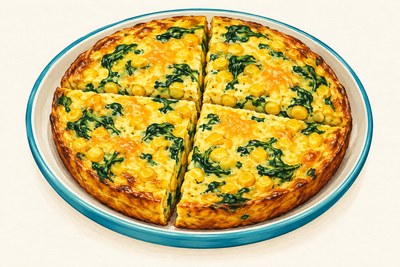
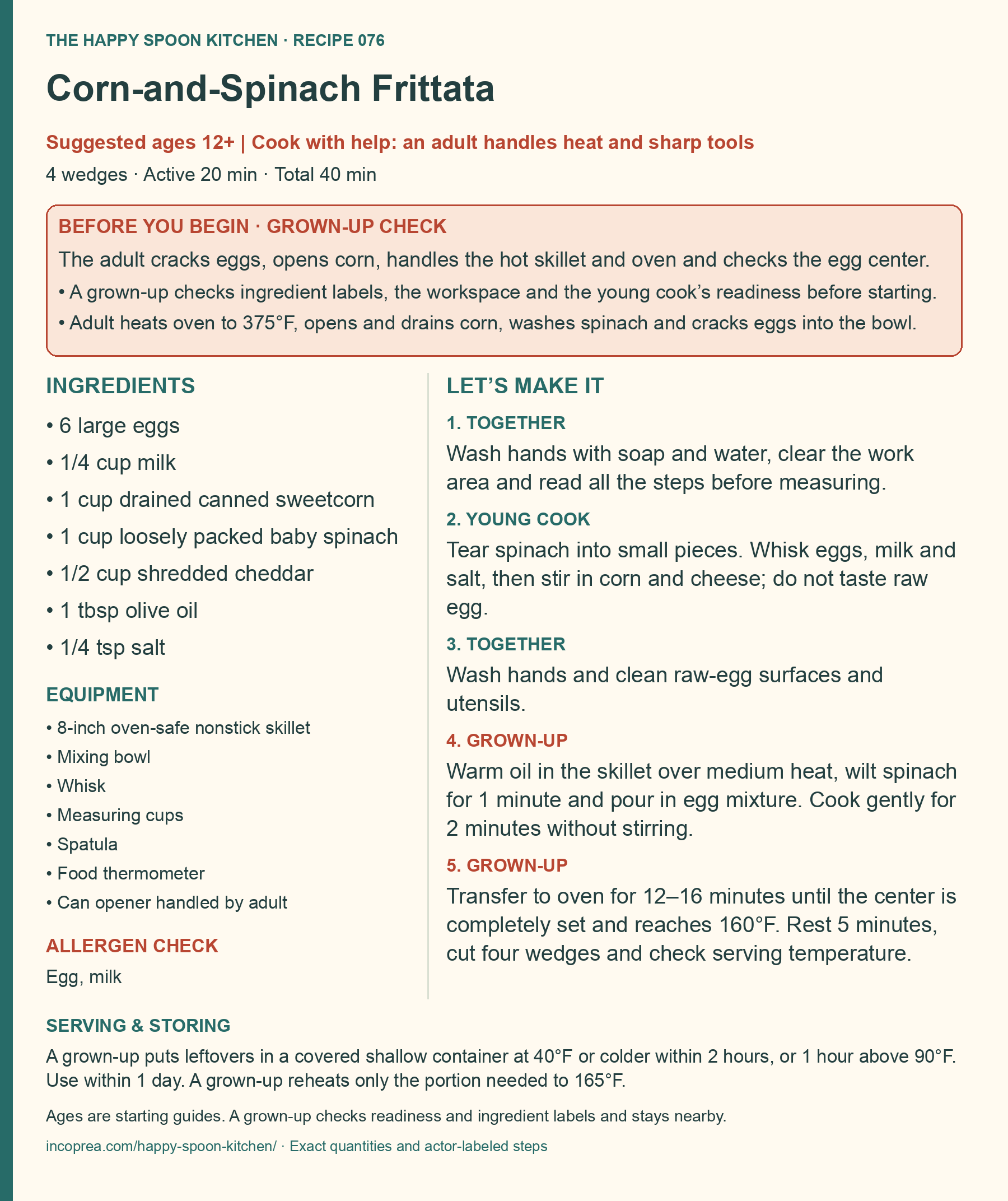
A frittata is an egg dish that sets into slices. Corn and torn spinach spread through this one, so each wedge has a little of both. The young cook measures and whisks at the counter; the grown-up does all hot-pan work.
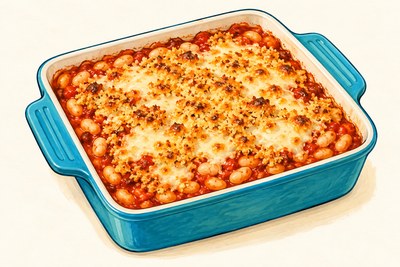
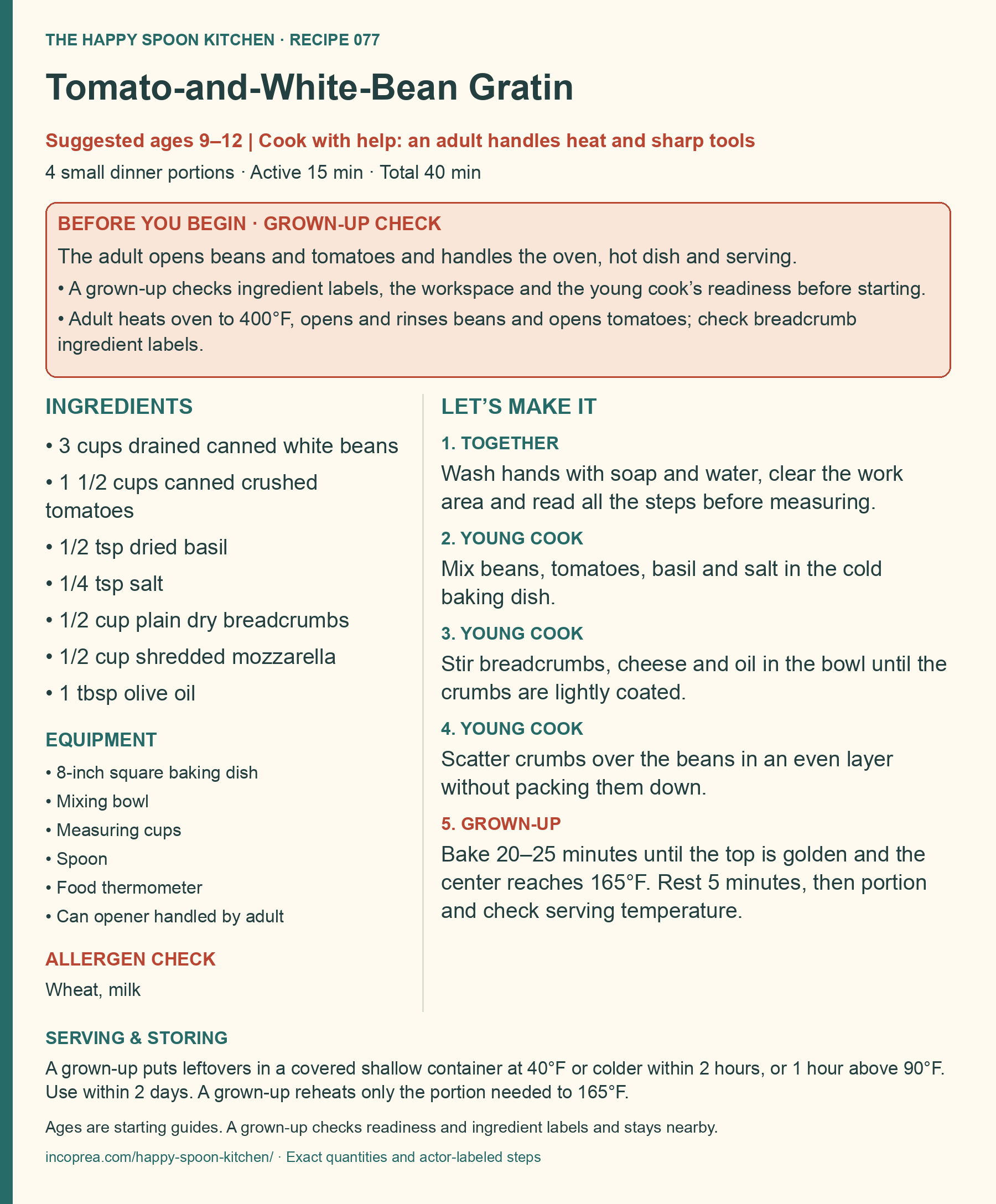
A gratin has a golden top over a soft filling. This one uses beans and tomatoes beneath cheesy crumbs. The young cook spreads the topping while the dish is cold, and the grown-up watches for bubbling edges.

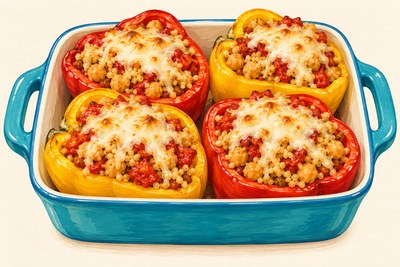
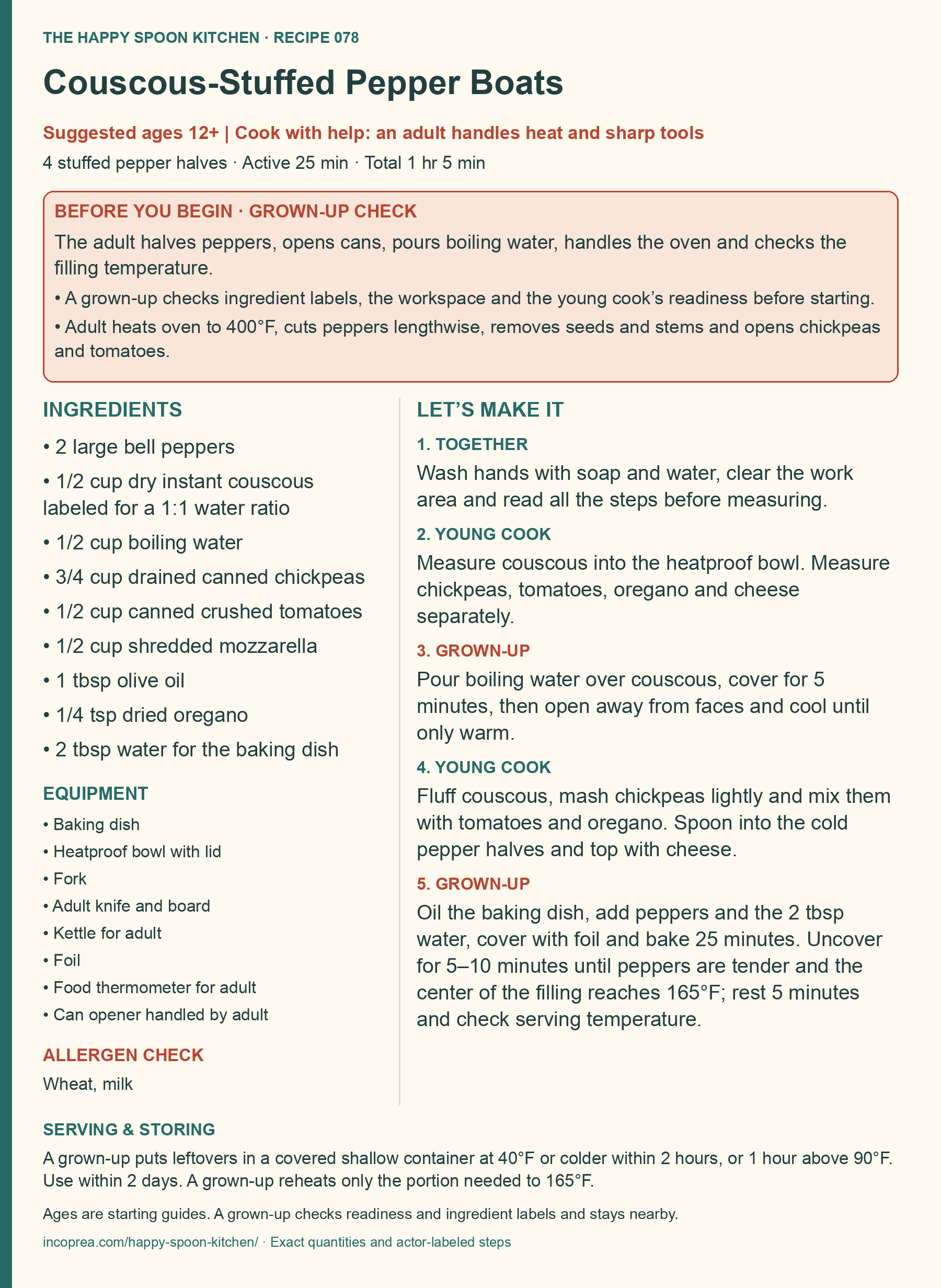
Bell pepper halves make colorful boats for couscous and chickpeas. The filling is prepared first so the peppers can bake until tender without drying out the grains. These are small dinner portions to serve with the rest of the family meal.

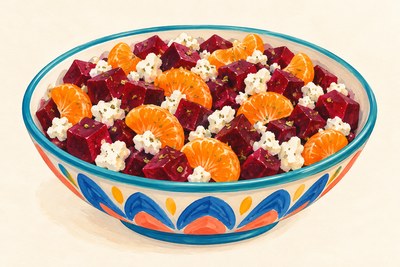
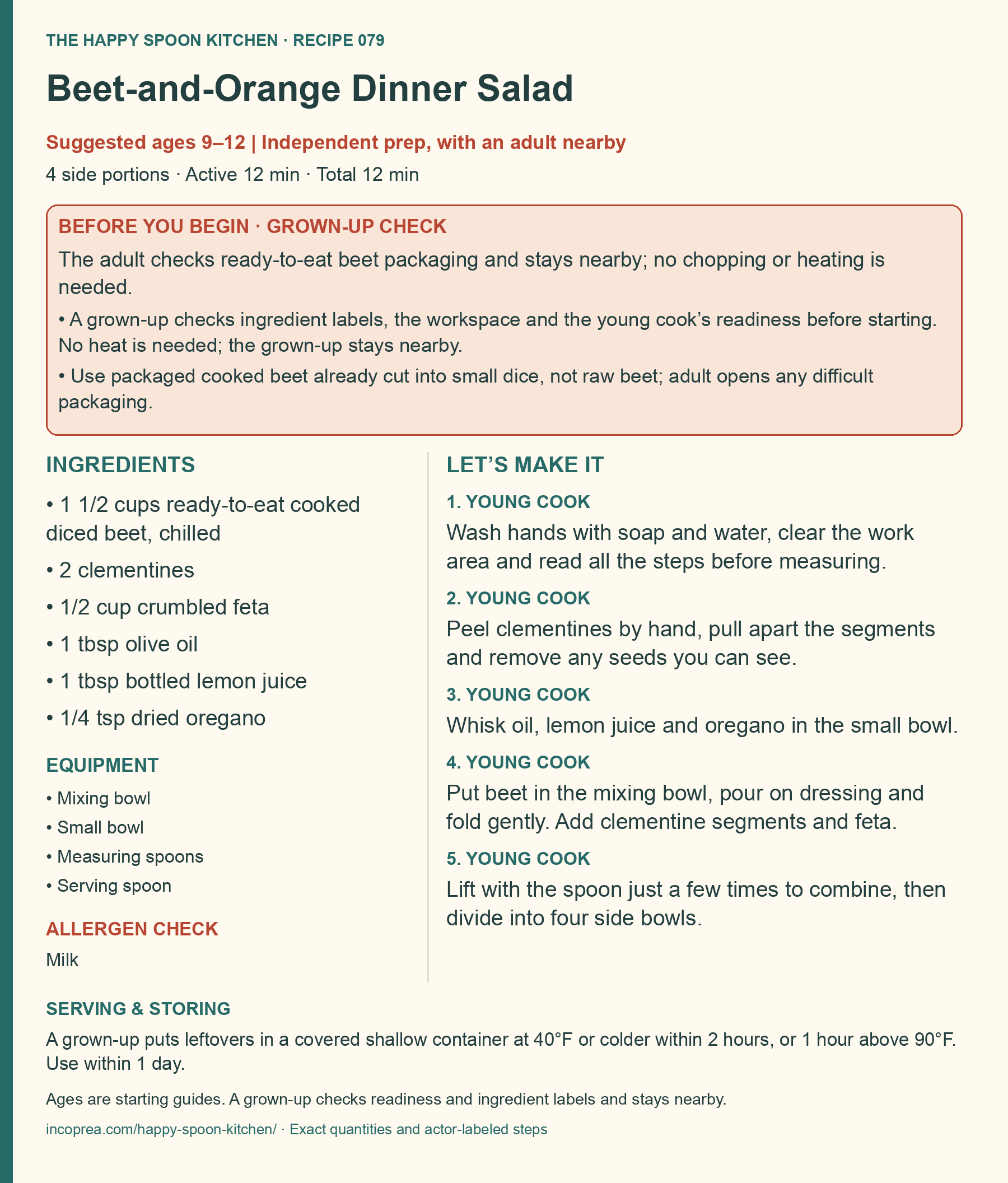
Sweet beet and juicy orange make a bright side for a family dinner. Choose ready-diced cooked beet so the young cook can work with a spoon. Add the orange last and the colors stay distinct for a little longer.

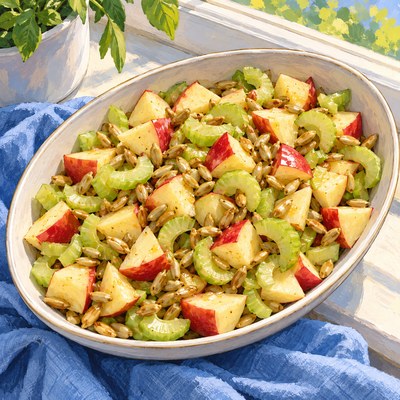
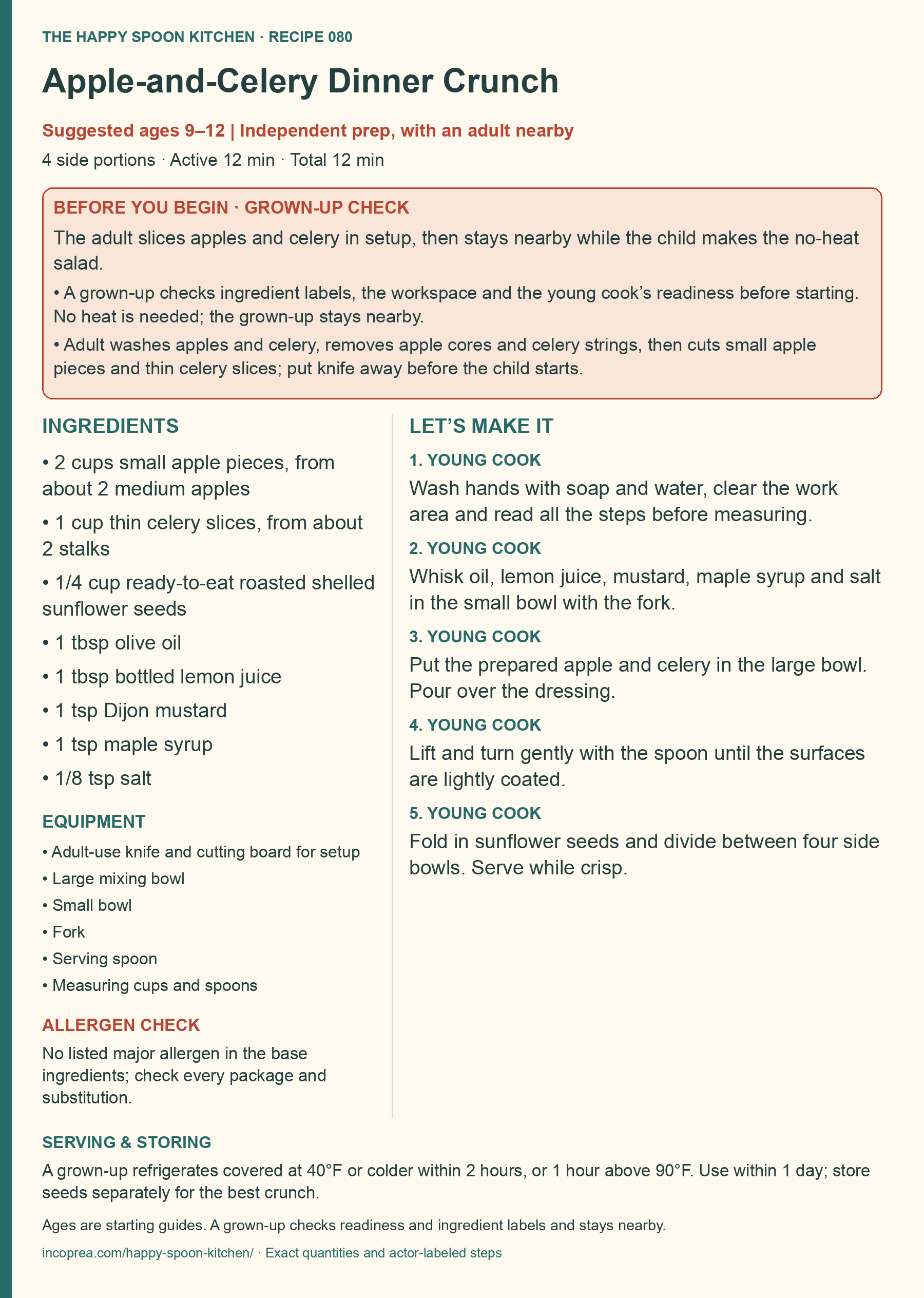
Crisp apple and celery make a bright side for a family meal. A small amount of lemon-mustard dressing coats the pieces without turning them creamy. Sunflower seeds add a different crunch, so mix them in just before serving.

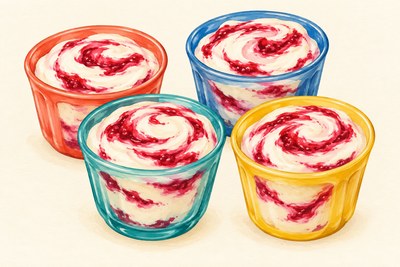
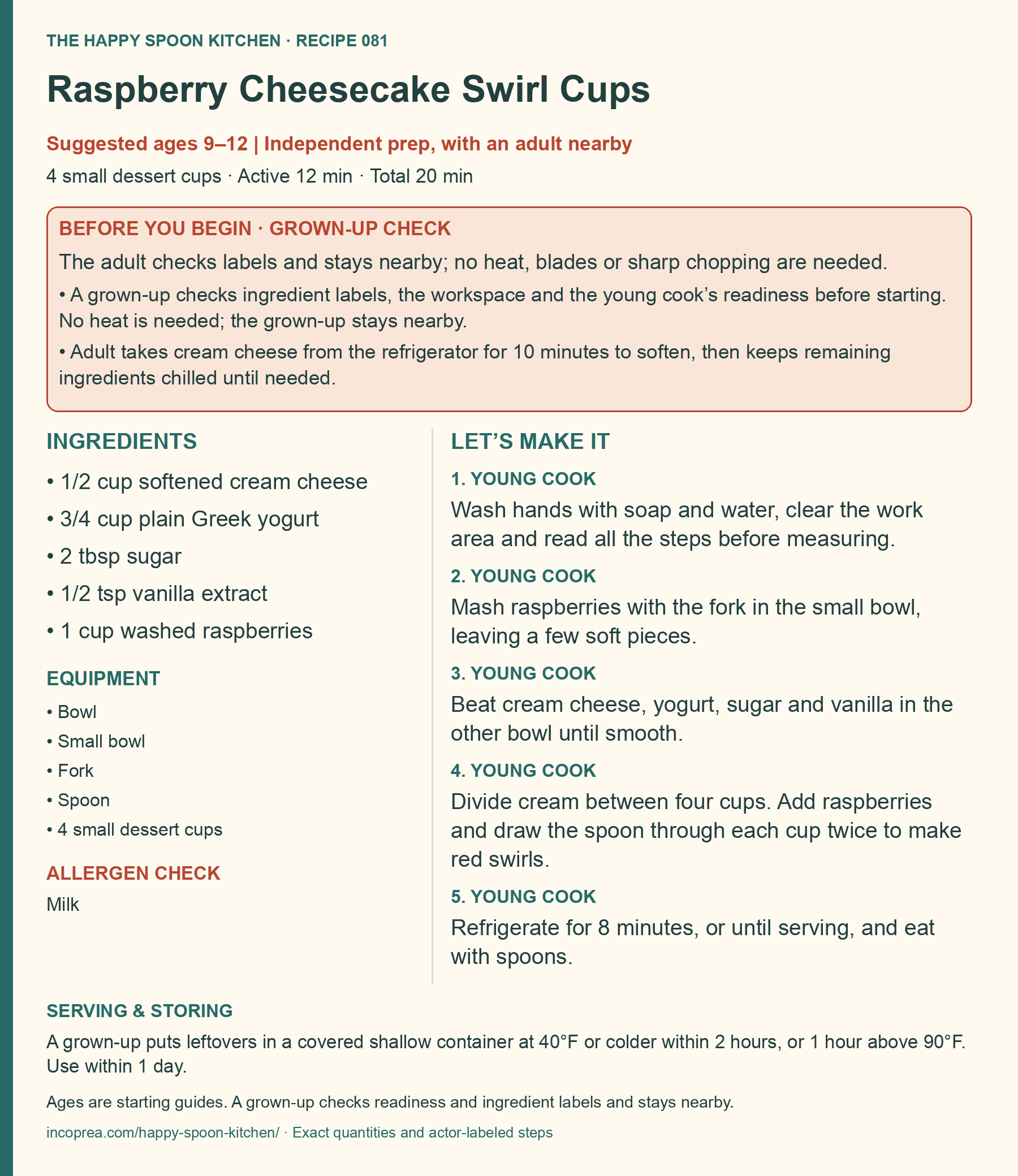
Soft raspberries make their own sauce when pressed with a fork. A little cream cheese gives the yogurt a cheesecake-like flavor without baking a cake. Leave some red streaks showing instead of stirring until the whole cup is pink.

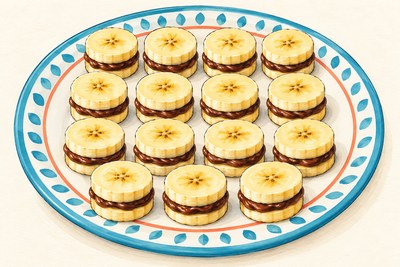
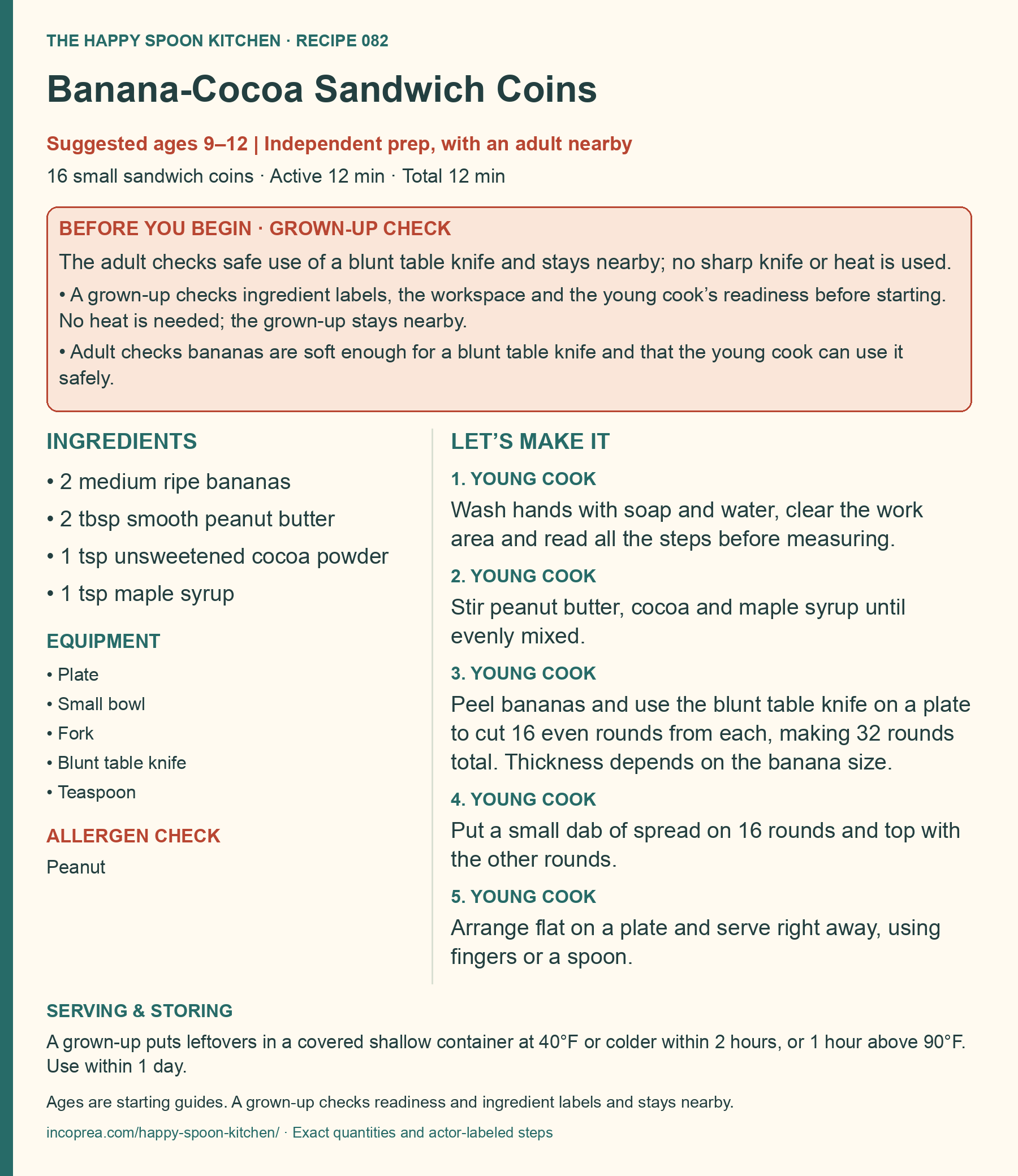
Two banana rounds can hold a tiny layer of cocoa-peanut spread. A blunt table knife is enough for ripe banana, and small spoonfuls keep the filling from squeezing out. Serve these soft fruit bites on a plate rather than on sticks.

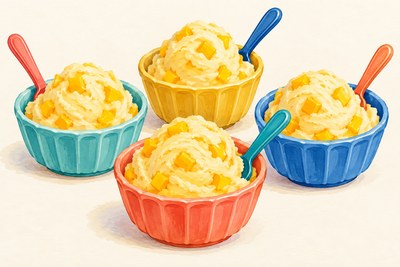
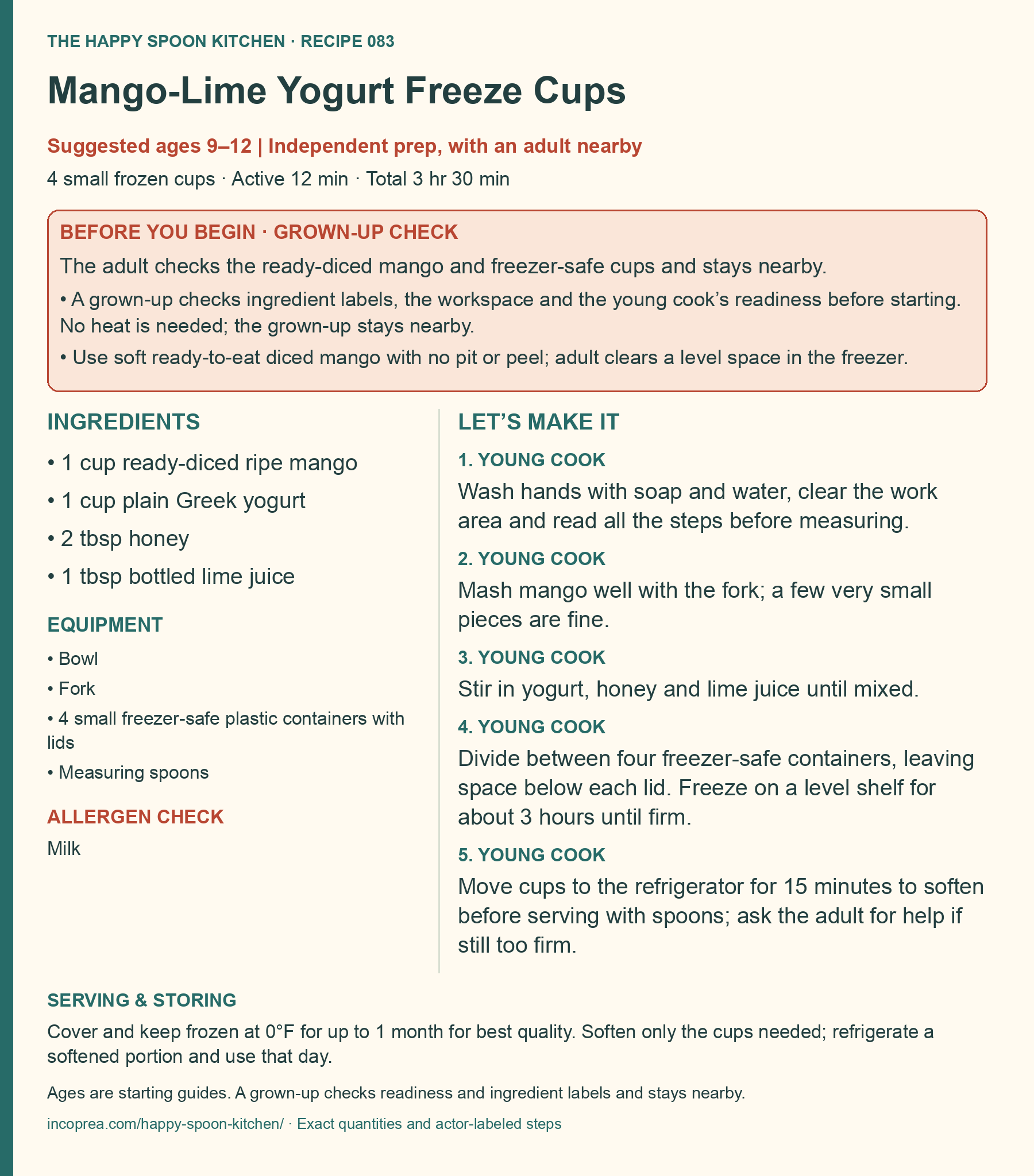
A fork makes ripe mango soft enough to mix into yogurt without a blender. Freeze the mixture in small cups and soften it briefly before eating with a spoon. These are scoopable frozen desserts, with no sticks or hard decorations.

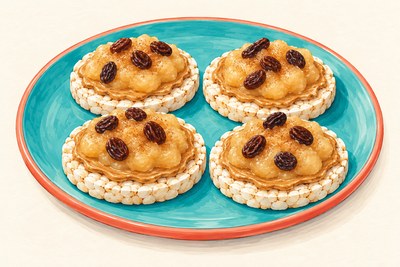
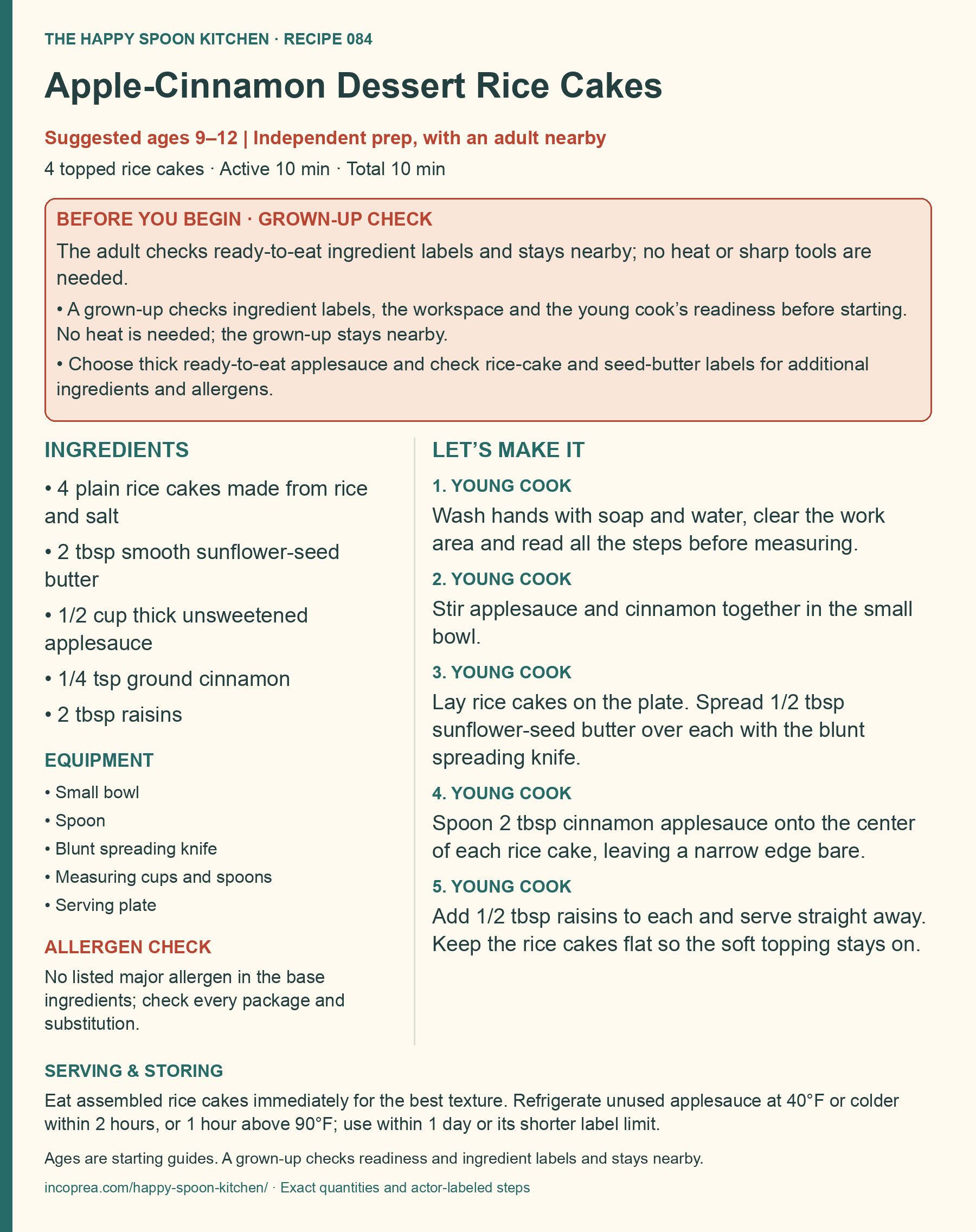
A crisp rice cake can hold a small apple dessert without any baking. A thin seed-butter layer helps the applesauce stay in place. Add each topping by the spoonful and make these just before eating, while the base still crunches.

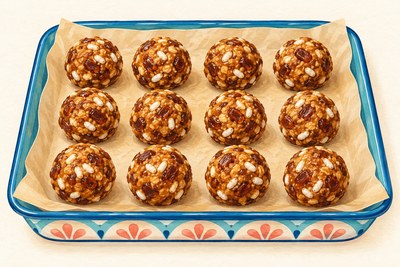
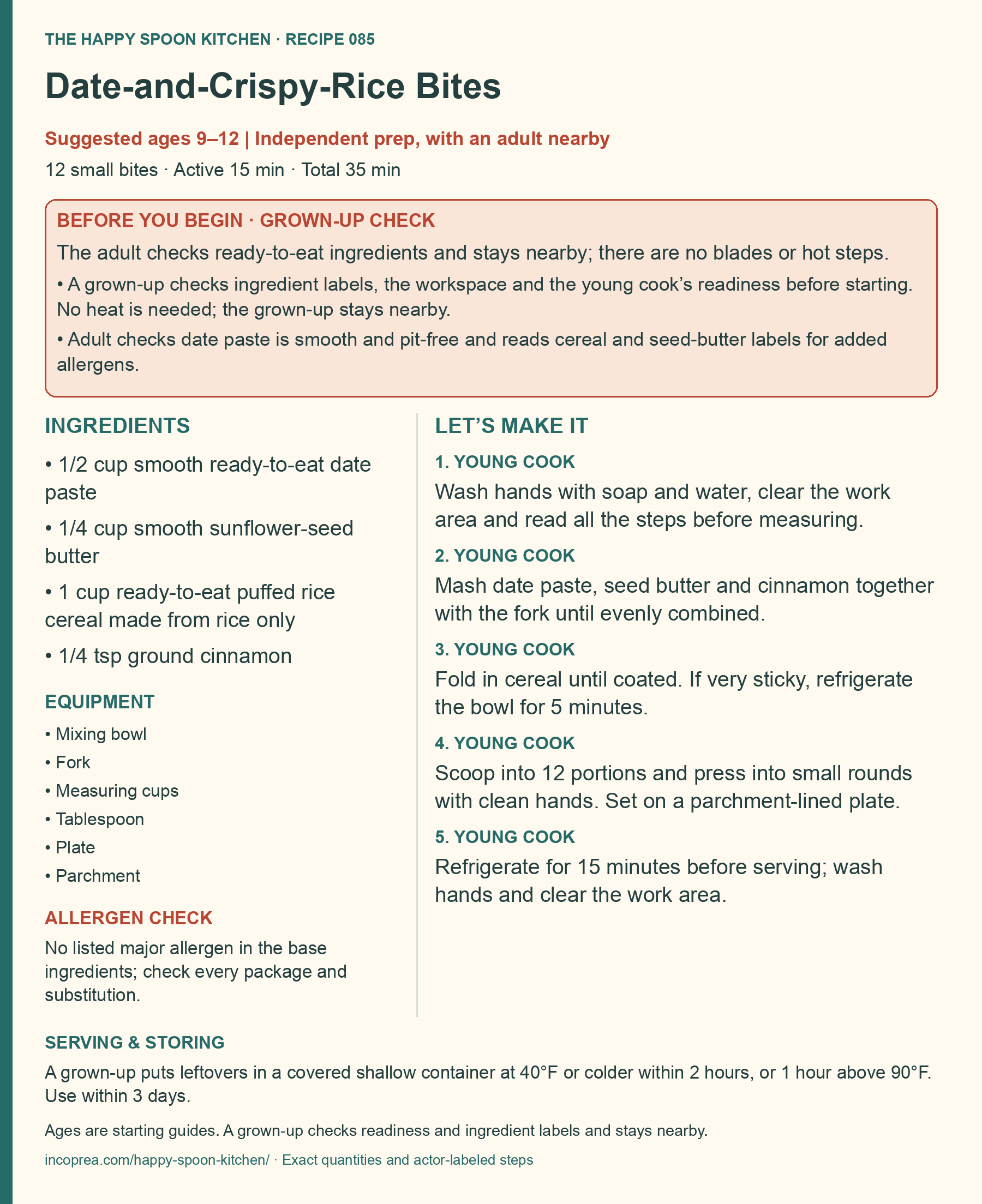
Ready-made date paste acts like glue for crisp rice cereal. Sunflower-seed butter makes the mixture easier to shape. Press firmly enough to hold each bite together, while leaving a little crisp cereal visible.

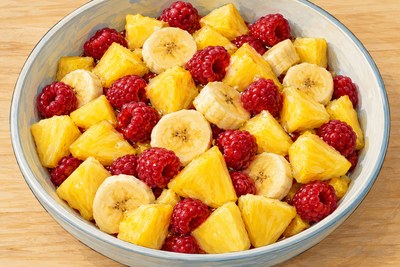
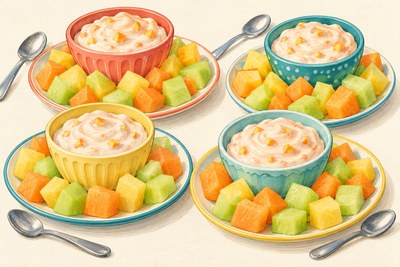
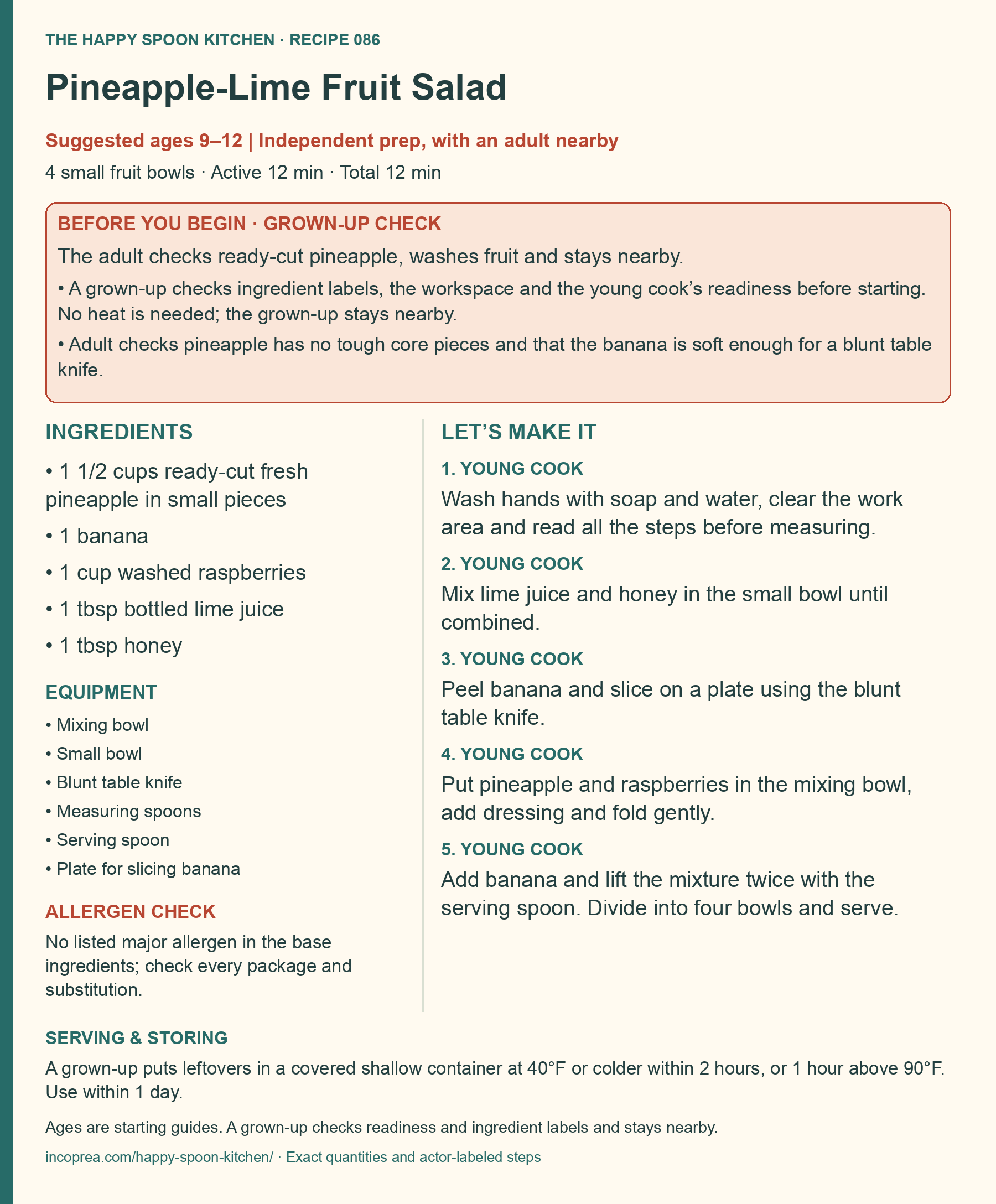
Pineapple brings plenty of juice, so this salad needs only a small lime dressing. Banana goes in last to keep its soft pieces from breaking. A wide spoon can lift fruit more gently than a fork.

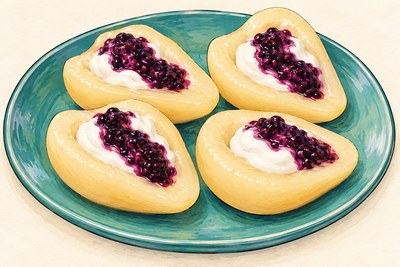
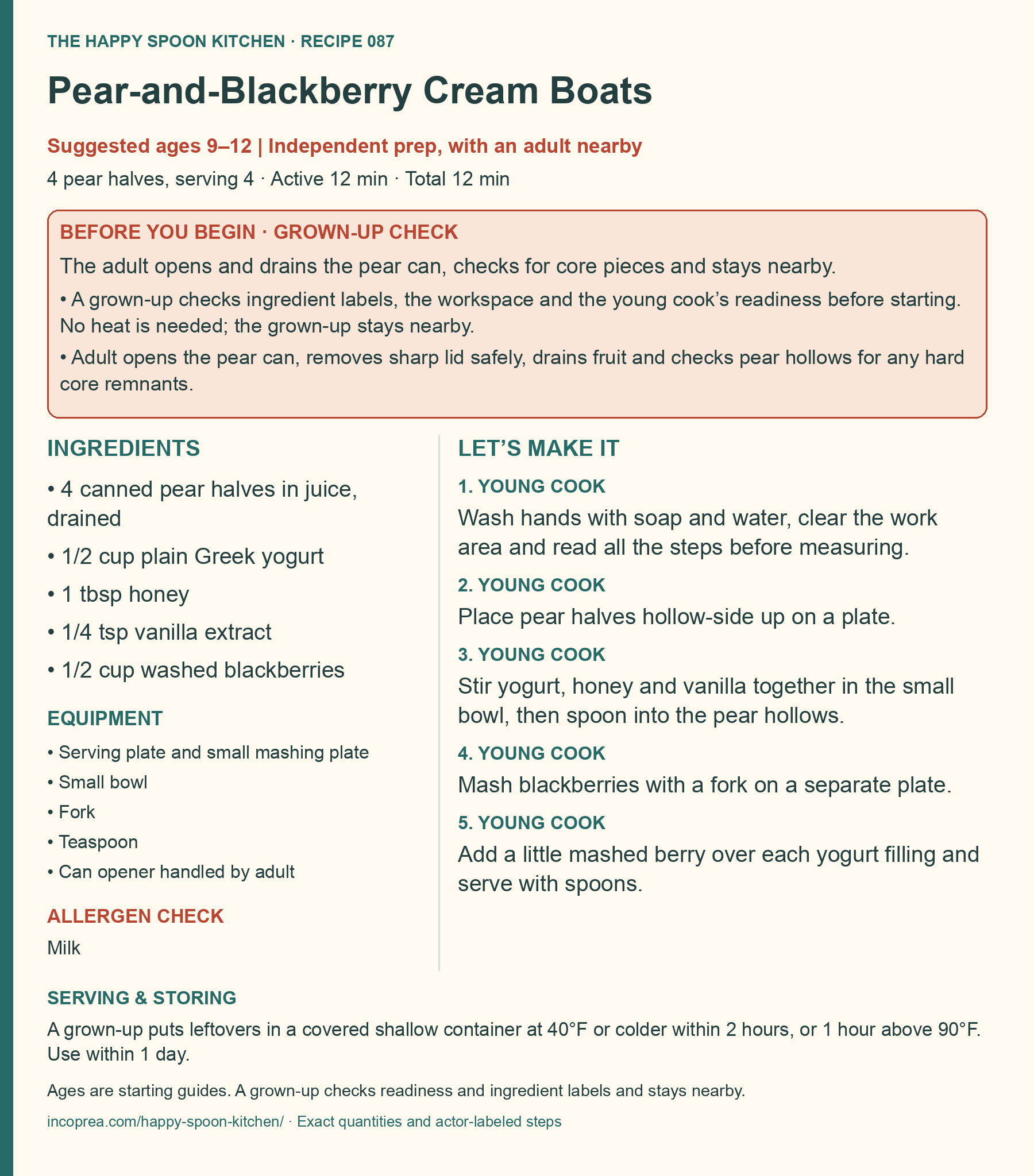
Canned pear halves make soft little bowls without peeling or knife work. A spoonful of vanilla yogurt fills the hollow, and mashed blackberry adds a deep-purple stripe. The canned fruit should be drained well so the cream stays in place.

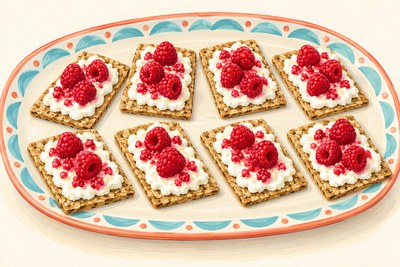
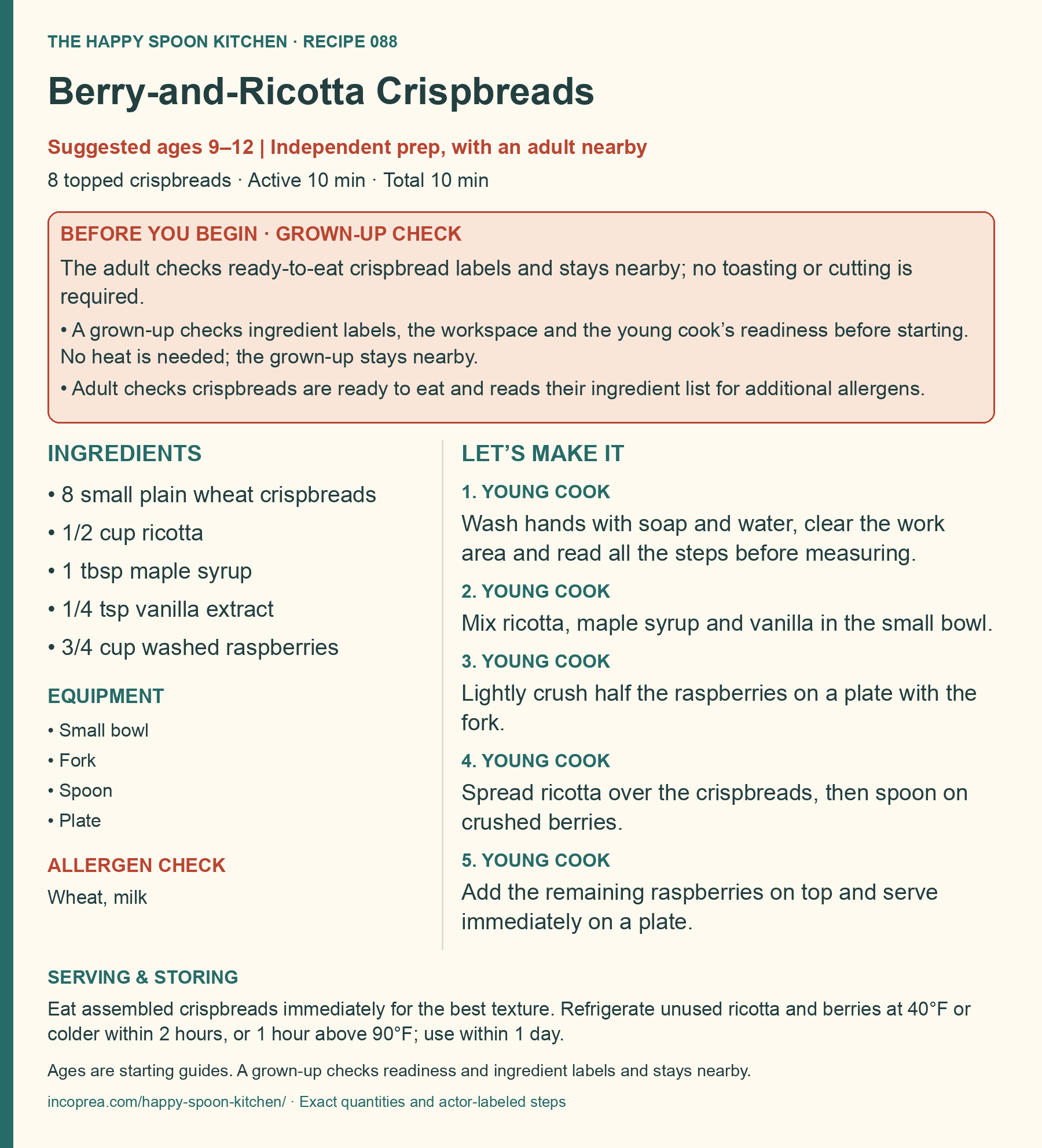
A crisp base and soft topping make these fruit bites satisfying to assemble. Spread the ricotta first so the berries have something to sit on. Make only what you will eat now, because juicy fruit softens the crispbread over time.

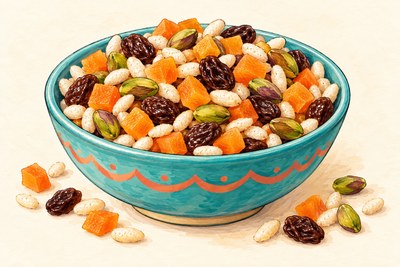
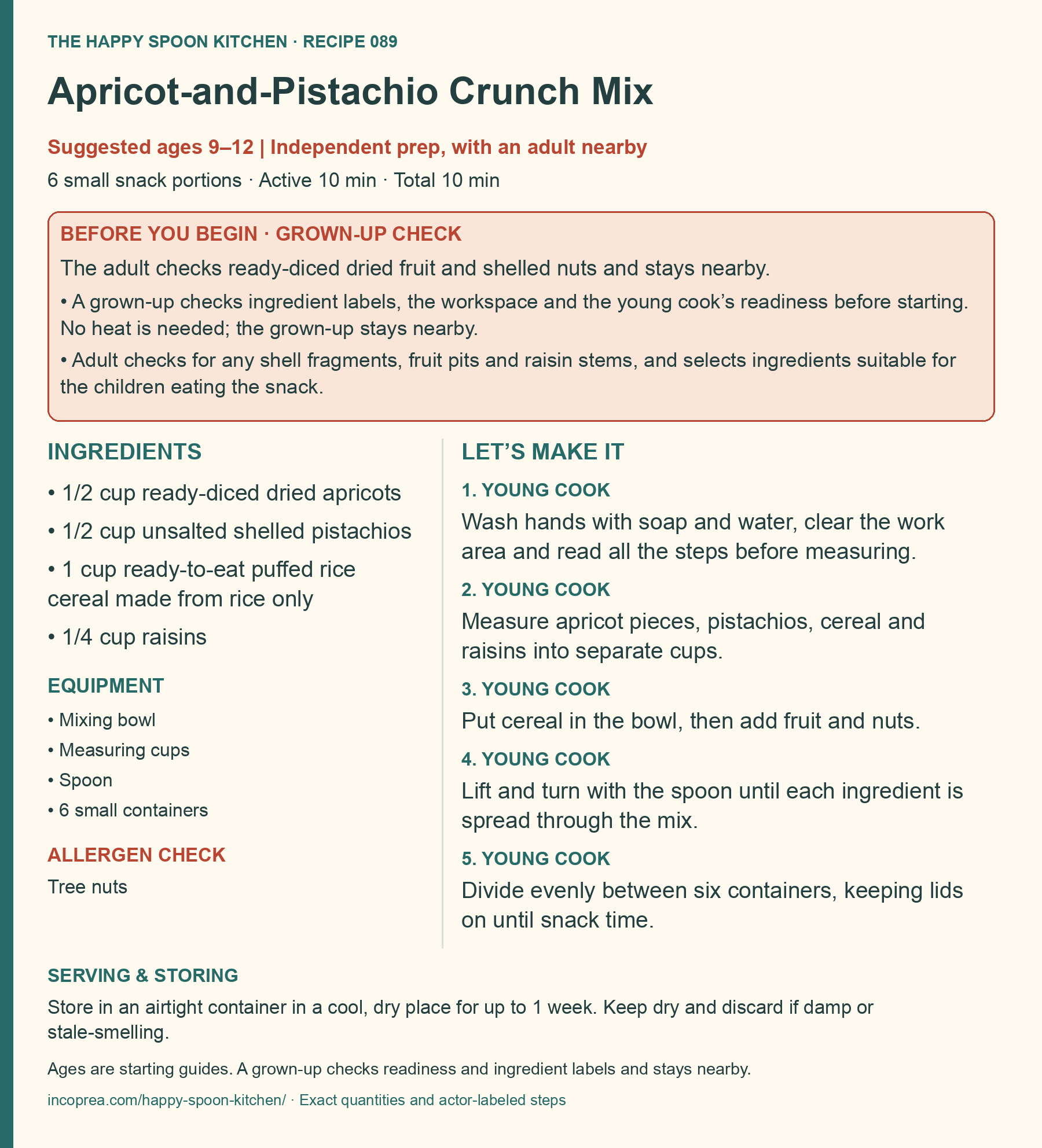
Chewy fruit and crisp nuts make this a useful measuring-and-dividing recipe. Use ready-diced apricots so no knife is needed. Mix in a wide bowl, then portion the snack rather than eating from the shared bowl.

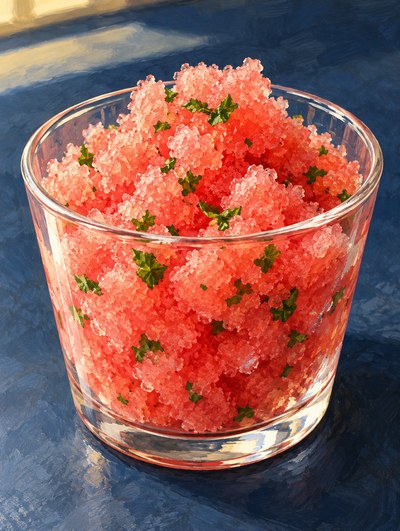
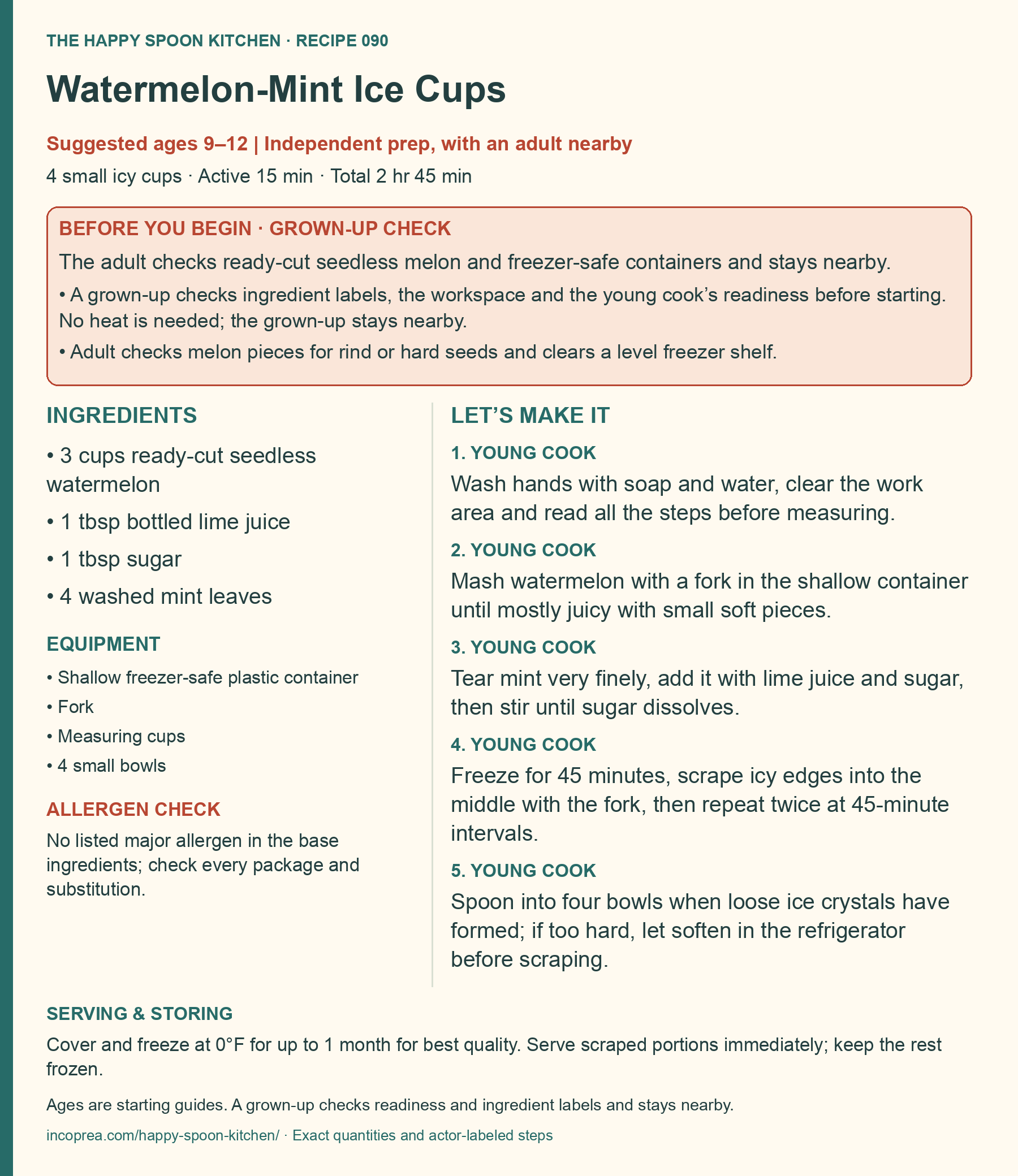
A fork and some freezer time turn juicy watermelon into a spoonable ice dessert. Scraping it a few times stops it becoming one solid block. A few tiny mint pieces add flavor without needing a blender.

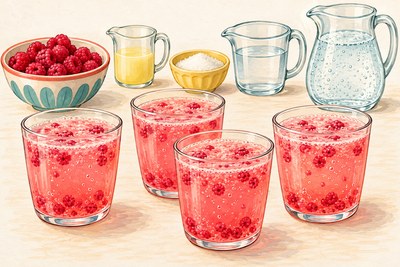
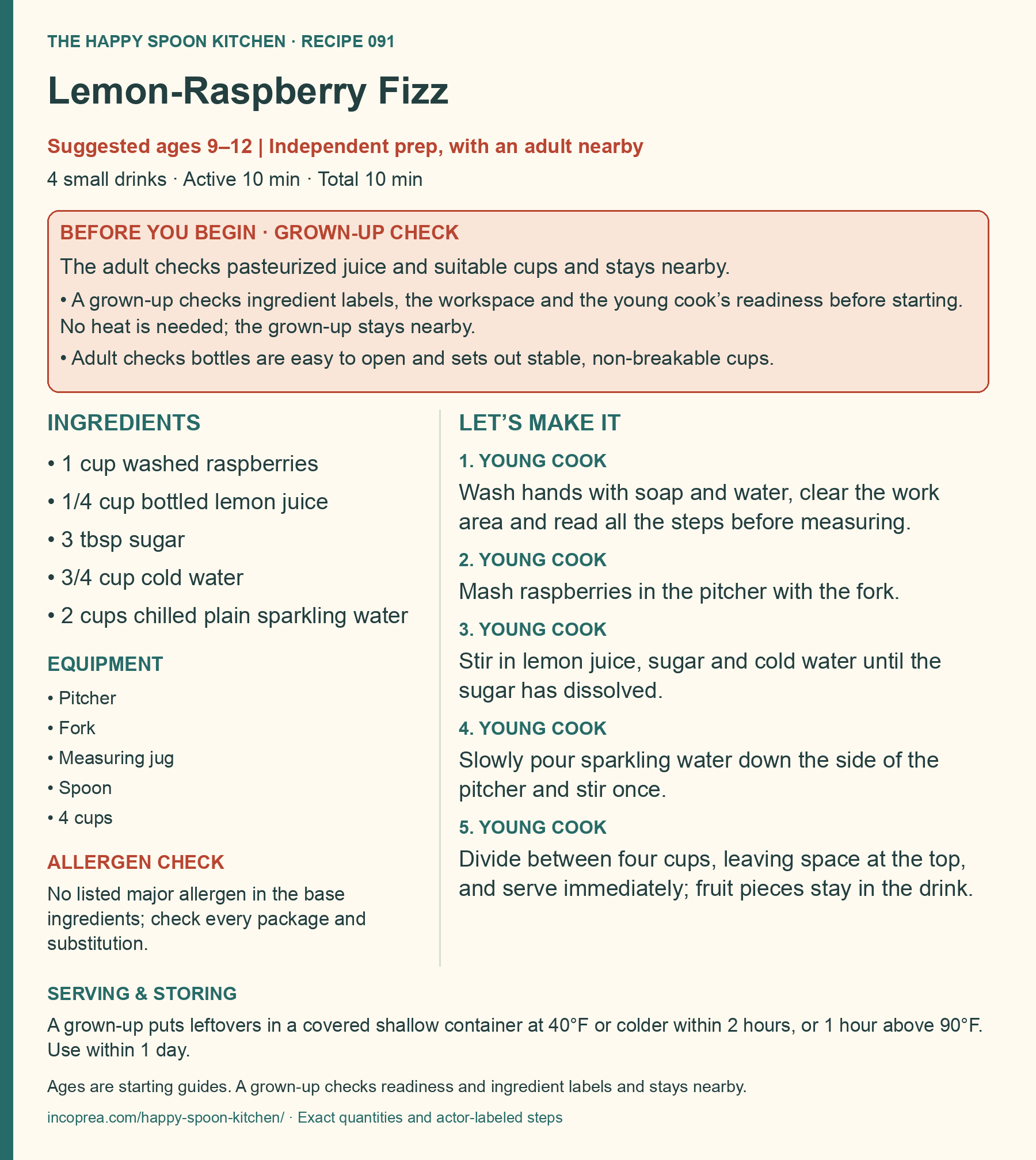
Mashing berries gives this fizzy drink its color without a blender. A little lemon sharpens the flavor. Add sparkling water slowly at the end so the bubbles stay in the glass instead of foaming over the rim.

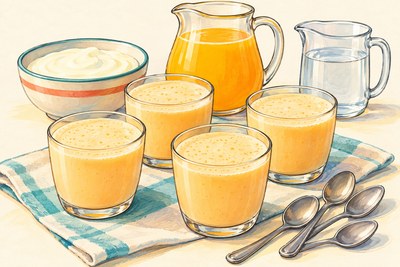
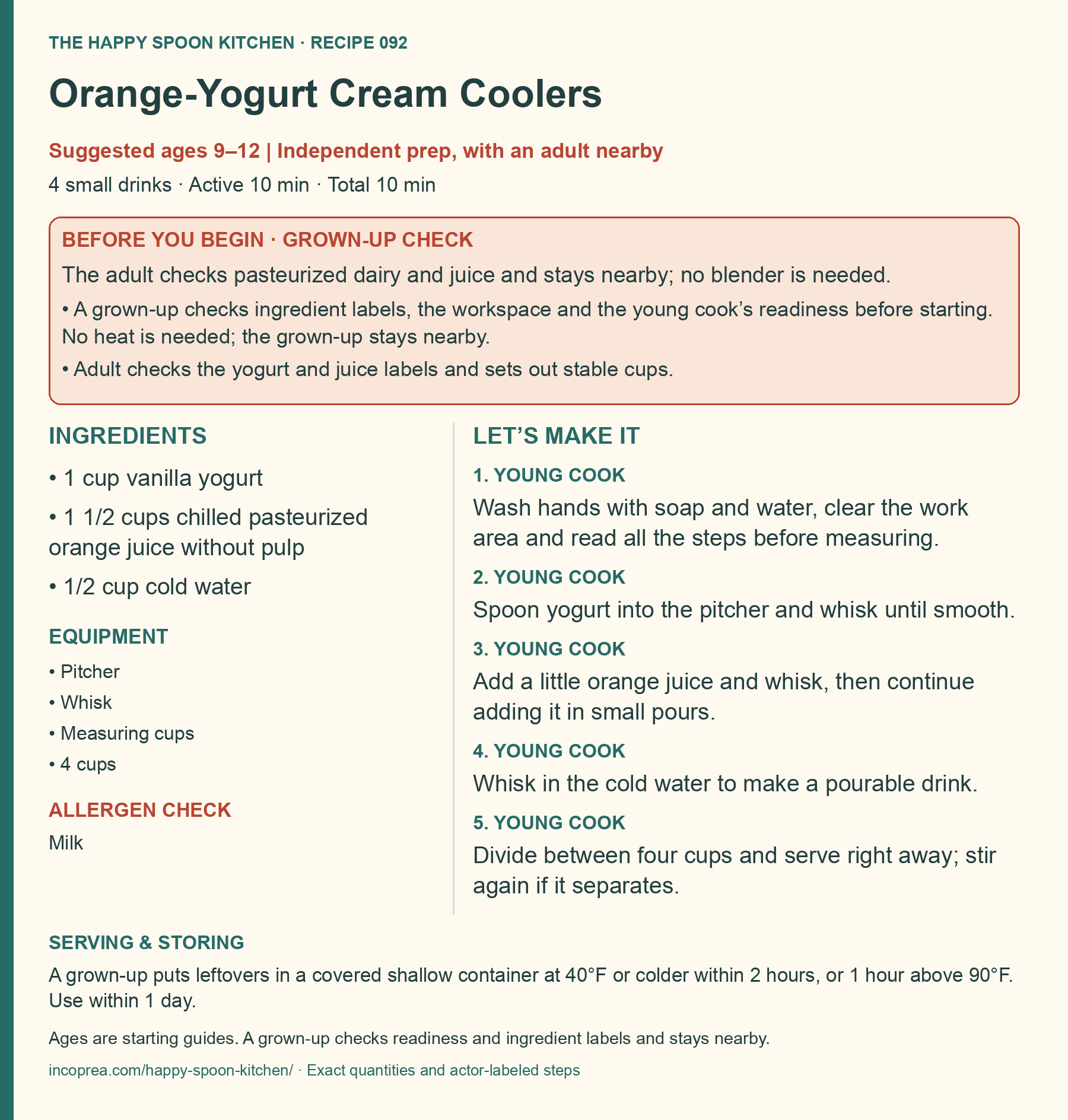
Yogurt and orange juice make a tangy, creamy drink that can be whisked by hand. Add the juice gradually so the yogurt loosens smoothly. It is a small drink to enjoy right after mixing, not something to leave standing on a warm table.

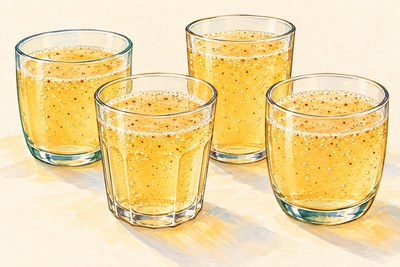
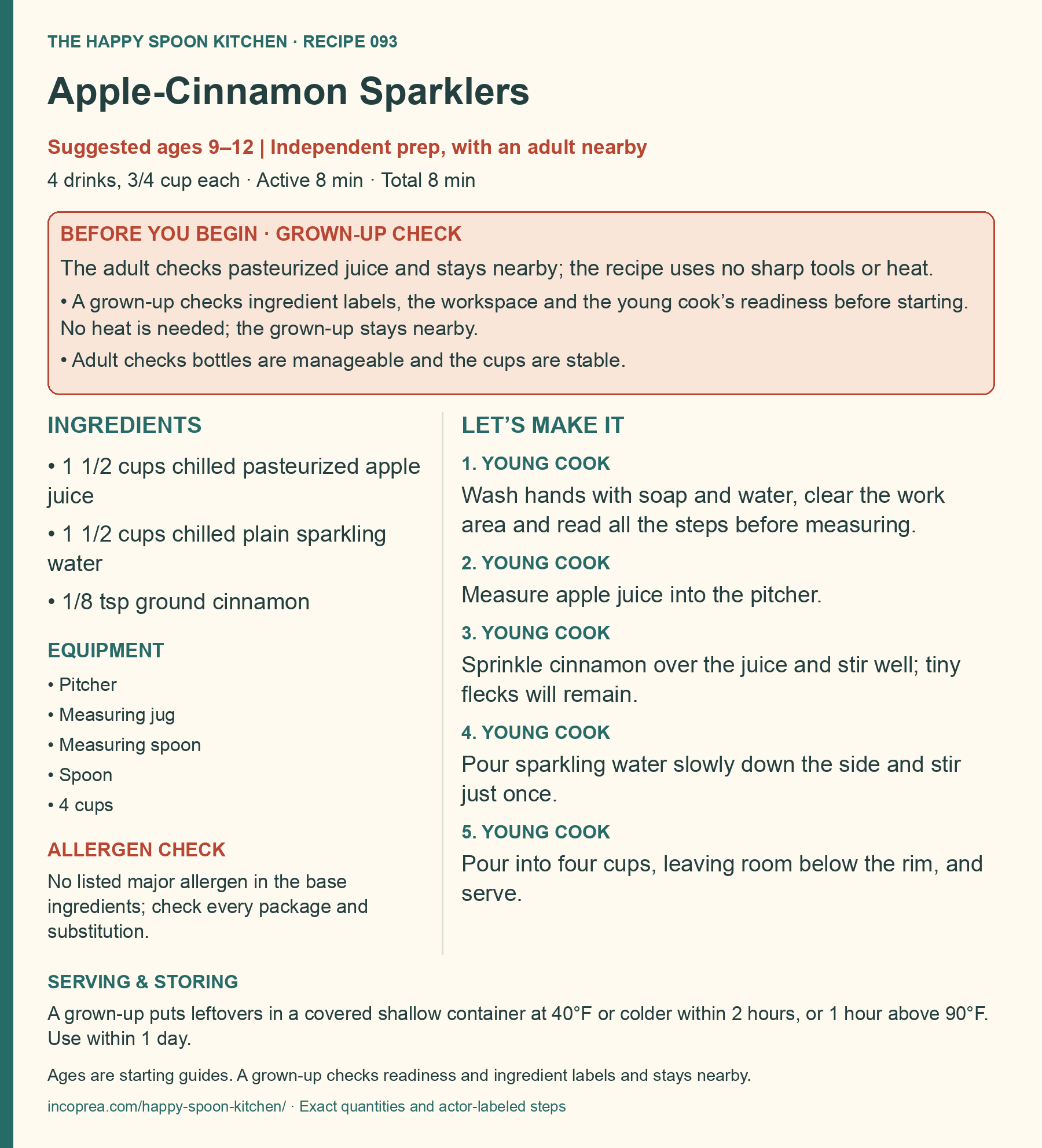
Apple juice becomes a lighter party drink when mixed with sparkling water. A very small pinch of cinnamon adds flavor without making it gritty. The measuring jug helps keep the same juice-to-water balance in every cup.

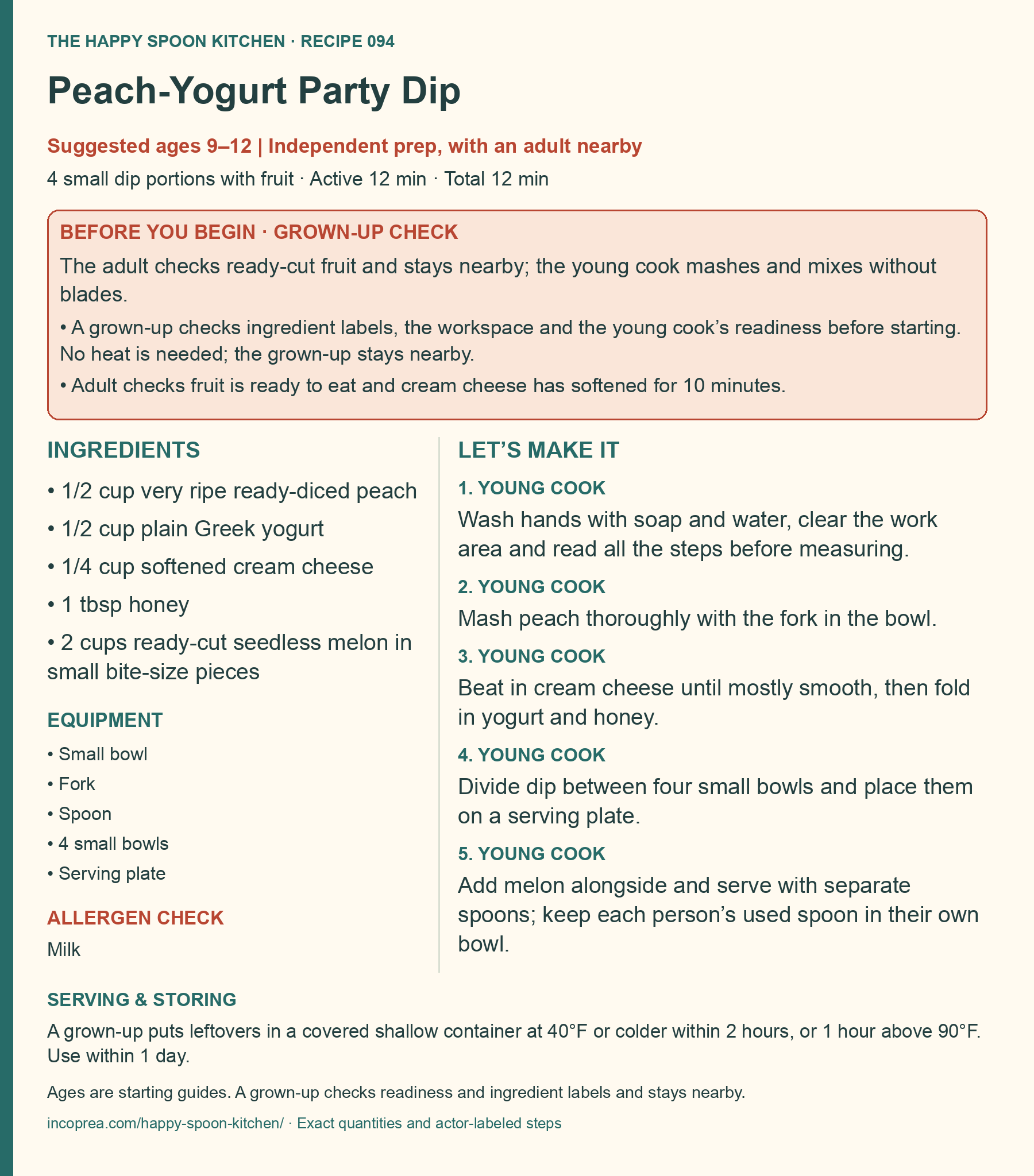
Very ripe peach can be mashed into a soft party dip. A little cream cheese gives it body, while yogurt keeps it spoonable. Serve the fruit alongside and give everyone a small portion so used spoons do not go back into the shared dip.

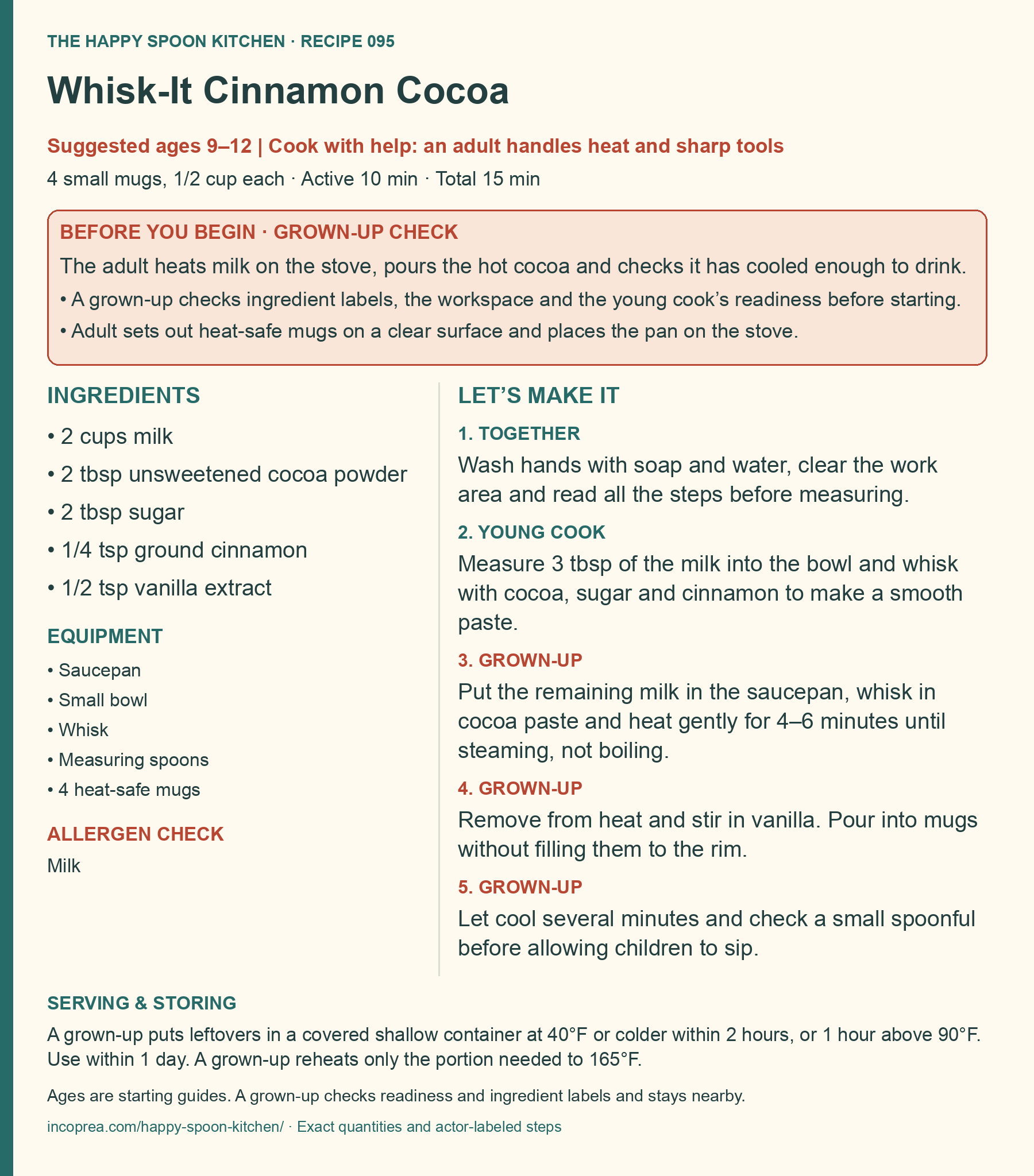
Cocoa powder mixes more smoothly into a paste than straight into a full pan of milk. The young cook makes that paste at the counter. The grown-up heats and pours the drink, then lets everyone wait for a comfortable sipping temperature.

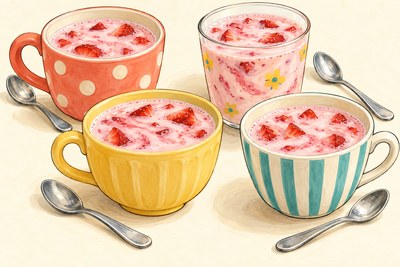
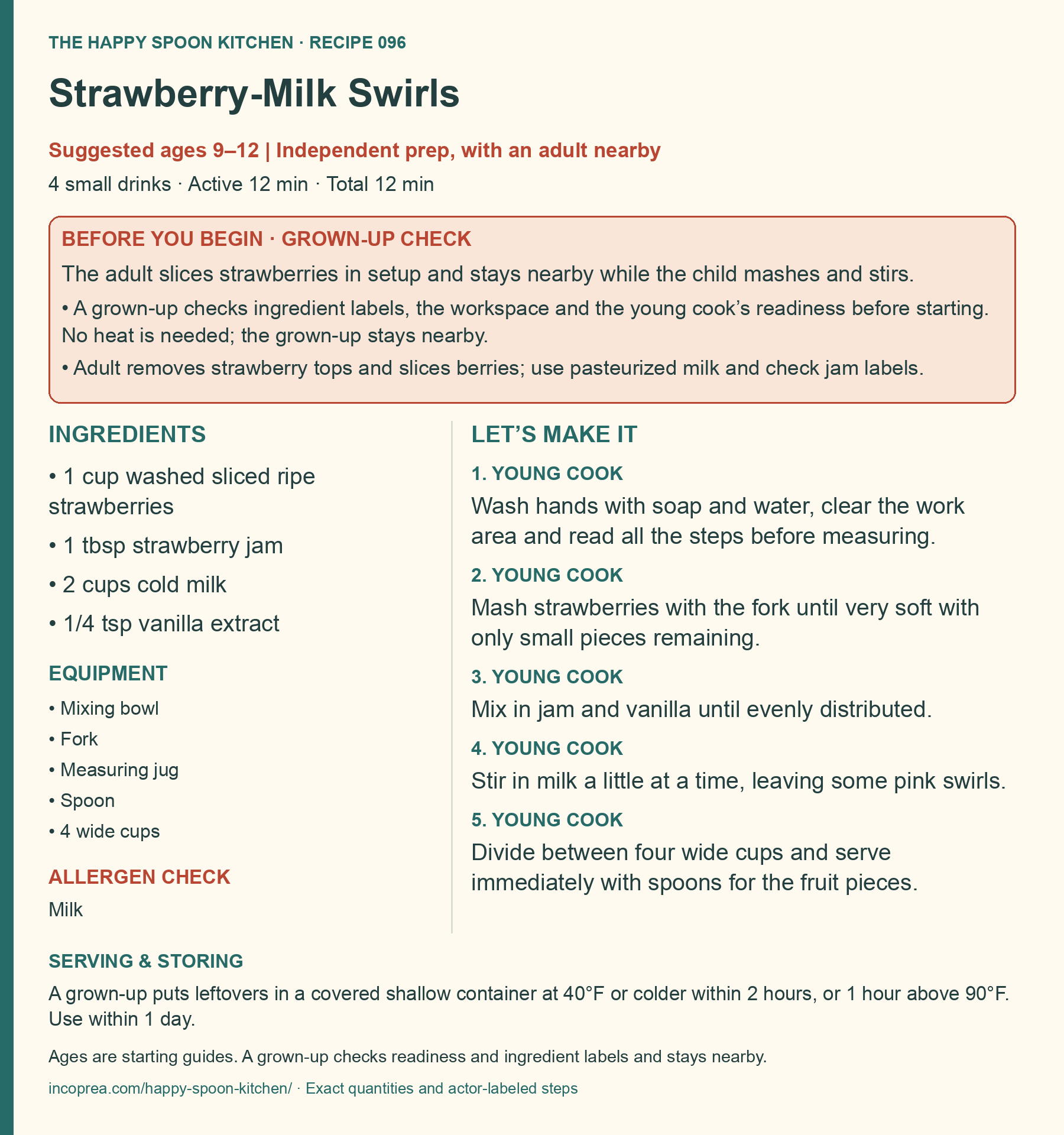
This hand-mixed strawberry milk keeps small fruit pieces instead of blending them away. Mash ripe berries well and stir in the milk slowly. It is a drink-and-spoon treat, so choose cups wide enough for a spoon.

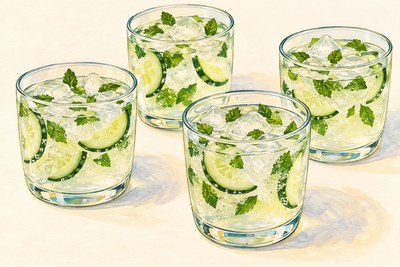
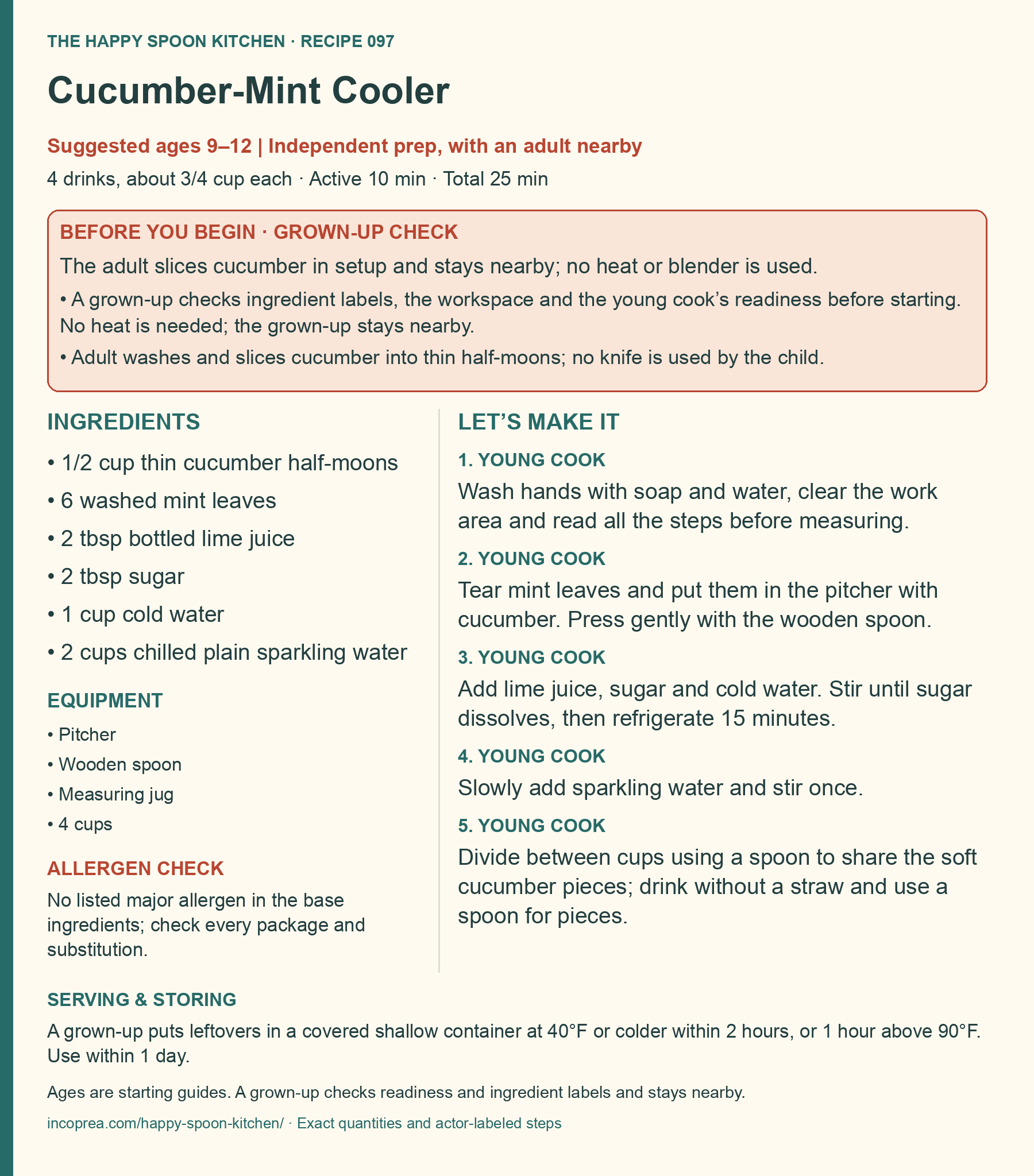
A few cucumber slices and torn mint leaves flavor this light lime cooler. Pressing them with a spoon releases more flavor than simply floating them on top. Chill the still mixture before adding sparkling water so the bubbles are fresh.
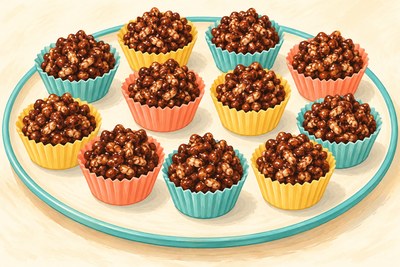
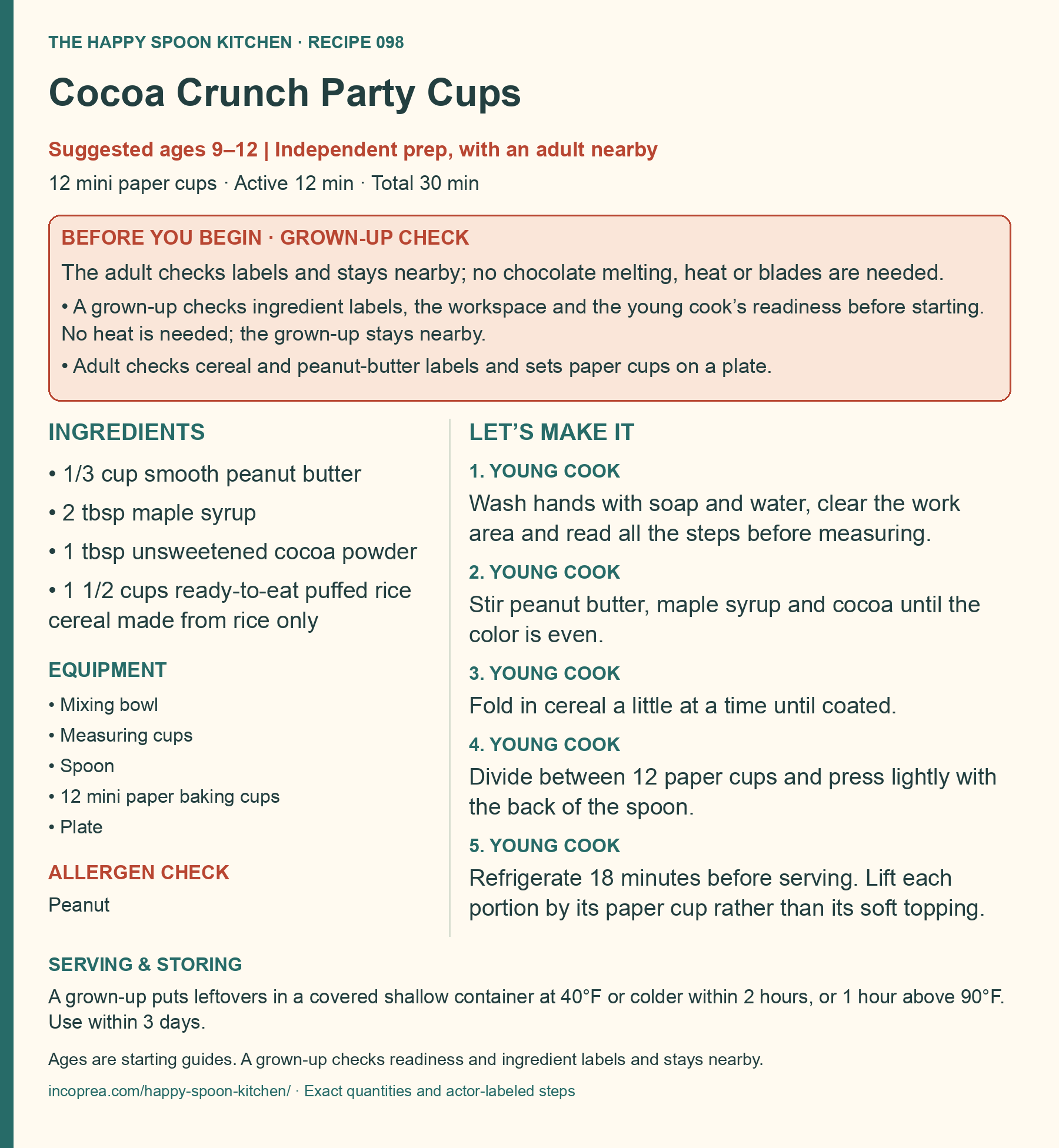
Cocoa flavors these little cereal cups without melting chocolate. A sticky peanut-butter mixture binds the crisp rice, and a short chill helps it hold together. Serve in paper cups so small hands have something clean to hold.
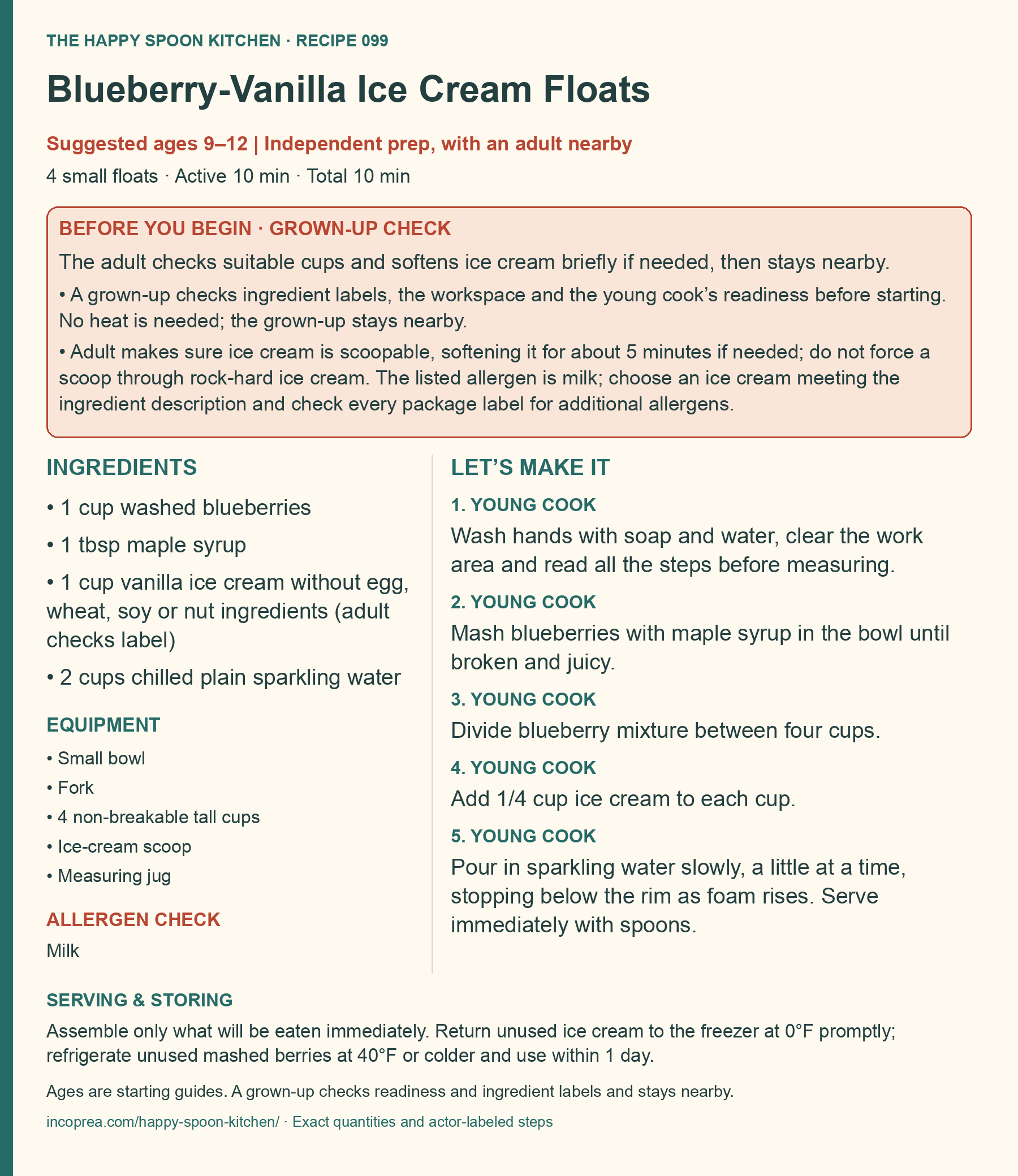
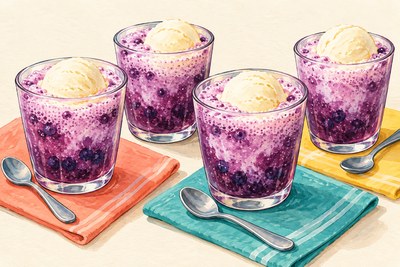
A spoonful of mashed blueberry gives these small floats a purple base. Sparkling water makes a foamy cap when it meets ice cream. Use a tall enough cup and pour slowly so the fun stays inside it.

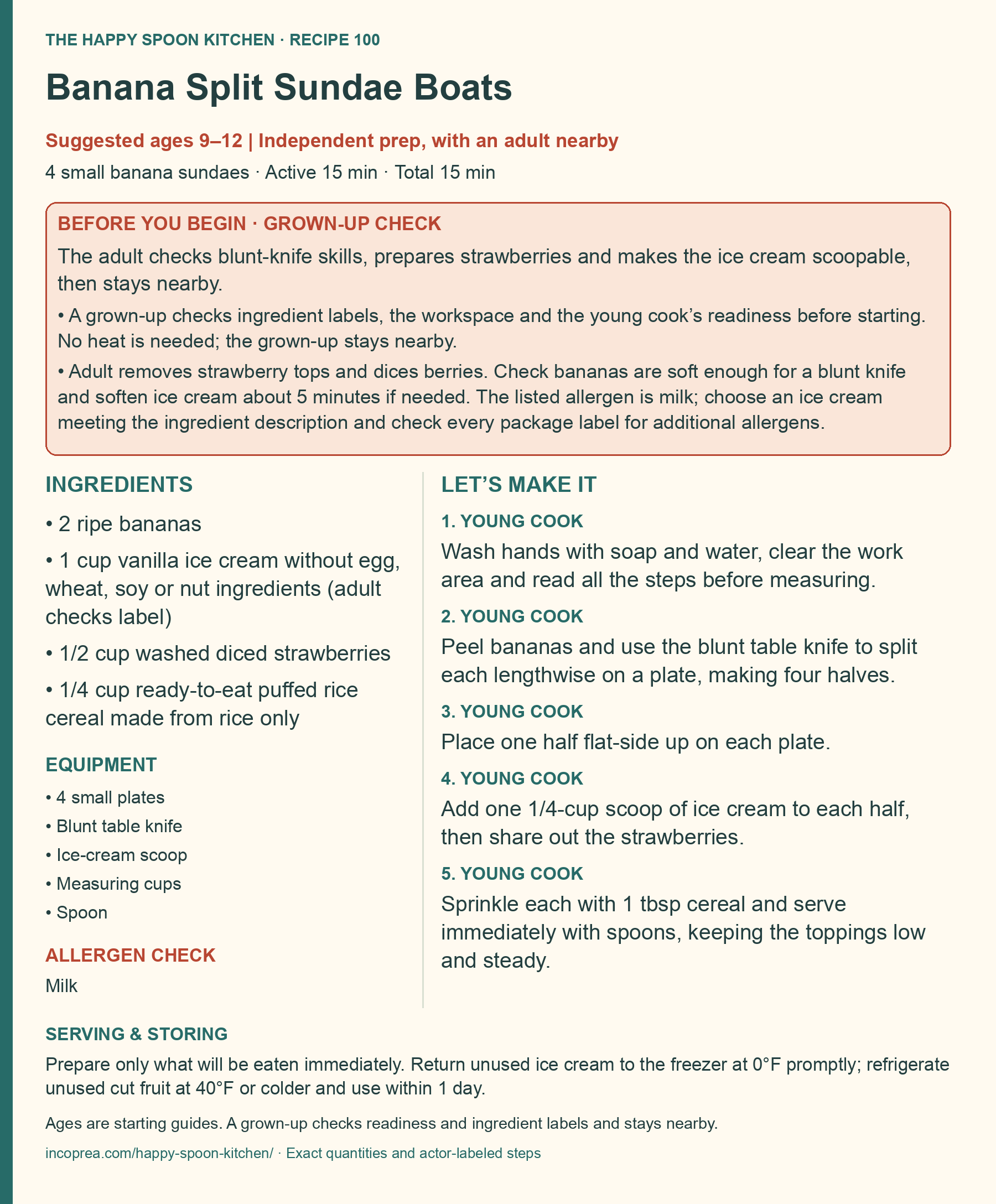
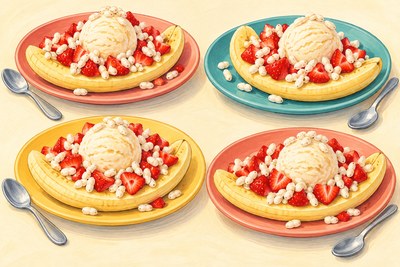
A banana half becomes the base for a small celebration sundae. Place it flat-side up so the scoop sits steadily. Fruit and a little crisp cereal finish the dish without tall decorations or sticks.
No matching recipes yet. Clear a filter or try another ingredient.