072 / 75 · Make the Most of What Is Left
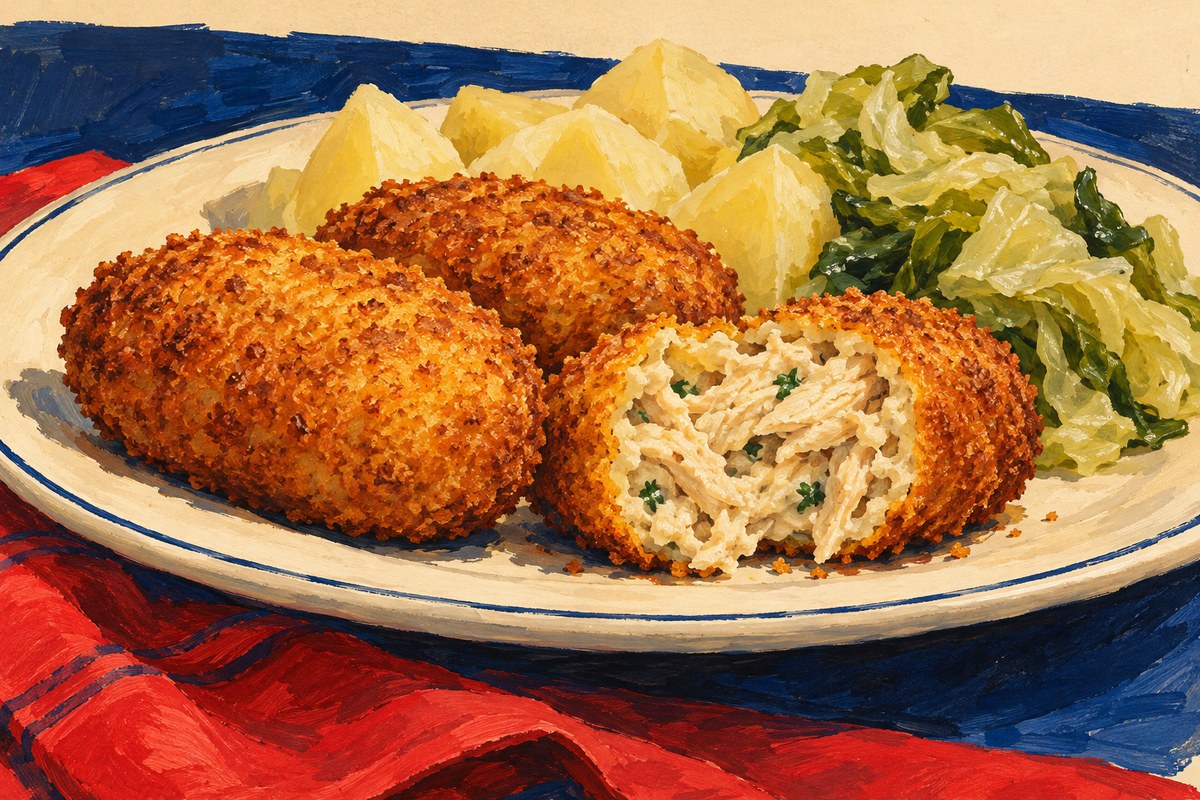
Roast Chicken Croquettes with Cabbage and Potatoes
12 chicken croquettes, 3 per person, with one-quarter each of the potatoes and cabbage · Active 1 hr 15 min · Total 4 hr
Print recipe · PDFCold roast chicken becomes crisp croquettes when it is held in a thick white sauce rather than mixed into another potato patty. The filling must chill fully before shaping, so this is a planned second meal rather than a last-minute use-up. Boiled potatoes and cabbage complete four generous plates.
Make a filling that holds its shape
The flour quantity is deliberately higher than in a pouring sauce. Cook it briefly with butter, add milk gradually and keep stirring until the mixture is very thick. Finely chopped chicken distributes more evenly than large shreds. Heat the combined filling thoroughly, then spread it thinly for chilling; a deep bowl stays warm longer and leaves the mixture difficult to shape.
Plan the cold stage
Allow at least two hours in the refrigerator and check that the filling is completely cold and firm. A tray or two shallow containers, with a layer no deeper than half an inch, makes the process more predictable. There is no advantage in trying to coat a warm, soft mixture with extra flour. The stated total includes the chilling time, and a filling that needs longer should be given it.
Turn with care, then check the center
Divide the cold filling into twelve pieces before rolling short, flattened ovals. Their modest thickness helps the centers heat while the crumbs color. A broad spatula is less likely to tear them than tongs squeezing the sides. Fry in batches without crowding, and use the thermometer on a center rather than judging the filling by the golden crust. Keep the chicken’s original storage deadline throughout: making a fresh sauce does not make older chicken new again.
Ingredients
- About 2 packed cups plain cooked roast chicken, skin and bones removed, finely chopped (300 g cold cooked meat)
- 3 tablespoons butter (45 g)
- 1 small onion, very finely chopped (100 g prepared)
- 1/2 cup all-purpose flour for filling (60 g)
- 1 1/2 cups milk (360 ml)
- 2 teaspoons prepared yellow mustard (10 g)
- 2 tablespoons finely chopped fresh parsley (10 g)
- 1 teaspoon fine salt (6 g), divided: 1/2 teaspoon/3 g for filling, 1/4 teaspoon/1.5 g each for potatoes and cabbage
- 1/2 teaspoon ground black pepper (1 g)
- 1/3 cup all-purpose flour for coating (40 g)
- 2 large eggs, beaten (100 g without shells)
- 1 cup plain dry breadcrumbs (80 g)
- 4 tablespoons neutral oil for frying (60 ml), divided equally between 3 batches
- 4 medium potatoes, peeled and cut into chunks (800 g prepared)
- About 4 cups shredded green cabbage (400 g prepared)
- About 6 cups water for boiling potatoes (1.5 L)
- 1/4 cup water for cabbage (60 ml)
- 1 tablespoon neutral oil for cooked vegetables (15 ml), divided equally
Set out
large saucepan and wooden spoon, one or two shallow trays or containers, refrigerator space, 3 shallow coating dishes, 12-inch/30 cm skillet, broad spatula, 2 saucepans for vegetables, food thermometer
Allergens
wheat, milk, egg, mustard. Check labels and substitutions.
Make it
- Check that the chicken was promptly chilled and remains within its original safe storage window. Melt butter in the large saucepan over medium-low heat. Cook onion for 7–8 minutes until soft. Stir in 60 g filling flour for 1 minute, then gradually add milk while stirring. Cook for 4–5 minutes until very thick.
- Add chicken, mustard, parsley, 3 g salt and pepper. Stir over low heat until the whole filling reaches 165°F/74°C. Spread into one or two shallow trays no more than 1/2 inch/1.25 cm deep. Refrigerate promptly for at least 2 hours, until completely cold and firm; allow longer if needed.
- Divide cold filling into 12 equal portions. Shape each into a short flattened oval about 2 1/2 inches/6 cm long and no thicker than 1 inch/2.5 cm. Put coating flour, beaten eggs and breadcrumbs in separate dishes. Coat each oval in flour, egg and crumbs, and refrigerate while preparing the vegetables.
- Put potatoes and their water in one saucepan. Bring to a boil and cook for 15–18 minutes until tender, then drain. Put cabbage and its 60 ml water in the other pan, cover and cook for 8–10 minutes until tender; drain. Divide the 15 ml vegetable oil between them and season each with its measured 1.5 g salt. Keep covered and hot.
- Heat 20 ml frying oil in the skillet over medium heat. Fry 4 croquettes for 4 minutes on each broad side, then turn briefly onto their edges if needed, until golden and 165°F/74°C in the center. Reduce heat if the crumbs darken before the centers are hot. Repeat twice with the remaining croquettes and oil, keeping raw-egg-coated batches refrigerated until cooking and cooked batches hot in a low oven.
- Serve 3 croquettes per person with one-quarter each of the potatoes and cabbage. Divide all the cooked vegetables between the 4 plates.
Choose chicken early in its window
This recipe needs a long cold stage. Use chicken from a recent meal with enough of its original safe refrigerated storage period remaining for the planned preparation.
Ingredient labels
Check breadcrumbs and prepared mustard labels. Seasonings or glazes already on the roast chicken may add allergens, which is why plain cooked chicken is specified.
A useful detail
The filling is a firm chicken white sauce, not mashed potato. A full cold set, small even croquettes and a safely reheated center matter more than a dark crust.
Another way
- Use 300 g plain cooked turkey instead of chicken, keeping its original storage deadline and the same 165°F/74°C endpoints.
- Use 400 g frozen peas instead of cabbage, cooking by the packet and dividing the measured vegetable oil between peas and potatoes.
Keep it well
The original chicken storage clock continues through filling, chilling and frying. Keep all stages at 40°F/4°C or below when not actively cooking, and use within 3 days of the chicken’s first cooking. Refrigerate finished croquettes and vegetables in shallow containers within 2 hours, or 1 hour above 90°F/32°C. Reheat a portion to 165°F/74°C throughout, without extending that original deadline.