073 / 75 · Make the Most of What Is Left
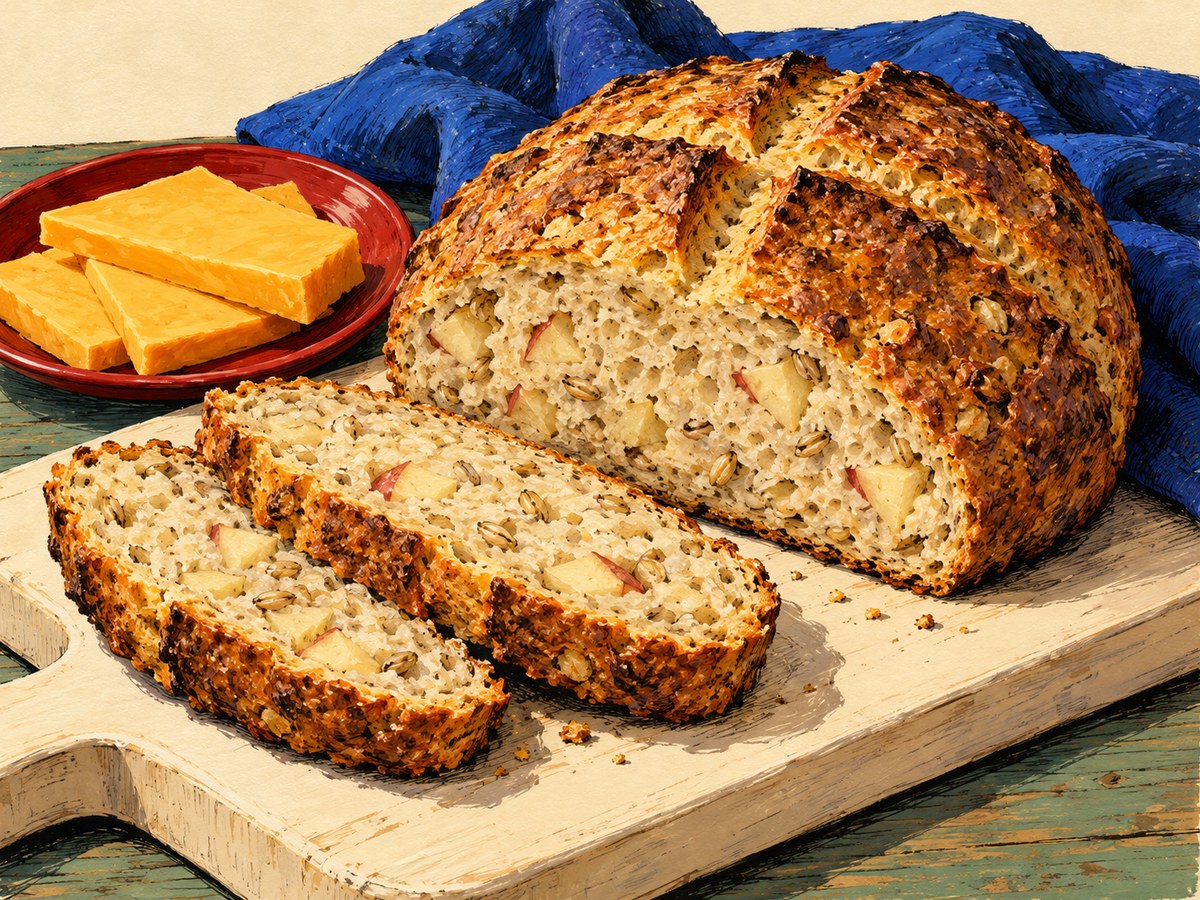
Cooked-Barley and Apple Soda Bread
1 round soda loaf cut into 8 thick slices; 2 slices and 30 g cheddar per person · Active 25 min · Total 2 hr
Print recipe · PDFA little cooked pearl barley gives this quick soda loaf a pleasing chew, while grated apple keeps the crumb moist without making a sweet cake. There is no yeast or warm proofing stage. Slice the loaf thickly and serve with the measured cheddar for four substantial bread-and-cheese breakfasts or simple lunches.
Use cold barley with a known date
The starting grain is fully cooked pearl barley that was promptly chilled and has been refrigerated for no more than twenty-four hours. Drain the barley very well. It should be separate enough to stir through the flour, not a creamy barley dish containing meat or sauce. Starting early in its storage window leaves time to cool and eat the loaf afterward. Mark the original barley cooking date before mixing the dough.
Mix gently and bake promptly
Yogurt supplies the acidity for the baking soda, and the dough goes straight from mixing to shaping. Lightly squeeze the grated apple before weighing it so excess juice does not make the dough loose. Stir the yogurt and oil into the dry mixture first, without milk. Work only until the flour has been incorporated; prolonged kneading is unnecessary. Add milk by the teaspoon only if dry flour pockets remain. The endpoint is a soft, slightly tacky dough that holds a low round rather than spreading like batter. A deep cross helps the center expand and cook.
Give the middle time to finish
A loaf containing fruit and cooked grain can brown outside before its center is ready. Check with a skewer as well as the stated internal temperature; it should not bring out sticky raw dough. Loosely cover the top if needed while the middle finishes. Cool on a rack before cutting so the crumb has time to settle. This is a refrigerated leftover-grain loaf rather than a bread to keep on the counter for several days.
Ingredients
- 3 1/3 cups all-purpose flour (400 g)
- 1 teaspoon baking soda (5 g)
- 3/4 teaspoon fine salt (4.5 g)
- 1 tablespoon plus 1 teaspoon sugar (16 g)
- About 1 cup plain cooked pearl barley, cold, very well drained, prepared within the last 24 hours (200 g)
- About 2 medium apples, cored, coarsely grated and lightly squeezed before weighing (200 g prepared after squeezing)
- 3/4 cup plain yogurt (180 g)
- Up to 2 tablespoons milk (30 ml), only if needed for dry flour pockets, added 1 teaspoon/5 ml at a time
- 1 tablespoon neutral oil (15 ml)
- 1 cup grated or sliced cheddar for serving (120 g)
Set out
mixing bowl, grater, baking tray and baking paper, knife, wire rack, skewer, food thermometer
Allergens
wheat, barley, milk. Check labels and substitutions.
Make it
- Check the barley’s original cooking date and refrigerated history. Heat the oven to 375°F/190°C and line the tray. Mix flour, baking soda, salt and sugar thoroughly in the bowl, then stir in the cold well-drained cooked barley and the lightly squeezed grated apple, weighed after squeezing.
- Stir yogurt and oil together without milk, then add to the dry mixture. Mix with a spoon and then a hand just until no dry flour remains. If dry pockets remain, add milk 1 teaspoon/5 ml at a time, using no more than 2 tablespoons/30 ml. Stop once the dough is soft and slightly tacky but holds a formable low round; do not add milk to an already joined dough. Do not knead as a yeast dough.
- Transfer to the lined tray and form a low round about 8 inches/20 cm across and 2 1/2 inches/6 cm high. Cut a deep cross, about 1 inch/2.5 cm into the top, dividing visually into quarters without cutting through the base. Put into the oven immediately.
- Bake for 55–65 minutes until well browned and the center reaches about 205°F/96°C. A skewer inserted into the thick center should show no sticky raw dough. If the top colors too quickly, cover loosely with foil and continue baking until done.
- Cool on a wire rack for at least 30 minutes before cutting into 8 thick slices. Serve 2 slices and 30 g cheddar per person. Refrigerate any planned saved portion after the brief cooling period rather than keeping this leftover-grain loaf at room temperature.
A measured leftover, not an uncertain scoop
The barley is plain, cold and weighed after cooking and draining well. A recent small leftover portion is suitable; a grain mixture with an unknown cooking date is not.
Ingredient labels
Barley contains gluten as does the wheat flour. Yogurt, milk and the included cheddar all supply milk.
A useful detail
Use well-drained barley and apple weighed after lightly squeezing out excess juice. Begin with yogurt and oil only; milk is a measured adjustment for persistent dry pockets. The formable soda dough is baked promptly without a warm rise. The thirty-minute cooling period is included in the total.
Another way
- Use 200 g plain cooked bulgur instead of barley, provided it was promptly chilled, remains within its original safe storage window and is very well drained; begin without milk and add it only for remaining dry flour pockets. Bulgur adds wheat.
- Use 200 g coarsely grated firm pear, lightly squeezed before weighing, instead of apple. Begin without milk and add a teaspoon only if dry flour pockets remain.
Keep it well
Cool on a rack and refrigerate within 2 hours, or 1 hour above 90°F/32°C, in a covered container at 40°F/4°C or below. Use within 2 days after baking and no later than 3 days after the barley was originally cooked, whichever is earlier. Keep cheddar refrigerated. Reheat only the slices needed until 165°F/74°C throughout; making bread does not restart the grain’s storage clock.