071 / 75 · Make the Most of What Is Left
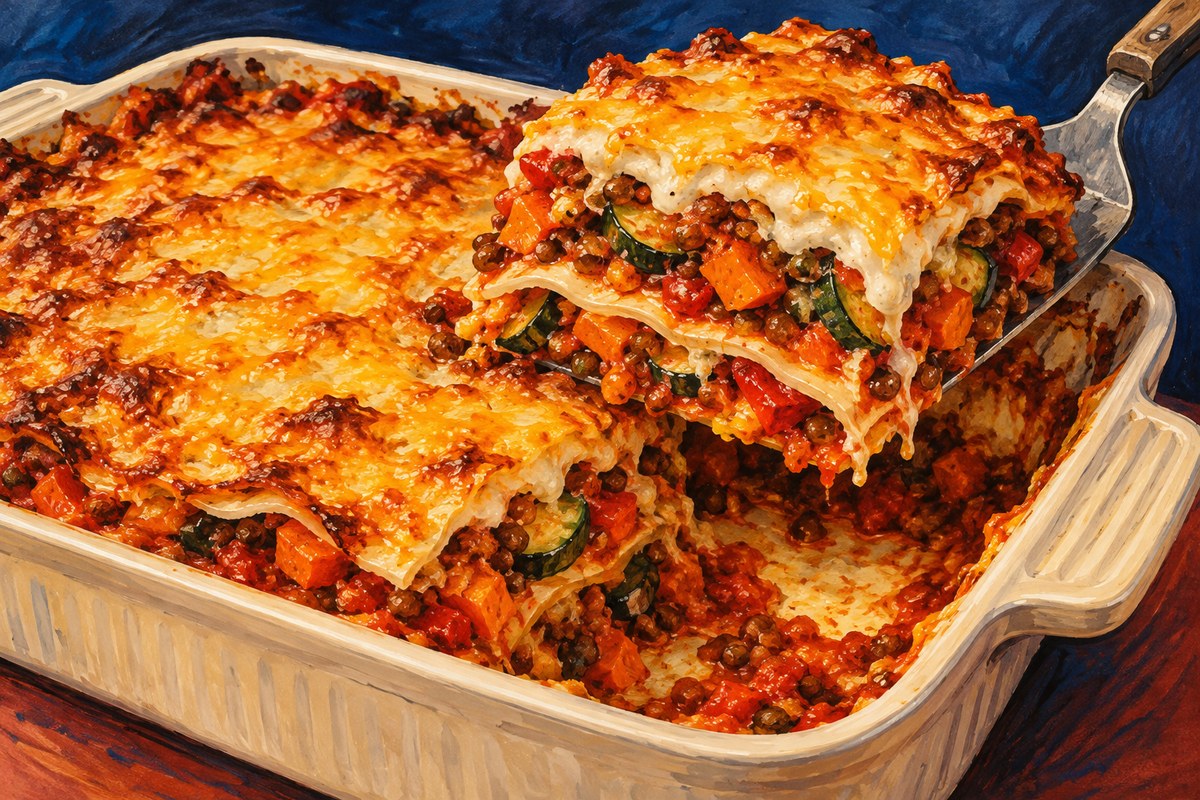
Roast-Vegetable and Lentil Lasagne
4 generous lasagne portions, each one-quarter of the finished dish · Active 35 min · Total 1 hr 50 min
Print recipe · PDFPlain roasted vegetables and cooked lentils become a layered supper with dried lasagne sheets and a simple milk sauce. The vegetables are already cooked, so the oven stage concentrates on softening the pasta and heating the whole dish thoroughly. A measured tomato sauce supplies moisture rather than relying on whatever liquid happens to be in the leftovers.
Start with suitable leftovers
Use vegetables that were promptly chilled after their first meal and have remained refrigerated. Plain roasted carrots, zucchini, peppers, onions or eggplant work well; creamy gratins, dressed salads and rice mixtures are different starting materials. Cut large pieces down so each serving gets a mixture. Lentils should be cooked and drained, not dry lentils added with the hope that they will soften inside the layers.
Give dried pasta enough sauce
The sheets need moisture around them, especially along their edges. Spread a little tomato mixture under the first layer, break sheets to fit without thick overlaps, and cover the exposed corners before baking. A tightly covered first stage traps steam while the pasta softens. The final uncovered stage colors the topping; it cannot rescue dry corners that were left sticking out of the sauce.
Label the earliest deadline
Turning two leftovers into one dish does not create a new storage window for the older ingredient. Mark the cooked-vegetable and lentil dates before starting and keep the earlier deadline for any lasagne saved afterward. If either ingredient is already near the end of its safe window, make only what will be eaten promptly. The point is to use good food thoughtfully, not hide an uncertain history beneath a fresh topping.
Ingredients
- About 4 cups plain cooked roasted mixed vegetables, cold and cut into bite-size pieces (600 g)
- About 2 cups cooked lentils, cold and well drained (360 g)
- 1 medium onion, finely chopped (150 g prepared)
- 2 tablespoons neutral oil (30 ml), divided equally between tomato and milk sauces
- 2 garlic cloves, minced (6 g prepared)
- 2 cans crushed tomatoes (28 oz/800 g total)
- 1 cup water (240 ml)
- 1 teaspoon dried oregano (1 g)
- 3/4 teaspoon fine salt (4.5 g), divided: 1/2 teaspoon/3 g for tomato filling and 1/4 teaspoon/1.5 g for milk sauce
- 1/2 teaspoon ground black pepper (1 g)
- 1/4 cup all-purpose flour (30 g)
- 1 1/2 cups milk (360 ml)
- About 9–12 dried lasagne sheets, enough for 3 thin layers in the stated dish (200 g total)
- 2/3 cup grated cheddar (80 g)
Set out
knife and board, large skillet or saucepan, small saucepan and whisk, 3-quart/3 L baking dish about 8 by 12 inches/20 by 30 cm, foil, broad serving spatula, food thermometer
Allergens
wheat, milk. Check labels and substitutions.
Make it
- Check the original cooking dates of both leftovers. Heat the oven to 375°F/190°C. Cut roasted vegetables into roughly 3/4-inch/2 cm pieces and drain the cooked lentils well.
- Heat 15 ml oil in the large pan over medium heat. Cook onion for 7 minutes, then garlic for 30 seconds. Add tomatoes, water, oregano, 3 g salt and pepper. Simmer for 10 minutes. Stir in vegetables and lentils and heat until steaming, keeping the mixture loose enough to surround dry pasta.
- In the small saucepan, stir flour into the remaining 15 ml oil over low heat for 1 minute. Gradually whisk in milk and the final 1.5 g salt. Cook, stirring, for 3–4 minutes until smooth and thickened. Remove from heat.
- Spread a thin layer of tomato filling over the dish base. Add one-third of the dry pasta, breaking sheets to fit without thick overlaps, then one-third of the remaining tomato filling and one-third of the milk sauce. Repeat twice, ending with sauces that completely cover the last sheets. Scatter all the cheddar over the top.
- Cover tightly with foil without pressing it into the topping. Bake for 40–45 minutes, then uncover and bake for 10–15 minutes more. Check that a knife passes through the center pasta easily and the middle reaches 165°F/74°C; if pasta is firm, cover and bake longer.
- Rest for 10 minutes, then divide all layers and topping into 4 equal portions. Serve hot and label any planned leftovers with the original earliest storage deadline.
A real second meal
The source vegetables are specifically plain and cooked. This method changes their structure into a complete pasta bake rather than simply warming the same tray again.
Ingredient labels
Lasagne sheets may also contain egg; check their label. Check canned tomatoes and seasoning on the original vegetables for additional allergens.
A useful detail
Sheet sizes vary. Use the stated total weight and distribute it across three thin layers. Covered baking and sauce around every edge are important for dried sheets.
Another way
- Use 600 g freshly cooked roast vegetables, cooled enough to handle, instead of leftovers. Their preparation is additional to the stated time.
- Replace cooked lentils with 360 g drained canned white beans, roughly crushing half to help them sit between the layers.
Keep it well
Refrigerate shallow portions within 2 hours, or 1 hour above 90°F/32°C, at 40°F/4°C or below. Use within 3 days of the original cooking of the oldest vegetable or lentil component, not 3 new days after baking. Reheat only the portion needed to 165°F/74°C throughout. Do not use leftovers with an uncertain storage history.