017 / 75 · Cold Supper Centerpieces
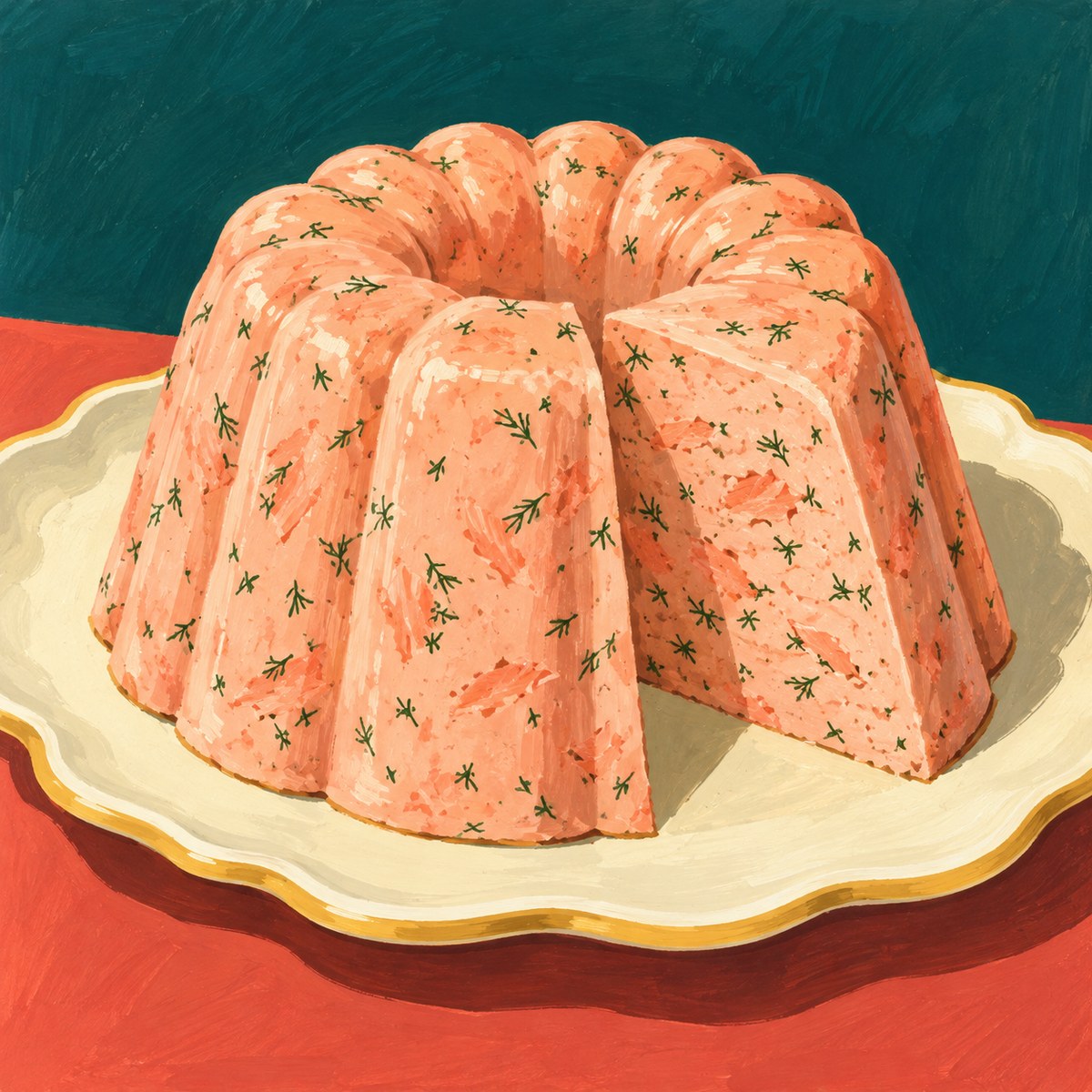
Salmon Dill Lemon Supper Mold
One small salmon-dill mold, about 3¼ cups (780 ml); 4 modest cold fish-course portions · Active 30 min · Total 10 hr
Print recipe · PDFCanned salmon is folded into a lemony yogurt-and-milk gel, with dill distributed through the pale pink body. This uses the fish as a ready-to-eat ingredient rather than asking a cold mold to cook it. Serve small fish-course portions with other separately named foods for the rest of the meal.
Take the drained fish weight seriously
The 240-gram measure is fish after draining and checking, not the net weight on a can that also includes liquid. Remove any hard fragments; soft edible canned bones and skin can be removed if desired before taking that final weight. Flake gently with a fork, leaving a little texture rather than blending everything into paste. Refrigerate opened fish promptly while preparing the base.
Dill and lemon are inside the mold
Finely chop washed dried dill and use a measured lemon quantity. A whole herb crown or a squeezed extra lemon at the end would change both the flavor and the recipe presentation. A few spoonfuls of cold yogurt are whisked gradually into the lukewarm dissolved gelatin first; that smooth tempered mixture then joins the remaining cold yogurt, helping prevent small elastic threads. Fold in the fish after that mixture is smooth and lightly thickened. The final color should be softly pink and creamy, with flakes visible at a slice—not a bright red transparent fish jelly.
Ingredients
- Unflavored powdered gelatin, 12 g (one standard 7 g envelope plus 5 g weighed from another), of specified setting strength
- ¼ cup cold drinking water (60 ml)
- ¾ cup pasteurized whole milk (180 ml)
- 1 cup thick plain pasteurized Greek-style yogurt (240 g), kept cold
- 8½ oz ready-to-eat canned salmon (240 g drained and checked), kept cold
- 1 tablespoon plus 1 teaspoon lemon juice (20 ml)
- 2 tablespoons finely chopped washed dill (4 g)
- ⅛ teaspoon fine salt (0.75 g), or omit if fish is salty
- ⅛ teaspoon black pepper
- ¼ teaspoon neutral oil (1.25 ml), for wiping mold
Set out
Sieve, Fork and clean plate for checking salmon, Small saucepan, Mixing bowl and whisk, Scale and measuring jug, Metal mold of at least 1-liter capacity, Paper towel, Food thermometer, Cold platter, Refrigerator
Allergens
Fish (salmon), Milk. Check labels and substitutions.
Make it
- Check mold capacity, dry and oil lightly. Drain canned salmon, check for hard fragments and flake into small pieces; weigh 240 g after any skin or bone removal. Keep cold. Bloom gelatin in 60 ml cold water in the saucepan 5–10 minutes.
- Add milk and heat gently while stirring until gelatin fully dissolves, about 120–140°F (50–60°C). Remove from heat before boiling. Whisk 3 tablespoons yogurt into the warm base gradually. Once smooth and merely lukewarm, whisk into the remaining cold yogurt with lemon, dill, salt and pepper.
- Refrigerate 15–25 minutes until lightly thickened, stirring gently. Fold in cold salmon flakes. Spoon into mold with at least ½ inch (1.25 cm) headroom; put excess in a separate small refrigerator cup.
- Cover and refrigerate at 40°F (4°C) or below at least 8 hours until fully set. Allow 10 hours total including draining and preliminary chilling; the fish was already fully cooked and ready to eat.
- For unmolding, set a cold plate beside the refrigerator. Dip only the outside of the metal mold in warm, not hot, water, about 100°F (38°C), for 5–8 seconds without letting water touch food. Dry the outside, loosen just the upper edge with a clean fingertip and invert onto the plate. If stuck, repeat a brief dip rather than shaking violently. Refrigerate again immediately if not serving now. Divide into 4 modest cold fish-course portions and serve promptly.
Gelatin starting strength
Use food-grade unflavored powdered gelatin with a manufacturer benchmark of 7 g for about 2 cups (500 ml) plain liquid. Weigh the stated grams: envelope sizes and powder density vary. A flavored dessert packet, collagen peptides, sheet gelatin or agar is not an equal substitute.
Cold service
This is an original retro-inspired recipe, not a recovered 1960s formula. Gelatin is animal-derived; the vegetable ingredients do not make the dish vegetarian. A reliable refrigerator and the stated earlier ingredient deadlines are essential.
Ingredient labels
Check yogurt, salmon, milk and gelatin labels for other ingredients.
A useful detail
The gel matrix contains 60 ml water +180 ml milk +20 ml lemon +240 g thick yogurt, then 240 g drained fish. Twelve grams gelatin supports the moist fish mixture. This is not a method for raw salmon or a reheat-required canned product.
Another way
- Use 240 g ready-to-eat canned trout, drained and checked, as a different fish choice; its own label and deadline control.
- Use 4 g finely chopped washed chives instead of dill for a different herb profile.
Keep it well
Keep covered at 40°F (4°C) or below and use within 24 hours of final assembly or any earlier seafood/dairy/opening deadline, whichever comes first. The eight-hour set is included in that day. Keep cumulative unrefrigerated preparation/service below 2 hours, or 1 hour above 90°F (32°C); discard beyond it. Do not freeze or reset a seafood clock by making gelatin.