018 / 75 · Cold Supper Centerpieces
Tuna Olive Tomato Luncheon Ring
One tomato-tuna luncheon ring, about 3¾ cups (920 ml); 4 modest cold tuna-course portions · Active 30 min · Total 10 hr
Print recipe · PDFTuna flakes and black olive pieces give a tomato aspic ring a stronger luncheon character. A little celery keeps the texture varied. The ring is a cold protein course for four, with any bread, potatoes or other sides prepared and counted separately.
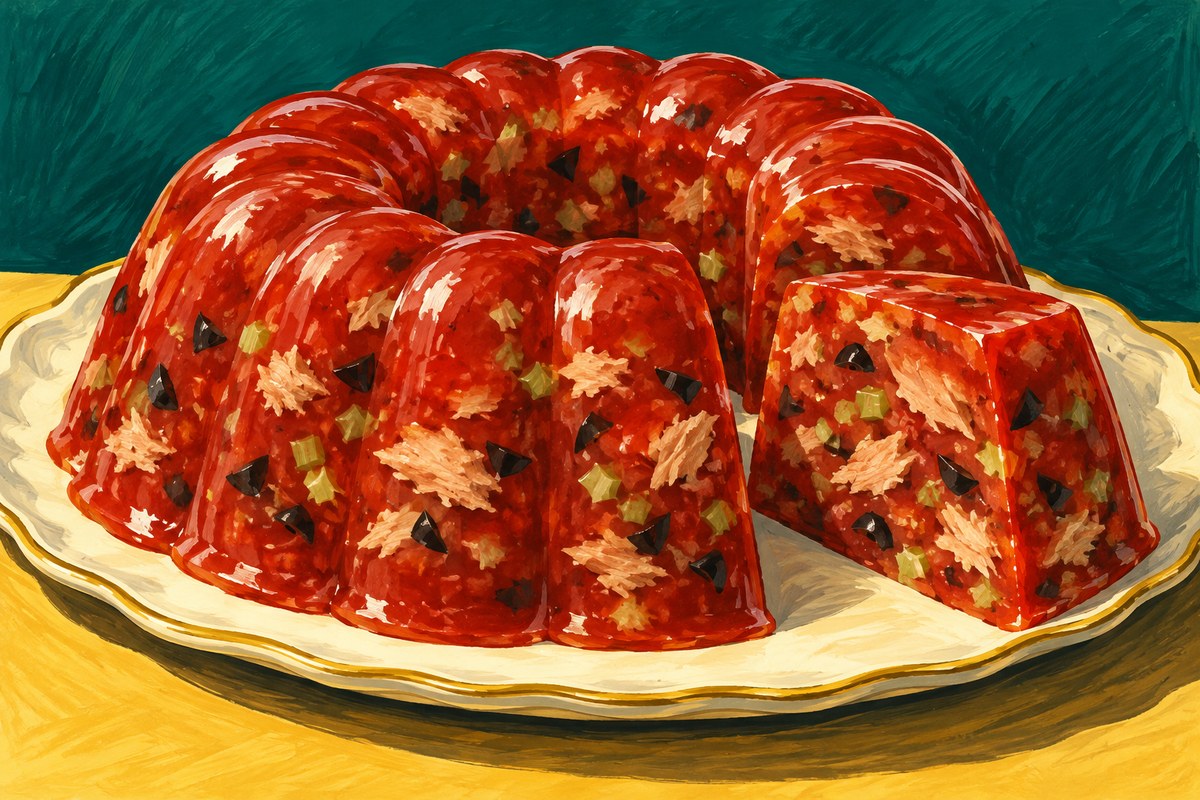
Drain tuna, then keep its flakes
Use commercially canned ready-to-eat light tuna packed in water. Drain well and weigh the fish rather than counting cans of different sizes. Break large pieces gently with a fork; blending would hide the fish and change the mouthfeel. The olive quantity is deliberately small because brine and tuna already contribute salt. Drain and blot olives too, and read the tomato-juice label before adding more salt.
Tomato gel should hold the fish, not hide it
The liquid begins to thicken in the refrigerator before any fish enters. Fold at that stage so tuna and celery stay distributed instead of settling into a dense layer below empty red gel. Short clean spoon turns preserve the flakes. A naturally cloudy tomato body is expected; it need not be optically clear. Begin with cold fish and serve the finished ring cold, respecting the original opening deadline through the overnight setting period. Gelatin is a texture tool, not a preservation step.
Ingredients
- 2 standard ¼-ounce envelopes unflavored powdered gelatin (14 g total), of specified setting strength
- 6 tablespoons cold drinking water (90 ml)
- 2 cups unsweetened tomato juice (480 ml), divided
- 1 tablespoon red-wine vinegar (15 ml)
- ⅛ teaspoon fine salt (0.75 g), or omit if products are salty
- ⅛ teaspoon black pepper
- 9 oz ready-to-eat canned light tuna packed in water (250 g drained), kept cold
- ¼ cup pitted ready-to-eat black olives (40 g drained), blotted and finely chopped
- ⅓ cup very finely diced washed celery (40 g), dried and strings removed
- ¼ teaspoon neutral oil (1.25 ml), for wiping mold
Set out
Sieve, Fork and clean bowl, Knife and clean board, Small saucepan, Mixing bowl and spoon, Scale and measuring jug, Metal ring mold of at least 1¼-liter capacity, Paper towel, Food thermometer, Cold platter, Refrigerator
Allergens
Fish (tuna). Check labels and substitutions.
Make it
- Check mold capacity, dry and oil lightly. Drain tuna and olives; flake fish and chop olives, keeping both cold with the dry celery. Bloom gelatin in 90 ml cold water in the mixing bowl 5–10 minutes.
- Heat 240 ml tomato juice with salt and pepper to 140–150°F (60–65°C), take off heat and stir into gelatin until fully dissolved. Add remaining 240 ml juice and vinegar. Refrigerate, stirring gently every 10 minutes, until lightly syrupy, about 25–40 minutes.
- Fold in cold tuna, olive and celery. Spoon into ring with at least ½ inch (1.25 cm) below its rim, placing excess in a small separate refrigerator cup. Keep raw-food utensils away from this ready-to-eat mixture.
- Cover and refrigerate at 40°F (4°C) or below at least 8 hours and until firm through the center. Allow 10 hours total including preparation and suspension; the fish is a listed ready-cooked starting ingredient.
- For unmolding, set a cold plate beside the refrigerator. Dip only the outside of the metal mold in warm, not hot, water, about 100°F (38°C), for 5–8 seconds without letting water touch food. Dry the outside, loosen just the upper edge with a clean fingertip and invert onto the plate. If stuck, repeat a brief dip rather than shaking violently. Refrigerate again immediately if not serving now. Serve 4 modest tuna-course portions promptly, with the remainder of a meal separately chosen.
Gelatin starting strength
Use food-grade unflavored powdered gelatin with a manufacturer benchmark of 7 g for about 2 cups (500 ml) plain liquid. Weigh the stated grams: envelope sizes and powder density vary. A flavored dessert packet, collagen peptides, sheet gelatin or agar is not an equal substitute.
Cold service
This is an original retro-inspired recipe, not a recovered 1960s formula. Gelatin is animal-derived; the vegetable ingredients do not make the dish vegetarian. A reliable refrigerator and the stated earlier ingredient deadlines are essential.
Ingredient labels
Tomato juice, olives, canned fish and gelatin can include other ingredients; check the actual labels.
A useful detail
Measured free liquid is 585 ml: 90 ml bloom water +480 ml tomato juice +15 ml vinegar. Tuna 250 g, olives 40 g and celery 40 g add 330 g inclusions. Fourteen grams gelatin supports the acidic, moist ring. No olive brine or tuna water is added.
Another way
- Use 40 g drained pitted green olives instead of black, accepting their different salt and flavor.
- Use 250 g ready-to-eat canned salmon, drained and checked, as a separately named fish variation with its own earlier deadline.
Keep it well
Keep covered at 40°F (4°C) or below and use within 24 hours of final assembly or any earlier seafood/dairy/opening deadline, whichever comes first. The eight-hour set is included in that day. Keep cumulative unrefrigerated preparation/service below 2 hours, or 1 hour above 90°F (32°C); discard beyond it. Do not freeze or reset a seafood clock by making gelatin.