016 / 75 · Cold Supper Centerpieces
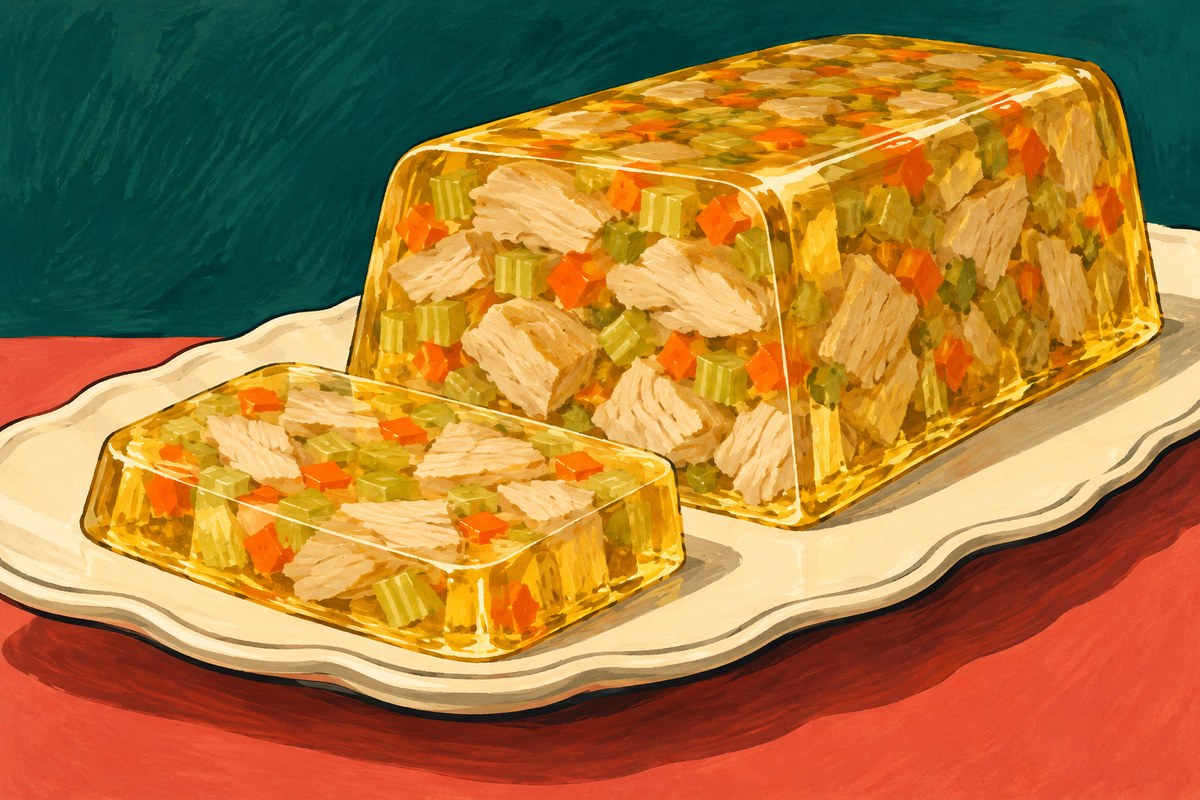
Chicken Celery Clear Aspic Loaf
One chicken-celery aspic loaf, about 4¼ cups (1.05 liters); 4 modest cold chicken-course portions · Active 30 min · Total 10 hr
Print recipe · PDFSmall pieces of fully cooked chicken, celery and carrot are suspended in a clear savory loaf. Start with properly chilled ready-to-eat chicken, so the warm broth is only dissolving gelatin rather than being mistaken for a poultry cooking step. Four portions are a cold protein course, with bread or another side served separately.
The chicken is cooked before this recipe starts
Use freshly cooked chicken that has already been promptly chilled, or a commercially fully cooked product whose label permits cold ready-to-eat service. Raw chicken, a cook-before-eating product and meat left warm on a counter are not starting ingredients. Making the mold takes another overnight period, so check the original cooking or package-opening date before beginning. A fresh gel does not make old chicken fresh again.
Cut small without shredding everything
Half-inch chicken pieces are easy to divide through a slice, while very long fibers can drag through the gel. Dry the celery after washing, remove tough strings and dice finely. Canned plain carrot is an explicitly ready-cooked choice; drain and blot it before cutting. Keep all three cold while the broth base begins to thicken. A small amount of seasoning lets the chicken remain recognizable instead of relying on a strongly salted stock cube.
A cold loaf can complete a plate, not a diet
Each portion contains about 75 grams of cooked chicken. Add a separately prepared starch or vegetable according to the meal wanted rather than claiming the transparent broth is a complete dinner. Unmold close to service, slice with a clean thin knife and refrigerate the remainder while people eat. This is cold-service food, so do not plan to restore it by reheating: heat would melt the structure before it made an attractive leftover dish.
Ingredients
- 2 standard ¼-ounce envelopes unflavored powdered gelatin (14 g total), of specified setting strength
- 6 tablespoons cold drinking water (90 ml)
- 2¼ cups clear ready-to-use low-sodium chicken broth (540 ml), divided
- 1 tablespoon lemon juice (15 ml)
- ⅛ teaspoon fine salt (0.75 g), or omit if broth is salty
- ⅛ teaspoon black pepper
- 10½ oz fully cooked ready-to-eat plain chicken meat (300 g), already safely chilled, cut into ½-inch (1 cm) pieces
- ½ cup very finely diced celery (60 g), washed, dried and strings removed
- ½ cup plain canned carrot dice (60 g drained), blotted dry
- ¼ teaspoon neutral oil (1.25 ml), for wiping mold
Set out
Knife and clean board, Small saucepan, Mixing bowl and spoon, Scale and measuring jug, Metal loaf mold of at least 1½-liter capacity, Paper towel, Food thermometer, Cold platter, Refrigerator
Allergens
No major US allergen identified in the base ingredients. Check labels and substitutions.
Make it
- Read the chicken’s ready-to-eat label or original cooking date and confirm it will remain within the stated cold-storage limit through tomorrow’s service. Keep chicken, dry celery and drained carrot refrigerated. Check mold capacity, dry and wipe with oil. Bloom gelatin in 90 ml cold water 5–10 minutes in the mixing bowl.
- Heat 300 ml broth with salt and pepper to 140–150°F (60–65°C), remove from heat and stir into gelatin until fully dissolved. Add remaining 240 ml broth and lemon. Do not boil the gelatin or put raw poultry into this base.
- Refrigerate the bowl, stirring gently every 10 minutes, until lightly syrupy, usually 25–45 minutes. Fold in the cold chicken, celery and carrot. Spoon into mold, leaving at least ½ inch (1.25 cm) below rim; place any excess in a separate small covered refrigerator cup.
- Cover and refrigerate at 40°F (4°C) or below at least 8 hours until firm throughout. Allow 10 hours total including preparation and suspension. This timetable starts with cooked chilled chicken; cooking and cooling raw poultry would be separate advance work.
- For unmolding, set a cold plate beside the refrigerator. Dip only the outside of the metal mold in warm, not hot, water, about 100°F (38°C), for 5–8 seconds without letting water touch food. Dry the outside, loosen just the upper edge with a clean fingertip and invert onto the plate. If stuck, repeat a brief dip rather than shaking violently. Refrigerate again immediately if not serving now. Slice into 4 modest cold chicken-course portions and serve promptly.
Gelatin starting strength
Use food-grade unflavored powdered gelatin with a manufacturer benchmark of 7 g for about 2 cups (500 ml) plain liquid. Weigh the stated grams: envelope sizes and powder density vary. A flavored dessert packet, collagen peptides, sheet gelatin or agar is not an equal substitute.
Cold service
This is an original retro-inspired recipe, not a recovered 1960s formula. Gelatin is animal-derived; the vegetable ingredients do not make the dish vegetarian. A reliable refrigerator and the stated earlier ingredient deadlines are essential.
Ingredient labels
Broth and cooked chicken products may contain celery, wheat, soy, milk or other ingredients. Read their actual labels rather than assuming plain appearance means allergen-free.
A useful detail
Free liquid is 645 ml: 90 ml water +540 ml broth +15 ml lemon. Cooked chicken 300 g and prepared vegetables 120 g bring finished volume to roughly 1.05 liters. Fourteen grams gelatin and a 1½-liter mold allow for a sliceable, inclusion-filled loaf with headroom.
Another way
- Use 300 g fully cooked chilled ready-to-eat turkey instead of chicken, retaining its own original cooking/opening deadline.
- Use 60 g canned plain green beans, drained, blotted and finely cut, instead of carrot.
Keep it well
Keep covered at 40°F (4°C) or below and use within 2 days of assembly AND within 3 days of the chicken’s original cooking, or an earlier commercial opening/use-by deadline, whichever is sooner. The overnight set counts. Do not begin with chicken too old to remain within that limit through setting and service. Keep cumulative preparation/service below 2 hours, or 1 hour above 90°F (32°C); discard beyond it. Do not freeze this gel.