015 / 75 · Savory Garden Molds
Tomato Avocado Cottage Cheese Terrine
One tomato and avocado-cottage-cheese terrine, about 3¾ cups (920 ml); 8 small side slices · Active 45 min · Total 11 hr
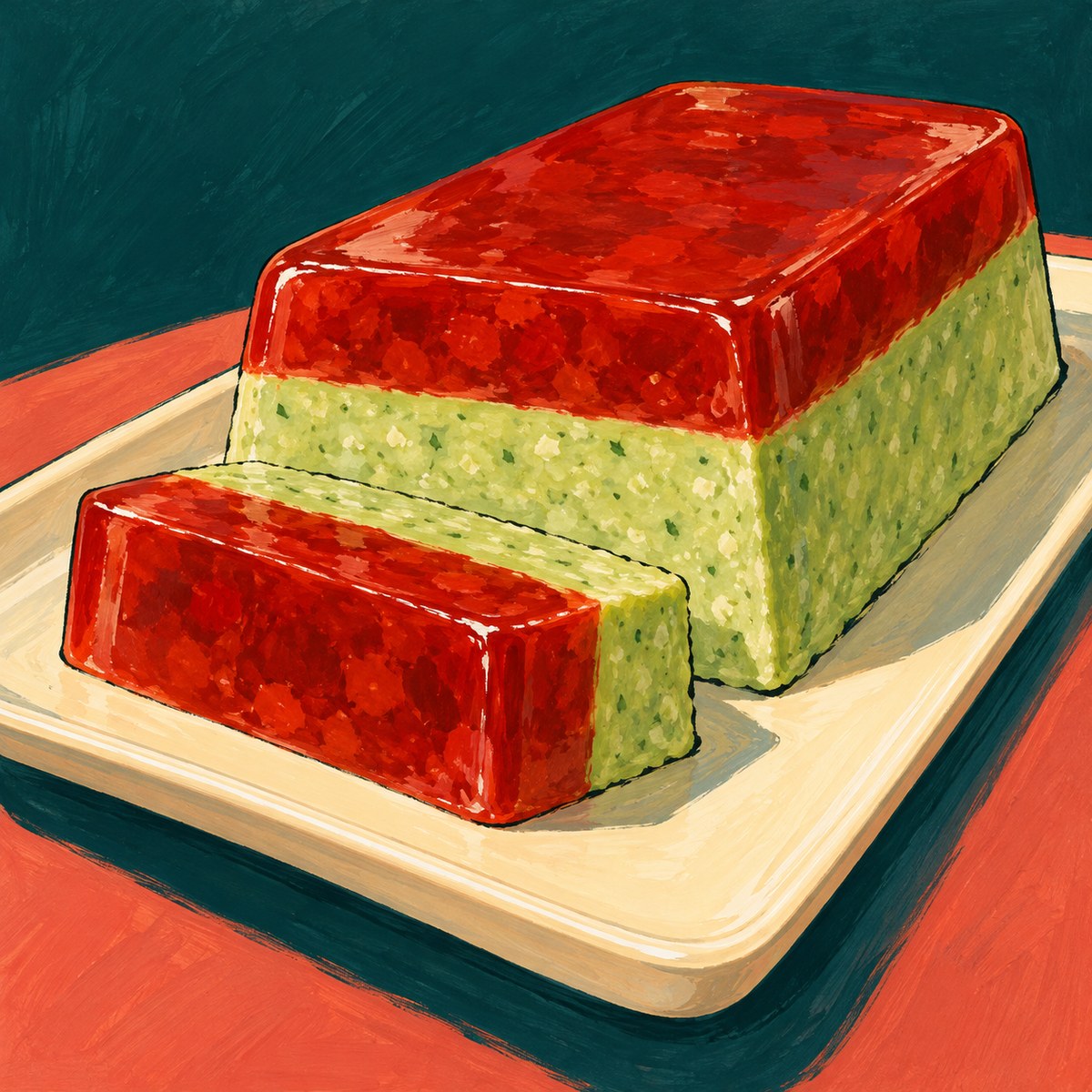
Print recipe · PDFA tomato-red layer sits over a pale avocado-and-cottage-cheese layer when this terrine is turned out. The contrast is made with real ingredients, not food coloring. Blend avocado only when the tomato layer is ready so its fresh color and short refrigerator life are treated honestly.
Two bases, two gelatin measures
The tomato layer is an acidic juice gel, while the avocado layer contains thick dairy and fruit flesh. Their different gelatin weights are deliberate. Weigh the two portions into separate bowls before beginning. A single spoon dipped into a bulk packet is not a reliable way to divide them. The tomato layer goes into the mold first and becomes the top after inversion.
Avocado waits for the assembly stage
Choose a ripe sound avocado without spoiled patches, wash its skin before cutting and keep the knife on a stable board. The prepared flesh weight excludes skin and stone. Blend the flesh with cold cottage cheese, milk and measured lemon only when the tomato layer is lightly set. Lemon helps the appearance but does not preserve the mixture at room temperature. This terrine is best served the next day and used within 24 hours of final assembly, which includes its overnight set.
Do not melt the red layer
Dissolved gelatin for the green base should be merely lukewarm before it joins the cold purée. Once combined, spoon a little over the back of a spoon onto the tomato gel. If that test melts a channel, pause briefly in the refrigerator before adding the rest. Keep both layers smooth rather than whisking air into them. The result is a small cold side, not a shelf-stable vegetable pâté or a complete meal.
Ingredients
- Unflavored powdered gelatin, 16 g total, weighed into 7 g for tomato layer and 9 g for avocado layer, of specified setting strength
- ½ cup cold drinking water (120 ml), divided into 60 ml per layer
- 1¼ cups unsweetened tomato juice (300 ml)
- 2 teaspoons lemon juice (10 ml), for tomato layer
- 1 teaspoon sugar (4 g)
- ⅛ teaspoon fine salt (0.75 g), divided
- ¾ cup plus 1 tablespoon plain pasteurized cottage cheese (200 g), kept cold
- 1 medium ripe avocado, enough for 5¼ oz sound flesh (150 g prepared)
- ½ cup cold pasteurized whole milk (120 ml)
- 1 tablespoon lemon juice (15 ml), for avocado layer
- ⅛ teaspoon black pepper
- ¼ teaspoon neutral oil (1.25 ml), for wiping mold
Set out
Two small saucepans or one washed between layers, Two mixing bowls and whisk, Kitchen scale and measuring jug, Small blender or food processor suitable for a 500 ml cold batch, Knife and board, Metal loaf mold of at least 1¼-liter capacity, Paper towel, Food thermometer, Cold platter, Refrigerator
Allergens
Milk. Check labels and substitutions.
Make it
- Check mold capacity with water, dry and oil lightly. Bloom 7 g gelatin in 60 ml cold water 5–10 minutes. Heat tomato juice, sugar and half the salt to 140–150°F (60–65°C). Take off heat and stir into the bloomed gelatin until fully dissolved. Add 10 ml lemon juice. Cool briefly, pour into mold and refrigerate 45–60 minutes until firm enough to support a spoonful but slightly tacky.
- When red layer is ready, bloom 9 g gelatin in remaining 60 ml cold water in a clean saucepan 5–10 minutes. Heat gently while stirring just until fully dissolved; do not boil. Take off heat and allow to become merely lukewarm.
- Wash avocado before cutting, remove skin and stone and weigh 150 g sound flesh. Blend with cold cottage cheese, milk, 15 ml lemon, remaining salt and pepper until smooth. Stop machine before scraping. Whisk 3 tablespoons cold purée into the lukewarm gelatin gradually, then whisk that tempered mixture smoothly into remaining purée.
- Spoon a little green mixture over the back of a spoon onto the red layer. If red surface softens or melts, chill green base briefly before continuing. Divide remaining green mixture gently across it, keeping at least ½ inch (1.25 cm) below rim and using a separate refrigerator cup for any excess.
- Cover and refrigerate at 40°F (4°C) or below for at least 8 hours after final layer, until firm throughout. Allow 11 hours total including the first set and assembly. For unmolding, set a cold plate beside the refrigerator. Dip only the outside of the metal mold in warm, not hot, water, about 100°F (38°C), for 5–8 seconds without letting water touch food. Dry the outside, loosen just the upper edge with a clean fingertip and invert onto the plate. If stuck, repeat a brief dip rather than shaking violently. Refrigerate again immediately if not serving now. Cut 8 small side slices and use within 24 hours of final assembly or an earlier ingredient deadline.
Gelatin starting strength
Use food-grade unflavored powdered gelatin with a manufacturer benchmark of 7 g for about 2 cups (500 ml) plain liquid. Weigh the stated grams: envelope sizes and powder density vary. A flavored dessert packet, collagen peptides, sheet gelatin or agar is not an equal substitute.
Cold service
This is an original retro-inspired recipe, not a recovered 1960s formula. Gelatin is animal-derived; the vegetable ingredients do not make the dish vegetarian. A reliable refrigerator and the stated earlier ingredient deadlines are essential.
Ingredient labels
Read cottage cheese, milk, tomato juice and gelatin labels. Gelatin is animal-derived, so this vegetable terrine is not vegetarian.
A useful detail
Red layer: 7 g gelatin with 60 ml water +300 ml tomato juice +10 ml lemon. Green layer: 9 g gelatin with 60 ml water +120 ml milk +15 ml lemon +200 g cottage cheese +150 g avocado flesh. These yield roughly 920 ml combined; a 1¼-liter loaf mold leaves headroom. Gelatin and acid do not eliminate the avocado’s short quality window.
Another way
- Use 150 g sound ripe avocado flesh from several smaller avocados rather than relying on a whole-fruit count.
- Omit black pepper for a smoother flavor, keeping all liquid, dairy and gelatin quantities.
Keep it well
Keep covered at 40°F (4°C) or below and use within 24 hours of final assembly or the earliest ingredient deadline, whichever comes first; the eight-hour setting period counts. Prepare close to service for avocado quality. Total unrefrigerated preparation and service must remain below 2 hours, or 1 hour above 90°F (32°C). Discard portions exceeding those limits. Do not freeze.