014 / 75 · Savory Garden Molds
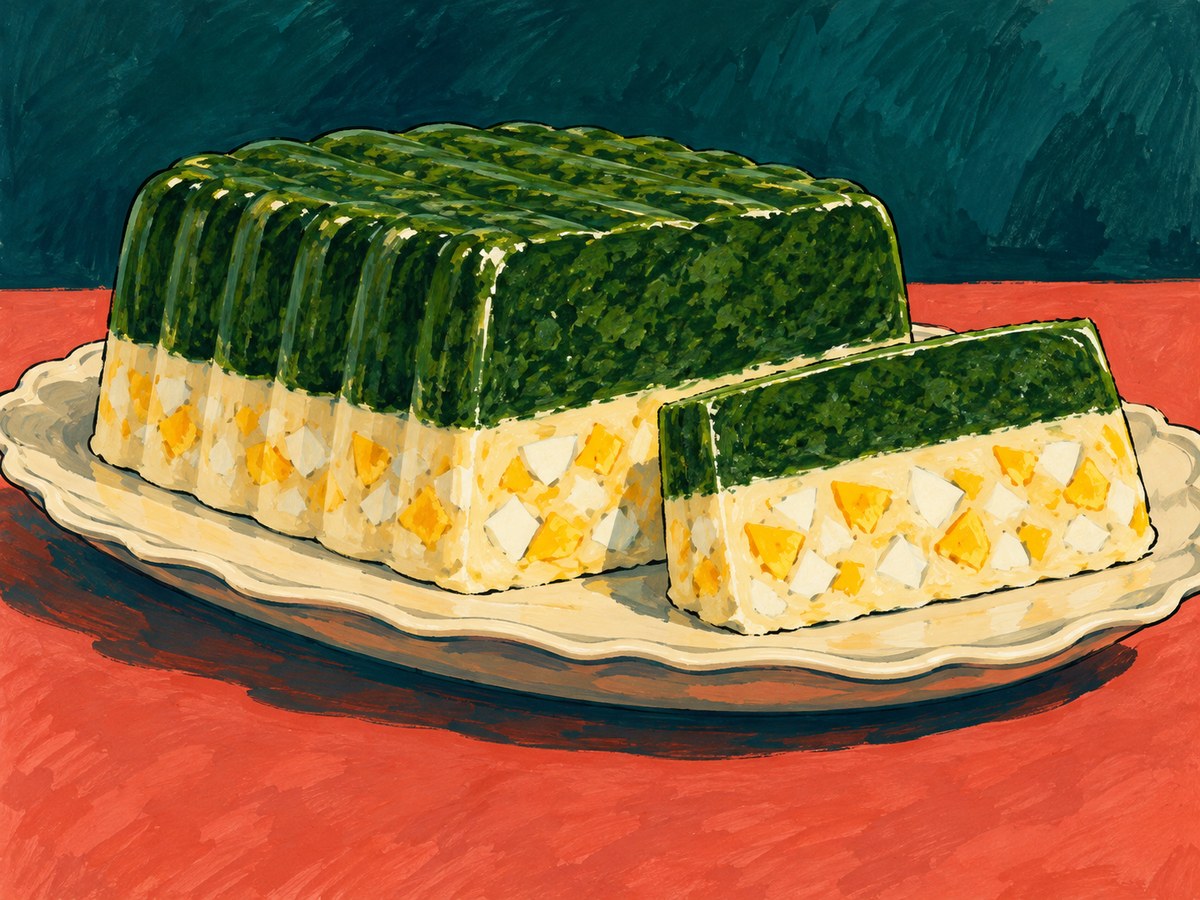
Spinach Egg Layered Salad Loaf
One two-layer spinach-and-egg salad loaf, about 3¾ cups (900 ml); 8 small luncheon side slices · Active 45 min · Total 11 hr
Print recipe · PDFA green spinach layer and a creamy chopped-egg layer make a two-tone savory loaf. Each layer has its own measured gelatin and is made in sequence, so the dairy mixture does not sit warm while the first layer sets. This is a small cold side for a luncheon plate, with bread or a main dish separately chosen.
Keep spinach water out of the dairy layer
Cook the plain frozen spinach fully as its packet directs, cool promptly, then press out liquid in a sieve. Weigh 120 grams after pressing. The cooked leaves should hold together softly without dripping when lifted. That liquid is discarded rather than added to the broth measure. Blending the spinach into its own base gives one green layer instead of streaking the egg mixture an uneven gray.
Make the second base when the first is ready
The first layer should be firm enough to support a spoonful but still slightly tacky, usually after 45–60 minutes in the refrigerator. Prepare the second gelatin mixture only then. Adding a boiling layer would melt the first; adding an already lumpy set mixture would leave a rough seam. Temper the warm dissolved gelatin with a little cold yogurt and work smoothly into the rest. The chopped eggs are fully hard-cooked before they enter, with no raw egg stirred into a cold mold.
Read the loaf in reverse
The spinach mixture enters the mold first, so it becomes the upper layer after inversion. The pale egg layer becomes the bottom. This order is useful to remember when choosing a platter, but color is not a safety test. Keep all cooked components cold, include their original cooking dates in the finished storage deadline and refrigerate the filled loaf for its full final set. Cut eight modest side slices rather than presenting the whole loaf as eight complete meals.
Ingredients
- 3 large eggs
- 8 oz plain frozen chopped spinach (225 g), yielding 120 g cooked, well-pressed spinach; prepare extra if its drained yield is short
- Water to cook eggs and spinach as directed, not mixed into gel
- Unflavored powdered gelatin, 16 g total, weighed into two separate 8 g portions, of specified setting strength
- ½ cup cold drinking water (120 ml), divided into 60 ml per layer
- ¾ cup clear ready-to-use mild vegetable broth (180 ml), for green layer
- 2 teaspoons lemon juice (10 ml), for green layer
- ½ cup pasteurized whole milk (120 ml), for egg layer
- ¾ cup plus 1 tablespoon thick plain pasteurized Greek-style yogurt (200 g), kept cold
- ⅛ teaspoon fine salt (0.75 g), divided
- ⅛ teaspoon white pepper, divided
- ¼ teaspoon neutral oil (1.25 ml), for wiping mold
Set out
Small covered egg saucepan, Bowl of cold water, Covered saucepan for spinach, Sieve and shallow cooling tray, Small blender suitable for cooled spinach, Two small saucepans or one washed between bases, Two mixing bowls and whisk, Kitchen scale, Metal loaf mold of at least 1¼-liter capacity, Paper towel, Food thermometer, Cold platter, Refrigerator
Allergens
Egg, Milk. Check labels and substitutions.
Make it
- Cover eggs with cold water by 1 inch (2.5 cm), bring to a full boil, cover, take off heat and stand 12 minutes until yolks are firm, extending if needed. Cool promptly in cold water, peel, chop and refrigerate. Cook spinach fully by its packet, drain, cool promptly on a shallow tray in the refrigerator, then press and weigh 120 g. Keep cold. Check mold capacity, dry and oil lightly.
- For green layer, bloom 8 g gelatin in 60 ml cold water 5–10 minutes. Heat broth to 140–150°F (60–65°C), take off heat and dissolve bloomed gelatin in it. Cool to lukewarm. Blend with cold pressed spinach, lemon, half the salt and pepper, following machine limits. Pour into mold and refrigerate 45–60 minutes until it supports a spoonful but remains tacky.
- Then make egg layer: bloom remaining 8 g gelatin in remaining 60 ml cold water 5–10 minutes. Add milk and heat gently until gelatin fully dissolves; do not boil. Take off heat. Whisk 3 tablespoons yogurt into warm base gradually, then whisk into remaining cold yogurt with remaining salt and pepper. Fold in cold chopped firm-yolk eggs.
- Spoon the lukewarm-to-cool egg mixture carefully over the spinach layer, first over the back of a clean spoon to avoid breaking the surface. Keep at least ½ inch (1.25 cm) below rim; put excess in a separate small covered cup. Cover loaf and refrigerate at 40°F (4°C) or below at least 8 hours after final layer is added, until firm throughout.
- Allow at least 11 hours total for cooking/cooling, the first set and final chill. For unmolding, set a cold plate beside the refrigerator. Dip only the outside of the metal mold in warm, not hot, water, about 100°F (38°C), for 5–8 seconds without letting water touch food. Dry the outside, loosen just the upper edge with a clean fingertip and invert onto the plate. If stuck, repeat a brief dip rather than shaking violently. Refrigerate again immediately if not serving now. Cut 8 small side slices.
Gelatin starting strength
Use food-grade unflavored powdered gelatin with a manufacturer benchmark of 7 g for about 2 cups (500 ml) plain liquid. Weigh the stated grams: envelope sizes and powder density vary. A flavored dessert packet, collagen peptides, sheet gelatin or agar is not an equal substitute.
Cold service
This is an original retro-inspired recipe, not a recovered 1960s formula. Gelatin is animal-derived; the vegetable ingredients do not make the dish vegetarian. A reliable refrigerator and the stated earlier ingredient deadlines are essential.
Ingredient labels
Broth can add celery, wheat, soy or other ingredients. Track the earliest egg, dairy and spinach deadline.
A useful detail
Green layer: 8 g gelatin with 60 ml water +180 ml broth +10 ml lemon +120 g pressed spinach. Egg layer: 8 g gelatin with 60 ml water +120 ml milk +200 g thick yogurt +about 150 g cooked egg. The roughly 900 ml combined batch fits a 1¼-liter mold with headroom. Do not add reserved spinach cooking liquid.
Another way
- Use 120 g fully cooked, cold and firmly pressed Swiss chard instead of spinach as a different green layer; remove tough stems before weighing.
- Add 1 teaspoon (1 g) finely chopped washed chives to the egg layer for a separate herb variation.
Keep it well
Keep covered at 40°F (4°C) or below. Use within 2 days of assembly or the earliest ingredient deadline, whichever comes first. Include the overnight setting period in that limit. Keep total unrefrigerated preparation and serving below 2 hours, or 1 hour above 90°F (32°C). Chill slices promptly after service; discard food exceeding those limits. Do not freeze; freezing damages the gel and releases water.