013 / 75 · Savory Garden Molds
Asparagus Lemon Aspic Bundles
6 small asparagus aspic molds, about 130–135 ml each; vegetable side portions · Active 35 min · Total 10 hr 30 min
Print recipe · PDFShort asparagus sections are grouped inside small lemon-stock molds, making their green shape the main design. Tender cooked stalks are easier to eat cold than woody long spears. The clear base is lightly savory, with enough room around each bundle for a clean cut.
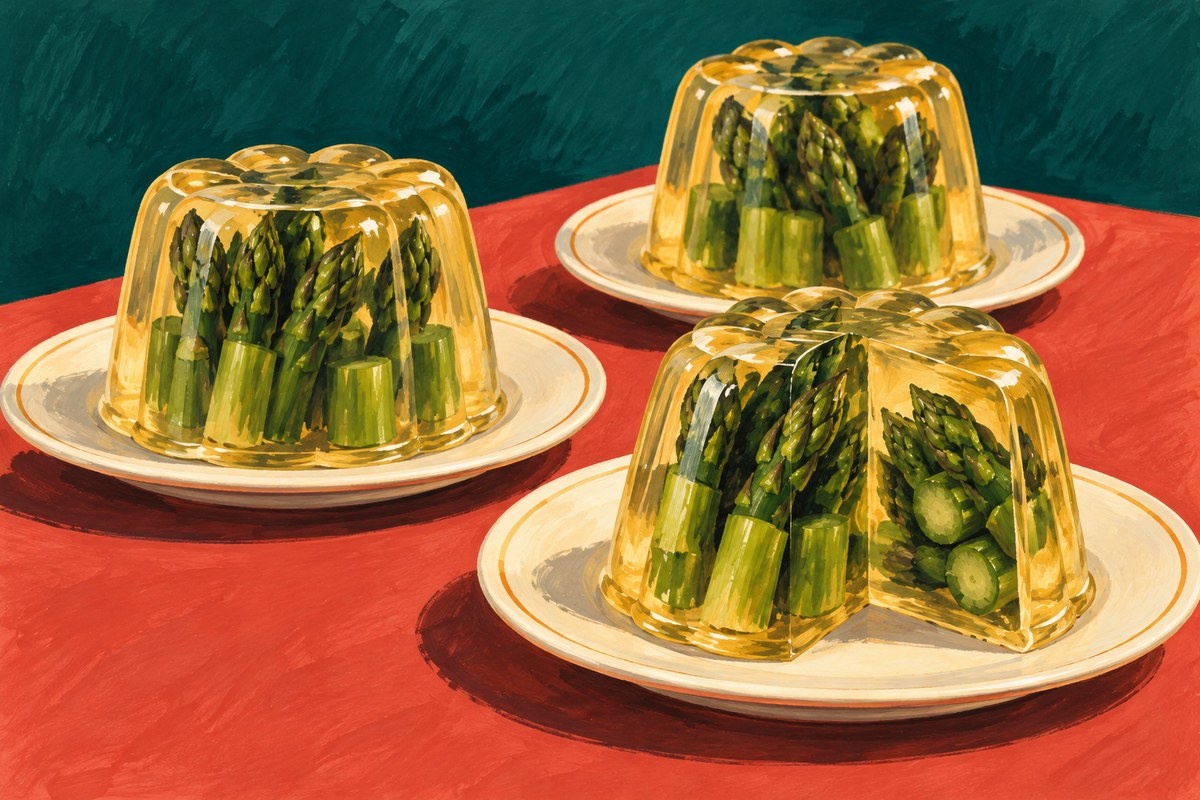
Trim for tenderness, then group by size
Bend or cut away woody ends and peel a tough lower stalk if necessary. The prepared weight is taken after those trims. Cut stalks into short sections that fit well below the mold rim and keep tips separate so they can be divided evenly. Very thick spears may need more cooking than thin ones. A small knife should enter readily; preserving a hard core for the sake of color makes the cold portion less pleasant to eat.
The bundle is a serving shape, not a tie
No string, herb ribbon or food pick belongs in these little molds. The asparagus pieces are simply grouped near the center and held by set gelatin. Spoon a little thickened base into each mold, arrange the cooled pieces and add the rest slowly so they stay gathered. A few fragments are fine, but do not cram a fistful of raw spears into the center. The lemon juice is measured into the base, with no garnish wedge assumed. Serve these small sides on cold plates close to mealtime rather than arranging them on a warm buffet hours ahead.
Ingredients
- 7 oz fresh asparagus (200 g trimmed), washed, woody ends removed and stalks cut into 1½-inch (4 cm) sections
- Water for gentle boiling, about 4 cups (960 ml), drained away
- 2 standard ¼-ounce envelopes unflavored powdered gelatin (14 g total), of specified setting strength
- 6 tablespoons cold drinking water (90 ml)
- 2 cups clear ready-to-use mild vegetable broth (480 ml), divided
- 2 tablespoons lemon juice (30 ml)
- ½ teaspoon sugar (2 g)
- ⅛ teaspoon fine salt (0.75 g), or omit if broth is salty
- ⅛ teaspoon white pepper
- ½ teaspoon neutral oil (2.5 ml), divided for wiping molds
Set out
Knife and board, Saucepan and colander, Shallow refrigerator tray, Small saucepan, Mixing bowl and spoon, Measuring jug and scale, 6 small metal molds of at least 180 ml capacity each, Paper towel, Food thermometer, Cold plates, Refrigerator
Allergens
No major US allergen identified in the base ingredients. Check labels and substitutions.
Make it
- Cook prepared asparagus gently in boiling water 4–7 minutes, longer if needed until tender, with any very thin tips added later. Drain, spread on the shallow tray and refrigerate promptly until cold, about 30–45 minutes. Dry surface moisture. Check mold capacities, dry and wipe with oil.
- Bloom gelatin in 90 ml cold water in the mixing bowl 5–10 minutes. Heat 240 ml broth with sugar, salt and pepper to 140–150°F (60–65°C), take off heat and stir into gelatin until fully dissolved. Stir in remaining 240 ml broth and lemon juice.
- Refrigerate base, stirring gently every 10 minutes, until beginning to hold a spoon track, about 25–40 minutes. Divide a spoonful between each mold, group one-sixth of the cold asparagus pieces in each center and divide remaining base slowly around them. Keep at least ½ inch (1.25 cm) below rims; refrigerate any excess separately.
- Cover and refrigerate at 40°F (4°C) or below at least 8 hours and until fully set. Allow 10½ hours total including vegetable cooling and suspension.
- For unmolding, set a cold plate beside the refrigerator. Dip only the outside of the metal mold in warm, not hot, water, about 100°F (38°C), for 5–8 seconds without letting water touch food. Dry the outside, loosen just the upper edge with a clean fingertip and invert onto the plate. If stuck, repeat a brief dip rather than shaking violently. Refrigerate again immediately if not serving now. Serve one small vegetable mold per person.
Gelatin starting strength
Use food-grade unflavored powdered gelatin with a manufacturer benchmark of 7 g for about 2 cups (500 ml) plain liquid. Weigh the stated grams: envelope sizes and powder density vary. A flavored dessert packet, collagen peptides, sheet gelatin or agar is not an equal substitute.
Cold service
This is an original retro-inspired recipe, not a recovered 1960s formula. Gelatin is animal-derived; the vegetable ingredients do not make the dish vegetarian. A reliable refrigerator and the stated earlier ingredient deadlines are essential.
Ingredient labels
Broth may add celery, wheat, soy or other allergens. Check every prepared ingredient and the gelatin source.
A useful detail
Free liquid is 600 ml: 90 ml bloom water +480 ml broth +30 ml lemon. Drained cooked asparagus adds 200 g. Fourteen grams gelatin supports a lemony vegetable-filled unmolded set. The six 180 ml molds give practical headroom for roughly 800 ml total mixture.
Another way
- Use 200 g fully cooked, cold, well-drained green beans cut into 1½-inch (4 cm) sections instead of asparagus. If starting fresh, prepare about 250 g trimmed beans, boil in adequate water for at least 30 minutes, drain and shallow-chill promptly in the refrigerator until cold, usually 30–45 minutes, then weigh 200 g cooked and drained. Prepare extra with the same full boiling stage if needed. Allow this additional preparation and cooling time before the gelatin stages.
- Use clear ready-to-use chicken broth in place of vegetable broth as a separately named broth choice, checking its label.
Keep it well
Keep covered at 40°F (4°C) or below. Use within 2 days of assembly or the earliest ingredient deadline, whichever comes first. Include the overnight setting period in that limit. Keep total unrefrigerated preparation and serving below 2 hours, or 1 hour above 90°F (32°C). Chill slices promptly after service; discard food exceeding those limits. Do not freeze; freezing damages the gel and releases water.