007 / 75 · Savory Garden Molds
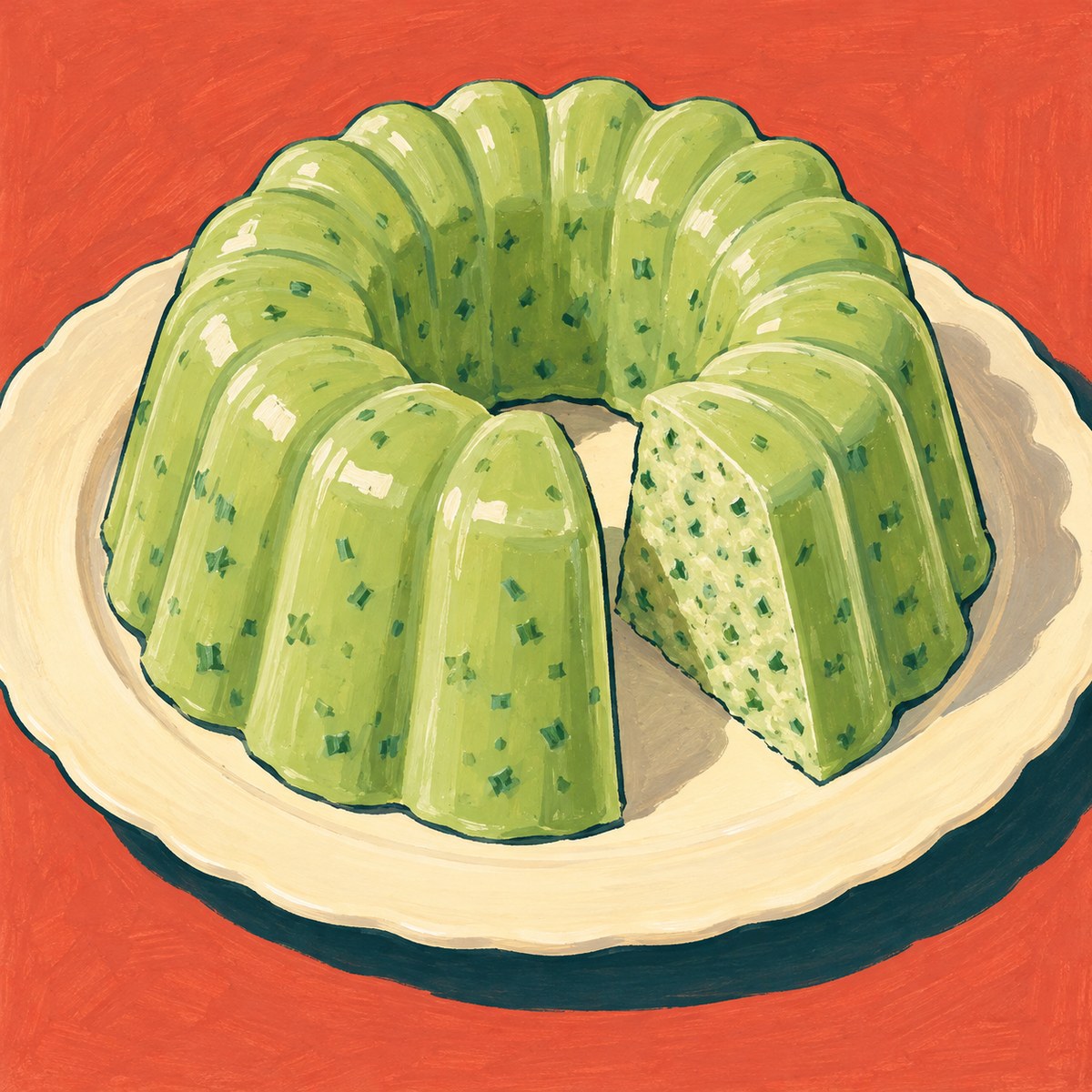
Pea Mint Cream Cheese Crown
One pale-green pea and cream-cheese crown, about 2¾ cups (660 ml); 8 small side wedges · Active 30 min · Total 10 hr
Print recipe · PDFPeas are blended into cream cheese and milk for a smooth pale-green savory crown. Mint is incorporated finely rather than laid on top as decoration. The modest ring is a cool vegetable-and-dairy side, with its pea cooking and cooling included before the long setting stage.
Cook peas fully before puréeing
Plain frozen peas need their full packet cooking method even though this dish will be served cold. A quick thaw is not that method. Drain them and spread on a shallow tray in the refrigerator promptly. They should be cold before entering the dairy mixture, so the blender does not turn a hot vegetable pan into a warm cream-cheese bowl.
Smoothness comes before the gelatin
Blend the cold peas with the cream cheese and most of the measured milk until evenly pale green. Check the machine’s minimum volume and stop before scraping its sides. A few fine pea-skin flecks are natural; this is not strained consommé. Add the mint at the end for tiny green flecks rather than blending a whole bunch into a dark herb sauce. The gelatin is introduced only after the purée is smooth.
A shallow crown is easier to portion
Use a ring with at least a liter of usable capacity and allow a low fill instead of trying to make a towering display. A softly rounded wedge is the aim. Brief warm-water release is enough once the set is firm; prolonged heat would soften the outside before the center leaves the mold. Return the remaining crown to refrigeration while serving, and use a clean knife for each round of slices.
Ingredients
- 7 oz plain frozen peas (200 g)
- Water to cook peas according to packet, drained away
- Unflavored powdered gelatin, 10 g (one standard 7 g envelope plus 3 g weighed from another), of the specified setting strength
- ¼ cup cold drinking water (60 ml)
- 1 cup pasteurized whole milk (240 ml), divided
- 5¼ oz plain pasteurized full-fat cream cheese (150 g), kept cold
- 2 teaspoons lemon juice (10 ml)
- 2 tablespoons finely chopped washed mint leaves (4 g)
- ⅛ teaspoon fine salt (0.75 g)
- ⅛ teaspoon white pepper
- ¼ teaspoon neutral oil (1.25 ml), for wiping mold
Set out
Small covered saucepan and colander, Shallow tray for cooling peas, Blender or food processor suitable for a 600 ml cold batch, Small saucepan, Mixing bowl and whisk, Kitchen scale, Metal ring mold of at least 1-liter capacity, Paper towel, Food thermometer, Cold platter, Refrigerator
Allergens
Milk. Check labels and substitutions.
Make it
- Cook peas fully using their actual packet water and time. Drain and spread on the shallow tray; refrigerate promptly until cold, allowing about 30 minutes or longer as needed. Check mold capacity, dry and wipe with oil.
- Blend cold peas, cream cheese and ¾ cup (180 ml) milk until smooth, stopping the machine before scraping. Put purée in the mixing bowl, stir in mint, lemon, salt and pepper and keep refrigerated.
- Bloom gelatin in the 60 ml cold water in the small saucepan for 5–10 minutes. Add remaining ¼ cup (60 ml) milk and heat gently, stirring, just until fully dissolved, about 120–140°F (50–60°C); do not boil. Take off heat.
- Whisk 3 tablespoons cold purée into the warm gelatin one at a time. Once smooth and merely lukewarm, whisk that mixture into the remaining purée. Spoon into mold, leaving at least ½ inch (1.25 cm) below rim; smooth without vigorous beating.
- Cover and refrigerate at 40°F (4°C) or below at least 8 hours until fully set. The 10-hour allowance includes pea cooking/cooling and handling. For unmolding, set a cold plate beside the refrigerator. Dip only the outside of the metal mold in warm, not hot, water, about 100°F (38°C), for 5–8 seconds without letting water touch food. Dry the outside, loosen just the upper edge with a clean fingertip and invert onto the plate. If stuck, repeat a brief dip rather than shaking violently. Refrigerate again immediately if not serving now. Serve 8 small side wedges.
Gelatin starting strength
Use food-grade unflavored powdered gelatin with a manufacturer benchmark of 7 g for about 2 cups (500 ml) plain liquid. Weigh the stated grams: envelope sizes and powder density vary. A flavored dessert packet, collagen peptides, sheet gelatin or agar is not an equal substitute.
Cold service
This is an original retro-inspired recipe, not a recovered 1960s formula. Gelatin is animal-derived; the vegetable ingredients do not make the dish vegetarian. A reliable refrigerator and the stated earlier ingredient deadlines are essential.
Ingredient labels
Check cream cheese, milk, gelatin and pea labels for other ingredients. Gelatin remains animal-derived.
A useful detail
The base is 60 ml water +240 ml milk +150 g cream cheese +200 g drained peas, with 10 ml lemon. Ten grams gelatin supports this relatively thick purée; do not add water to make the blender run. Use its permitted minimum batch or a smaller suitable processor instead.
Another way
- Use 4 g finely chopped dill instead of mint for a different green-herb flavor.
- Use full-fat pasteurized soft spreadable cream cheese only if its label identifies a plain product of similar thickness; a whipped airy tub changes the yield and is not an equal-weight assumption.
Keep it well
Keep covered at 40°F (4°C) or below. Use within 2 days of assembly or the earliest ingredient deadline, whichever comes first. Include the overnight setting period in that limit. Keep total unrefrigerated preparation and serving below 2 hours, or 1 hour above 90°F (32°C). Chill slices promptly after service; discard food exceeding those limits. Do not freeze; freezing damages the gel and releases water.