006 / 75 · Savory Garden Molds
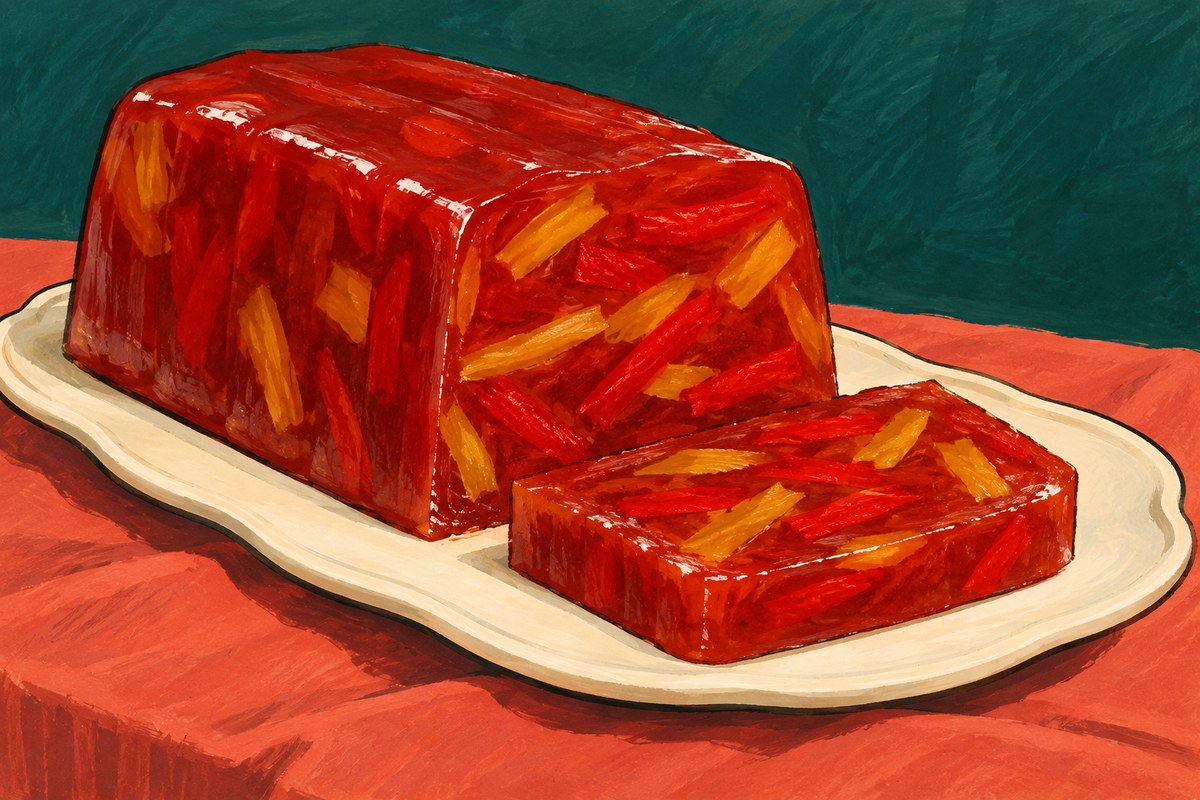
Roasted Pepper Tomato Mosaic
One small tomato mosaic loaf, about 3 cups (740 ml); 8 vegetable side slices · Active 25 min · Total 9 hr 30 min
Print recipe · PDFStrips of roasted red and yellow pepper make a mosaic inside a deep tomato-colored gel. Jarred peppers are an intentional ready-cooked ingredient, not a hidden oven-roasting project. Drain and blot them carefully before cutting so their packing liquid does not change the set.
Choose peppers by their starting state
Use ready-to-eat roasted peppers from a labeled jar, checking whether they contain vinegar, oil, garlic or other ingredients. Drain away that packing liquid; it is not part of the tomato-juice measure. Two colors create the mosaic without requiring extra foods. Cut short narrow strips instead of leaving large slippery sheets that can separate from a slice.
Dark red does not mean clear
Tomato juice gives this loaf a rich, naturally cloudy body. The pepper pieces will be easiest to see at a cut face rather than appearing suspended in a perfectly transparent red glass. That is the intended food, not a reason to replace tomato juice with sweetened red dessert gelatin. Keep the vinegar small and measured, and add it after the gelatin has dissolved.
Give the pieces a slow landing
When the base lightly thickens in the refrigerator, fold in the dry pepper strips and spoon the mixture into the mold. Pouring from a great height introduces bubbles and can bunch strips at one end. A gentle tap on a folded towel is enough to settle it. Make the loaf the day before serving, keep it covered and cold, and present small slices with a separately prepared main dish. The two-day limit includes its setting night.
Ingredients
- 2 standard ¼-ounce envelopes unflavored powdered gelatin (14 g total), of the specified setting strength
- 6 tablespoons cold drinking water (90 ml)
- 1¾ cups plus 2 tablespoons unsweetened tomato juice (450 ml), divided
- 1 tablespoon balsamic vinegar (15 ml)
- 1 teaspoon sugar (4 g)
- ⅛ teaspoon fine salt (0.75 g), or omit if juice is salty
- ⅛ teaspoon black pepper
- 4¼ oz drained ready-to-eat roasted red pepper (120 g), blotted dry and cut into short thin strips
- 2 oz drained ready-to-eat roasted yellow pepper (60 g), blotted dry and cut into short thin strips
- ¼ teaspoon neutral oil (1.25 ml), for wiping mold
Set out
Small saucepan, Mixing bowl and spoon, Kitchen scale and measuring jug, Knife and clean board, Metal loaf mold of at least 1-liter capacity, Paper towels, Food thermometer, External cool-water bath bowl, Cold platter, Refrigerator
Allergens
No major US allergen identified in the base ingredients. Check labels and substitutions.
Make it
- Check mold capacity with water, empty and dry it, then wipe with oil. Keep peppers cold after opening. Bloom gelatin in the 90 ml cold water in the mixing bowl for 5–10 minutes.
- Heat 240 ml tomato juice with sugar, salt and pepper to about 140–150°F (60–65°C). Take off heat, stir into bloomed gelatin until completely dissolved, then add remaining 210 ml juice and balsamic vinegar. Do not boil the gelatin.
- Cool briefly in an external cool-water bath and refrigerate, stirring gently every 10 minutes, until lightly syrupy, usually 20–40 minutes. Fold in dry pepper strips. Spoon into mold with at least ½ inch (1.25 cm) below the rim; keep any excess in a separate small refrigerator cup.
- Cover and chill at 40°F (4°C) or below at least 8 hours, preferably overnight, until firm. Allow 9½ hours total including cutting and the suspension stage.
- For unmolding, set a cold plate beside the refrigerator. Dip only the outside of the metal mold in warm, not hot, water, about 100°F (38°C), for 5–8 seconds without letting water touch food. Dry the outside, loosen just the upper edge with a clean fingertip and invert onto the plate. If stuck, repeat a brief dip rather than shaking violently. Refrigerate again immediately if not serving now. Cut 8 small vegetable side slices.
Gelatin starting strength
Use food-grade unflavored powdered gelatin with a manufacturer benchmark of 7 g for about 2 cups (500 ml) plain liquid. Weigh the stated grams: envelope sizes and powder density vary. A flavored dessert packet, collagen peptides, sheet gelatin or agar is not an equal substitute.
Cold service
This is an original retro-inspired recipe, not a recovered 1960s formula. Gelatin is animal-derived; the vegetable ingredients do not make the dish vegetarian. A reliable refrigerator and the stated earlier ingredient deadlines are essential.
Ingredient labels
Check pepper marinade, tomato juice, balsamic vinegar and gelatin labels. Sulfites or other ingredients may be present.
A useful detail
Free liquid totals 555 ml: 90 ml bloom water +450 ml tomato juice +15 ml vinegar. Pepper contributes 180 g drained moist solids. The 14 g gelatin and dry pepper surfaces are intentional; an extra pour of jar liquid is not included.
Another way
- Use 180 g drained ready-to-eat roasted red pepper alone if yellow is unavailable; the loaf loses its two-color mosaic but keeps the same balance.
- Use 15 ml cider vinegar instead of balsamic for a lighter original acidity.
Keep it well
Keep covered at 40°F (4°C) or below. Use within 2 days of assembly or the earliest ingredient deadline, whichever comes first. Include the overnight setting period in that limit. Keep total unrefrigerated preparation and serving below 2 hours, or 1 hour above 90°F (32°C). Chill slices promptly after service; discard food exceeding those limits. Do not freeze; freezing damages the gel and releases water.