008 / 75 · Savory Garden Molds
Cauliflower Mustard Savory Ring
One small creamy cauliflower ring, about 3½ cups (850 ml); 8 vegetable side portions · Active 30 min · Total 10 hr 30 min
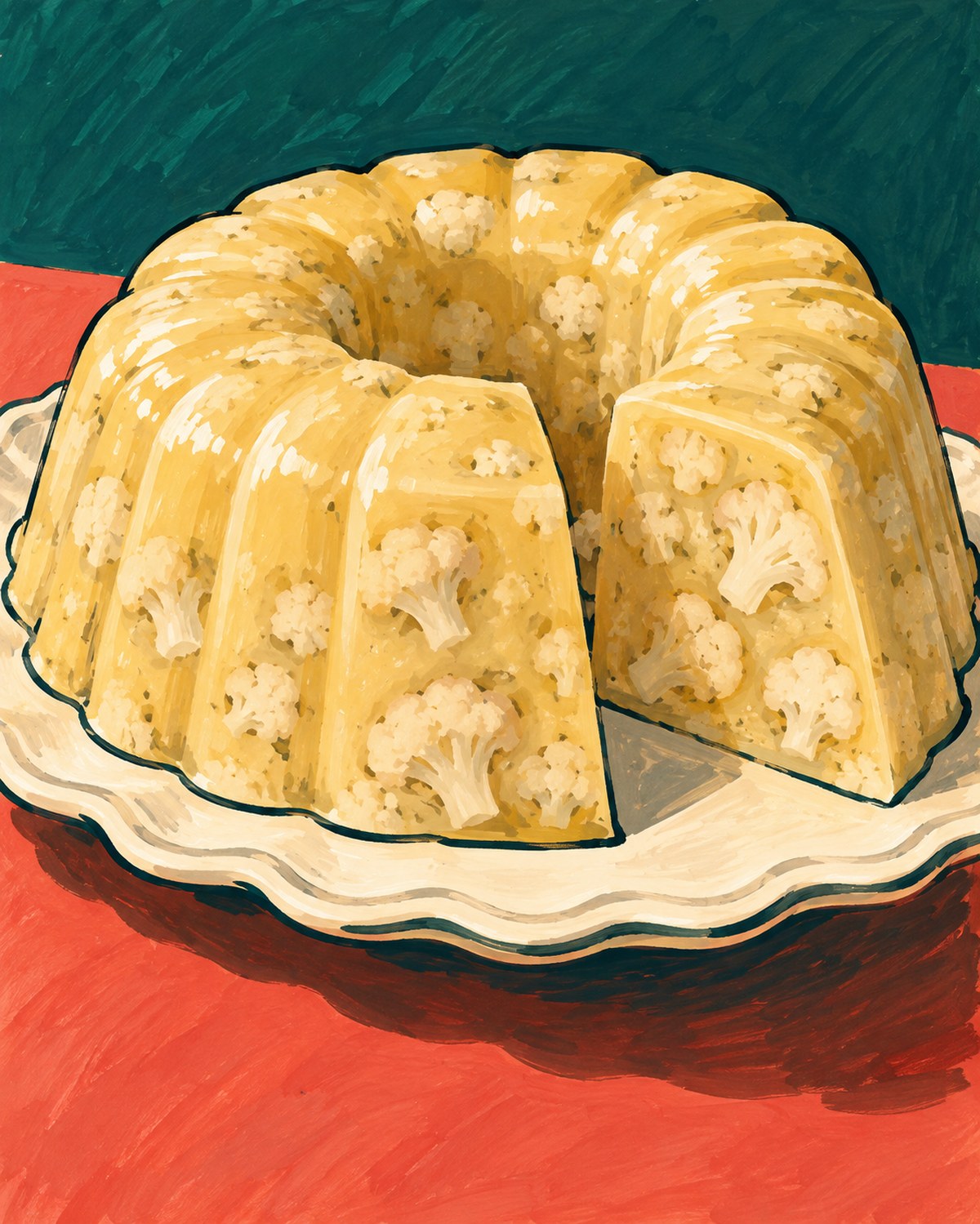
Print recipe · PDFTiny tender cauliflower florets sit in a creamy mustard gel for a cool buffet side. The florets are cooked first and chilled before assembly. Their small size helps the ring slice cleanly without requiring the whole vegetable to become a purée.
Small florets, not raw crumbles
Break cauliflower into small pieces, then cook until a knife enters easily. Raw florets are a different texture and bring unmeasured surface moisture into the mold. Drain the cooked pieces carefully and chill them on a shallow tray. Larger chunks can lever a wedge apart at the table; aim for pieces about a centimeter across.
Mustard seasons a creamy base
A measured spoon of Dijon gives a savory note without relying on a brightly colored sweet gelatin packet. Commercial mayonnaise is ready to eat and emulsified; homemade raw-egg mayonnaise is outside this recipe. Loosen the mayonnaise with cool milk. Whisk a few spoonfuls of that cold mixture gradually into the lukewarm dissolved gelatin first, then whisk the smooth tempered mixture into the remaining cold base. Very hot liquid can split the mixture and should be allowed to become merely lukewarm first.
Leave room around the whole ring
A one-and-a-quarter-liter mold gives this batch headroom and makes a lower centerpiece easier to release. Its capacity matters more than the diameter printed on the package. Dry the cooked cauliflower before folding it into the thickening base. The tiny florets should be scattered throughout, not forced down into a solid packed layer. Slice modestly and serve with another dish as the main course.
Ingredients
- 9 oz fresh cauliflower florets (250 g trimmed), washed and broken into ½-inch (1 cm) pieces
- Water for steamer according to its instructions, not mixed into gel
- 2 standard ¼-ounce envelopes unflavored powdered gelatin (14 g total), of the specified setting strength
- 6 tablespoons cold drinking water (90 ml)
- 1¼ cups clear ready-to-use vegetable broth (300 ml)
- ½ cup pasteurized whole milk (120 ml)
- ¼ cup commercial mayonnaise (60 g)
- 1 tablespoon Dijon mustard (15 g)
- 2 teaspoons lemon juice (10 ml)
- ⅛ teaspoon fine salt (0.75 g), or omit if broth is salty
- ⅛ teaspoon white pepper
- ¼ teaspoon neutral oil (1.25 ml), for wiping mold
Set out
Covered saucepan and stable steamer insert, Colander, Shallow refrigerator tray, Small saucepan, Two mixing bowls and whisk, Kitchen scale and measuring jug, Metal ring mold of at least 1¼-liter capacity, Paper towel, Food thermometer, Cold platter, Refrigerator
Allergens
Milk, Egg, Mustard. Check labels and substitutions.
Make it
- Steam small cauliflower florets over the equipment-directed water for 8–12 minutes until fully tender. Drain thoroughly, spread on a shallow tray and refrigerate promptly until cold, allowing 30–45 minutes. Check mold capacity, empty, dry and wipe with oil.
- Bloom gelatin in 90 ml cold water in the mixing bowl for 5–10 minutes. Warm broth and salt to 140–150°F (60–65°C), take off heat and stir into gelatin until fully dissolved. Cool briefly until merely lukewarm.
- In a separate clean bowl whisk milk, mayonnaise, mustard, lemon and white pepper. Whisk a few spoonfuls of this cold mixture gradually into the lukewarm dissolved gelatin until smooth. Then whisk that tempered mixture gradually into the remaining cold milk-mayonnaise mixture. Refrigerate, stirring gently every 10 minutes, until lightly syrupy, about 20–35 minutes.
- Blot the cold cauliflower dry and fold gently into the thickening base. Transfer to the ring with at least ½ inch (1.25 cm) headroom. Cover and refrigerate at 40°F (4°C) or below at least 8 hours and until fully firm. Allow 10½ hours total including vegetable cooling and suspension.
- For unmolding, set a cold plate beside the refrigerator. Dip only the outside of the metal mold in warm, not hot, water, about 100°F (38°C), for 5–8 seconds without letting water touch food. Dry the outside, loosen just the upper edge with a clean fingertip and invert onto the plate. If stuck, repeat a brief dip rather than shaking violently. Refrigerate again immediately if not serving now. Cut 8 small side wedges.
Gelatin starting strength
Use food-grade unflavored powdered gelatin with a manufacturer benchmark of 7 g for about 2 cups (500 ml) plain liquid. Weigh the stated grams: envelope sizes and powder density vary. A flavored dessert packet, collagen peptides, sheet gelatin or agar is not an equal substitute.
Cold service
This is an original retro-inspired recipe, not a recovered 1960s formula. Gelatin is animal-derived; the vegetable ingredients do not make the dish vegetarian. A reliable refrigerator and the stated earlier ingredient deadlines are essential.
Ingredient labels
Egg is commonly present in commercial mayonnaise. Mustard can cause allergy although it is not one of the nine major US categories; broth may add celery or other allergens.
A useful detail
Measured water/broth/milk/lemon totals 520 ml. Mayonnaise adds 60 g and cooked drained cauliflower 250 g; the batch is about 850 ml before any trapped air. Fourteen grams gelatin supports those moist inclusions. Do not replace cooked cauliflower with a bag of wet raw riced cauliflower and retain the same recipe.
Another way
- Use 15 g prepared whole-grain mustard instead of Dijon, accepting visible mustard seeds and checking its labels.
- Use 250 g cooked, cold, well-drained broccoli florets instead of cauliflower for an explicitly different green vegetable ring.
Keep it well
Keep covered at 40°F (4°C) or below. Use within 2 days of assembly or the earliest ingredient deadline, whichever comes first. Include the overnight setting period in that limit. Keep total unrefrigerated preparation and serving below 2 hours, or 1 hour above 90°F (32°C). Chill slices promptly after service; discard food exceeding those limits. Do not freeze; freezing damages the gel and releases water.