040 / 100 · The Cozy Pasta Shelf
Creamy Salmon and Dill Linguine
4 main-dish portions Active 20 min Total 40 min
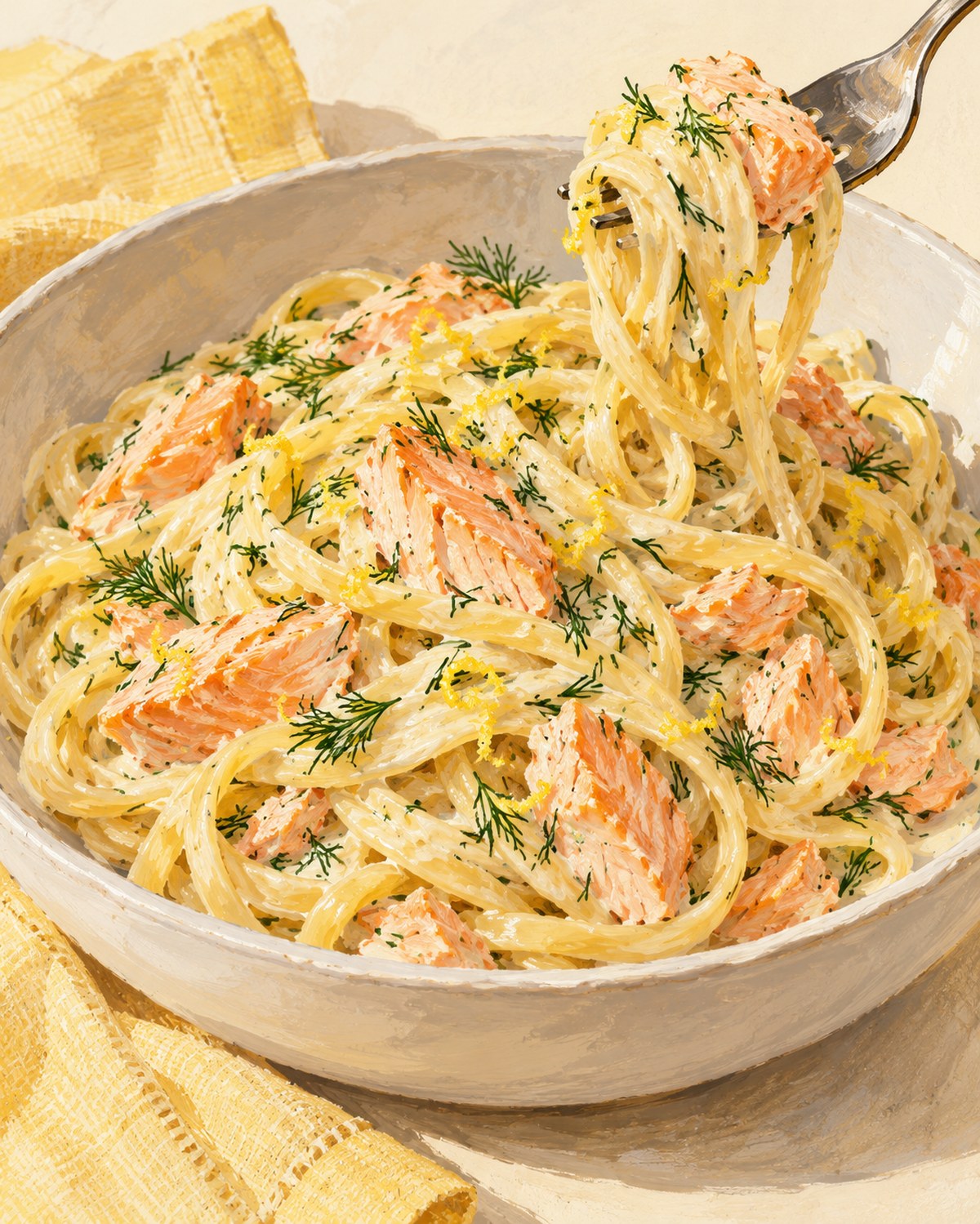
Fresh salmon turns a modest cream sauce into a full supper. Baking the fish separately makes it easier to judge doneness and keeps the large flakes intact when they meet the linguine. Dill and lemon are added near the end, giving the pasta a fresh finish without competing with the fish. The sauce should lightly coat the strands, not sit in a deep pool underneath them. A wide bowl and a pair of tongs make the final mixing easier, especially once the salmon is in the pan.
Keep the flakes generous
Use a center-cut salmon fillet of fairly even thickness if possible. Once it is cooked, let it stand briefly, then separate it into broad pieces rather than shredding it finely. The goal is to find a clear piece of salmon in each forkful. Folding it in after the pasta is coated avoids the vigorous tossing that would break those flakes apart.
Reserve more water than you expect
Linguine continues absorbing moisture after draining, and cream thickens as it stands. A mug of reserved pasta water gives you room to adjust without reaching for more cream. Start with the measured amount, then add small splashes until the strands slide easily over one another. Lemon juice goes in off the heat. Serve immediately, with the dill already distributed through the sauce rather than sitting in one large pile on top.
Ingredients
- 1 lb (450 g) skinless salmon fillet
- 1 tablespoon olive oil
- 2 teaspoons kosher salt, divided
- 12 oz (340 g) linguine
- 1 small shallot, finely chopped
- 1 tablespoon unsalted butter
- 3/4 cup (180 ml) heavy cream
- 1 teaspoon finely grated lemon zest
- 2 tablespoons lemon juice
- 3 tablespoons chopped fresh dill
Set out
Small rimmed baking sheet, Large pasta pot, Large skillet, Instant-read thermometer
Allergens
Fish (salmon), wheat, milk. Check ingredient labels and substitutions.
Make it
- Heat the oven to 375°F (190°C). Place the salmon on the baking sheet, brush with the olive oil, and season with 1/4 teaspoon salt. Bake for 15–20 minutes, depending on thickness, until the center reaches 145°F (63°C).
- Meanwhile, boil the linguine in a large pot of water with 1 1/2 teaspoons salt until just tender according to its package. Reserve 1 1/2 cups pasta water, then drain.
- Melt the butter in the skillet over medium-low heat. Add the shallot and cook for 4–5 minutes until soft but not browned. Add the cream, lemon zest, remaining 1/4 teaspoon salt, and 1/2 cup reserved pasta water. Simmer gently for 2 minutes.
- Flake the cooked salmon into large pieces. Add the linguine to the skillet and toss until coated, loosening with more pasta water as needed.
- Remove the pan from the heat. Fold in the salmon, lemon juice, and dill without breaking up the fish too much. Divide among four shallow bowls and serve immediately.
A useful detail
Check the salmon in its thickest part with a thermometer; a thin tail section will cook sooner than a thick center piece.
Make it your own
- Use tagliatelle or fettuccine instead of linguine.
- Replace half the dill with finely chopped chives.
Keep it well
Refrigerate in shallow containers within 2 hours, or 1 hour above 90°F (32°C). Store at 40°F (4°C) or colder for up to 2 days. Reheat gently with a splash of water until the center reaches 165°F (74°C).