039 / 100 · The Cozy Pasta Shelf
Butternut and Sage Stuffed Pasta Bake
6 portions Active 35 min Total 1 hr 40 min
A tray of stuffed shells feels generous before it even reaches the table. These are filled with roasted butternut squash and ricotta, then baked in a light sage-scented white sauce. The squash should be roasted until its edges color and its center mashes easily; that gives the filling a rounded sweetness and keeps it from tasting watery. There is no tomato sauce here, so the orange filling remains the visual center of the dish. A little Parmesan on top adds a savory finish.
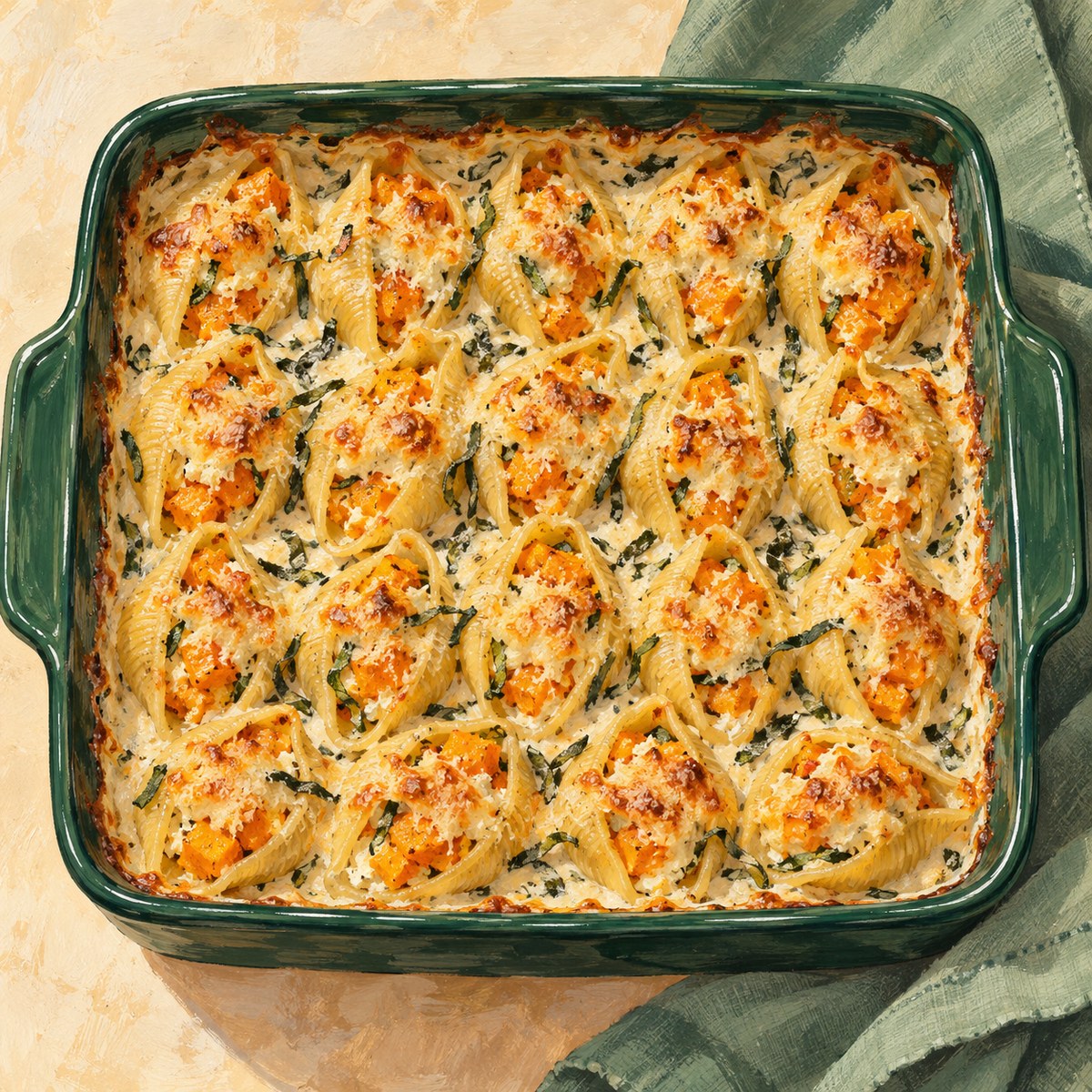
Choose shells with room to spare
Pasta shells vary in size and a few inevitably split in the pot. Cook twenty-four so you can select the best twenty for filling. Underboil them slightly because they will continue to soften in the oven. Arrange the drained shells with their openings facing up on a plate, rather than piling them in a colander where their edges can stick together.
Sage, used quietly
Sage can dominate a mild filling when used in large quantities. A modest amount of finely sliced fresh leaf is enough to perfume the warm butter before the flour and milk go in. Keep that butter pale rather than deeply browned, and simmer the sauce gently. The finished bake should have a creamy base and distinct orange-filled shells, not a dry crust hiding the pasta.
Fill while the shells are warm
Let the cooked shells cool only until they are comfortable to handle. If they sit for a long time, their openings can close and stick together. A teaspoon is useful for tucking the filling into each curve, and the bowl of squash can remain slightly warm. Filling twenty shells gives four people a generous meal with leftovers, or six people a lighter portion of three or four shells.
Ingredients
- 1 1/2 lb (680 g) peeled, seeded butternut squash, cut into 3/4-inch cubes
- 1 tablespoon olive oil
- 2 teaspoons kosher salt, divided
- 24 jumbo pasta shells (about 8 oz / 225 g), to fill the best 20
- 1 cup (225 g) whole-milk ricotta
- 1/2 cup (50 g) finely grated Parmesan, divided
- 3 tablespoons unsalted butter
- 6 fresh sage leaves, finely sliced
- 3 tablespoons all-purpose flour
- 2 1/2 cups (600 ml) whole milk
Set out
Rimmed sheet pan, Large pasta pot, Medium saucepan and whisk, 9-by-13-inch baking dish, Mixing bowl
Allergens
Wheat, milk. Check ingredient labels and substitutions.
Make it
- Heat the oven to 425°F (220°C). Toss the squash with the oil and 1/2 teaspoon salt on the sheet pan. Roast for 25–30 minutes until tender and browned at the edges. Mash in a bowl and let cool for 5 minutes. Reduce the oven to 375°F (190°C).
- While the squash roasts, boil the shells in water with 1 teaspoon salt until 2 minutes short of the package time. Drain carefully and separate them on a plate.
- Stir the ricotta and 1/4 cup Parmesan into the mashed squash. Select twenty intact shells and fill each with about 2 tablespoons squash mixture, dividing any remainder among them.
- Melt the butter in the saucepan over medium-low heat. Add the sage and cook for 30 seconds. Whisk in the flour and cook for 1 minute. Gradually whisk in the milk and remaining 1/2 teaspoon salt. Simmer for 4–5 minutes, stirring, until lightly thickened.
- Spread half the sauce in the baking dish. Nestle in the filled shells, openings upward, and spoon the remaining sauce around and lightly over them. Scatter with the remaining 1/4 cup Parmesan.
- Cover with foil and bake for 20 minutes. Uncover and bake for 10 minutes more, until bubbling and lightly golden. Rest for 5 minutes before serving.
A useful detail
If the mashed squash is unusually wet, return it to a dry saucepan over low heat for 2–3 minutes, stirring to let excess moisture evaporate before adding the ricotta.
Make it your own
- Use roasted kabocha squash in place of butternut, keeping the prepared weight the same.
- Replace sage with 1 teaspoon fresh thyme leaves for a different herbal finish.
Keep it well
Refrigerate in shallow covered containers within 2 hours, or 1 hour above 90°F (32°C). Keep at 40°F (4°C) or colder for up to 4 days. Reheat, covered, to 165°F (74°C).