Famous Last Meals / Modern companion recipe
Warm Citrus Olives with Bread
Orange and lemon zest scent a modest pan of warm olives. Bread belongs to this new shared appetizer, not to the historical meal. This is a ready-to-eat-olive preparation for immediate service, not an olive-curing or shelf-stable garlic-oil recipe.
Read Victor Feguer: A House Call, a Single Olive →
Print recipe · PDF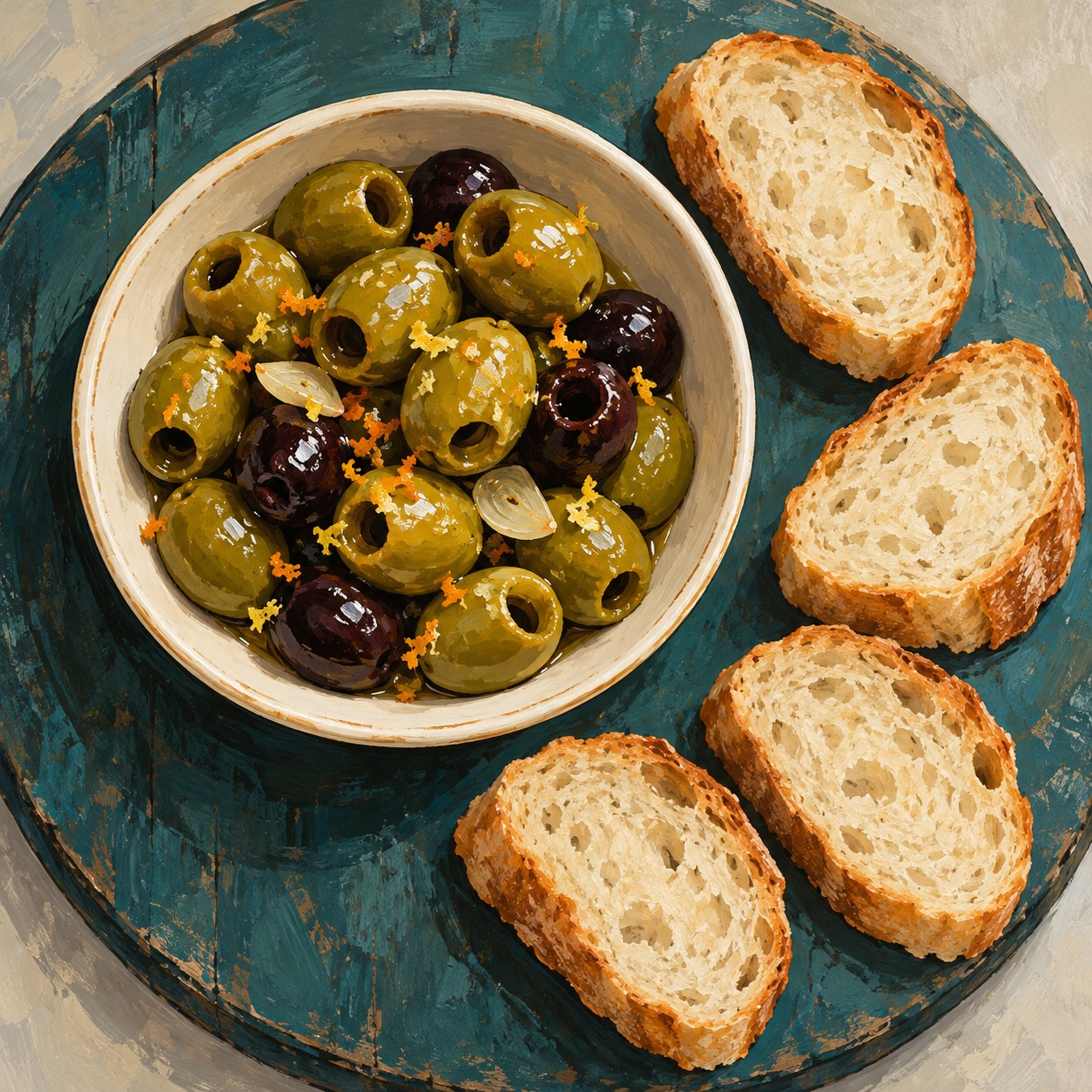
Warm citrus without scorching the garlic
Measure the oil, orange juice and water before heating the pan. Very thin garlic warms quickly; keep it pale and take the pan briefly off the burner if it begins browning. Add the liquid carefully, then stir in the olives. The gentle warming stage should leave a little coating liquid rather than boiling the bowl dry. This is a ready-to-eat olive preparation, not a curing process.
A shared starter with its own purpose
Four small bread slices and a modest bowl of olives give four people a simple starter. The new recipe chooses a mix of green and black pitted olives for flavor and appearance; the historical report does not identify its olive’s color. Divide the entire batch honestly rather than presenting one decorative olive as a recipe. Serve warm, keep any leftovers cold under their original opening deadline, and never treat the garlic-oil mixture as shelf stable.
Ingredients
- 7 oz commercially prepared, ready-to-eat pitted olives, drained (200 g), using about 150 g green and 50 g black olives
- 2 teaspoons olive oil (10 ml)
- 1 small garlic clove, peeled and very thinly sliced (3 g)
- 2 tablespoons freshly squeezed orange juice (30 ml), seeds removed
- 2 tablespoons safe drinking water (30 ml)
- 1 teaspoon finely grated orange zest (about 2 g), from a washed orange, colored peel only
- ¼ teaspoon finely grated lemon zest (about 0.5 g), from a washed lemon, colored peel only
- 4 small plain crusty bread slices (30 g/1 oz each; 120 g total)
Set out
Stovetop, 8-in/20-cm small skillet, Knife and board, Fine zester, Measuring spoons, Sieve, Serving bowl and clean spoon, Reliable refrigerator and shallow covered container for leftovers
Allergens
Wheat; bread may add sesame, soy or milk—check the actual label. Read the olive, bread and oil labels for additional allergens or shared-equipment warnings. Pitted labeling does not eliminate the need to look for hard fragments.
Make it
- Drain the prepared olives. Check for pit fragments even when the container says pitted. Wash the citrus before zesting and avoid the bitter white pith. Measure the juice, water and zest before heating the pan.
- Put oil and sliced garlic in the small skillet over low heat. Warm for 1–2 minutes, stirring, until fragrant but not browned. If the garlic starts coloring quickly, take the pan off the heat briefly and lower the burner.
- Add orange juice, water and both zests carefully; the pan may spit. Add the drained olives and return to gentle low heat. Warm 5–7 minutes, stirring occasionally, until hot throughout. Keep only a gentle simmer and stop before the small liquid allowance evaporates completely.
- Transfer all olives and their small amount of warm coating liquid to a clean bowl. Serve promptly as 4 small starters, each with one-quarter of the olives and one bread slice. Warn diners that an occasional pit fragment can remain. No salt, herbs, chili or garnish is added.
A useful detail
The 20-minute total includes draining, checking, zesting and a gentle short warming stage. The olives are commercially prepared ready-to-eat products; fresh raw olives from a tree require an entirely different curing process. A little pan liquid is intentional and can be spooned onto the bread.
Keep it well
Refrigerate leftovers in a shallow covered container within 2 hours, or 1 hour above 90°F/32°C, at 40°F/4°C or below. Use within 2 days or the earlier original olive-opening deadline. The citrus and garlic-oil coating do not make this shelf stable. Reheat the portion needed to 165°F/74°C if serving it hot; do not store homemade garlic in oil at room temperature. Keep bread separately according to its label.
How this recipe relates to the story
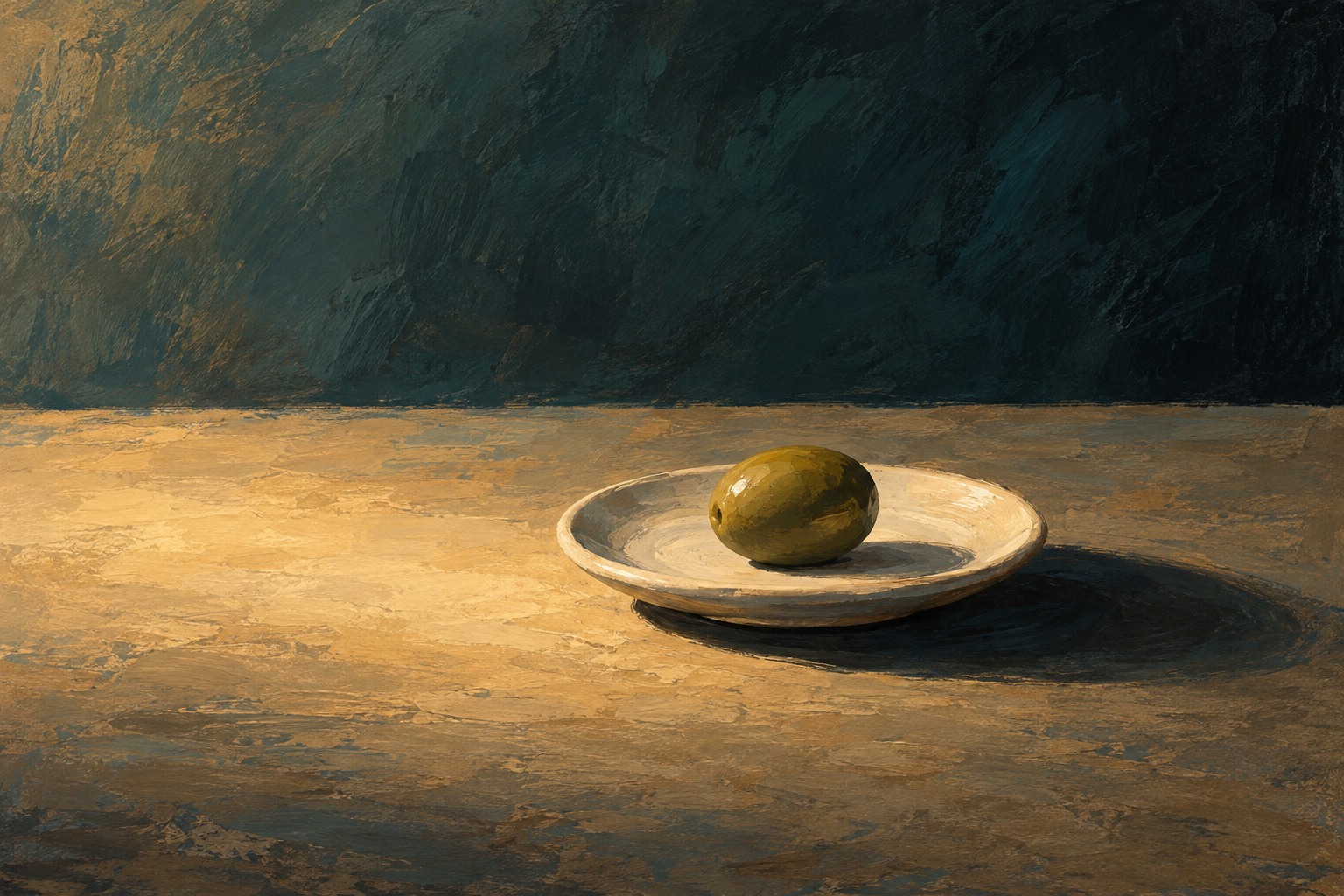
A single olive at midnight and a later cup of coffee are the report’s food evidence. This warm mixed-olive starter with citrus, garlic, oil and bread is an original modern companion, not a reconstruction of the request or service.
Another way
- Use 200 g of one ready-to-eat pitted olive variety if preferred; keep the same measured oil and citrus. The historical account does not identify its olive variety.
- Use the same 120 g plain bread cut into small pieces instead of 4 slices, dividing all the pieces evenly among the 4 starter portions.