Famous Last Meals / Modern companion recipe
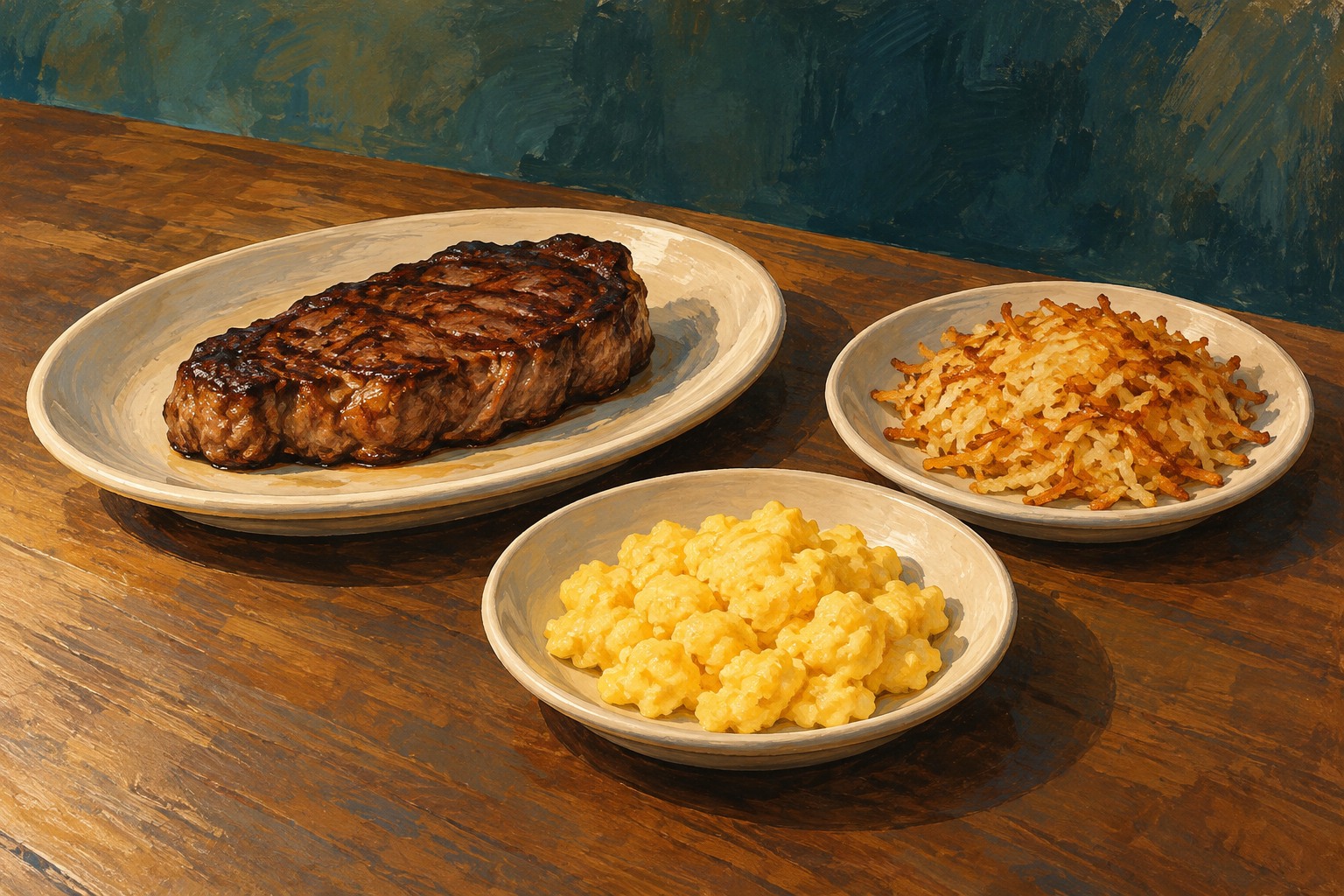
Small Steak with Crisp Potato Cakes and Scrambled Eggs
Four small grated-potato cakes cook before a low-heat scramble. The steak is a manageable boneless whole cut, chosen for this modern recipe. Scrambling the eggs, the portions and every seasoning are new decisions, not details established by the official meal record.
Read Kenneth Eugene Smith: Three Foods in the Record →
Print recipe · PDF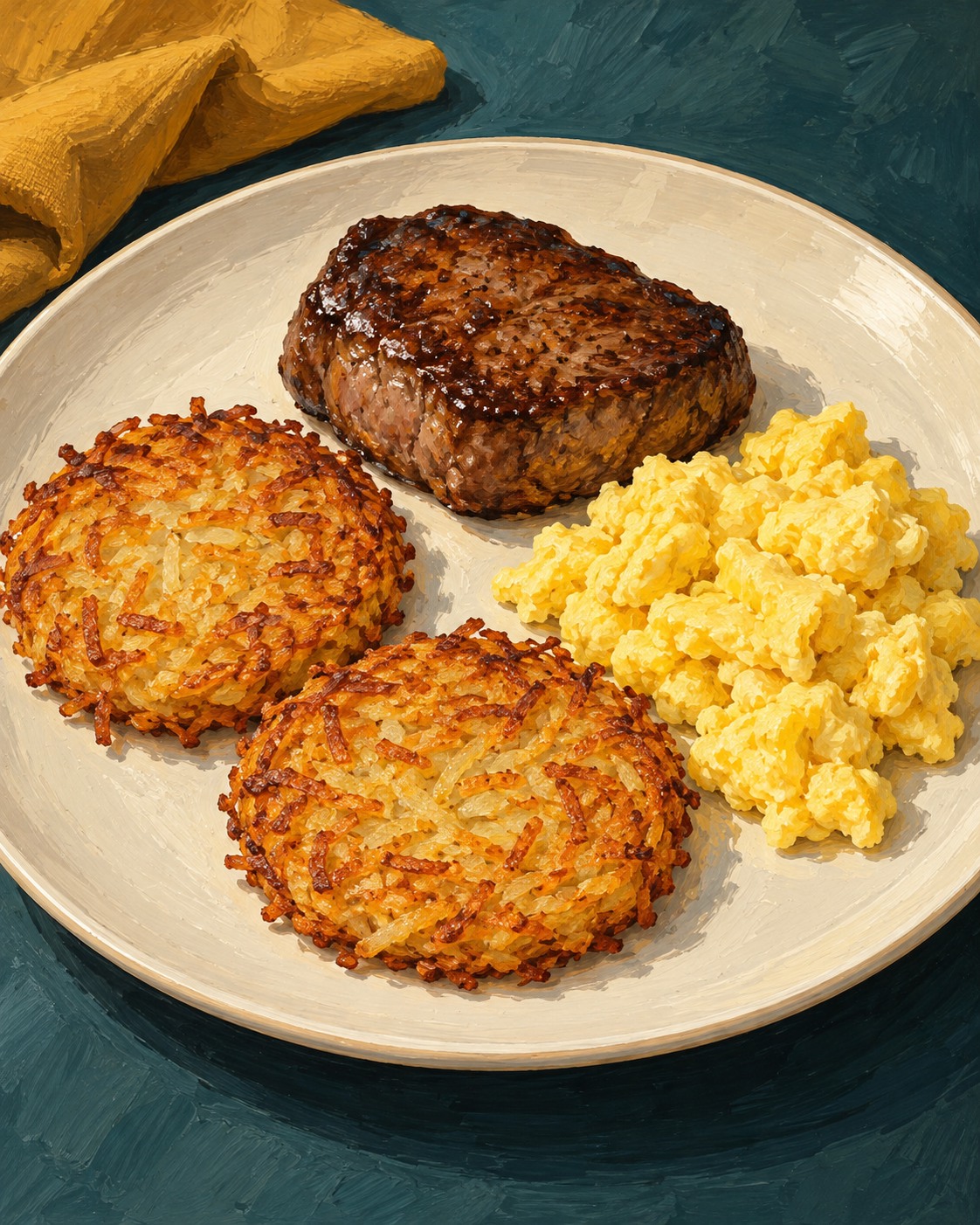
Ingredients
- About 2 medium potatoes, scrubbed and peeled (400 g/14 oz prepared), coarsely grated
- Cold safe drinking water for rinsing grated potatoes, drained away
- 2 plain intact boneless beef sirloin steaks, about ¾ in/2 cm thick (5¼ oz/150 g each; 300 g total), not minced, rolled or stuffed
- 4 large eggs (200 g edible contents)
- 2 tablespoons milk (30 ml)
- 1 tablespoon plus 1 teaspoon neutral cooking oil (20 ml), divided: 15 ml potatoes and 5 ml steaks
- 2 teaspoons unsalted butter (10 g), for eggs
- ½ teaspoon fine salt (3 g), divided: 1.5 g potatoes, 0.75 g steaks, 0.75 g eggs
- ¼ teaspoon ground black pepper (0.5 g), divided between potatoes and steaks
Set out
Stovetop with 2 burners, 12-in/30-cm heavy skillet with flat cooking base at least 10 in/25 cm across, for potatoes, 10-in/25-cm heavy skillet, for steaks, Small nonstick skillet, for eggs, Box grater, Clean kitchen towel and bowl for squeezing potatoes, Mixing bowl, fork and flexible spatula, Thin-probe food thermometer, Tongs and clean steak-resting plate, Knife, separate raw-meat board and clean serving plates
Allergens
Egg; Milk. Milk and butter are included in the scramble. Check actual packaged ingredients and any substituted oil for additional allergens or cross-contact.
Make it
- Rinse the grated potatoes briefly in cold drinking water, drain and squeeze firmly in the clean towel over a bowl. Discard the starchy water. Mix the squeezed potato with its 1.5 g salt and half the pepper. Divide all the potato into 4 equal piles and press into thin cakes about 4 in/10 cm across and no more than ⅜ in/1 cm thick. Wash hands and keep the towel/used water away from finished food.
- Heat 15 ml oil in the large skillet over medium heat. Add all 4 cakes only if they fit without touching on the stated flat base; otherwise cook in batches and extend the total. Cook 7–9 minutes on the first side, then turn carefully and cook 7–9 minutes more. Lower heat if the outside colors before the middle softens. Split one to check that the shreds are fully tender, with no hard raw center; continue if needed. Transfer to a clean plate and cover loosely while finishing the other components.
- As the potatoes near their finishing stage, blot steaks with disposable kitchen paper without rinsing raw meat. Keep raw-meat utensils and board separate. Season with their 0.75 g salt and remaining pepper. Heat the steak skillet over medium-high heat, add the 5 ml oil and lay in both steaks with a gap.
- Sear about 3–4 minutes per side, lowering the heat if browning too quickly, then continue as needed until each thickest center reaches at least 145°F/63°C before removal. Insert the thermometer from the side away from fat and pan. Use clean tongs to move the cooked steaks to the clean resting plate. Rest at least 3 minutes before slicing or eating; do not rely on color alone.
- Whisk eggs, milk and their 0.75 g salt. Once the potato pan is off its burner and the steaks are resting, melt butter in the separate small nonstick pan over low heat. Add eggs and draw the spatula slowly across the bottom. Cook about 4–6 minutes, or as needed, until the curds are fully set with no liquid egg and the combined mixture reaches 160°F/71°C.
- Serve one rested steak, 2 fully cooked potato cakes and half the eggs per person. Rest the steak longer while eggs finish if necessary. The short interval on a clean covered plate is part of this continuous cooking sequence, not permission to hold cooked food warm for a later meal. No toast, bottled sauce or garnish is included.
A useful detail
The 65-minute total allows beginner preparation, 14–18 minutes per potato batch, steak cooking alongside near the end and the scramble after a burner becomes free. Pan fit, thicker steaks or another potato batch extend the clock. Whole-cut beef 145°F/63°C plus 3-minute rest and egg-dish 160°F/71°C are separate endpoints.
Keep it well
Refrigerate leftovers in separate shallow containers within 2 hours, or 1 hour above 90°F/32°C, at 40°F/4°C or below. Use within 2 days. Reheat only the portions needed to 165°F/74°C throughout; protect eggs from drying with gentle covered heat. Do not put cooked food back on the raw-steak plate.
How this recipe relates to the story
The official department list names steak, hashbrowns and eggs, but not portions, steakcut or eggstyle. This original plate chooses small bonelesssirloin, grated cakes and fully set scrambled eggs; it is not the actual reported T-bone/toast/sauce service.
Another way
- Use two intact boneless strip steaks of the same150 g weight and2 cm thickness, retaining the temperature check and rest. Do not treat ground beef patties as the same whole-cut method.
- Leave steaks whole on the plates after their full rest if preferred; slicing is a presentation choice and is not required for doneness.