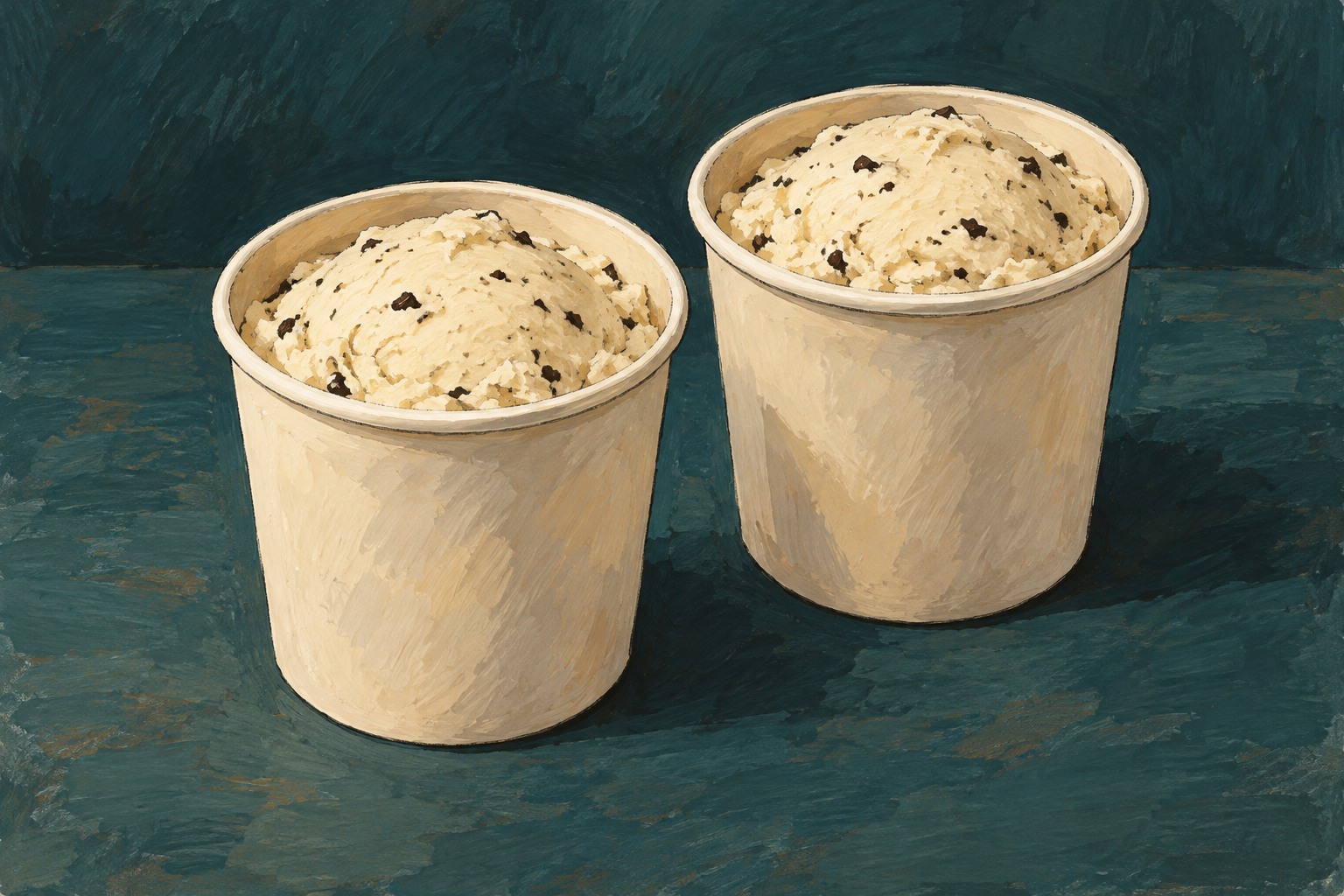
Famous Last Meals / Modern companion recipe
Small-Batch Mint Chocolate-Chip Ice Cream
Tiny chocolate flakes stay easier to bite than large chunks in this pale mint custard. A cooked base, a fully cold churning stage and a shallow freezer box give the recipe its own practical rhythm. Prepare the machine’s freezer bowl ahead if its instructions require it; the historical report supplies the flavor, not this formula.
Read Timothy McVeigh: Two Pints, and 168 Empty Chairs →
Print recipe · PDF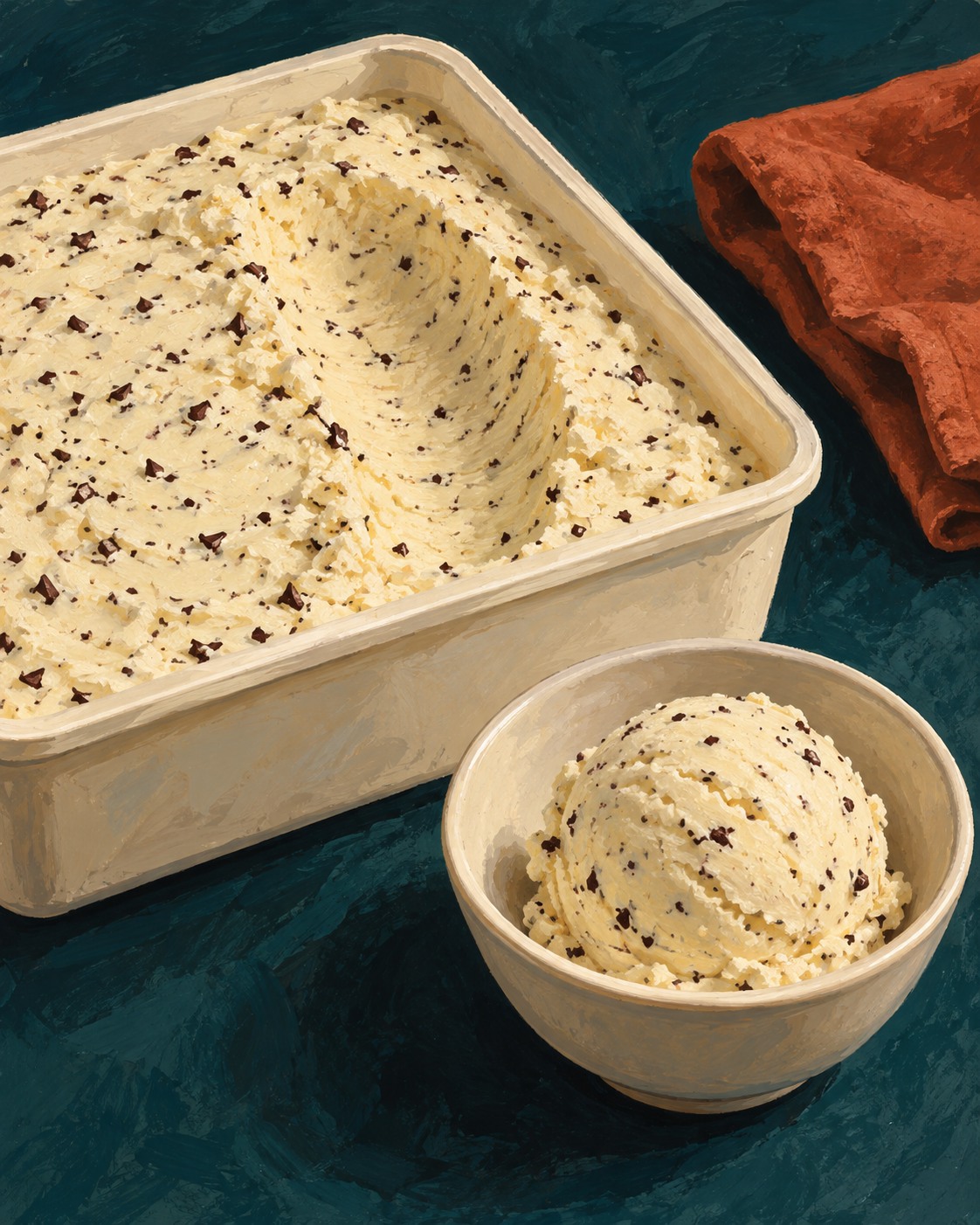
Small flakes make a gentler frozen bite
The 40 g chocolate is part of the batch, not a decoration added afterward. Chop it finely enough to distribute through four small portions. Large hard chocolate chunks become awkward when frozen, while fine flakes give repeated little bites of chocolate. The pale color comes from the new recipe’s dairy and yolks; it tells us nothing about the color of the historical ice cream.
Cold equipment does different jobs
The ice bath removes heat from the cooked custard promptly. The refrigerator then holds the base fully cold; the ice-cream machine incorporates air while freezing it; the final shallow box firms the finished dessert. One stage cannot simply stand in for all the others. If the machine bowl still contains liquid when shaken, it is not ready—follow the manufacturer’s freezing guidance rather than trying to rescue warm, unchurned custard in it.
Ingredients
- ¾ cup plus 1 tablespoon plus 1 teaspoon pasteurized whole milk (200 ml)
- ¾ cup plus 1 tablespoon plus 1 teaspoon pasteurized heavy cream (200 ml; about 35–36% fat)
- ¼ cup plus 2½ teaspoons granulated sugar (60 g)
- 2 large egg yolks (about 36 g total), from refrigerated eggs; reserve whites separately for another fully cooked use
- ¼ teaspoon culinary peppermint extract (1.25 ml), not essential oil
- 1 small pinch fine salt (about 0.4 g)
- 1.4 oz dark chocolate, finely chopped into flakes no larger than ⅛ in/3 mm (40 g)
Set out
Stovetop and 1½-qt/1.5-L heavy saucepan, Whisk and flexible spatula, Instant-read food thermometer, Heatproof mixing bowl and fine sieve, Larger bowl, ice and safe cold water for an ice bath, Measuring spoons and kitchen scale, Knife and board, Ice-cream machine approved for approximately 450–500 ml liquid base, with a fully frozen bowl if required by its instructions, Shallow freezer-safe 1-qt/1-L lidded container, Refrigerator at 40°F/4°C or below and freezer at 0°F/−18°C or below
Allergens
Milk; Egg; Chocolate may contain soy or additional milk, peanut or tree-nut traces; check the actual label. Use culinary peppermint extract rather than concentrated essential oil. Read dairy, chocolate and extract labels; no allergen-free claim is made. This recipe contains cooked yolks, not raw egg added after heating.
Make it
- Check the machine instructions first. If its bowl needs overnight freezing, do that in advance; this additional machine preparation is not included in the 13-hour recipe total. Chill the final freezer container. Set a clean bowl over an ice-water bath, keeping the rim well above the water. Keep the egg yolks refrigerated until needed.
- Whisk the milk, cream, sugar and salt together in the saucepan. Heat gently until steaming, without boiling. In a separate bowl whisk the yolks. Slowly whisk about ½ cup/120 ml of the hot dairy into the yolks, then return the tempered mixture to the saucepan while stirring.
- Cook over low heat, stirring across the bottom and corners, until the entire custard reaches at least 160°F/71°C on the thermometer. Allow about 5–10 minutes after tempering; the measured endpoint controls. Do not boil, and do not taste the mixture before that endpoint. Pour it through the clean sieve into the bowl over the ice bath.
- Stir the custard frequently in the ice bath and replace melting ice as needed, keeping bath water out. Cool promptly, then stir in peppermint extract. Cover and refrigerate at 40°F/4°C or below; the base must reach that cold temperature within 2 hours of leaving the heat. Chill for at least 4 hours after it is cold, or overnight. Do not leave it on the counter to cool.
- Finely chop the chocolate and keep it cold. Churn the fully cold custard according to the machine instructions, usually 20–30 minutes, respecting the manufacturer’s minimum and maximum fill limits. Add the chocolate in the final minute if the machine permits, or fold it evenly through the soft ice cream with a clean spatula afterward.
- Immediately spread into the chilled shallow container, cover, and freeze for at least 6 hours until scoopable and firm. Divide the entire batch into 4 modest dessert portions. Serve without an invented green coloring, mint-leaf garnish or branded container.
A useful detail
Allow about 13 hours from a prepared machine bowl: roughly 30 minutes active work, gentle cooking, prompt ice-bath cooling, at least 4 hours thoroughly cold rest, churning and at least 6 hours hardening. A machine bowl may require a separate 12–24-hour freeze; follow its maker. The base is approximately 450–500 ml before churning and chocolate, so select suitable equipment. A little custard left on the sieve and variable aeration make the final volume approximate.
Keep it well
Keep the cooked base at 40°F/4°C or below and churn within 24 hours of cooking. Freeze the finished ice cream promptly at 0°F/−18°C or below and use within 2 weeks for best texture. Scoop with a clean utensil. Do not refreeze a melted or substantially thawed batch. Discard a perishable base left above refrigeration temperature for more than 2 hours, or 1 hour above 90°F/32°C; freezing does not repair unsafe handling.
How this recipe relates to the story
A contemporary AP report says McVeigh ate two pints of mint-chocolate-chip ice cream. This smaller, uncolored cooked-custard recipe serves four and is an original modern companion, not the prison’s formula, supplier or recorded portion.
Another way
- Use the same 40 g finely chopped milk chocolate if preferred; sweetness and milk allergens will increase. Keep the peppermint extract and total batch size unchanged.
- For a softer serving texture, set only the portion needed on the counter briefly, just until scoopable, and return the main container to the freezer immediately. Do not thaw the whole batch or refreeze melted ice cream.