Famous Last Meals / Modern companion recipe
Mushroom, Pepper and Onion Pizza for Sharing
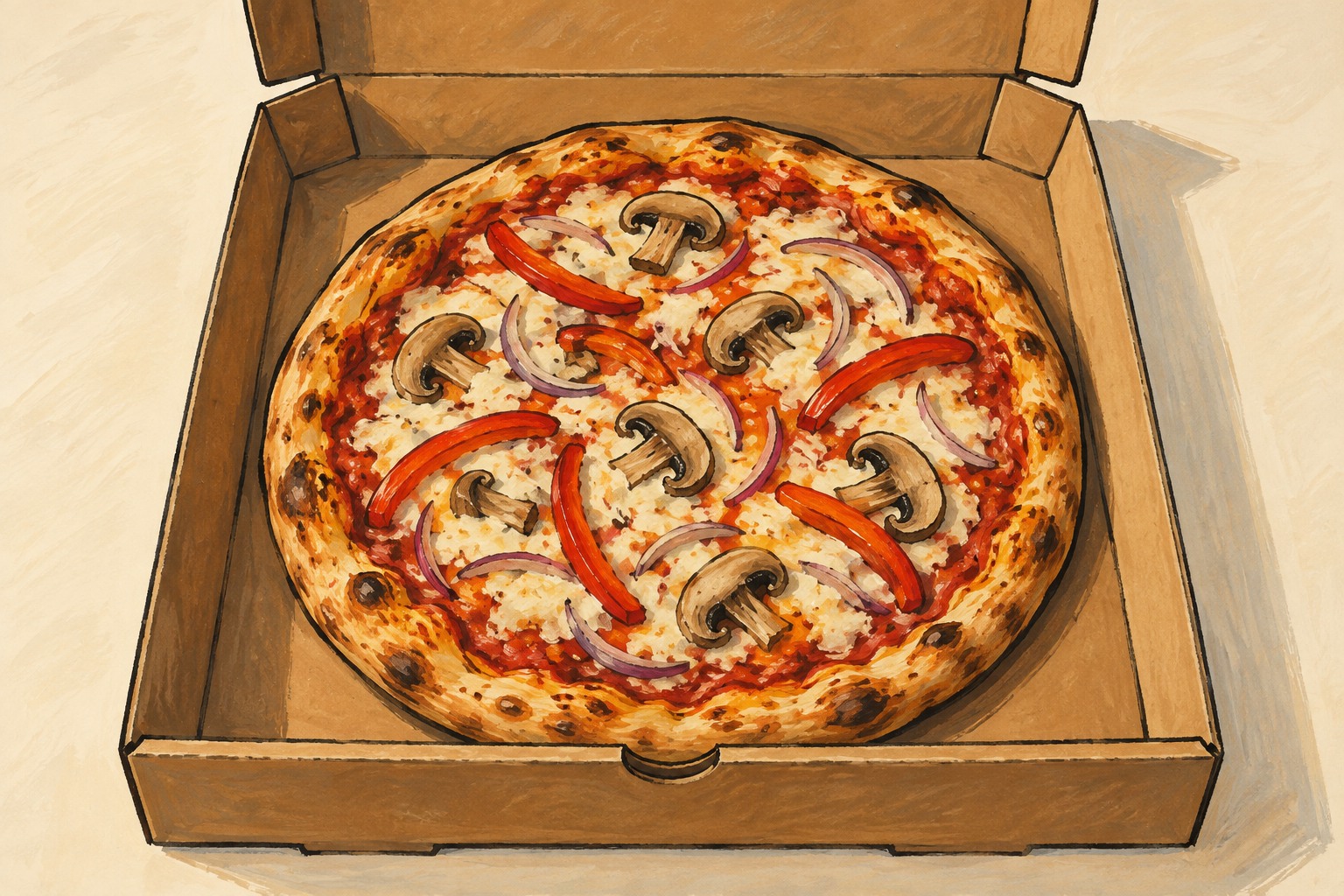
Cook the vegetables before they meet the dough, and a home-oven pizza is less likely to turn wet in the middle. This recipe makes two medium pizzas with mushrooms, pepper and onion. These toppings, dough and portions are modern choices; the record identifies only a vegetarian pizza request.
Read Philip Workman: A Pizza for Someone Else →
Print recipe · PDF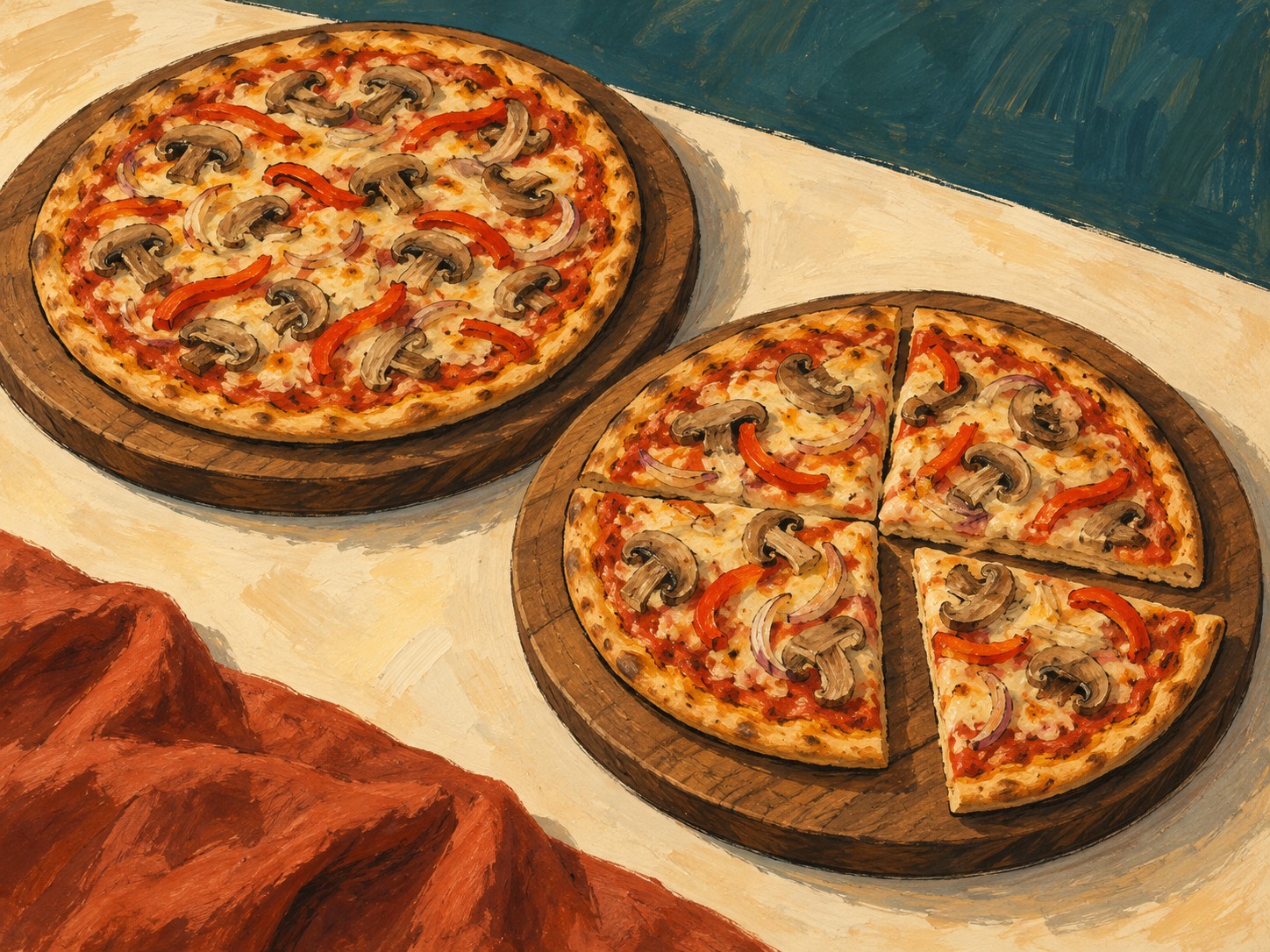
Take the water out of the topping first
A mushroom releases moisture before it browns; an onion and pepper soften at a different pace. Cooking all three in the small skillet gives that liquid a chance to evaporate before it reaches the dough. Divide the cooked mixture evenly. Thick passata supplies enough tomato for a thin coating; do not substitute the same volume of concentrated paste, which is a different product.
Check under the pizza
A melted cheese top does not tell you whether the middle of the base is cooked. Lift the edge carefully and look at the underside; cut into a central section if needed and check for a wet dough seam. Resting a reluctant dough for a few minutes makes shaping easier than pulling it until it tears. The modest two-slice portion is stated so that a cook can plan any additional salad or side separately.
Ingredients
- 2½ cups all-purpose/plain flour (300 g), plus up to 1 tablespoon (8 g) separately for the bench
- ¾ cup plus 2 teaspoons safe drinking water, lukewarm rather than hot (190 ml)
- 1 teaspoon instant dry yeast (3 g; check the packet)
- ⅔ teaspoon fine salt (4 g)
- 1¼ teaspoons olive oil for the dough (6 ml)
- 2 teaspoons olive oil for the vegetables (10 ml)
- 4¼ oz mushrooms, cleaned, dried and thinly sliced (120 g)
- 3½ oz red bell pepper, stem and seeds removed, thinly sliced (100 g prepared)
- 2½ oz onion, peeled and thinly sliced (70 g prepared)
- ¾ cup thick plain tomato passata/purée (180 ml/about 180 g; not watery crushed tomatoes or concentrated tomato paste)
- 5¼ oz low-moisture mozzarella, grated (150 g), labeled suitable for vegetarians if required
- ½ teaspoon dried oregano (about 0.5 g)
- ¼ teaspoon freshly ground black pepper (about 0.5 g)
Set out
Conventional oven and stovetop, 2 sturdy baking trays with at least 12-in/30-cm flat usable space, plus oven-safe parchment rated for 450°F/230°C if used, Large mixing bowl, clean cover and measuring jug, Kitchen scale and measuring spoons, Knife and board, 10-in/25-cm skillet and spatula, Grater and pizza wheel or knife, Wire rack, Refrigerator and shallow covered containers for leftovers
Allergens
Wheat; Milk. Check flour, yeast, passata and mozzarella labels. Some cheeses use animal rennet, so choose vegetarian-labeled mozzarella if that matters to the diners. Do not call the pizza vegan or free of cross-contact allergens.
Make it
- Mix 300 g flour, yeast and salt in the bowl. Add 190 ml lukewarm water and the 6 ml dough oil. Stir, then knead 8–10 minutes until elastic and cohesive. If the mixture looks rough, cover and rest 10 minutes before continuing; avoid adding extra flour beyond the measured bench allowance. Cover and leave at a comfortable room temperature for about 60–90 minutes, until noticeably expanded and roughly doubled. A cool room may need longer.
- While the dough rises, heat the 10 ml vegetable oil in the skillet over medium heat. Add mushrooms, pepper and onion. Cook 8–10 minutes, stirring, until softened and their released liquid has evaporated. Mix in black pepper and leave the vegetables to cool briefly. Keep the total cooked topping and divide it evenly later; no large wet pile should sit in the center.
- Heat the oven to 450°F/230°C, allowing at least 20 minutes to preheat fully. Arrange racks so both trays can bake with space for air circulation. Prepare the trays according to their surface instructions; use appropriately rated parchment if desired. Mix oregano into the thick passata.
- Divide all the dough into 2 equal pieces, about 250 g each before any bench flour. Shape each on its tray into a 10-in/25-cm round with a slightly raised rim. If it repeatedly springs back, cover and rest 5–10 minutes, then continue. Use no more than the measured 8 g bench flour in total.
- Spread half the passata over each round, leaving a ½-in/1-cm rim. Add half the grated mozzarella and half the softened vegetables to each, spreading them evenly in a thin layer. Bake both trays for about 15–20 minutes, swapping their positions and turning them halfway through, until the rims are browned, the underside is cooked and the centers have no wet dough seam. Lift a pizza edge carefully with a spatula to check the base. Oven performance varies; add time if necessary rather than judging only the melted cheese.
- Move the pizzas briefly to a rack so steam can escape from the bases. Cut each into 4 slices and divide the entire batch among 4 people, 2 slices each. If the oven can take only one tray, bake sequentially and add about 20 minutes to the total; keep the second shaped pizza cool while the first bakes.
A useful detail
The 3-hour allowance covers mixing, a 60–90-minute rise, vegetable cooking during that rise, full oven preheating, shaping and the final bake. Cold-room proofing or sequential tray baking takes longer. About 500 g dough makes two medium bases, not two oversized restaurant pizzas. A dry, thin topping layer and a fully cooked base matter more than a dramatic mound of vegetables.
Keep it well
Refrigerate cooked slices in shallow covered containers within 2 hours, or 1 hour above 90°F/32°C, at 40°F/4°C or below. Use within 3 days or an earlier ingredient deadline. Reheat leftover slices to 165°F/74°C throughout. Freeze cooled slices individually, then wrap airtight and use within 1 month for best texture; reheat from frozen or thaw overnight in the refrigerator, never on the counter.
How this recipe relates to the story
The documented request was for a vegetarian pizza to be given to a person experiencing homelessness; the department refused. The dough, mushrooms, pepper, onion, mozzarella and four portions here are original modern choices, not a documented prison recipe, donated pizza or meal eaten by Workman.
Another way
- Replace the 100 g prepared pepper with 100 g thinly sliced zucchini/courgette. Cook it with the mushrooms and onion until the released water evaporates, and keep the topping layer thin.
- For a tomato-only cheese pizza, omit all three vegetables and the 10 ml sauté oil. Keep the same two dough rounds, passata and mozzarella; this is an ingredient omission, not a claim about historical toppings.