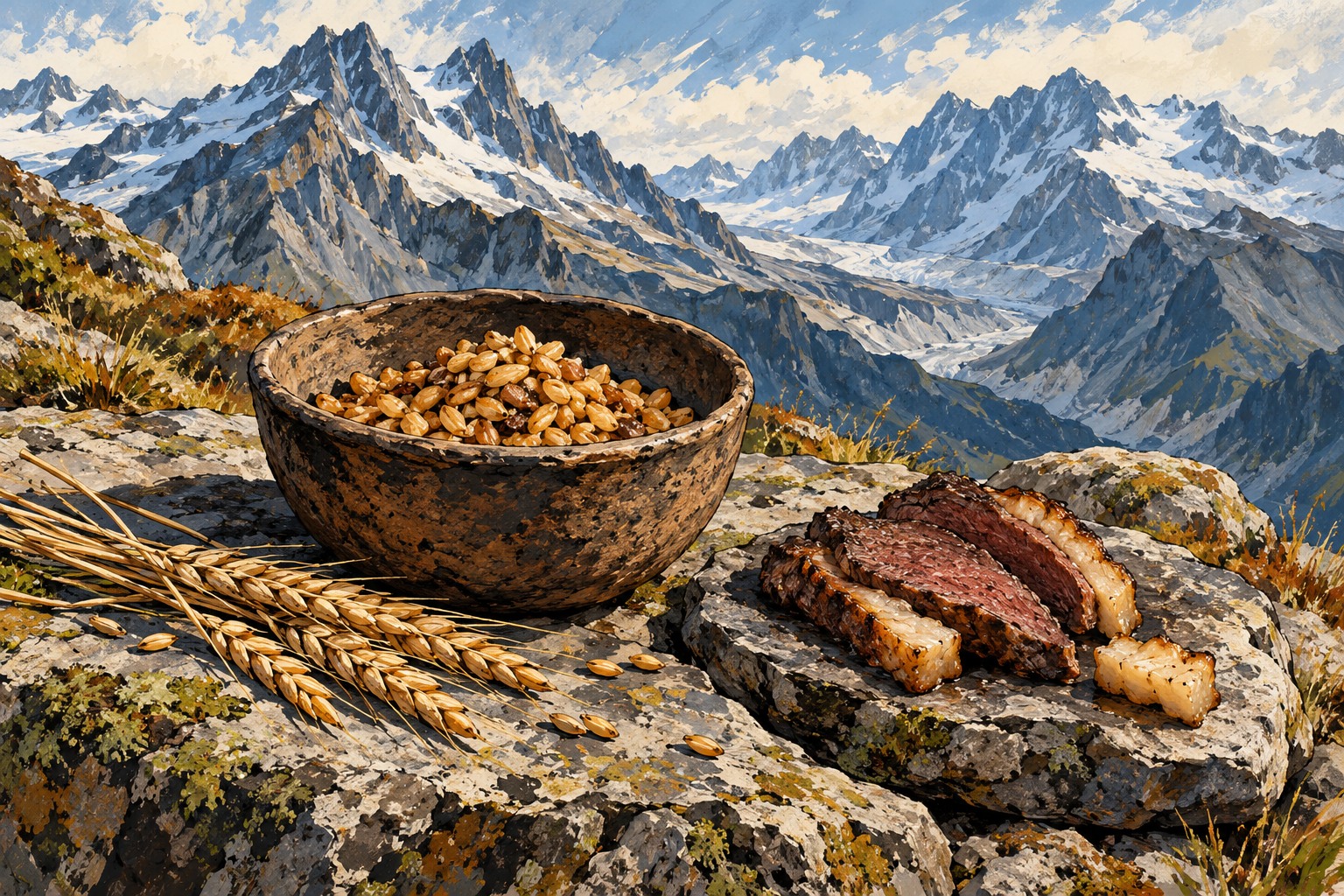
Famous Last Meals / Modern companion recipe
Seared Lamb with Einkorn
A plain plate of browned lamb and chewy einkorn. Lamb is our accessible domestic substitute for the ibex and red deer identified in Ötzi’s stomach. The amounts, seasoning and fully cooked modern method are original choices.
Read Ötzi: The Meal Hidden in Plain Sight →
Print recipe · PDF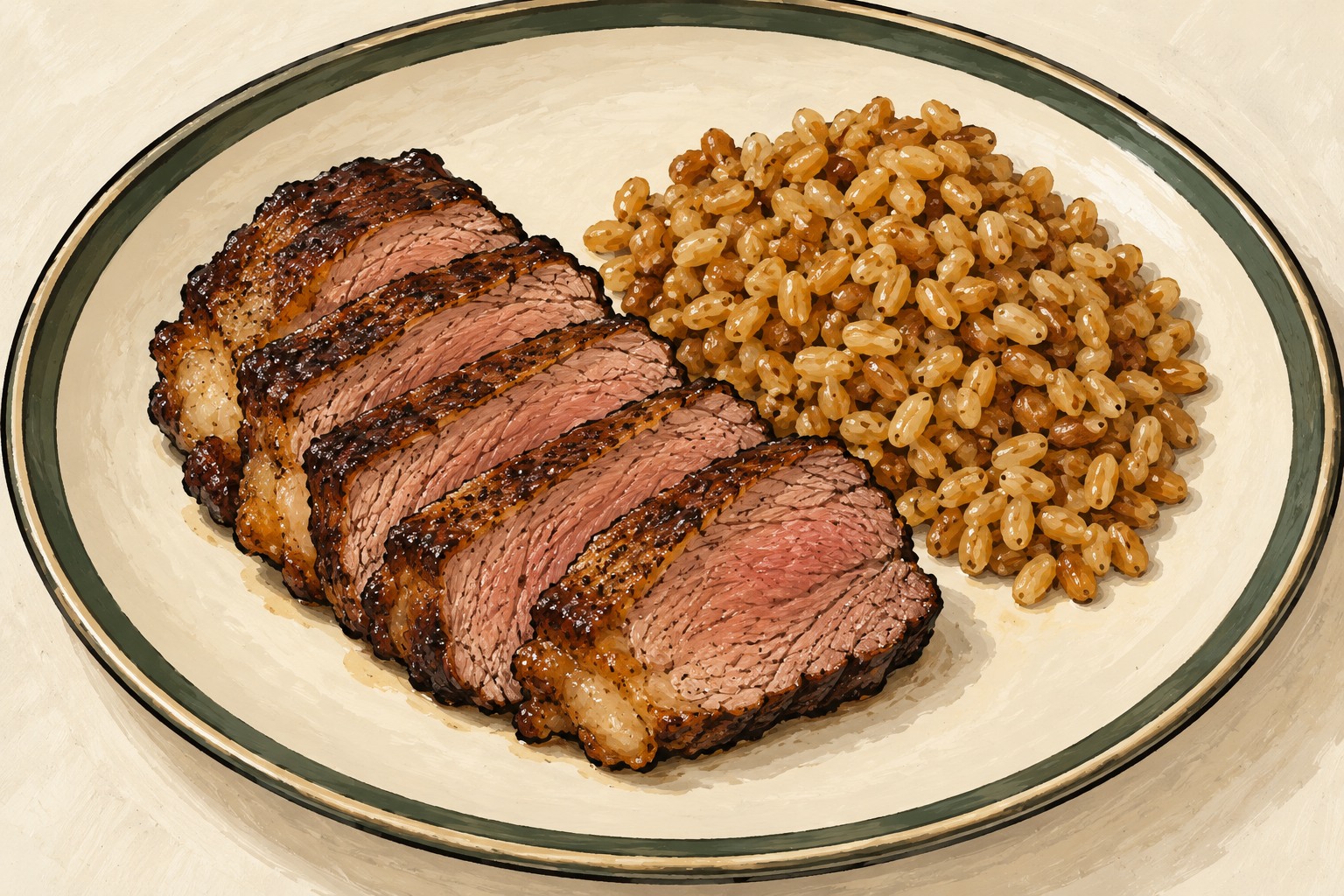
Ingredients
- About 1/2 cup whole einkorn wheat berries (100 g/3 1/2 oz), food-grade; choose a product whose label permits cooking without soaking
- 1 cup safe drinking water (240 ml) for the grain when the packet specifies 2 volumes water to 1 volume dry grain; use the exact packet-directed amount for 100 g if its ratio differs
- Up to 1/4 cup additional hot drinking water (60 ml), added 1 tablespoon/15 ml at a time only if the grain still needs cooking and the pan is dry
- 2 plain intact boneless lamb leg steaks, about 3/4 in/2 cm thick (5 1/4 oz/150 g each; 300 g total), not minced, stuffed or rolled
- 1 teaspoon neutral cooking oil (5 ml)
- 1/4 teaspoon fine salt (1.5 g), divided
Set out
Stovetop with 2 burners, Small heavy saucepan with lid, about 1.5 qt/1.4 L, Fine-mesh sieve, 10-in/25-cm heavy skillet, Tongs, Thin-probe food thermometer, Clean plate for cooked lamb, Clean knife and cutting board, Clean shallow refrigerator containers for leftovers
Allergens
Wheat (einkorn); contains gluten. Einkorn is wheat and is not gluten-free. Check the actual grain and oil labels and avoid cross-contact from shared equipment.
Make it
- Read the einkorn packet before starting. This timetable uses unsoaked berries with an approximately 30-minute covered simmer and 2:1 water-to-dry-grain volume ratio. If its required time or hydration differs, follow that instruction and extend the meal timetable; do not treat flour, bulgur or cracked wheat as the same product. Rinse the 100 g berries in the sieve if the packet directs.
- Put the grain and 1 cup/240 ml water, or the exact packet-directed water for 100 g, in the saucepan with half the salt. Bring to a boil, cover and reduce to a gentle simmer for the full packet time, about 30 minutes for the specified product. Check that the pan does not dry out. If the grain is still firm and the pan dry, add hot water 1 tablespoon/15 ml at a time from the measured 60 ml allowance and continue simmering. The grains should be tender through the center, with a pleasant chew and no hard raw core. Rest covered off the heat 5 minutes; drain excess liquid if needed.
- When the grain is nearly tender, blot the lamb with disposable kitchen paper without rinsing it. Keep raw meat and its utensils away from the cooked grain and clean resting plate. Season both steaks with the remaining salt. Heat the skillet over medium-high heat and add the oil. Lay the steaks in a single layer with space around them.
- Sear about 3–4 minutes on the first side, then turn and cook another 3–4 minutes. Hold any narrow outer fat edge against the pan briefly with the tongs if necessary. Reduce the heat if the surface is darkening too fast and continue cooking until the center of each steak reaches at least 145°F/63°C before removal, measured from the side into the thickest meat away from fat. Thickness and the stove can change the time; color alone is not the endpoint.
- Use clean tongs to move the cooked steaks to the clean plate and rest at least 3 minutes before slicing or eating, as specified by USDA for whole lamb steaks. Take the skillet off the heat. Spoon up to 1 teaspoon of its hot cooked fat into the finished grain if desired; leave any excess behind. Divide all the grain between 2 plates and add one steak to each, whole or sliced after its rest. No unlisted sauce, garnish or side is included.
A useful detail
The 60-minute total allows for reading the label, rinsing and heating the grain, about 30 minutes simmering, a 5-minute grain rest and the lamb cooked alongside near the end. A longer grain packet instruction or thicker steak extends the clock. Choose an unsoaked whole-grain product for this timetable; do not soak it overnight at room temperature to try to shorten the recipe.
Keep it well
Cool leftover lamb and grain promptly in separate shallow containers and refrigerate within 2 hours, or 1 hour above 90°F/32°C, at 40°F/4°C or below. Use within 2 days. Reheat the portion required to 165°F/74°C throughout, adding a little measured water to loosen the grain; do not leave a cooked-grain pan on the counter for a later meal.
How this recipe relates to the story
Domestic lamb replaces the identified ibex/red deer; no ancient recipe, measured portion, searing method, salt or oil use is asserted by this dish. The recipe deliberately follows modern food handling and whole-cut lamb safety.
Another way
- Pearled barley can replace the same 100 g dry grain only as a different modern dish: use its own packet water and cooking time, and identify the substitution rather than calling it einkorn. It still contains gluten.
- For the base dish, leave excess pan fat behind rather than adding it to the grain if that suits your preference. No extra fat beyond the listed oil is required.