Famous Last Meals / Modern companion recipe
Peppery Steak Toasts with Oven Potato Coins
Roast thin potato coins while cooking two small steaks, then use the skillet to toast the bread during the meat’s rest. Slice across the grain so each toast is easy to eat with a knife and fork. The portions, oven route and seasoning are new home choices, not a reproduction of the newspaper’s large reported dinner.
Read Charles Guiteau: Dinner at Eleven →
Print recipe · PDF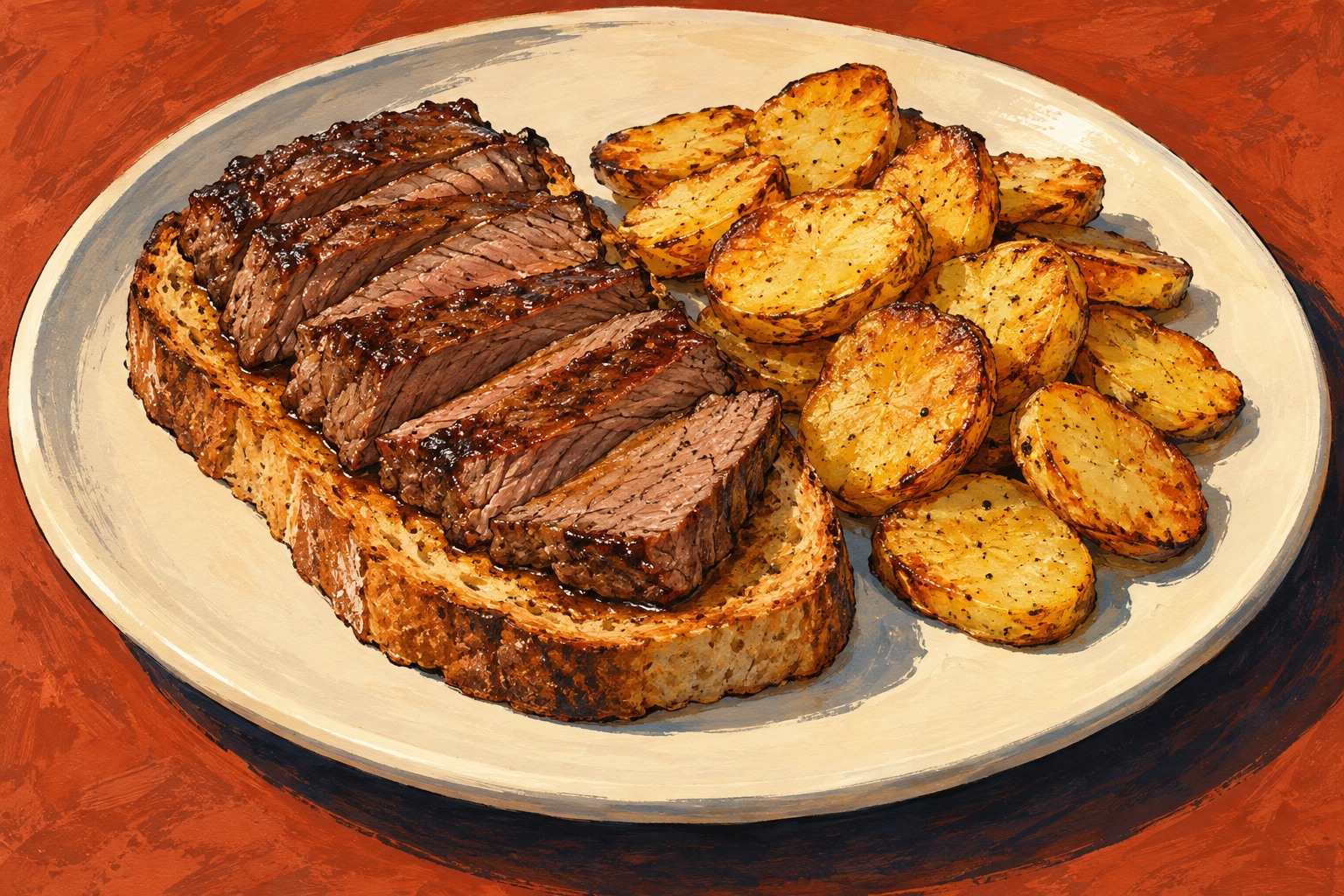
A coin has an even center
Cut the potatoes to the same thickness rather than chasing perfectly round shapes. A broad usable tray base lets 250 g lie in one layer, so the coins roast rather than steam in a heap. Turn them once, then test a center with a fork. Dark edges on a slice that is still hard in the middle call for more cooking, with lower heat if the outside is getting ahead.
Two small steaks need a real resting plate
Set out a clean plate before the raw steaks enter the pan. The board and plate that carried raw beef must not receive the finished slices. Check the thickest point with a thermometer and give the meat its three-minute rest. That small interval is enough for the bread step in a suitable pan; it is not spare time to eliminate.
Bread catches the juices
Keep each bread portion thick enough to support sliced meat. A brief dry toast in the just-used skillet gives the surface structure without another spoonful of fat. Share the resting juices between both plates, then serve with the potatoes alongside. The modern dish is intentionally smaller than the newspaper’s quantities and does not require a large coffee serving to complete it.
Ingredients
- 2 boneless whole-cut beef sirloin steaks, about 5⅓ oz/150 g each and ¾ in/2 cm thick (300 g raw edible meat total; each roughly 4 × 2¾ in/10 × 7 cm across)
- 8¾ oz potatoes after peeling or scrubbing (250 g prepared), cut into even ¼ in/7 mm coins
- 2 thick slices plain bread, 1¾ oz/50 g each (100 g total)
- 1 tablespoon olive oil (15 ml), divided into 2 teaspoons/10 ml for potatoes and 1 teaspoon/5 ml for steaks
- ¼ teaspoon fine salt (1.5 g), divided equally between potatoes and steaks
- ½ teaspoon black pepper (about 1 g), divided equally between potatoes and steaks
Set out
Oven and stovetop, Rimmed metal roasting tray with a usable internal base at least 12 × 9 in/30 × 23 cm, Skillet with a usable flat base at least 8½ in/22 cm, Knife and separate boards for produce/bread and raw beef, Scale and measuring spoons, Bowl, Tongs and broad spatula, Food thermometer, Clean resting plate and two serving plates, Shallow containers and refrigerator for planned leftovers
Allergens
Wheat/gluten. Ordinary bread contains wheat/gluten and may contain milk, egg, soy or sesame. Check its actual label and intended dietary requirements. The optional mustard variation adds mustard, which is an allergen in some labeling systems, and may add other labeled ingredients.
Make it
- Heat the oven to 400°F/200°C conventional or 375°F/190°C fan. Prepare the potato coins and bread before handling raw beef. Pat steaks dry with disposable paper, then wash hands and clean raw-meat utensils. Keep cooked food and bread clear of raw juices.
- Toss the potatoes with 10 ml oil and half the salt and pepper. Spread in one uncrowded layer on the usable tray base. Roast for 25–30 minutes, turning after about 15 minutes, until a fork enters the centers easily and the edges are golden. Extend the time if needed for actual thickness; do not use color as a substitute for tender centers.
- During the last 12–15 minutes of potato roasting, season the steaks with the remaining salt and pepper. Heat the skillet over medium-high heat and add the remaining 5 ml oil. Cook the two steaks side by side without touching, about 3–4 minutes per side for this thickness, checking early. Their centers must reach at least 145°F/63°C; extend cooking as necessary. Transfer with clean tongs to a clean plate and rest for at least 3 minutes before slicing. The specified usable pan base fits the two modest steaks; use one at a time in a smaller pan and allow an additional cooking interval.
- Lower the skillet to medium. During the steaks’ rest, toast the two bread slices in the hot pan for about 1 minute per side, pressing lightly with a spatula and watching that residual juices brown without burning. Do not add unmeasured oil. If both slices cannot lie flat, toast one after the other and extend the short finishing sequence.
- Once the steaks have had their full 3-minute rest, slice across the grain. Put one steak’s slices and half the resting juices on each piece of toast. Divide all the roasted potatoes between the two plates and serve promptly. No coffee, butter, sauce, salad or garnish is included in the listed yield.
A useful detail
The 55-minute total allows 15 minutes for preparation and about 40 minutes for oven heating/roasting plus the overlapping steak-and-toast finish. Use the stated steak thickness and usable tray/pan bases; thicker steaks or smaller equipment extend the clock. Every measured oil portion is allocated. Steak rests a full 3 minutes after reaching 145°F/63°C; slicing early to hurry the toast is not the route.
Keep it well
Chill planned leftovers promptly in shallow containers at 40°F/4°C or below within 2 hours, or 1 hour above 90°F/32°C. Keep bread separately so it does not soak. Use cooked beef and potatoes within 3 days, or promptly freeze at 0°F/−18°C for up to 2 months for quality. Thaw in the refrigerator and reheat the portion needed to 165°F/74°C throughout. Toast fresh bread for reheated meat; the complete assembled toast is best served immediately.
How this recipe relates to the story
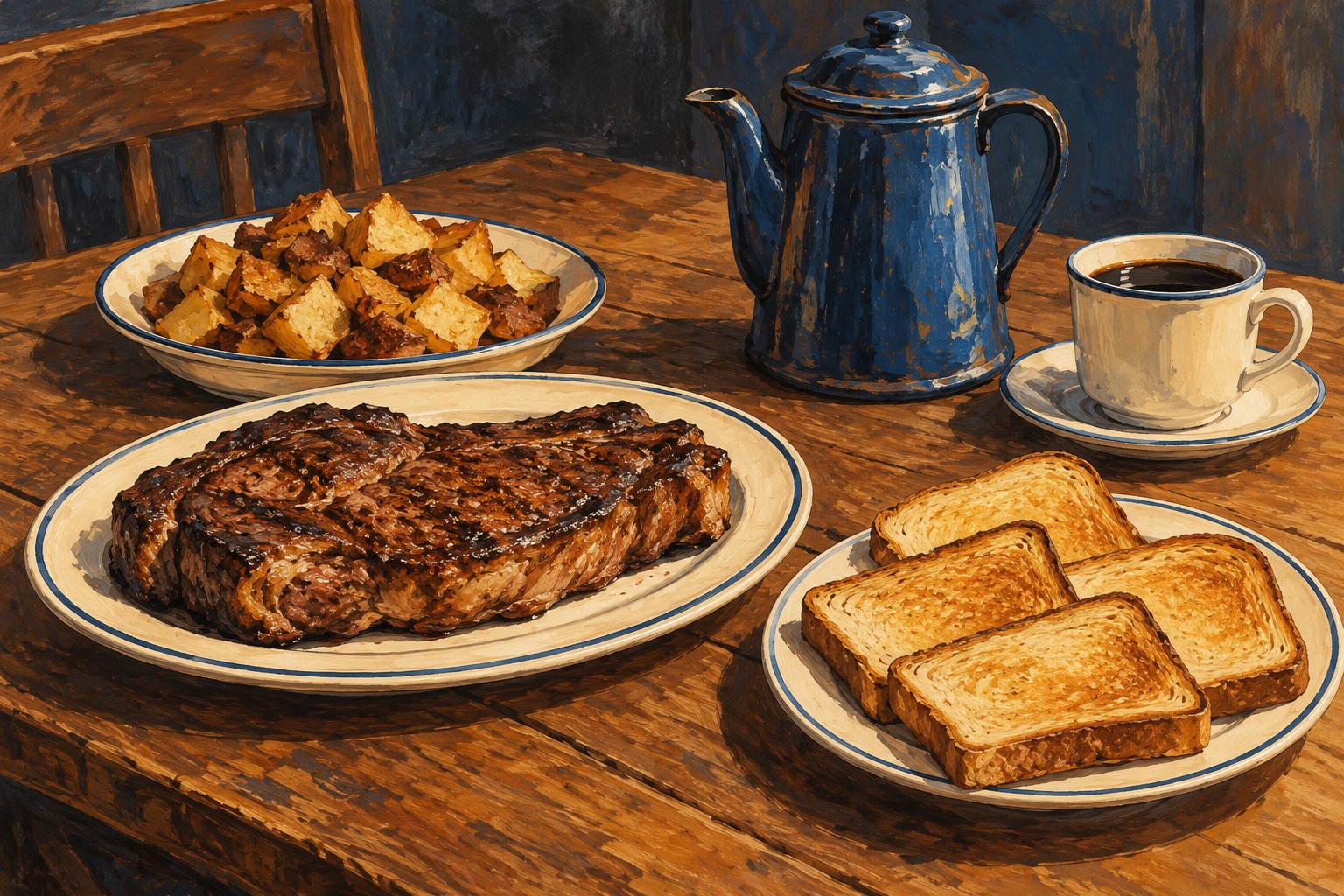
The steak, potato and toast connection comes from the contemporary newspaper report. Whole-cut sirloin portions, potato coins, roasting, seasoning and this serving method are original modern choices. The recipe does not reproduce the historical amount eaten or include the reported coffee.
Another way
- Use the same weight of whole-grain bread instead of plain white bread. Check the slice size and labels; two thin supermarket slices may be needed to make each 50 g portion. Toast in the same allotted pan sequence.
- Add 2 teaspoons prepared mustard (10 g), divided between the two finished toasts, if wanted. This is an optional modern addition, changes the finished ingredient list and requires checking the mustard label for allergens; it is not part of the source menu.