Famous Last Meals / Illustrated food history

Aileen Wuornos: A Dinner Declined

Florida, 9 October 2002

Evidence: A live report described an offered barbecued-chicken meal, not a meal eaten.

The report came from outside Florida State Prison before the execution. WTLV reporter Lori Aragon told CNN’s morning audience that Aileen Wuornos had refused a barbecued-chicken meal. She also said Wuornos had eaten nothing since noon the previous day. The detail is small, but it changes the familiar last-meal scene: there is food associated with the occasion, yet no shared supper to describe. CNN’s contemporaneous rush transcript.

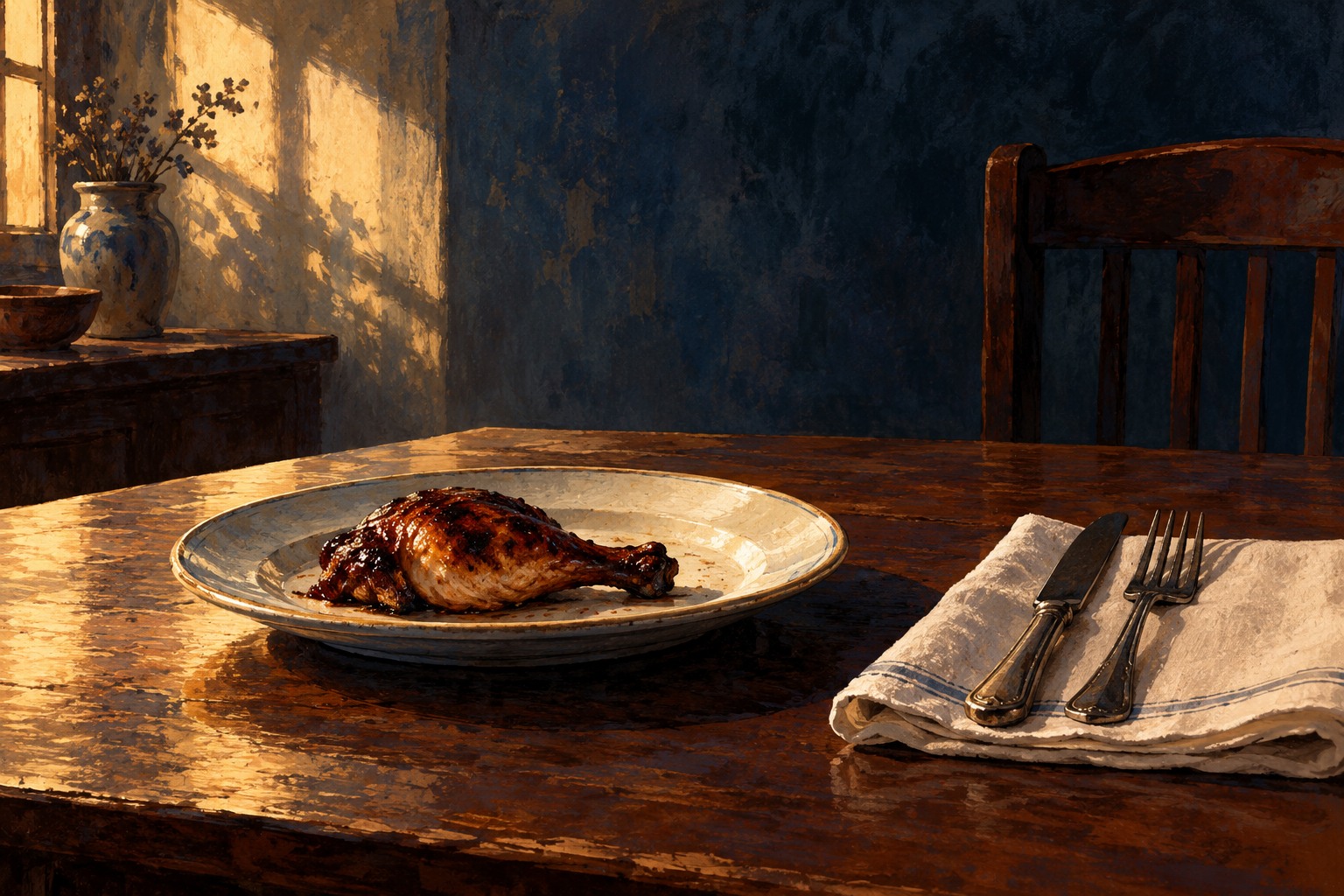
Imagined still life of an untouched supper dish and unused cutlery. It is not a photograph of the offered meal or the prison setting.

A case assembled along the highways

The 1994 Florida Supreme Court opinion begins with Richard Mallory. His abandoned vehicle was found in Volusia County on 1 December 1989; his body was discovered later that month. Investigators eventually connected property from the car with Wuornos. The court’s account follows possessions, interviews and a returned companion into a criminal case, rather than beginning with the later films and shorthand labels. Florida Supreme Court, printed pages 1–6.

Tyria Moore had lived with Wuornos for years. After leaving Florida, she was contacted by investigators and returned. Their subsequent conversations helped produce confessions. The opinion also records substantial differences between Wuornos’s accounts of Mallory’s death. Those differences became part of the trial and appeal; they cannot be settled by choosing one dramatic version for a dinner story.

More than one story reached the courtroom

The same opinion records defense evidence about abuse, alcoholism and mental difficulties, alongside disputed testimony and the state’s case. A jury convicted Wuornos of Mallory’s murder and armed robbery. Her history and the people she killed both belong in the account. A final meal does not turn either into an explanation for the other. The court’s factual and trial account.

Years later, on 9 October 2002, the legal proceedings had reached their end. The state’s historical case record gives that execution date. The morning broadcast is a different kind of source: a reporter outside the prison, gathering information while the event was still unfolding. Florida Commission on Capital Cases.

The supper that was not eaten

Aragon’s report places the declined chicken meal beside an overnight visit from a close friend. She attributed further information to a corrections spokesperson she had just spoken with. These are the ordinary movements of a live news report: an anchor asks, a reporter answers, and what is known at that hour becomes a transcript.

The transcript is marked as a rush version. It does not list side dishes, a sauce, a chicken cut or a serving size. Those omissions leave no obstacle to reading the scene. The essential action is already there: a meal had been offered, and it was refused. The private reason for that refusal is left unspoken. CNN/WTLV report.

A separate supper at home

The companion recipe makes two oven-roasted chicken thighs with a thin barbecue glaze. First the chicken gets time to color; then the sweet sauce goes on, where it can thicken without spending the whole cooking period against a hot pan. A thermometer, rather than the shade of the glaze, checks the meat.

This supper belongs to the present reader. Its small scale, pantry sauce and oven method are original choices. The historical connection is the offered food named in the broadcast, with the refusal still part of the story.

Cook the recipe

An original modern home recipe, with its historical connection and adaptations explained below.

Famous Last Meals / Modern companion recipe

Oven Barbecue Chicken for Two

Two chicken thighs roast before a small homemade glaze goes on for the final stage. A contemporary broadcast described a barbecued-chicken meal offered to Wuornos and refused. The oven method, sauce formula and two-person portion here are new home-kitchen choices.

2 glazed bone-in chicken thighs; serves 2 as part of a meal, with no sides includedActive 20 minCooking 45 minTotal 1 hr 10 min

Read Aileen Wuornos: A Dinner Declined →

Print recipe · PDF
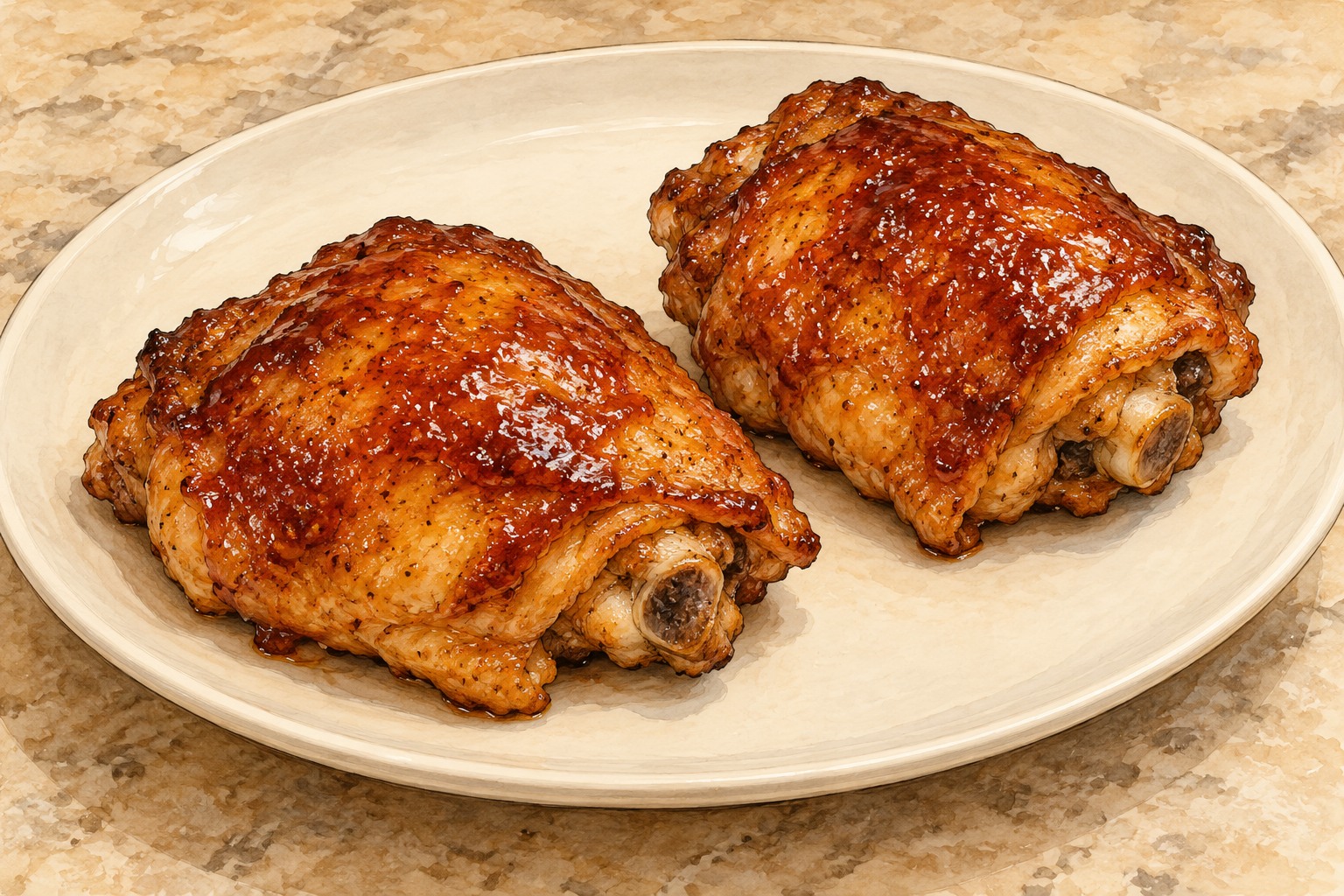
One plain cream serving plate holding exactly two cooked skin-on bone-in chicken thighs with a thin glossy reddish-brown barbecue glaze. Lightly browned edges, no charred black sauce, visible natural irregular thigh shapes.
Original modern recipe illustration: Oven Barbecue Chicken for Two. See the measured recipe for portions and cooking instructions.

Ingredients

  • 2 plain bone-in skin-on chicken thighs, about 6⅓ oz/180 g each including bone and skin (360 g total), fully thawed in the refrigerator
  • 1 teaspoon neutral cooking oil (5 ml)
  • ¼ teaspoon fine salt (1.5 g)
  • 3 tablespoons plain tomato ketchup (45 g)
  • 2 teaspoons cider vinegar (10 ml)
  • 2 teaspoons packed light brown sugar (8 g)
  • 1 teaspoon prepared Dijon mustard (5 g)
  • ½ teaspoon smoked paprika (1 g)
  • ⅛ teaspoon ground black pepper (0.25 g)
Set out

Conventional oven, Shallow metal roasting pan with usable base at least 8×8 in/20×20 cm, Small mixing bowl and spoon, Food-safe pastry brush, Thin-probe food thermometer, Tongs, separate raw-poultry preparation area and disposable kitchen paper, Clean cooked-chicken plate, oven mitts and foil for shielding a darkening glaze

Allergens

Mustard. No major US allergen is intentionally required, but prepared ketchup and Dijon mustard formulas vary and can contain additional ingredients or cross-contact warnings. Mustard is present and is an allergen in some jurisdictions. Check the actual containers and any substitutions.

Make it

  1. Heat the oven to 400°F/200°C with a middle shelf clear. In the small bowl mix ketchup, vinegar, sugar, mustard, paprika and pepper until the sugar is distributed. Keep this glaze separate from the raw chicken until the brushing step.
  2. Blot the thawed thighs with disposable kitchen paper; do not wash raw chicken. Put skin-side up in the roasting pan with at least 1 in/2.5 cm between them. Rub with all the oil and salt. Wash hands and clean the raw-poultry preparation area.
  3. Roast uncovered for 20–25 minutes, until the skin starts coloring. This is a partly cooked stage, not a safe serving endpoint. Remove the pan only long enough to brush all the measured glaze over the tops and exposed sides, keeping the skin upward.
  4. Return to the oven and roast another 15–20 minutes, checking both thighs near the shorter time. Each thickest meaty part must reach at least 165°F/74°C, measured from the side away from bone and pan. Continue as needed; sticky brown glaze does not prove the center is safely cooked. If the glaze darkens early, cover loosely with foil and continue.
  5. Treat the brush and bowl as having contacted partly cooked poultry: wash them thoroughly and never use them to dress cooked food. Use clean tongs to move the cooked thighs to the clean plate and rest 5 minutes. Serve 1 thigh per person. The pan drippings are not a dipping sauce; no side dish or garnish is included.

A useful detail

The 70-minute total allows 20 minutes for preparation and preheating, up to 45 minutes roasting and a 5-minute rest. Larger thighs, cold ovens and differing pan surfaces can extend cooking; the 165°F/74°C center check decides when each thigh is ready. The measured raw weight includes bones and skin.

Keep it well

Refrigerate remaining chicken promptly in shallow covered containers within 2 hours, or 1 hour above 90°F/32°C, at 40°F/4°C or below. Use within 2 days. Reheat only the portion needed until its thickest center reaches 165°F/74°C; cover to protect the glaze from scorching. Keep cooked food away from the used raw-poultry surface and utensils.

How this recipe relates to the story

WTLV’s Lori Aragon, reporting live on CNN on 9 October 2002, described a barbecued-chicken meal Wuornos had refused. No cut, sauce formula, cooking method or quantity is supplied. This new recipe chooses oven-roasted thighs and a measured ketchup-mustard glaze; it is not the prison meal and does not imply she ate it.

Another way

  • Use sweet paprika instead of smoked paprika at the same 1 g weight for a milder sauce flavor; neither spice is established by the historical broadcast.
  • Choose a plain gluten-free-labeled ketchup and mustard if needed for the diners, checking every product and preparation surface; this does not make the original recipe a certified allergen-free dish.

Cooking and storage references

Sources for this story

  1. CNN Live at Daybreak, 9 October 2002, 06:41 ET ·
  2. Wuornos v.State, Supreme Court of Florida, 22 September 1994 ·
  3. Florida Commission on Capital Cases: Aileen Wuornos ·