054 / 75 · Pasta, Rice and Grain Meals
Chicken Pea Lemon Orzo
2 bowls, each with half the chicken, peas and lemon orzo · Active 40 min · Total 1 hr 10 min
Print recipe · PDFChicken, peas and orzo can finish in a single skillet when the pasta has enough water and the peas join at the correct stage. Lemon and chopped dill go in at the end for a clear fresh finish. This is a useful beginner lesson in timing two packaged ingredients together: a pasta’s cooking interval should not be finished once before a vegetable’s full interval is added on top.
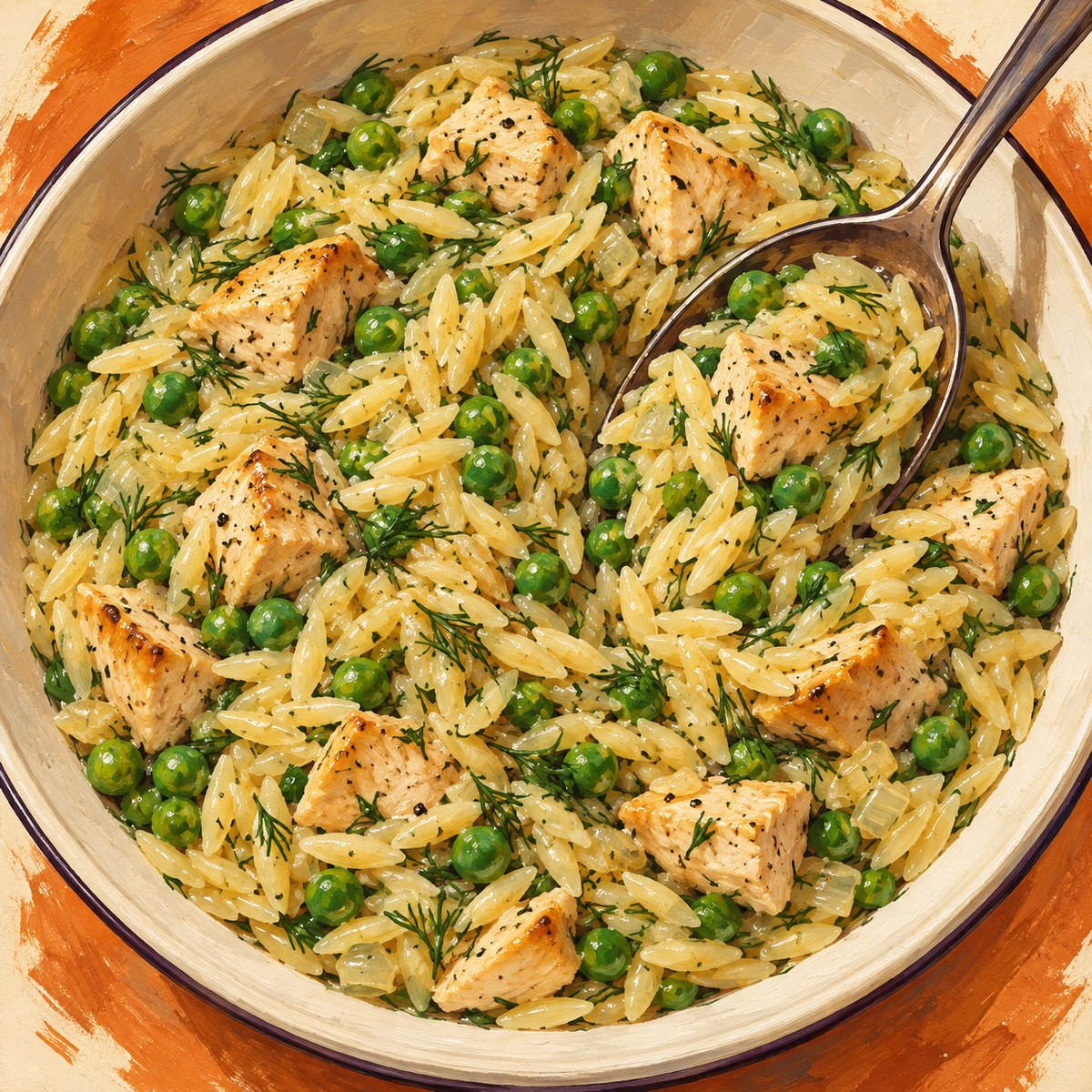
Cut chicken before watching the pan
Prepare onion, garlic and lemon first, then cut chicken into small even pieces on a separate board. Keep the raw chicken away from dill and serving bowls. The chicken colors briefly before pasta is added but does not have to finish cooking at that early stage. Its thickest pieces must reach the poultry endpoint by serving. A wide deep skillet gives the orzo room to simmer; in a narrow pot the same liquid may remain deeper and reduce more slowly.
Read two packet times before starting
Use ordinary dry orzo, a small wheat pasta, and read its expected simmer time alongside the frozen peas’ required cooking time. The peas need to join while that amount of pasta time remains. For example, a ten-minute pasta and five-minute pea product share their final five minutes. If the pea instructions require longer than the pasta, cook those peas separately as directed and fold them in at the end. This is clearer than overcooking the orzo and hoping a frozen center has merely warmed enough. A small splash of boiling water is useful if the base dries before the pasta is tender.
Finish with a loose spoonful, not a dry block
Stir along the base occasionally because orzo releases starch and can stick. The finished mixture should be moist and spoonable, with no hard pasta center and no large puddle of water. Lemon juice and dill are folded through off the heat. Divide all the chicken and pasta, including any sauce in the pan, evenly between two bowls. A second handful of dry orzo would need additional water and would change both the timing and the estimate.
Ingredients
- 9 oz raw boneless skinless chicken breast, cut into 3/4-inch/2 cm pieces (250 g)
- 3/4 cup dry orzo pasta (140 g)
- 1 cup frozen green peas (160 g), not thawed
- 1 small onion, finely diced (80 g)
- 1 garlic clove, minced (3 g)
- 2 teaspoons olive oil (10 ml/about 9 g)
- 2 cups water (480 ml), plus a small boiling-water splash if needed
- 4 teaspoons lemon juice (20 ml/about 20 g)
- 2 tablespoons chopped dill (8 g)
- 1/2 teaspoon fine salt (3 g)
- 1/8 teaspoon black pepper (0.3 g)
Set out
28 cm/11-inch deep skillet with tight lid, Knife and separate raw-chicken board or cleaned board, Spoon, Kitchen scale, Measuring jug, Kettle for a little boiling water if needed, Food thermometer, Extra small saucepan only if pea packet timing requires separate cooking, 2 bowls
Allergens
Wheat; check dry pasta for egg or other added allergens. Check labels and substitutions.
Make it
- Read orzo and frozen-pea cooking instructions before heating the skillet. Prepare vegetables first, then cut raw chicken and wash its board, utensils and your hands.
- Heat oil over medium heat. Cook onion for 7–9 minutes until softened. Add chicken pieces and cook for 4–5 minutes, turning, until the outsides lose their raw appearance. Add garlic for 30 seconds, then stir in dry orzo.
- Add measured water, salt and pepper, bring to a gentle boil, cover loosely and simmer on low for the orzo packet’s expected time, usually 10–12 minutes. Stir along the base twice. Add the still-frozen peas when their full package cooking time remains: for 10-minute orzo and 5-minute peas, add them after the first 5 minutes. If peas need longer than the entire orzo time, cook them separately as directed and fold them in near the end.
- Continue until peas have received their full required cooking, orzo is tender with a moist coating, and the thickest chicken pieces reach 165°F/74°C. Add a splash of boiling water if the pan dries too soon; simmer uncovered briefly if too wet. Do not finish a full pasta cooking interval and then add another complete pea interval.
- Remove from heat, stir in lemon juice and dill and divide all contents evenly between 2 bowls.
A useful kitchen skill
Coordinate a frozen vegetable’s full required cooking with the pasta time instead of adding two complete cooking intervals in sequence.
A useful detail
The 70-minute total allows beginner chopping, staged cooking and packet differences. The estimate uses raw chicken, frozen unprepared peas and dry enriched pasta by weight. The water contributes no calories and may need a little adjustment for the pan and packet.
Another way
- Use 140 g dry small pasta shells instead of orzo, applying their packet cooking time and liquid needs; check the product estimate.
- Use 8 g chopped parsley instead of dill for a different herb finish and a slightly revised estimate.
Keep it well
Refrigerate promptly in shallow containers at 40°F/4°C or below within 2 hours, or 1 hour above 90°F/32°C. Use within 3 days. Reheat only the portion needed to 165°F/74°C throughout with a splash of water, stirring the orzo and checking chicken pieces. Freeze for up to 2 months and thaw in the refrigerator; pasta softens further.