002 / 75 · Breakfasts That Teach the Basics
Peanut Oat Porridge with Warm Apple
2 porridge bowls, each with half the peanut oats and warm apple · Active 15 min · Total 25 min
Print recipe · PDFMilk, oats and peanut butter make a porridge that needs watching more than equipment. The apple cooks in its own small pan, so its shape stays visible on top instead of disappearing into the cereal. Read the oat label before starting: this method uses ordinary rolled oats, not a packet with its own seasoning or steel-cut oats that need a much longer simmer.
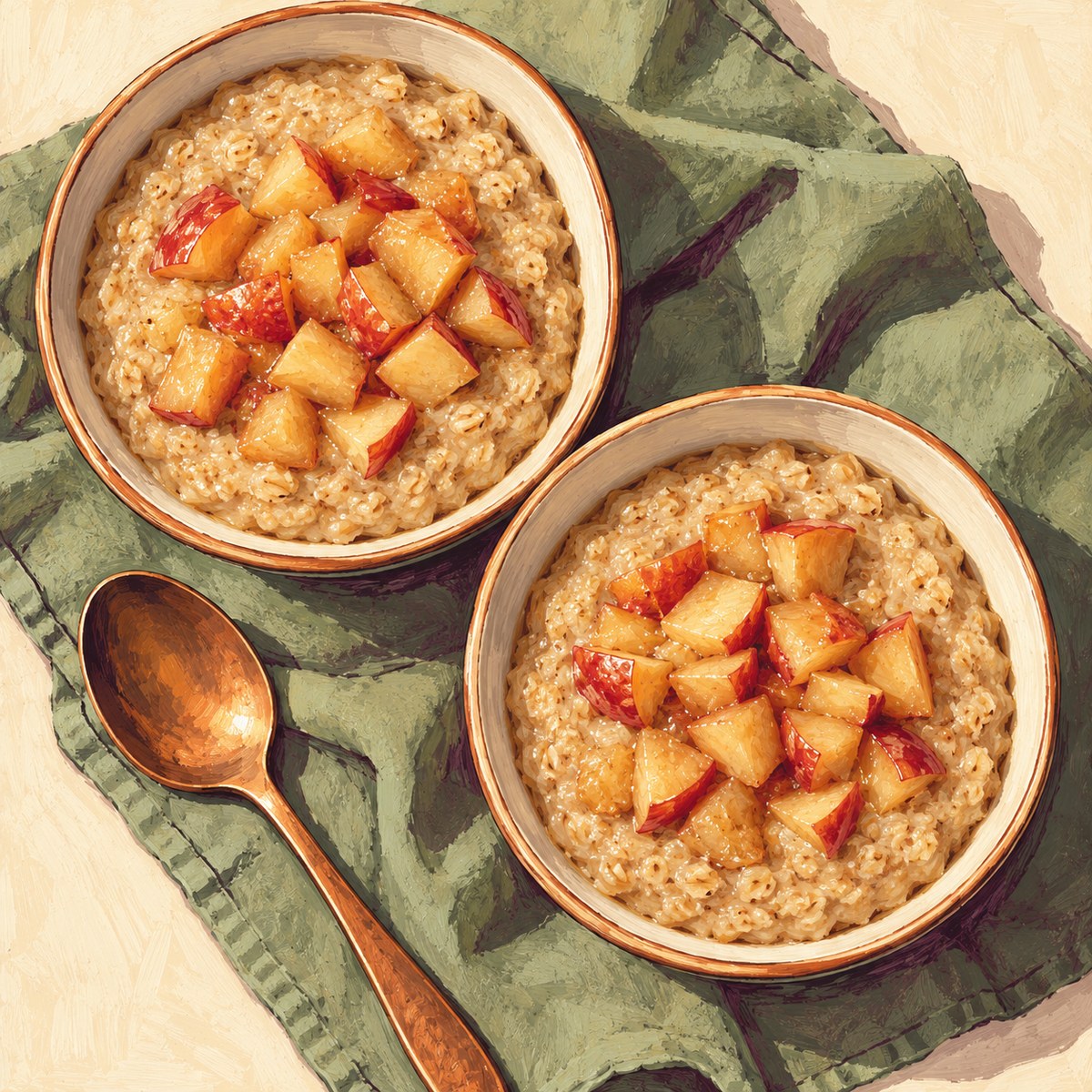
Let the spoon tell you about the bottom of the pan
Milk can catch on the base before the surface looks particularly hot. Use a heavy small saucepan and stir along the bottom and corners, not only through the middle. A gentle bubbling is enough. If the oats start spitting or sticking, lower the heat and keep the spoon moving. The mixture thickens further after leaving the burner, so stop when it still falls slowly from the spoon rather than waiting for a stiff mound. The measured water loosens the milk without making the breakfast depend on an extra unlisted carton.
A small apple pan gives you control
Leave the washed apple skin on and cut the fruit into small even pieces. Water and a little sugar help it soften without a separate frying stage. Cover briefly, then uncover and check a piece with the spoon. Some apples remain in neat cubes; very ripe fruit makes a softer topping. Either is usable as long as the center is tender. Stir peanut butter into the finished hot porridge a little at a time. It blends more easily into warm cereal than into cold milk, and the final pause lets the texture settle before you divide the bowls.
Ingredients
- 1 cup ordinary rolled oats (80 g)
- 1 2/3 cups 2% milk (400 ml/about 412 g)
- 3/4 cup drinking water (180 ml), use 120 ml for oats and 60 ml for apple
- 1 medium apple, washed, cored and diced (200 g prepared, skin on)
- 2 tablespoons smooth unsalted peanut butter (32 g)
- 1 tablespoon granulated sugar (12 g)
- 1/2 teaspoon ground cinnamon (1.3 g)
Set out
Stovetop with 2 burners, Heavy saucepan of at least 1.5 qt/1.4 L, Small saucepan with lid, Wooden spoon, Knife and board, 2 bowls
Allergens
Milk, Peanuts, Oats; check the oats for wheat cross-contact. Check labels and substitutions.
Make it
- Put apple, 60 ml water and sugar in the small saucepan. Cover and simmer gently for 6–8 minutes, stirring once, then uncover and cook 2 minutes or until apple is tender. Keep the heat gentle and cover again if the pan looks dry before the apple softens.
- Meanwhile, put oats, milk, the remaining 120 ml water and cinnamon in the heavy saucepan. Bring slowly to a gentle simmer, stirring across the base. Cook 8–10 minutes or for the full rolled-oat packet time, stirring often, until the oats are soft and the porridge is spoonable.
- Take porridge off the heat and stir in the peanut butter until evenly blended. Rest 2 minutes. Divide all the porridge between 2 bowls and top each with half the warm apple and any small amount of apple syrup.
A beginner skill to practice
Watch the bubbling and the spoon’s path across the base. Turning down heat early is easier than removing a scorched flavor later.
A useful detail
The 25-minute total uses two pans at once. The milk-and-oat mixture should simmer gently rather than boil hard. A longer oat-label cooking instruction extends the time.
Another way
- Use 200 g prepared ripe pear instead of apple, checking for tenderness after 5 minutes; it can soften faster.
- Use 32 g sunflower seed butter if suitable for your allergies. It changes the flavor and the estimate; check its label for cross-contact.
Keep it well
Cool leftovers in shallow containers and refrigerate within 2 hours, or 1 hour above 90°F/32°C, at 40°F/4°C or below. Use within 2 days. Reheat the portion required to 165°F/74°C, stirring and adding a measured spoonful of water if necessary. Do not leave milk porridge warm on the stove for later.