001 / 75 · Breakfasts That Teach the Basics
Ricotta Scrambled Eggs with Cherry Tomatoes
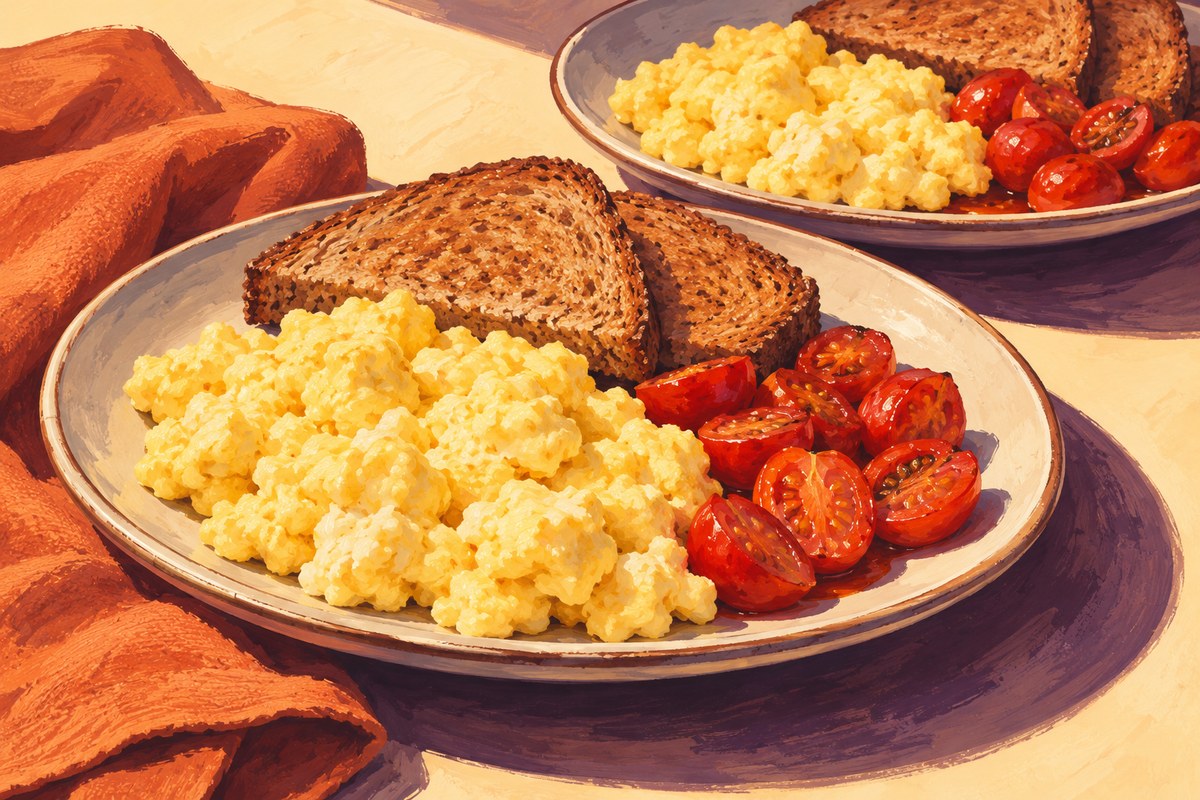
2 breakfast plates, each with half the eggs, ricotta, tomatoes and toast · Active 15 min · Total 30 min
Print recipe · PDFRicotta makes a soft scramble without a long ingredient list. The important move is to cook the tomatoes first, then lower the heat before the eggs enter the pan. A piece of toast gives you somewhere to put the curds as you eat. This is a useful first lesson in changing the heat during a recipe rather than leaving one burner setting in place from beginning to end.
A hot pan and a gentle pan can be the same pan
Start the tomatoes over medium heat so their cut surfaces soften and release a little juice. Move them to a clean plate before making the eggs. The pan now needs less heat: give it a brief pause off the burner, then return it over low heat. Eggs cook quickly on hot metal, and a pan that was right for tomatoes can make small dry crumbs of egg before you have time to stir. A flexible spatula helps lift the mixture from the bottom rather than scraping at it with a fork.
Fold rather than beat once cooking begins
Whisk the raw eggs in a bowl until the yolks and whites are combined, but there is no need to whip in a large amount of air. In the pan, draw the spatula slowly across the bottom and let uncooked egg flow into the space. Once broad curds have formed, the ricotta can be folded through. Its moisture keeps the finished scramble soft, but it also cools the eggs. Continue gently until the combined mixture is fully set and reaches the stated temperature. Have the toast ready so the scramble goes straight to the plate.
Ingredients
- 4 large eggs (200 g edible contents)
- 1/2 cup part-skim ricotta (120 g)
- 1 1/3 cups cherry tomatoes, washed and halved (200 g)
- 4 small whole-wheat bread slices (120 g total)
- 2 teaspoons olive oil (10 ml/about 9 g), divided
- 1/4 teaspoon fine salt (1.5 g), divided
- 1/8 teaspoon ground black pepper (0.3 g)
Set out
Stovetop, 10-in/25-cm nonstick skillet, Mixing bowl and whisk, Flexible spatula, Clean holding plate for tomatoes, Toaster, Thin-probe food thermometer, Knife and board
Allergens
Egg, Milk, Wheat; bread may add soy or sesame—check labels. Check labels and substitutions.
Make it
- Whisk eggs with half the salt and the pepper. Set the ricotta beside the stove. Heat 1 teaspoon oil in the skillet over medium heat. Add tomatoes and remaining salt; cook 4–5 minutes, turning, until softened but still holding their shape. Transfer to the clean plate.
- Take the skillet off the heat for 1 minute, then return it over low heat with the remaining oil. Add eggs. Draw the spatula across the bottom every few seconds, allowing broad curds to form, about 3–4 minutes. Toast the bread while you watch the eggs.
- Fold in ricotta and continue cooking gently for 2–3 minutes, or as needed, until no liquid egg remains and the combined scramble reaches 160°F/71°C. Check in the thickest curds without touching the pan with the probe. Divide all the scramble, tomatoes and toast between 2 plates and serve promptly.
A beginner skill to practice
Practice moving a pan off the burner to reduce its heat. A dial change alone does not immediately cool the metal.
A useful detail
The 30-minute total includes cutting, whisking, a tomato stage, a short pan-cooling pause and the scramble. Low heat gives you time to move the spatula; it does not mean leaving raw liquid egg in the finished dish.
Another way
- Use 200 g chopped regular ripe tomato instead of cherry tomatoes; cook it until the released liquid has mostly evaporated before removing it.
- A 120 g serving of plain 2% cottage cheese can replace the ricotta, but the curds and nutrition estimate will differ.
Keep it well
Refrigerate leftover eggs and tomatoes in a shallow container within 2 hours, or 1 hour above 90°F/32°C, at 40°F/4°C or below. Use within 2 days and reheat to 165°F/74°C. Toast bread fresh rather than storing it under the moist eggs.