052 / 75 · One Pan, Less Washing Up
Crisp Skillet Pierogi with Sauerkraut and Caraway
2 generous skillet portions · Active 15 min · Total 45 min
Print recipe · PDFBought potato-and-cheese pierogi become a complete savory skillet with onion and a tangle of sauerkraut. Caraway adds a warm fragrance, and a little sour cream on the plate softens the sharpness. The same deep skillet handles the brief boil and the final browning, with a colander used between stages. It is a practical meal for a tired evening because the dumplings are already made and the rest is straightforward.
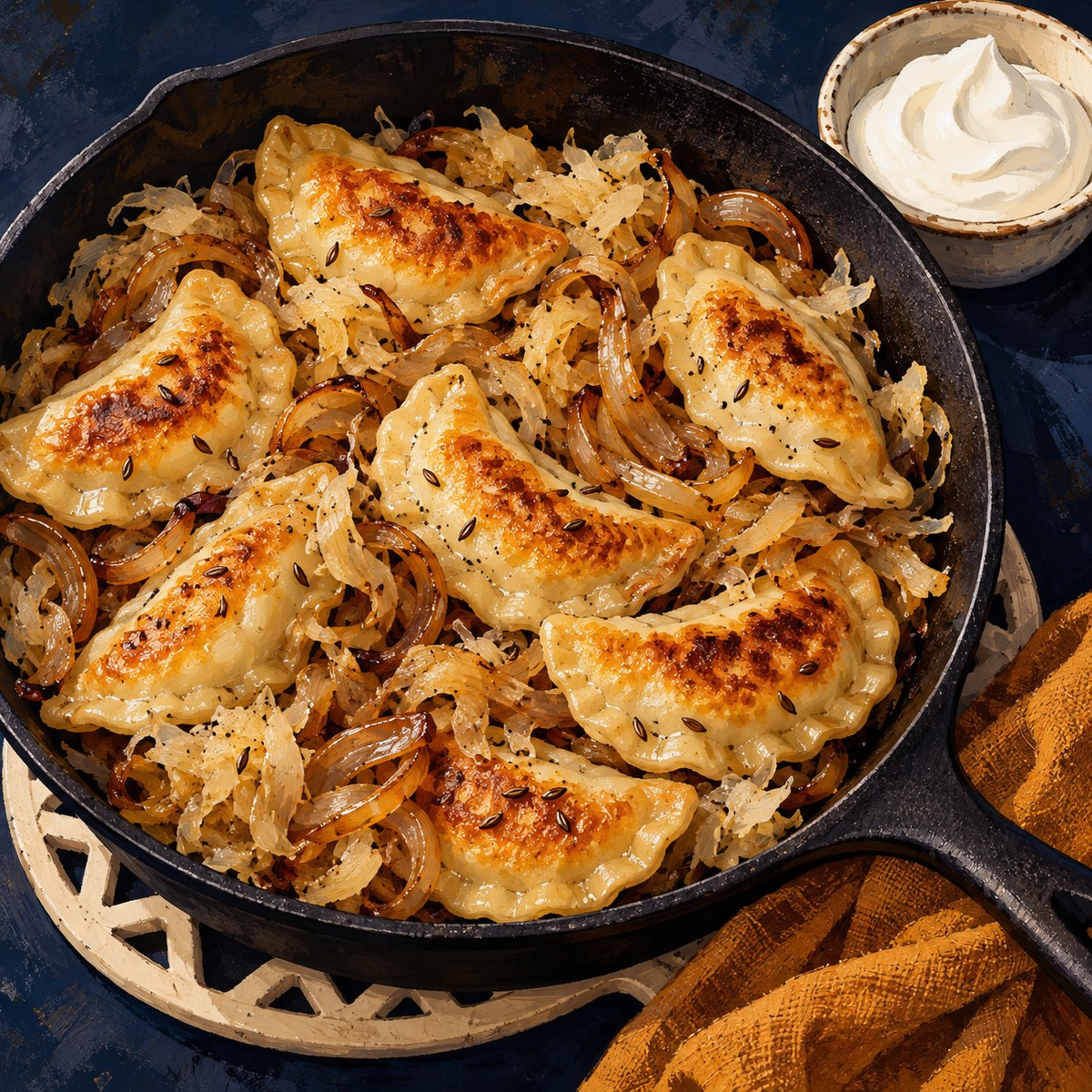
Follow the dumpling you bought
Pierogi vary in size, filling and whether they are fresh or frozen. Use the packet’s boiling instructions rather than assuming every dumpling is done as soon as it floats. Drain them well before browning, and let surface water escape for a moment. A wet dumpling spits in hot fat and is more likely to stick. Do not squeeze or press the soft cooked pieces while they are in the colander.
Drain the kraut, keep its character
Sauerkraut brings both flavor and liquid. Drain it well so the skillet does not turn into a wet stew after the pierogi have browned. If it is very sharply salted, rinse it briefly and squeeze out the extra water; taste a small amount first. Add it only after the dumplings have colored, warming it through without constantly stirring away the crisp surfaces you just made.
Use gentle turns
A wide spatula is kinder to tender pierogi than a sharp fork. Let one side brown before turning, working around the pan instead of tossing everything vigorously. If your skillet cannot hold the dumplings in one layer, brown two batches and return them together for the final warming. The sour cream stays separate until serving, which also makes any saved portion easier to reheat without a split dairy sauce.
Ingredients
- 14 oz refrigerated or frozen potato-and-cheese pierogi (400 g)
- 6 cups water for boiling (1.4 liters), or enough for the package method
- 1 tablespoon unsalted butter (15 g)
- 1 teaspoon olive oil (5 ml)
- 1 medium onion, thinly sliced (150 g)
- 1 1/2 cups sauerkraut, well drained (200 g)
- 1/2 teaspoon caraway seeds (1 g)
- 1/4 teaspoon black pepper (0.5 g)
- 1/4 cup sour cream (60 g), to serve
Set out
Deep 12-inch (30 cm) skillet, Colander, Wide spatula
Allergens
Wheat, Milk; pierogi may also contain egg or soy—check package. Check labels and substitutions.
Make it
- Bring the water to a boil in the deep skillet. Cook the pierogi according to their package instructions, then drain gently in the colander. Let stand for 2 minutes while the surface water drains. Empty and carefully dry the skillet.
- Return the skillet to medium heat. Melt the butter with the oil, add the onion and cook for 7–9 minutes until soft and lightly golden. Stir in the caraway for 30 seconds.
- Add the drained pierogi in one layer. Cook for 6–8 minutes, turning carefully once, until the broad sides are golden. If necessary, work in two batches rather than crowding the pan.
- Add the drained sauerkraut and pepper. Fold through gently and cook for 3–4 minutes until everything is hot, following any package temperature instruction for the pierogi.
- Divide between two plates and serve each with 2 tablespoons (30 g) sour cream.
Keep a freezer meal flexible
Use only the amount of frozen pierogi needed and reseal the remainder promptly. A bag in the freezer plus a refrigerated jar of sauerkraut makes this meal possible without fresh shopping after every shift.
A useful detail
The total allows a short package boiling stage and one browning batch. Add about 8 minutes if your pan requires two browning batches.
Another way
- Use potato-and-onion pierogi instead; check the label because those may still contain milk or egg.
- Replace caraway with 1/2 teaspoon (1 g) lightly crushed fennel seeds for a different aromatic flavor.
Keep it well
Refrigerate the cooked skillet mixture and sour cream separately within 2 hours, or 1 hour above 90°F/32°C, at 40°F/4°C or below for up to 3 days or the shorter package limit. Reheat the dumpling mixture to 165°F/74°C, adding a tablespoon of water under a lid before uncovering to crisp. Keep sour cream cold. Carry chilled with two cold sources and refrigerate at work.