002 / 75 · Savory Garden Molds
Cucumber Dill Yogurt Mold
6 small cucumber-yogurt molded sides, about 95–100 ml each · Active 35 min · Total 10 hr
Print recipe · PDFDrained cucumber and dill give these pale yogurt molds a fresh, savory character. They are small cool sides for a lunch plate rather than a replacement for tzatziki poured into a ring. Whisking a little cold yogurt gradually into the warm dissolved gelatin first helps keep the finished mixture smooth.
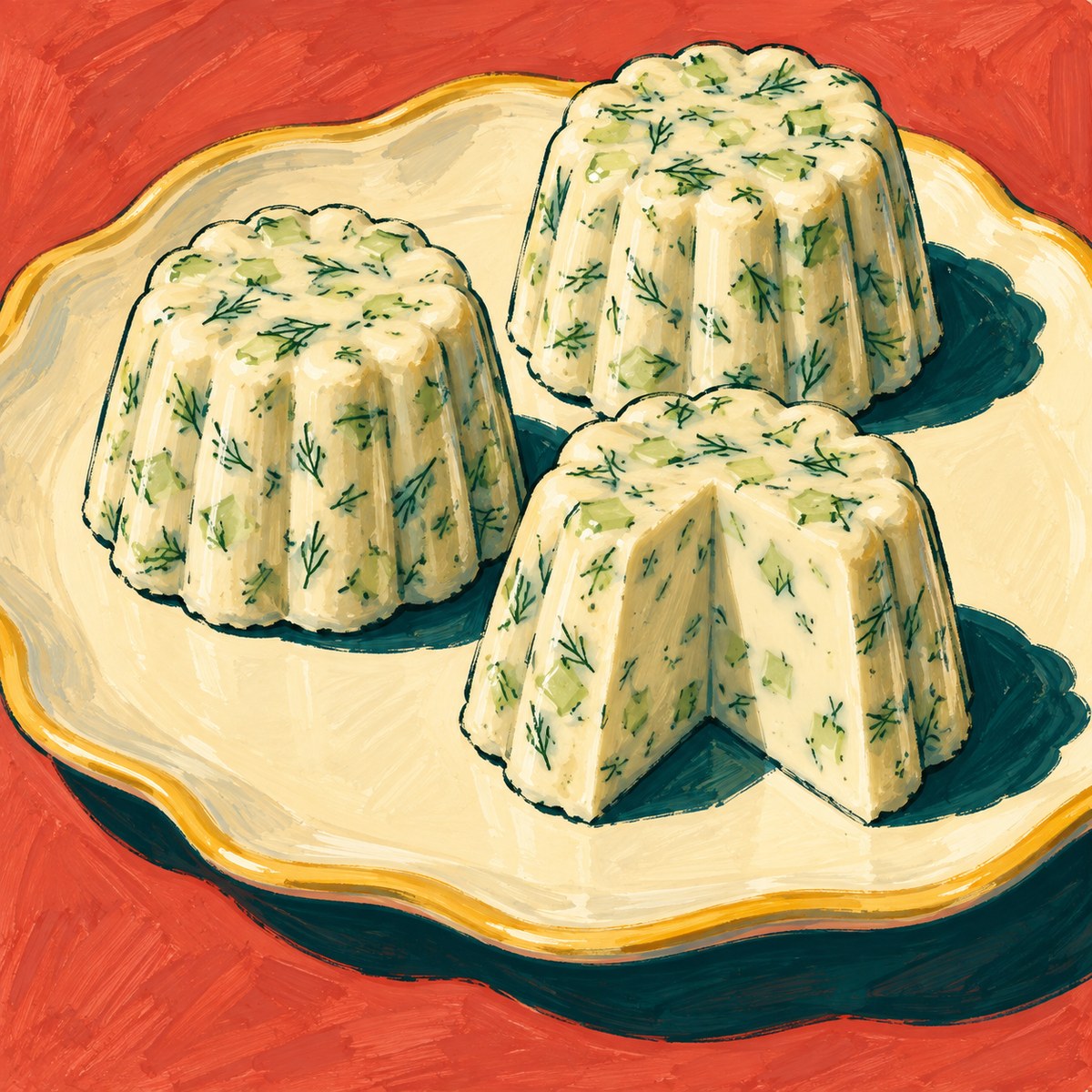
The cucumber is weighed twice for a reason
A large whole cucumber includes peel, a wet seed cavity and water that would otherwise seep into the gel. Prepare more than the final amount, salt the fine dice briefly, then press and weigh 140 grams after draining. If the result is short, prepare a little more cucumber rather than adding the discarded liquid back. Ordinary watery yogurt also changes the formula; use thick plain Greek-style yogurt as written.
Warm gelatin and cold yogurt need an introduction
Pouring a small hot gelatin mixture directly into a bowl of refrigerator-cold yogurt can make fine elastic threads before the whisk reaches them. Add the yogurt gradually to the dissolved gelatin first. Once that smaller mixture is smooth and merely lukewarm, whisk it into the rest. Keep the prepared cucumber cold while doing this and work continuously. A fifteen-minute room-temperature rest for the entire dairy bowl is not required.
Choose small molds you can release gently
Six individual metal molds make easy portions without cutting a large soft loaf. Measure their capacity with water before food enters them, dry and oil very lightly. The recipe intentionally fills each well below its rim, so a plate can be inverted without pushing yogurt over the edge. Unmold only the portions needed. A little movement in a set gelatin is normal; a liquid center that flows when tilted needs more refrigerator time, not a warmer unmolding bath.
Ingredients
- 1 cup finely diced, peeled and deseeded cucumber AFTER draining (140 g); start with about 12 oz/350 g whole cucumber and prepare extra if needed
- ¼ teaspoon fine salt (1.5 g), divided
- Unflavored powdered gelatin, 10 g (one standard 7 g envelope plus 3 g weighed from another), of the specified setting strength
- ¼ cup cold drinking water (60 ml)
- ¼ cup pasteurized whole milk (60 ml)
- 1¼ cups thick plain pasteurized Greek-style yogurt (300 g), kept cold
- 2 teaspoons lemon juice (10 ml)
- 2 tablespoons finely chopped fresh dill (4 g), washed and dried
- ⅛ teaspoon black pepper
- ½ teaspoon neutral oil (2.5 ml), divided for wiping six molds
Set out
Colander or sieve over a bowl, Clean cloth or paper towels, Knife and board, Kitchen scale, Small saucepan, Whisk and mixing bowl, 6 small metal fluted molds of at least 150 ml capacity each, Paper towel, Food thermometer, 6 small cold plates, Reliable refrigerator
Allergens
Milk. Check labels and substitutions.
Make it
- Prepare peeled deseeded cucumber and cut into fine dice. Toss with half the salt in the sieve and let drain in the refrigerator 20 minutes. Press gently in a clean cloth, then weigh 140 g drained cucumber. Discard liquid. Keep cucumber cold. Check each mold holds at least 150 ml, dry and wipe lightly with oil.
- Sprinkle gelatin over the 60 ml cold water in the small saucepan; bloom 5–10 minutes. Add milk and heat gently over low heat, stirring, just until gelatin fully dissolves, about 120–140°F (50–60°C). Do not boil. Take off heat.
- Whisk 3 tablespoons yogurt into the warm gelatin mixture one tablespoon at a time. When smooth and lukewarm, whisk this tempered mixture gradually into the remaining cold yogurt. Stir in lemon, dill, pepper, remaining salt and drained cucumber. Divide between molds, about 95–100 ml each, leaving ample headroom.
- Cover and refrigerate at 40°F (4°C) or below for at least 8 hours, preferably overnight, until set through the center. The 10-hour allowance includes cucumber draining, handling and a generous setting margin.
- For unmolding, set a cold plate beside the refrigerator. Dip only the outside of the metal mold in warm, not hot, water, about 100°F (38°C), for 5–8 seconds without letting water touch food. Dry the outside, loosen just the upper edge with a clean fingertip and invert onto the plate. If stuck, repeat a brief dip rather than shaking violently. Refrigerate again immediately if not serving now. Serve one per small side portion, with any bread or main dish chosen and counted separately.
Gelatin starting strength
Use food-grade unflavored powdered gelatin with a manufacturer benchmark of 7 g for about 2 cups (500 ml) plain liquid. Weigh the stated grams: envelope sizes and powder density vary. A flavored dessert packet, collagen peptides, sheet gelatin or agar is not an equal substitute.
Cold service
This is an original retro-inspired recipe, not a recovered 1960s formula. Gelatin is animal-derived; the vegetable ingredients do not make the dish vegetarian. A reliable refrigerator and the stated earlier ingredient deadlines are essential.
Ingredient labels
Check yogurt and gelatin labels and any shared equipment. Gelatin is animal-derived.
A useful detail
The matrix contains 60 ml water +60 ml milk +300 g thick yogurt, with 10 ml lemon juice and 140 g drained cucumber. Ten grams gelatin supports a small unmolded side with these moist inclusions. Using drinkable yogurt or unpressed cucumber adds unmeasured water; neither is an equal swap.
Another way
- Use 4 g finely chopped fresh chives instead of dill for a different herb finish.
- Use 10 ml white-wine vinegar instead of lemon juice, retaining the same small acid measure.
Keep it well
Keep covered at 40°F (4°C) or below. Use within 2 days of assembly or the earliest ingredient deadline, whichever comes first. Include the overnight setting period in that limit. Keep total unrefrigerated preparation and serving below 2 hours, or 1 hour above 90°F (32°C). Chill slices promptly after service; discard food exceeding those limits. Do not freeze; freezing damages the gel and releases water.