081 / 100 · Breads, Spreads, and Little Bites
Rosemary and Olive Oil Focaccia
1 nine-by-thirteen-inch loaf, cut into 12 pieces Active 25 min Total 3 hr 50 min
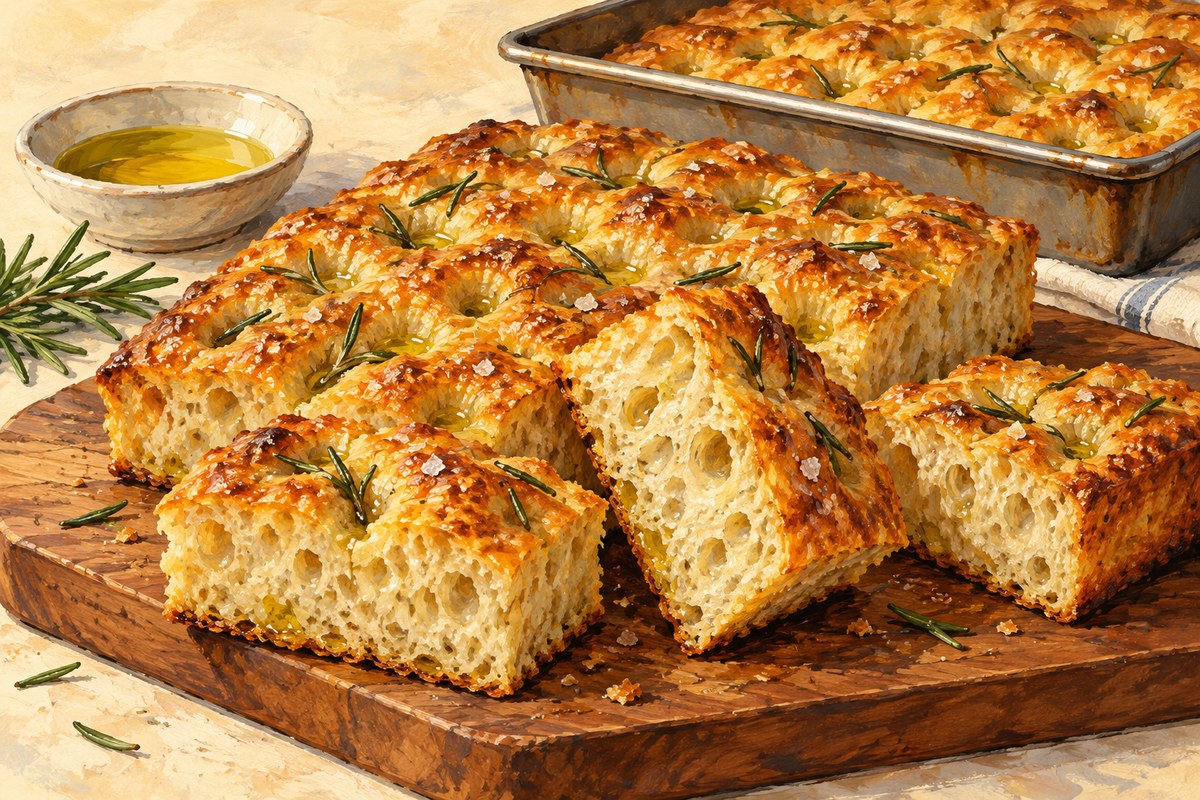
A generous amount of water gives this focaccia an airy crumb, while olive oil makes the bottom crisp and the surface easy to dimple. The dough is too sticky for conventional kneading, which is part of its character rather than a sign that it needs more flour. A few folds in the bowl provide structure. Rosemary and flaky salt finish the top, leaving the bread versatile enough for a soup supper, a sandwich, or a plate of roasted vegetables. Allow a leisurely afternoon for the two rises.
Work with wet hands
High-hydration dough clings to dry fingers. Dampening your hands before folding lets you lift the edges without adding a blanket of flour. Each fold is simply an edge stretched upward and laid across the center. Rotate the bowl and repeat around it. The dough will gradually feel less slack, though it should remain very soft. Judge the first rise by its increased volume and bubbles as well as the clock; a cool room slows yeast down.
Oil the pan generously
The oil underneath is not just for preventing sticking. It fries the base lightly as the bread bakes and creates the crisp, golden underside that distinguishes focaccia from an ordinary pan loaf. Dimple with your fingertips all the way toward the bottom without tearing the dough. The depressions catch oil and rosemary. Let the loaf cool on a rack after baking so steam does not soften its base in the pan. Cut with a serrated knife for clean, open-edged pieces.
Save the extra pieces well
Cut the loaf only as needed if you plan to eat it over two days. Exposed crumb dries faster than an uncut piece, while a whole loaf is more awkward to refresh. For longer storage, wrap individual portions and freeze once fully cool. A short oven warming restores the crust more effectively than a microwave, which can make the bread chewy. The simple rosemary topping works equally well as a soup accompaniment or as the base of a sandwich; let sandwich portions cool completely before adding a filling.
Ingredients
- 4 cups bread flour (500 g)
- 2 1/4 teaspoons instant yeast (7 g; one packet)
- 1 3/4 teaspoons fine salt (10 g)
- 1 2/3 cups warm water, about 105°F/40°C (400 ml)
- 4 tablespoons olive oil (60 ml), divided
- 1 tablespoon chopped fresh rosemary
- 1/2 teaspoon flaky salt
Set out
9-by-13-inch metal baking pan, Large mixing bowl, Flexible spatula, Kitchen scale, Wire rack
Allergens
Wheat. Check ingredient labels and substitutions.
Make it
- Mix the flour, yeast, and fine salt in a large bowl. Add the water and 1 tablespoon oil. Stir firmly until no dry flour remains; the dough will be very sticky. Cover and rest for 15 minutes.
- With damp hands, lift one edge of the dough and fold it over the center. Rotate the bowl and repeat three times. Cover for 15 minutes, then repeat this set of four folds.
- Cover and let rise in a warm place for 60–90 minutes, until roughly doubled and visibly bubbly.
- Pour 2 tablespoons oil into the metal pan and spread it over the base and sides. Scrape the dough into the pan, turn it once to coat, and gently stretch toward the corners. If it resists, wait 10 minutes and try again.
- Cover and let rise for about 45 minutes, until puffy and relaxed. During the final 20 minutes, heat the oven to 425°F/220°C.
- Drizzle the remaining tablespoon oil over the dough. With oiled fingertips, press deep dimples across the surface. Scatter with rosemary and flaky salt.
- Bake for 22–25 minutes, until deeply golden and crisp underneath. Lift from the pan onto a rack and cool for at least 15 minutes before cutting into 12 pieces.
A useful detail
The 230-minute total allows the longer first rise; room temperature and dough activity can shift the schedule. Do not force a slow dough into the oven before it is puffy.
Make it your own
- Use 2 teaspoons fresh thyme leaves instead of rosemary.
- Scatter 1/4 cup (30 g) finely grated Parmesan over the top before baking; this adds milk as an allergen.
Keep it well
Cool completely and keep airtight at room temperature for up to 2 days, or freeze individual pieces for up to 2 months. Refresh thawed bread in a 350°F/175°C oven for 8–10 minutes. Refrigeration makes the crumb stale faster.