054 / 100 · Fish, Pork, and Sunday Suppers
Pork Tenderloin with Apple Pan Sauce
4 portions Active 20 min Total 1 hr
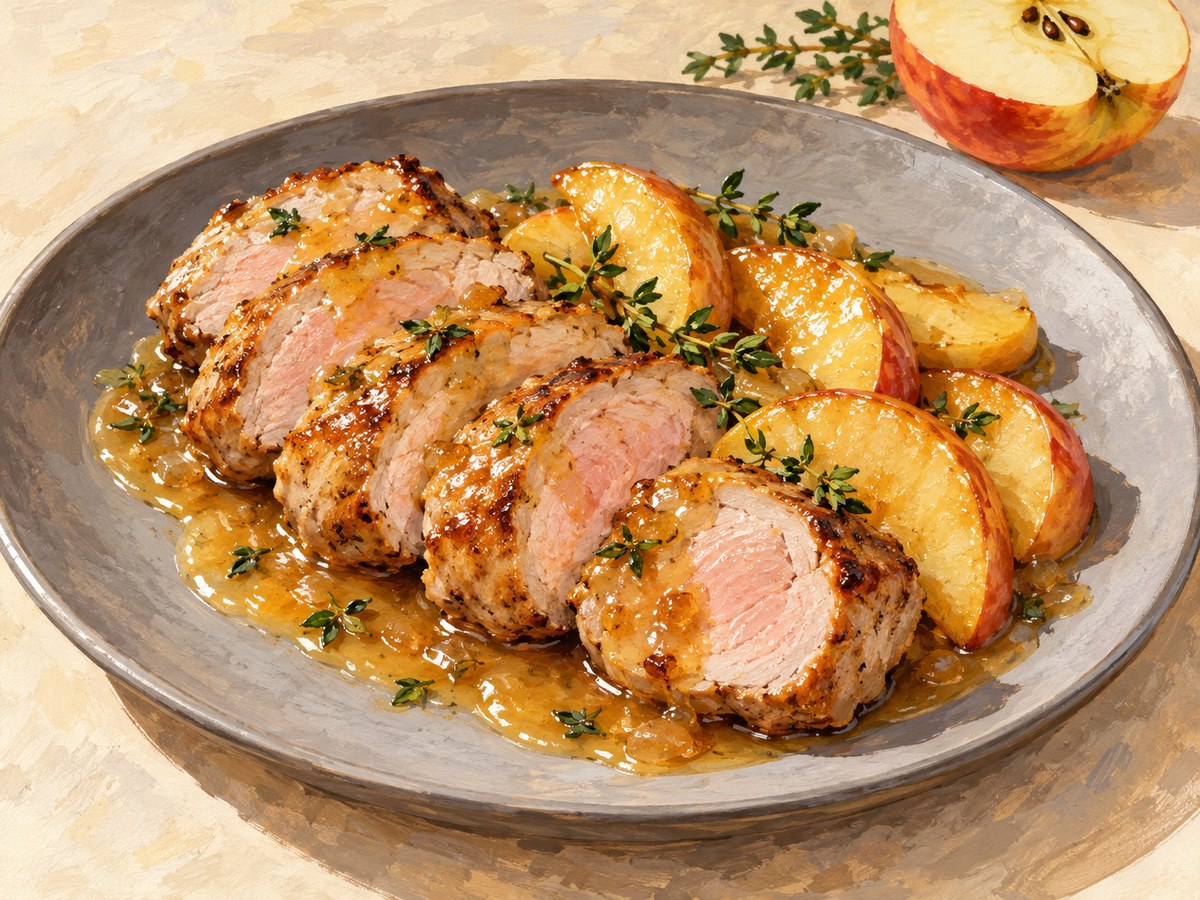
Pork tenderloin is small enough for a weeknight roast, but a quick apple pan sauce makes it feel more considered. Browning the meat first leaves flavorful bits in the skillet, which become part of the sauce when cider and stock are added. Choose a tenderloin, not a pork loin roast; the two cuts differ substantially in size and cooking time. Firm apples keep their shape during the short simmer, giving the sauce soft wedges rather than applesauce. Slice the rested pork across the grain and arrange the apples alongside.
An even shape cooks evenly
Tenderloins often have a thin tail end. Tuck that tip underneath before browning so it does not overcook while the thick center finishes. Trim off the silvery membrane because it stays chewy. Check the thickest section with a thermometer, then give the cooked meat its full rest on a clean board. The rest also provides a convenient interval for making the pan sauce.
Keep the pan juices useful
After removing the pork, the skillet will be very hot, including its handle. Use an oven mitt throughout the sauce stage. The apple wedges need only a little browning before the liquids go in. Scrape up brown bits as the cider simmers, leaving behind any blackened ones. Butter stirred in off the heat gives the finished sauce a soft sheen without the need for flour or cream.
Serve across the grain
Look at the direction of the meat’s fibers before slicing. Cutting across them into medallions shortens the fibers in each bite. A half-inch thickness is a useful starting point: thin enough to eat comfortably, but thick enough to hold the juices. Add any resting juices from the clean board to the finished sauce. The apple wedges can be arranged alongside or between the pork slices without covering their lightly browned edges.
Ingredients
- 1 pork tenderloin (about 1 1/4 lb / 565 g), silver skin trimmed
- 3/4 teaspoon kosher salt, divided
- 1 tablespoon olive oil
- 2 small firm apples (about 12 oz / 340 g), cored and cut into 1/2-inch wedges
- 1 teaspoon fresh thyme leaves
- 1/2 cup (120 ml) unsweetened nonalcoholic apple cider
- 1/2 cup (120 ml) low-sodium chicken stock, explicitly without chili or pepper
- 2 tablespoons unsalted butter
Set out
Ovenproof skillet, Tongs, Cutting board, Instant-read thermometer
Allergens
Milk. Check ingredient labels and substitutions.
Make it
- Heat the oven to 425°F (220°C). Pat the tenderloin dry, tuck its thin end underneath, and season with 1/2 teaspoon salt.
- Heat the oil in the ovenproof skillet over medium-high heat. Brown the pork for 6–8 minutes total, turning to color all sides.
- Transfer the skillet to the oven. Roast for 12–18 minutes, depending on thickness, until the thickest part reaches 145°F (63°C). Move the pork to a clean board and rest for at least 3 minutes; leave it resting while you prepare the apple sauce.
- Using an oven mitt on the hot skillet handle, set the pan over medium heat. Add the apples, thyme, and remaining 1/4 teaspoon salt. Cook for 3 minutes, turning once.
- Add the cider and stock. Simmer for 4–6 minutes, scraping up the brown pan juices, until the apples are tender and the liquid is slightly reduced. Remove from the heat and stir in the butter.
- Cut the rested pork into medallions and serve with the apple wedges and sauce.
A useful detail
A tenderloin’s diameter is a better guide than its weight for timing. Begin checking the temperature early, especially for a long, thin piece.
Make it your own
- Use firm pear wedges instead of apples, adding them after the liquids so they do not become too soft.
- Replace thyme with 1 teaspoon finely chopped fresh sage.
Keep it well
Refrigerate sliced pork and sauce in shallow containers within 2 hours, or 1 hour above 90°F (32°C). Keep at 40°F (4°C) or colder for up to 4 days. Reheat leftovers to 165°F (74°C).