020 / 100 · Soups with Something to Say
Baked Potato Soup with Chive Sour Cream
About 7 cups soup Active 20 min Total 1 hr 45 min
Baking the potatoes first gives this soup a different character from a pot of boiled cubes. Their flesh becomes fluffy, then partly breaks down into the milk and broth. A spoonful of chive sour cream finishes each bowl, bringing a little tang and an obvious fresh note. The recipe uses the potato flesh for a smooth, comforting soup and leaves the skins for another meal. It takes longer than a quick potato soup, but most of that time belongs to the oven.
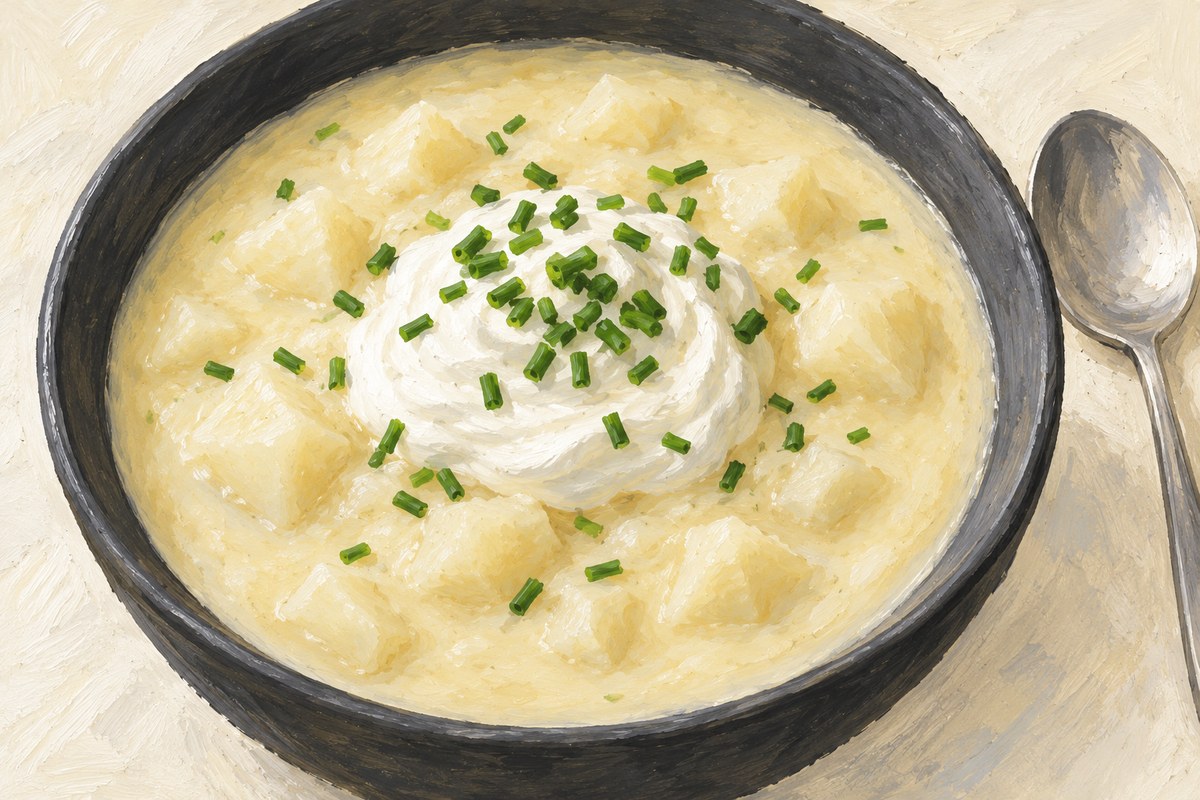
Bake until the centers yield
Russet potatoes are useful because their dry, starchy flesh mashes easily. Choose potatoes of similar size and pierce each one before baking. A skewer should slide into the thickest part without resistance. The stated oven time is a guide; very large potatoes need longer. Handle them with a towel when splitting and scooping. Leaving a few larger pieces in the soup gives a gentle contrast to the mashed base without making the bowl feel chunky.
Add the sour cream at the table
Sour cream provides both a cool topping and a clean tang. Mixing the chives into it first distributes their mild onion flavor evenly. Keep the topping refrigerated until serving, and do not boil it into the pot. Milk and broth make the base loose enough for the fluffy potato to thicken naturally. Start by mashing about half the potato flesh, then stop before the mixture becomes gluey; a food processor is not useful for this job.
Give the skins another purpose
This soup uses the fluffy flesh rather than blending in the skins, which would make the texture coarse. If you enjoy potato skins, reserve them separately for a later snack instead of forcing them into this bowl. Refrigerate them promptly, following the same two-hour limit as the soup. Their possible second use is a bonus; the soup quantities already account for removing them.
Ingredients
- 2 pounds (900 g) russet potatoes, scrubbed
- 2 tablespoons unsalted butter
- 1 small yellow onion, finely diced
- 3 cups (720 ml) low-sodium vegetable broth, labeled pepper-free and chili-free
- 2 cups (480 ml) milk
- 3/4 teaspoon fine salt
- 1/2 cup (120 g) sour cream
- 3 tablespoons finely snipped fresh chives, divided
Set out
Rimmed baking sheet, Large soup pot, Potato masher, Small mixing bowl
Allergens
Milk. Check ingredient labels and substitutions.
Make it
- Heat the oven to 425°F/220°C. Pierce each potato several times with a fork and put on a baking sheet. Bake for 50–65 minutes, until a skewer passes through the centers easily.
- While the potatoes bake, mix the sour cream with 2 tablespoons chives. Cover and refrigerate.
- Let the potatoes stand for about 10 minutes, until safe to handle. Split and scoop the flesh into a bowl; reserve the skins for another use or discard. Roughly break up the flesh with a fork.
- Melt the butter in a large soup pot over medium heat. Add the onion and cook for 7 minutes, stirring, until soft.
- Add the broth, milk, salt, and potato flesh. Bring to a gentle simmer. Mash about half the potato pieces in the pot, leaving the rest in small irregular chunks.
- Simmer gently for 5 minutes, stirring frequently along the base. Add water a tablespoon at a time if a looser consistency is needed.
- Divide among 6 bowls. Add the chive sour cream and scatter with the remaining tablespoon chives.
A useful detail
For a shorter serving-day preparation, bake and refrigerate the potatoes the day before. Chill them within 2 hours, and heat the completed soup to 165°F/74°C before serving.
Make it your own
- Stir 1/2 cup shredded mild cheddar into the pot off the heat.
- Replace the chives with 2 tablespoons finely chopped parsley for the topping.
Keep it well
Refrigerate soup and topping separately within 2 hours at 40°F/4°C or below for up to 4 days. Reheat soup gently to 165°F/74°C, adding a little milk or water. Freezing can make the potato texture grainy.