017 / 100 · Soups with Something to Say
Mushroom and Wild Rice Soup
About 8 cups soup Active 25 min Total 1 hr 15 min
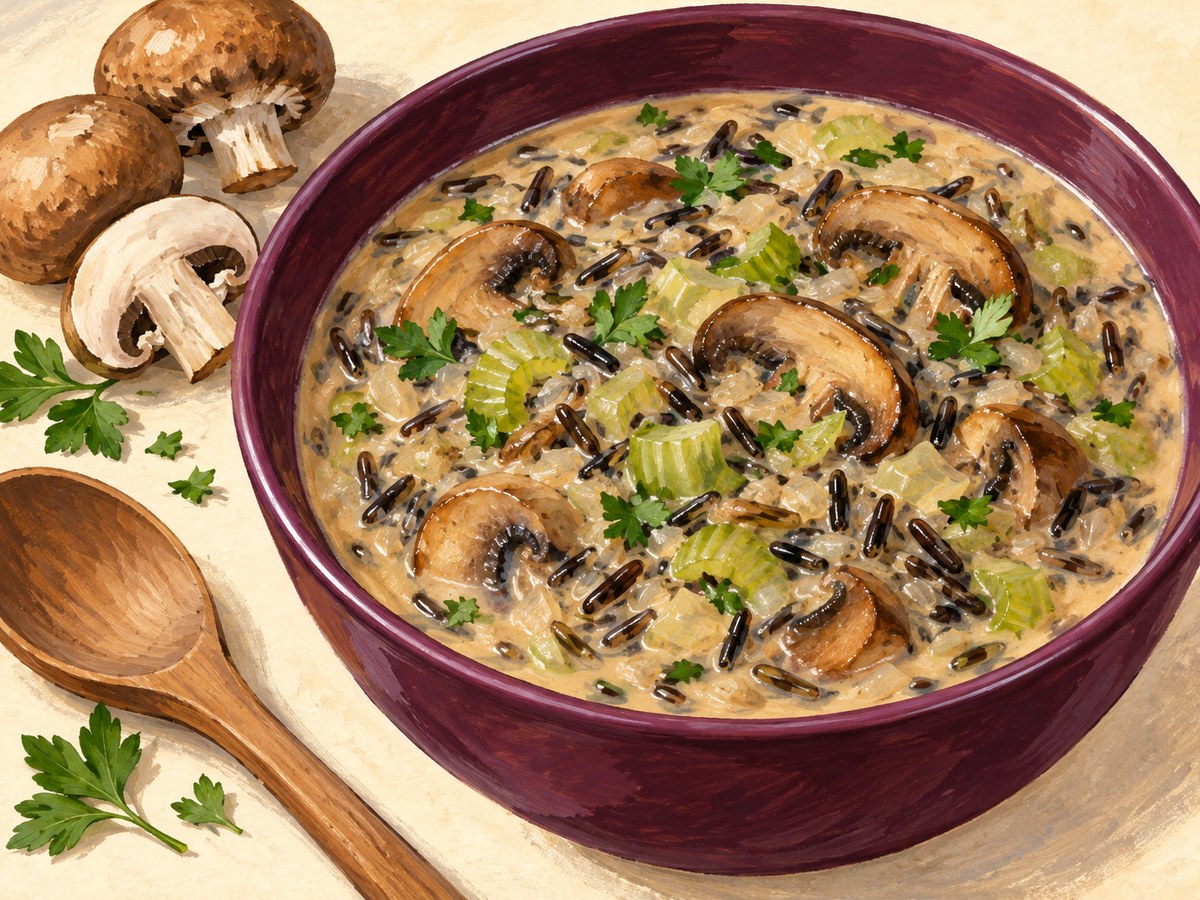
Mushrooms and wild rice bring two different kinds of depth to this soup: browned savory flavor from the pan and a pleasantly firm bite from the grain. A small splash of cream softens the broth without turning it into a heavy sauce. Cook the wild rice separately so you can judge its tenderness and keep its dark cooking liquid from overwhelming the pale soup. This is a patient, practical meal, especially on a day when the saucepan can simmer nearby.
Wild rice has its own clock
Pure wild rice is not the same as a bagged rice blend. Blends may contain grains with different cooking times or seasoning that does not fit this book. Use plain wild rice and follow its package if it needs longer than the range here. Many grains will split open when tender, but a little chew is part of their character. Taste several grains rather than relying on one. Drain well before adding them to the soup.
Brown mushrooms in batches
Mushrooms release water before they brown. If all the slices are crowded into the pot at once, that moisture takes longer to evaporate. Two batches give the mushrooms room and make it easier to develop golden surfaces. Hold the salt until the onion stage, then stir the browned mushrooms back in. Rub the dried thyme between your fingers as you add it. Its small amount should support the mushrooms rather than make the whole pot taste like a herb infusion.
Keep some texture in every spoonful
Slice the mushrooms rather than chopping all of them finely. Their broad surfaces brown more easily and remain visible beside the long wild rice grains. The celery should be much smaller, supplying an aromatic background rather than competing for attention. This difference in cut is part of what makes a simple ingredient list feel complete. A smooth puree would lose that useful contrast.
Ingredients
- 3/4 cup (120 g) plain dry wild rice, not a seasoned blend
- 4 cups (960 ml) water, for cooking rice
- 1 pound (450 g) cremini mushrooms, sliced 1/4 inch thick
- 2 tablespoons olive oil, divided
- 1 tablespoon unsalted butter
- 1 medium yellow onion, finely diced
- 2 celery stalks, finely diced
- 3/4 teaspoon fine salt
- 1/2 teaspoon dried thyme
- 4 cups (960 ml) low-sodium vegetable broth, labeled pepper-free and chili-free
- 1/2 cup (120 ml) heavy cream
- 2 tablespoons chopped fresh parsley
Set out
Medium saucepan, Fine-mesh sieve, Large heavy soup pot
Allergens
Milk. Check ingredient labels and substitutions.
Make it
- Rinse the wild rice, then combine with 4 cups water in a saucepan. Bring to a boil, reduce to a simmer, and cook partly covered for 40–50 minutes, or the package time, until tender with a pleasant chew. Drain.
- While the rice cooks, heat 1 tablespoon oil in a large soup pot over medium-high heat. Add half the mushrooms and cook for 7–8 minutes, stirring occasionally, until their liquid evaporates and they begin to brown. Transfer to a plate.
- Add the remaining tablespoon oil and repeat with the remaining mushrooms. Transfer these to the same plate.
- Reduce the heat to medium. Add the butter, onion, celery, and salt to the pot. Cook for 7 minutes, stirring, until softened. Add the thyme and stir for 30 seconds.
- Return the mushrooms and their juices to the pot. Add the broth and simmer gently for 10 minutes.
- Stir in the drained cooked wild rice and cream. Warm at a gentle simmer for 3 minutes without boiling hard.
- Stir in the parsley and divide among 6 bowls.
A useful detail
Allow extra time if your wild rice package lists a longer cooking period. Wild rice should be tender before it joins the soup; the final warm-through is not enough to cook hard grains.
Make it your own
- Use a mix of cremini and white button mushrooms in the same total weight.
- Replace the cream with 1/2 cup evaporated milk for a lighter dairy finish.
Keep it well
Divide the soup into shallow containers promptly and refrigerate within 2 hours at 40°F/4°C or below for up to 4 days. Reheat to 165°F/74°C, adding water as needed. Freeze for up to 2 months; the cream may separate slightly.