014 / 75 · Breakfasts with Staying Power
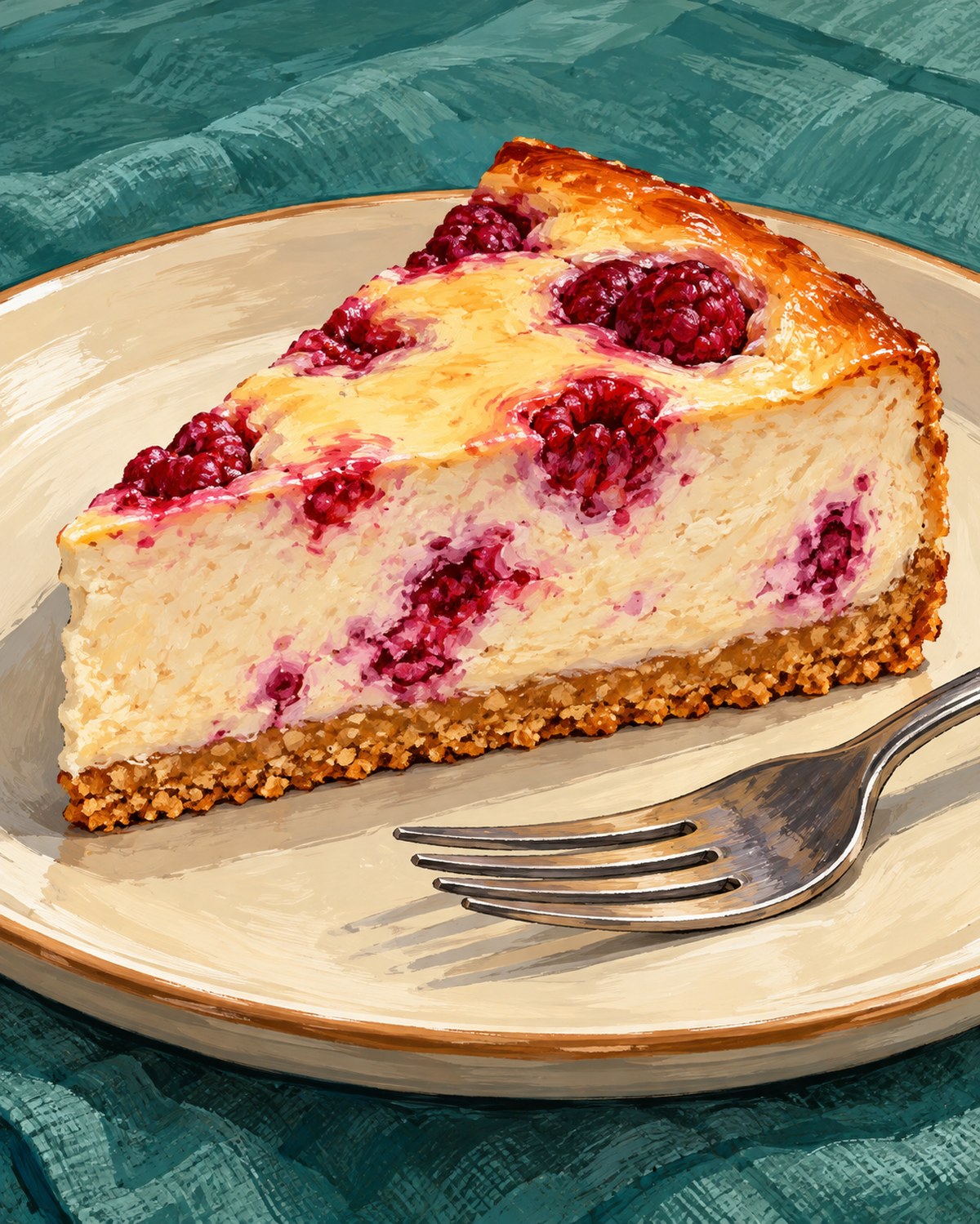
Baked Peanut Butter and Raspberry Breakfast Cheesecake
One 8-inch/20 cm cheesecake cut into 4 generous breakfast wedges; one quarter of the complete cake per serving · Active 25 min · Cook 1 hr 10 min · Total 6 hr 10 min
Print recipe · PDFAn oat-and-peanut crust supports a softly set cottage-cheese filling dotted with raspberries. This is a baked cheesecake that needs a long cold rest before slicing, not an instant yogurt bowl. Four generous wedges give the batch a clear breakfast yield. The gentle bake, smooth filling and tart berries matter as much as the convenience of a prepared portion.
Blend the curds without thinning the filling
Plain 2% cottage cheese is the starting ingredient. Blend it with Greek yogurt, the larger share of honey, vanilla, cornstarch and salt until the white curds disappear. Stop and scrape the processor bowl before deciding it needs more blending. Do not pour in extra milk to help the blade; that changes the water balance of a filling that already has plenty of dairy moisture. Add the eggs last and blend briefly, just until mixed. A very foamy batter expands more in the oven and can leave a sunken, cracked surface when it cools.
A pressed crust needs an even thickness
Pulse the oats into coarse flour before mixing them with peanut butter, melted butter, the smaller share of honey and measured water. Press the damp crumbs evenly across the lined base of the pan. Thick corners take longer to firm than the center and make the finished wedges hard to cut cleanly. The short preliminary bake dries the surface before the filling goes over it. Scatter the berries through the filling in two layers so one wedge is not mostly fruit and the next entirely plain. Pat washed berries dry first.
Plan for the cold rest, not just oven time
The filling should set gently at 325°F/160°C. Test the center away from a raspberry; a patch of hot fruit is not the egg filling you need to measure. A slight unified wobble is different from liquid sloshing under the surface. After a short rack cool, put the cake in the refrigerator promptly and give it at least four hours to chill. That pause makes the texture creamy and the portions stable enough to pack. Slice into four equal wedges; a smaller dessert slice changes the stated serving basis. This is a do-ahead breakfast option, with no claim that it replaces an individual nutrition plan.
Ingredients
- 2 3/4 oz rolled oats (80 g)
- 2 1/2 tablespoons smooth unsalted peanut butter (40 g)
- 1 1/2 tablespoons unsalted butter, melted (20 g)
- 2 tablespoons honey (42 g), divided
- 1 tablespoon water (15 ml/15 g)
- 14 oz plain low-fat cottage cheese, 2% milk fat (400 g), not drained
- 5 1/3 oz plain nonfat Greek yogurt (150 g)
- 2 large eggs, without shells (100 g)
- 2 1/2 tablespoons cornstarch (20 g)
- 1 teaspoon vanilla extract (5 ml/5 g)
- 1/8 teaspoon fine salt (0.75 g)
- About 1 1/4 cups fresh raspberries, washed, dried and weighed (150 g)
Set out
Kitchen scale and food processor, 8-inch/20 cm springform or deep round cake pan, at least 2 1/2 inches/6 cm deep, Baking parchment for base and sides, Small bowl, spatula and cooling rack, Thin-tip food thermometer, Refrigerator space for the complete pan
Allergens
Peanut, Tree nuts (almond-butter variation), Milk, Egg, Check oats, peanut butter and cornstarch labels for additional allergens or cross-contact.. Check labels and substitutions.
Make it
- Heat the oven to 325°F/160°C. Line the base and sides of an 8-inch/20 cm pan at least 2 1/2 inches/6 cm deep. Pulse oats to coarse flour. Mix with peanut butter, melted butter, 2 teaspoons/14 g of the honey and the measured water. Press evenly over the base. Bake for 8–10 minutes while preparing the filling.
- Blend cottage cheese, Greek yogurt, the remaining 4 teaspoons/28 g honey, cornstarch, vanilla and salt in a food processor until smooth, scraping the bowl once or twice. Add the eggs and blend briefly until combined. Do not taste the uncooked egg filling.
- Pour half the filling over the warm crust. Scatter half the dry raspberries evenly across it. Add the remaining filling, then distribute the remaining raspberries over the top, pressing them partly into the surface. Set the pan on the middle oven shelf.
- Bake for 50–60 minutes until the edges are set and the center moves with a gentle wobble rather than a liquid ripple. A thermometer inserted into the central filling, away from a berry, must read at least 160°F/71°C. Continue baking if necessary; the temperature and set filling matter more than the clock.
- Cool on a rack for 30 minutes. Refrigerate promptly, keeping the total time out after baking under 2 hours, or 1 hour above 90°F/32°C. Chill for at least 4 hours. Remove from the pan and cut into four equal wedges. The 6-hour-10-minute total includes oven time, cooling and the minimum cold rest.
Make tomorrow's portion today
The long chilling period is useful when the next morning is crowded: divide the cold cake into four containers before the day starts. Choose a wedge because it suits the meal and appetite, not because cheesecake has a special training effect.
A useful detail
The cottage cheese is used as purchased, not drained, for both the formula and estimate. Use plain smooth unsalted peanut butter. The pan has ample depth for roughly 1 kg of mixture; this is not a shallow tart tin. All honey is allocated: 14 g in the crust and 28 g in the filling.
Another way
- Replace the 150 g raspberries with 150 g fresh blueberries, distributing them in the same two layers.
- Replace the 40 g peanut butter with 40 g plain smooth almond butter. This introduces tree nuts instead of peanut; check labels and recalculate if using that variation.
Keep it well
Keep covered at 40°F/4°C or below and use within 2 days, within any shorter dairy storage window. Carry a wedge in an insulated bag with two cold sources and refrigerate on arrival. Keep it cold for serving; do not leave slices out during a long workout or commute. Freezing is possible but can make the dairy and berry layers weep on thawing.