041 / 75 · Canned Fish, Chicken and Eggs
Chicken Cabbage Egg Noodles
Four cabbage-and-chicken noodle bowls · Active 30 min · Total 55 min
Print recipe · PDFA generous amount of cabbage stretches a modest can of chicken across four noodle bowls. The cabbage is cooked in stages so it softens without flooding the pan. Wide egg noodles are boiled separately, then folded through the vegetables and chicken at the end.
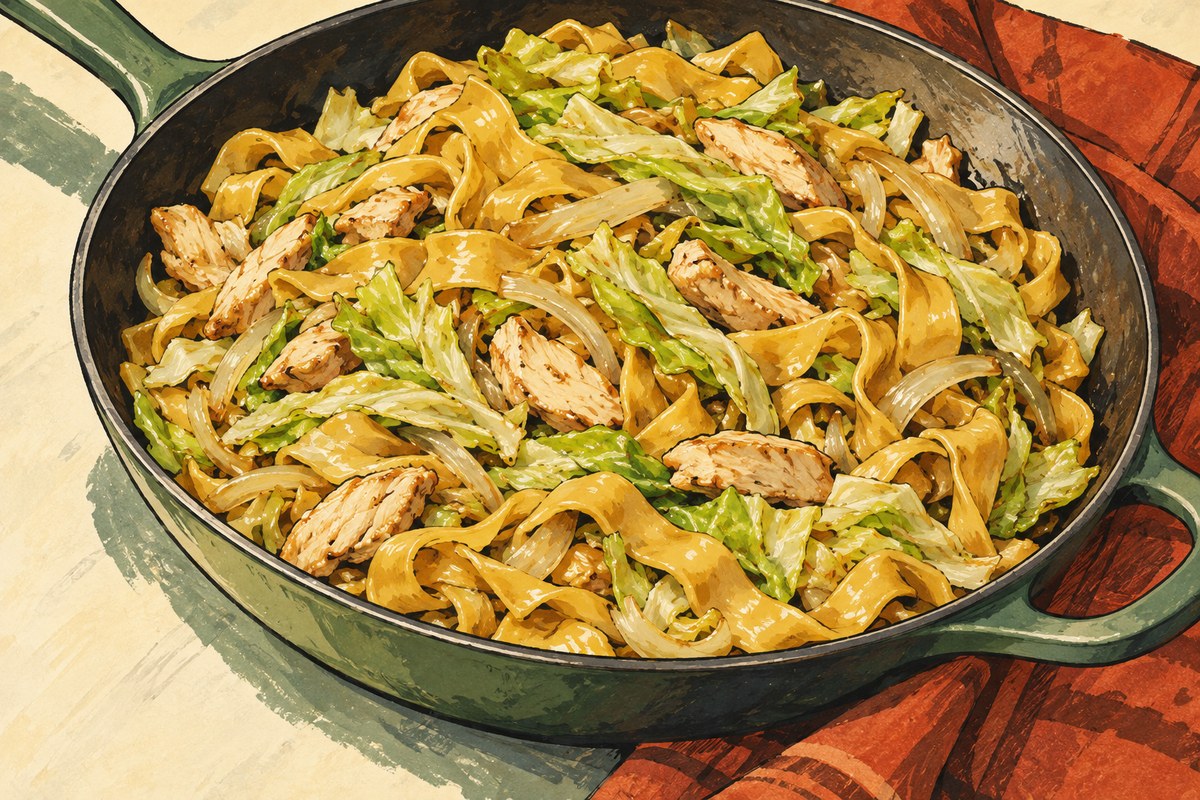
Cut the cabbage for the pan you have
Remove the tough central core and slice the leaves into thin short strips. A thick wedge needs much longer than a ribbon. The raw pile can look too large for the skillet, so add half first, let it wilt and then add the rest. A deep wide pan gives the strips room to lose moisture instead of boiling underneath a crowded lid.
The chicken arrives late
Drain canned cooked chicken and keep it in small recognizable pieces. Its purpose is not to brown through a long vegetable cook; that would make it stringy. Fold it in once cabbage is almost tender, then heat it fully with the soy-water mixture. Use plain chicken rather than a canned chicken salad with a dressing the recipe has not allowed for.
Toss rather than mash
The cooked egg noodles join only after draining. A pair of tongs or two broad spoons turns them through the cabbage without cutting every ribbon. Start with the stated small water amount and add a little reserve only if the pan needs help loosening the soy coating. Share the chicken pieces along with the noodles among four bowls. Turn the pan contents from the bottom as you serve so the last bowl receives chicken and cabbage as well as noodles.
Ingredients
- 9 oz dry wide egg noodles (250 g)
- About 10 cups water for noodles (2.5 L), or package-specified amount
- 2 tablespoons neutral oil (30 ml)
- 1 small onion, thinly sliced (100 g)
- 1/2 medium cabbage, cored and thinly sliced (500 g trimmed weight)
- Canned cooked chicken, drained (7 oz/200 g)
- 2 tablespoons reduced-sodium soy sauce (30 ml)
- 1/4 cup water for skillet (60 ml), plus up to 1/4 cup/60 ml more if needed
- 1/2 teaspoon ground ginger (1 g)
- 1/4 teaspoon black pepper (0.5 g)
Set out
Large pasta saucepan and strainer, Deep wide skillet, at least 12 inches/30 cm and 4 qt/4 L, Tongs or two broad spoons, Food thermometer
Allergens
wheat, egg, soy. Check labels and substitutions.
Make it
- Bring noodle water to a boil and cook egg noodles according to their package until tender. Drain well.
- Meanwhile heat oil in the skillet over medium-high heat. Cook onion for 4–5 minutes. Add half the cabbage and stir for 3 minutes to wilt, then add remaining cabbage. Cook for 6–8 minutes, turning often, until tender with a few golden edges.
- Add drained chicken, soy sauce, the separate 60 ml skillet water, ginger and pepper. Fold gently and heat for 3–4 minutes until the chicken mixture reaches 165°F/74°C.
- Add drained noodles and toss over medium heat for 1–2 minutes. If too dry to turn, add extra water 1 tablespoon/15 ml at a time, up to 60 ml. Divide the entire pan among four bowls.
Four modest chicken shares
The whole pan uses 200 g drained chicken, shared evenly. Drain it well and fold it in late so this modest amount remains in recognizable pieces.
Ingredient labels
Egg noodles contain wheat and egg; soy sauce contains soy and usually wheat. Check chicken and sauce labels for added ingredients.
A useful detail
Noodle boiling and cabbage cooking overlap. A smaller skillet needs two vegetable batches and additional elapsed time; do not compress a crowded raw pile under a lid.
Another way
- Use 200 g drained canned tuna in place of chicken, adding fish to allergens.
- Use 500 g thinly sliced plain frozen cabbage only if its package supports pan cooking; follow its complete cooking time and allow water to evaporate before adding chicken.
Keep it well
Refrigerate shallow portions within 2 hours, or 1 hour above 90°F/32°C, at 40°F/4°C or below and use within 3 days. Reheat a portion to 165°F/74°C throughout. Freeze promptly cooled portions for up to 1 month; thaw in the refrigerator. Noodles soften on storage, so loosen them gently rather than repeatedly stirring the cold block.