Famous Last Meals / Modern companion recipe
Black-Eyed Peas with Tender Turnip Greens
Cook tender greens before adding already cooked peas, then finish the pot with a little cider vinegar. Onion, thyme and a small amount of smoked paprika season a light broth. This is a new home recipe with its own quantities and method, not the Kyles family’s recipe.
Read Martin Luther King Jr.: The Dinner He Never Reached →
Print recipe · PDF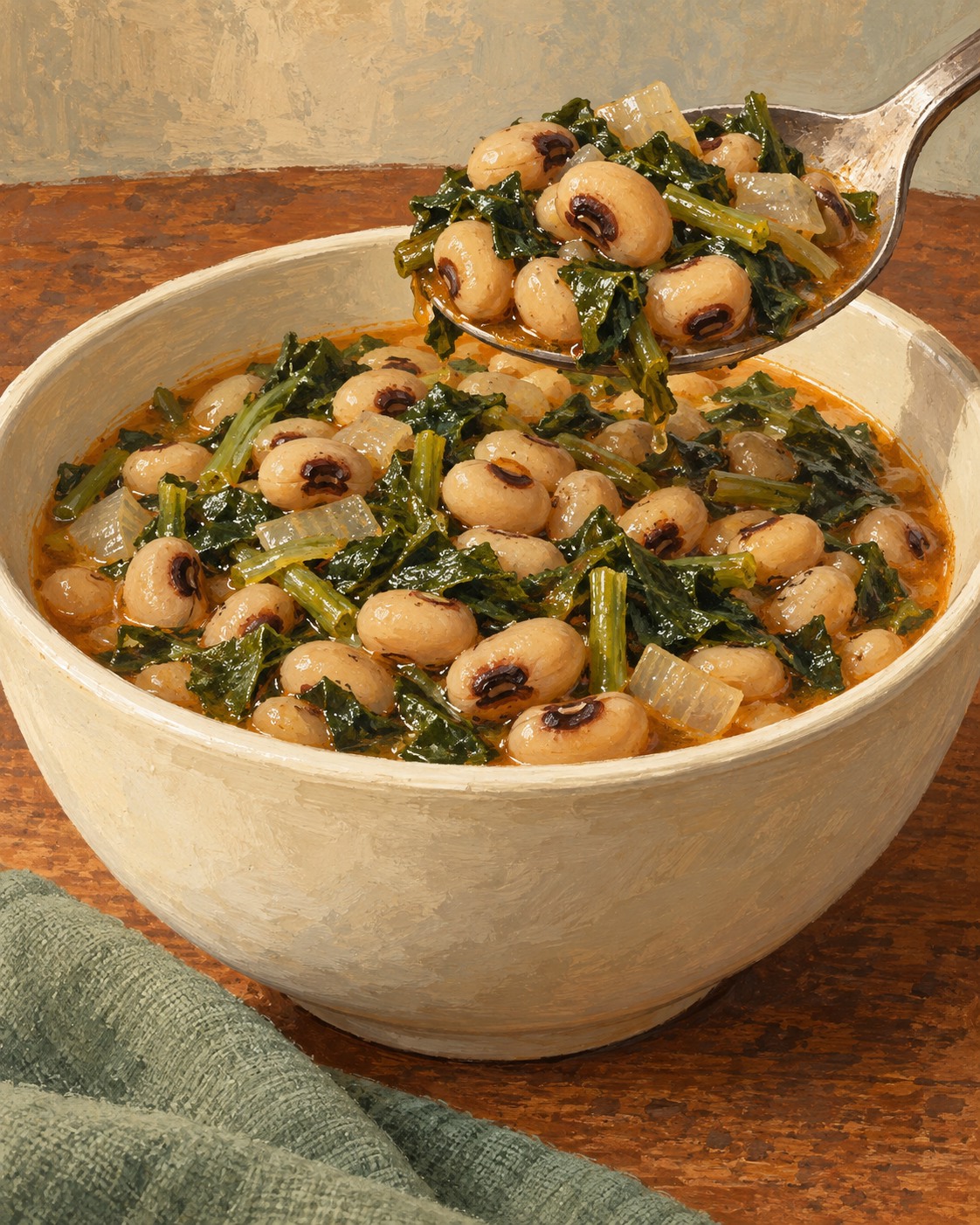
Lift the greens out of the grit
A sandy bunch can spoil the whole pot. Loosen the leaves so water reaches folds and stem junctions. When using a bowl, lift the greens out rather than pouring dirty water back through them. The weight in the ingredient list is usable leaves and tender stems after trimming, so begin with more than 300 g in the shopping bag. Cutting the leaves into short strips makes a side portion easier to eat with a spoon.
The greens set the pace
Canned peas are already cooked; a long simmer would mainly break them apart. Give the turnip greens their tenderizing time first, checking a cooled piece of leaf and tender stem before adding the peas. A covered pot retains the small measured broth, but lift the lid to stir along the bottom. If a mature bunch needs longer, a spoonful of water is more useful than turning up the heat.
A finish, not a second sauce
Stir in the vinegar after cooking so its sharpness stays clear. The amount is deliberately modest and divided across four side portions. There is no need to turn the pot into a rich meat gravy or to conceal a separate cheese topping. Serve the peas with some of their light broth, and divide the greens fairly instead of leaving them all at the bottom for the final bowl.
Ingredients
- 2 cans commercially cooked black-eyed peas/cowpeas, about 15 oz/425 g net each, opened, drained and rinsed to provide 17 oz/480 g edible peas; open enough to obtain the stated drained weight
- 10½ oz fresh turnip greens after removing tough stalks and thick ribs (300 g prepared leaves and tender stems); buy a larger bunch to allow for trimming
- 1 medium onion, finely diced (120 g)
- 2 garlic cloves, finely chopped (6 g)
- 1 tablespoon olive oil (15 ml)
- 1 cup drinking water (240 ml), plus a little more only if the pot becomes dry
- ½ teaspoon dried thyme leaves (about 0.5 g)
- ½ teaspoon sweet smoked paprika (about 1 g)
- ¼ teaspoon fine salt (1.5 g)
- ¼ teaspoon black pepper (about 0.5 g)
- 1 tablespoon cider vinegar (15 ml)
Set out
Stovetop, 3-liter/about 3-quart saucepan with a lid, Large bowl and colander for washing greens, Can opener if required and sieve for the peas, Knife and board, Kitchen scale, measuring jug and spoons, Broad spoon, Food thermometer, 4 side bowls, Refrigerator and shallow containers for planned leftovers
Allergens
No major allergen is deliberately included in the base ingredients. Check the canned peas, vinegar and spice labels for added ingredients and shared-equipment warnings; this is not an allergen-free claim.
Make it
- Wash the greens thoroughly under running water. If sandy, swish in a large bowl of clean water, lift them out so the grit stays behind, replace the water and repeat before a final rinse. Remove tough stalks and thick ribs, then weigh 300 g prepared greens. Finely slice the tender stems and cut leaves into short strips, keeping the stems and leaves separate. Drain and rinse the canned peas and weigh 480 g.
- Heat the oil in the saucepan over medium heat. Cook onion and tender stem pieces for 7–9 minutes, stirring, until softened without browning deeply. Add garlic, thyme and paprika and stir for 30 seconds.
- Add the measured water, salt and pepper. Add greens in handfuls, turning for 3–4 minutes as they wilt enough to fit. Bring to a gentle simmer, cover and cook on low for 20–25 minutes, stirring twice, until the greens and tender stems are easy to bite. Older leaves may need longer. Add water 1–2 tablespoons/15–30 ml at a time only if the base is drying; do not let the pot scorch.
- Fold in all the drained canned peas. Cover and simmer gently for 8–10 minutes until the peas and broth are hot throughout at 165°F/74°C. Fold rather than beating the peas apart. There should be a little spoonable broth around the beans; simmer uncovered briefly if it is unusually watery.
- Take the pot off the heat and stir in the measured cider vinegar. Divide the whole pot into 4 equal side portions, sharing peas, greens and broth. Serve promptly. No ham, stock cube, extra oil, bread or garnish is part of this recipe.
A useful detail
The 75-minute total includes washing gritty greens, trimming, knife work, the greens’ full tenderizing stage and final heating of commercially cooked peas. It does not include cooking dry black-eyed peas. Prepared greens are weighed after tough ribs and stalks are removed; canned peas are weighed after draining. A mature bunch may extend the simmer.
Keep it well
Move planned leftovers promptly into shallow containers and refrigerate at 40°F/4°C or below within 2 hours, or within 1 hour above 90°F/32°C. Use within 3 days, or sooner if a packaged ingredient or previously cooked peas have an earlier remaining limit. Once promptly chilled, freeze individual portions at 0°F/−18°C for up to 2 months for quality. Thaw in the refrigerator and reheat only the required portion to 165°F/74°C throughout, stirring; add a spoonful of water if thick. A new pot does not reset an earlier cooked pea batch’s clock.
How this recipe relates to the story
The two principal ingredients connect to the anticipated supper. All quantities, seasonings and cooking steps are original modern choices.
Another way
- Use 300 g prepared collard leaves, tough ribs removed and cut into short strips, instead of turnip greens. Allow about 30–45 minutes, or longer as needed, for their covered simmer before adding the peas. Extend the total time and add small measured water splashes if necessary.
- Use 480 g fully cooked drained black-eyed peas from an earlier refrigerated batch only if their original cooking date and safe storage are known. Heat the complete pot to 165°F/74°C and keep the earlier peas’ remaining storage deadline. This variation does not include dry-pea preparation in the stated time.