Famous Last Meals / Modern companion recipe
Roast Chicken Thighs with Buttered Peas
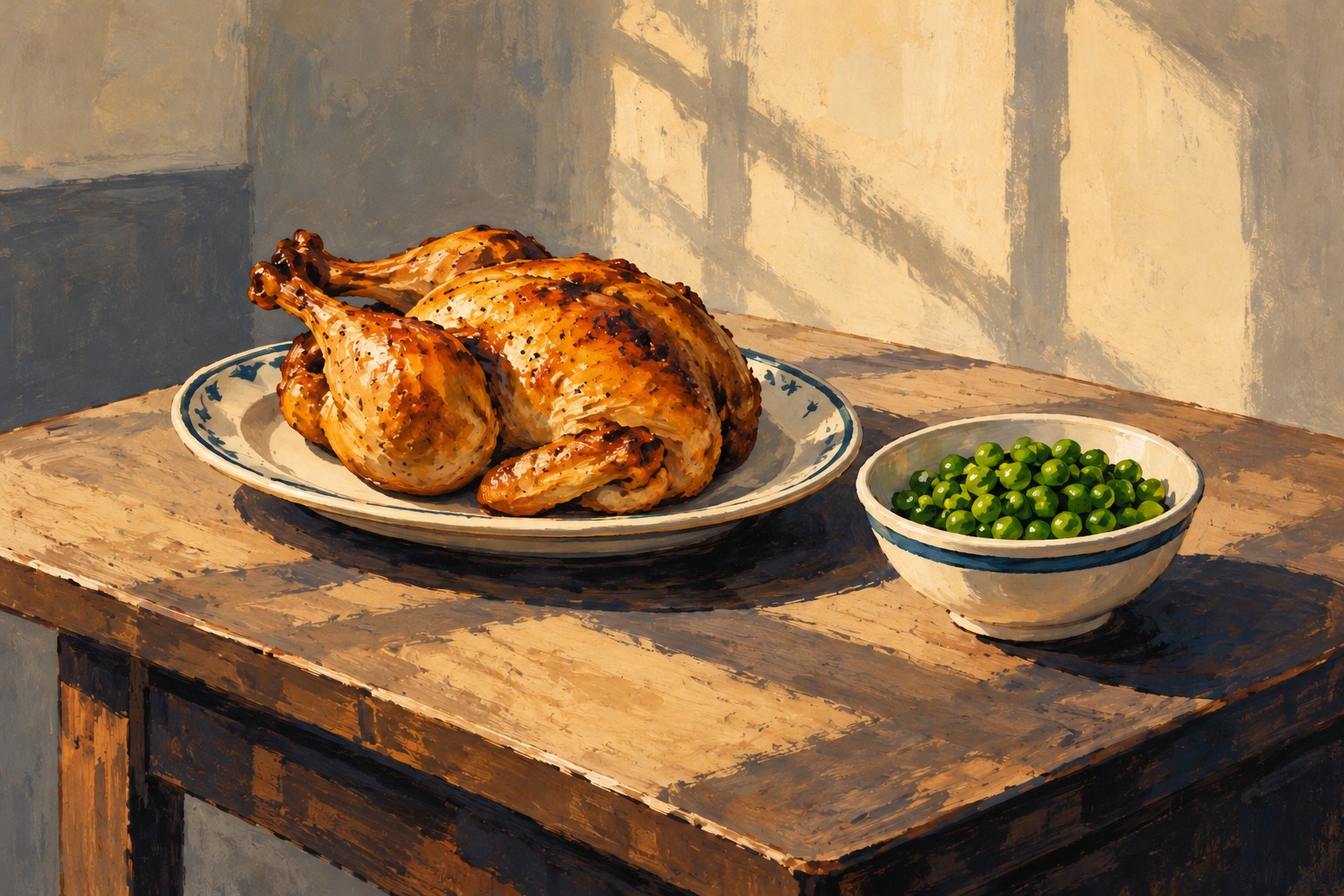
A small roasting pan gives two chicken thighs space to brown, while frozen peas are cooked separately according to their packet and finished with butter. Roast chicken and buttered peas appear in the March 31 offered-menu reporting. These cuts, quantities and two-person method are modern choices, not proof of what Hauptmann ate on April 3.
Read Bruno Richard Hauptmann: An Offered Menu, 31 March 1936 →
Print recipe · PDF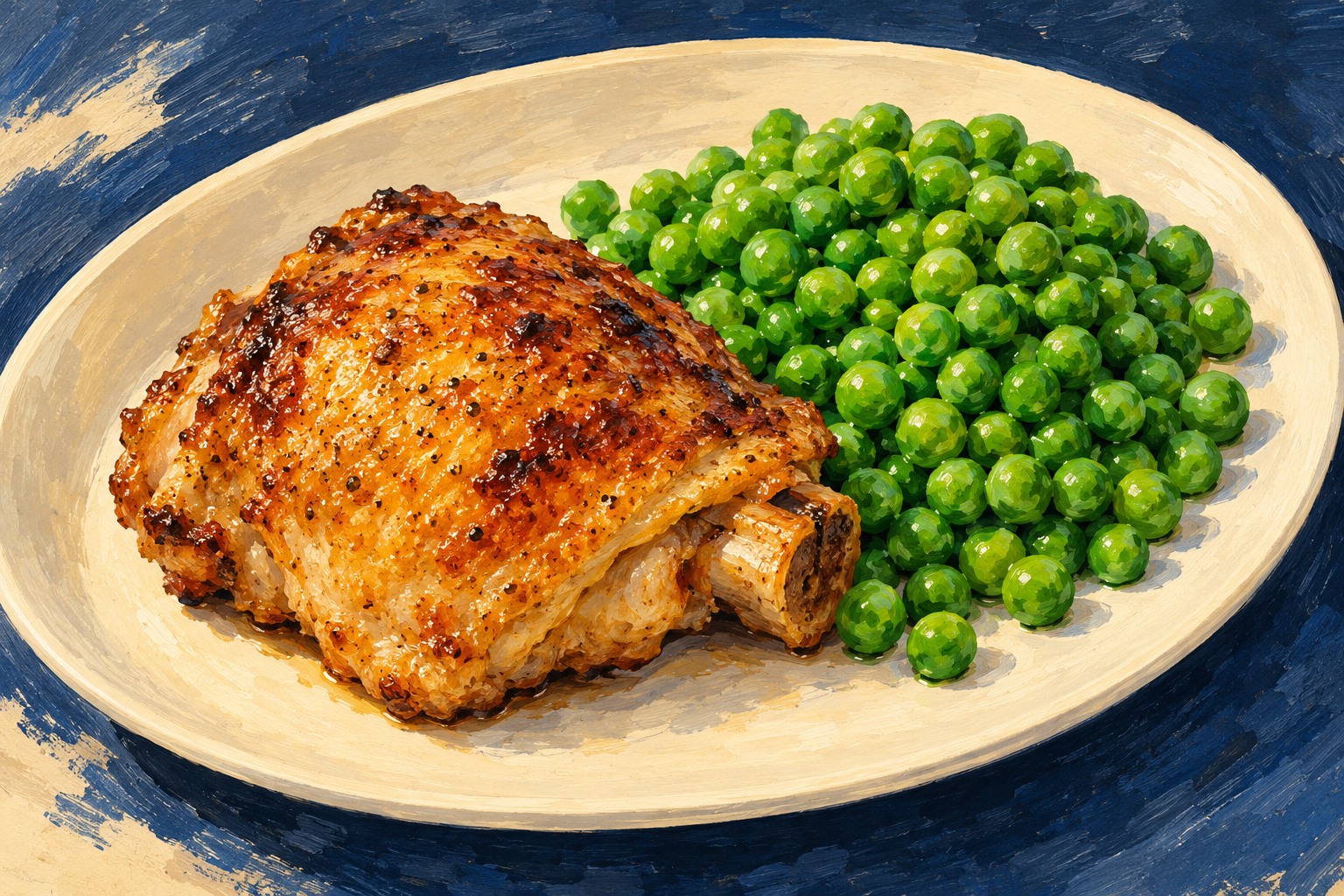
Ingredients
- 2 plain bone-in skin-on chicken thighs, each about 8 oz/225 g raw including bone and skin (450 g total), fully thawed in the refrigerator
- 1 teaspoon neutral cooking oil (5 ml)
- ¼ teaspoon fine salt (1.5 g), divided: 1 g chicken and 0.5 g peas
- ⅛ teaspoon ground black pepper (0.25 g), for chicken
- 10½ oz plain frozen green peas (300 g), kept frozen until cooking
- Drinking water for peas: the exact packet-directed quantity; use 2 tablespoons/30 ml only if the packet permits a covered saucepan method with that amount
- 2 teaspoons unsalted butter (10 g), for peas
Set out
Oven and 1 stovetop burner, Shallow metal roasting pan with usable base at least 9×9 in/23×23 cm, sides at least 1½ in/4 cm high, Small saucepan with lid, about 1½ qt/1.4 L, Thin-probe food thermometer, Tongs, spoon and measuring jug, Separate raw-chicken preparation surface and disposable kitchen paper, Clean cooked-chicken resting plate, Oven mitts and clean shallow refrigerator containers
Allergens
Milk. Butter contains milk. Check actual chicken, oil and frozen-pea labels; use plain unseasoned products. A butter substitute changes the allergen information and flavor.
Make it
- Heat the oven to 400°F/200°C. Keep the peas frozen. Read their packet for the full cooking method, time and water quantity so that the saucepan can be ready near the end of roasting. Do not assume frozen peas are ready to eat after thawing.
- Blot the thawed chicken with disposable kitchen paper without washing it. Put the thighs skin-side up in the roasting pan, separated by at least 1 in/2.5 cm; use a larger pan if the actual pieces cannot fit with that gap. Rub with all the oil, the chicken’s 1 g salt and the pepper. Wash hands and clean the raw-chicken area and any used utensils before handling other food.
- Roast uncovered for about 35–50 minutes. Begin checking both thighs near 35 minutes: insert the thermometer from the side into the thickest meat, avoiding bone and the pan. Each must reach at least 165°F/74°C before removal. Continue as needed; neither brown skin nor clear-looking juices replaces the thermometer. If the surface darkens early, lower the oven slightly and allow extra time.
- Use clean tongs to move the cooked thighs to the clean plate. Rest 5 minutes while cooking the peas. Keep any raw-chicken utensil away from the resting plate. The cooked pan juices are not part of the serving formula; leave them in the roasting pan rather than pouring them over the peas.
- Put the packet-directed water in the saucepan and cook all 300 g frozen peas for the complete packet time and method. Use only a packet that permits stovetop cooking; do not use the small stated allowance if its directions call for more water or another method. Check that peas are steaming hot and tender. Drain excess water carefully if directed.
- Take the pea pan off the heat, add butter and the remaining 0.5 g salt, and stir until coated. Divide all the peas between 2 plates and add 1 cooked rested thigh to each. Serve promptly. Any extra roasting or pea packet time extends the meal clock.
A useful detail
The 80-minute total allows 20 minutes preparation and preheating, up to 50 minutes roasting and a 5-minute rest, with the pea pan finished during that rest or immediately afterward. Chicken pieces larger than the specified 225 g, crowded pans or longer packet directions need more time. Bone weight is included in the stated raw chicken weight; one thigh is one serving, not 225 g edible cooked meat.
Keep it well
Cool leftovers promptly in separate shallow covered containers and refrigerate within 2 hours, or 1 hour above 90°F/32°C, at 40°F/4°C or below. Use within 2 days. Reheat only the required portion to 165°F/74°C throughout; peas may be loosened with a little drinking water. Never put cooked chicken on the raw-chicken surface or reuse a raw-meat utensil unwashed.
How this recipe relates to the story
The source describes a March 31, 1936 menu ordered by Charles Zied and a similar meal that could be offered to Hauptmann. It does not establish Hauptmann’s selection, consumption or actual April 3 final meal. This companion makes only two named food categories with new portions, cuts and cooking instructions.
Another way
- Use plain frozen petits pois in the same 300 g amount, following that product’s own complete cooking directions.
- Leave the cooked skin on for the illustrated version, or remove it at the table after the chicken has reached 165°F/74°C. No skinless timing claim is substituted.