069 / 75 · Make the Most of What Is Left
Crisp Polenta Fingers with Pea and Tomato Ragu
12 crisp polenta fingers with pea-tomato ragu; 4 fingers and one-third of the ragu per serving · Active 20 min · Total 45 min
Print recipe · PDFFirm chilled polenta can be cut into thick fingers and baked until crisp at the edges. The soft center remains distinctly different from a potato chip or a bread stick. A tomato and pea ragu cooks while the fingers are in the oven, providing a substantial spoonful beside each portion. The base recipe starts with an already cooked, properly chilled slab.
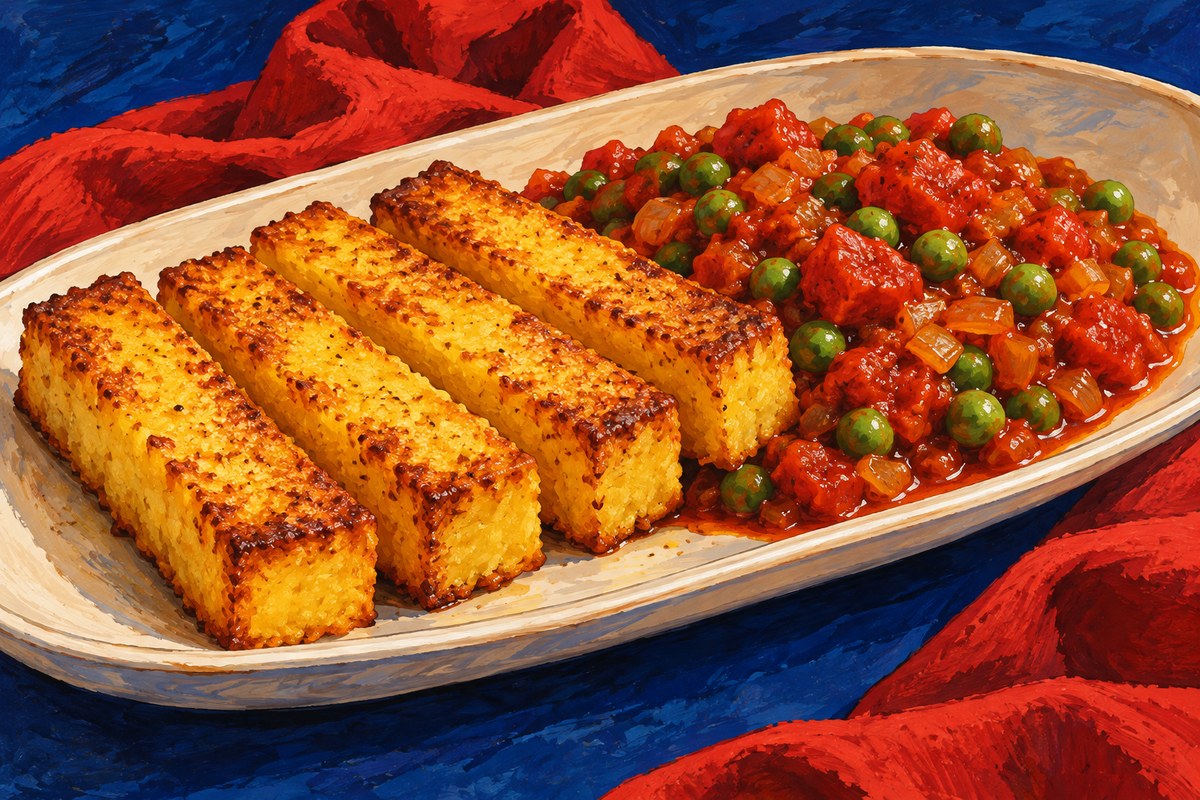
A firm slab saves the shaping
Polenta that was spread in a shallow container before chilling is easiest to use. Aim for a slab about 8 by 6 inches and roughly three-quarters of an inch thick. The exact outline need not be perfect: cut evenly sized fingers from what you have and keep small offcuts with the rest. Very thin pieces dry out before thicker ones become crisp. Polenta that is still soft enough to spoon cannot be cut for this method; serve it as soft polenta instead, rather than mixing in extra dry cornmeal at the last moment.
Oil the food, leave room on the tray
Brush the fingers themselves with the measured oil and leave a small gap between them. A crowded tray holds steam around the pieces and keeps the sides soft. Turn the fingers only after their first side has had time to firm and release from the paper. A thin spatula is easier to slide under them than a fork. They will have browned corners and a dry surface when ready, while the center stays soft. This combination of textures is the point, so there is no need to bake them until hard all the way through.
Let the ragu do more than dip
The peas and tomato are part of the serving, not an optional sauce squeezed from a bottle. Cook the onion until soft, then reduce the tomato before the peas go in. That keeps the sauce thick enough to sit beside the polenta without flooding the plate. Add the frozen peas for at least their packet cooking time. Divide all the ragu among the three portions. Spoon a little over the ends of the fingers if you like, but leave most of the crisp surfaces exposed until they reach the table.
Ingredients
- About 2 1/2 cups plain firm cooked polenta, chilled promptly in a slab (500 g)
- 1 tablespoon plus 1 teaspoon neutral oil (20 ml), for the polenta
- 1 tablespoon neutral oil (15 ml), for the ragu
- 1 small onion (100 g), finely diced
- 2 garlic cloves (6 g), finely chopped
- 1 can chopped tomatoes, 14 oz/400 g, with juice
- 1 teaspoon sweet paprika (2 g)
- 2 cups frozen peas (280 g)
- 1/2 teaspoon fine salt (3 g)
- 1/4 teaspoon black pepper (0.5 g)
Set out
Large baking tray, Baking parchment, Thin spatula, Medium saucepan, Food thermometer, Knife and board
Allergens
No major US allergen identified in the base ingredients. Check labels and substitutions.
Make it
- Heat the oven to 425°F/220°C. Line the tray. Cut the cold polenta slab into 12 similar fingers, about 4 by 1 inch/10 by 2.5 cm and 3/4 inch/2 cm thick, adjusting for the slab shape.
- Arrange with gaps and brush all sides with the measured 20 ml oil. Bake for 15 minutes, turn carefully, then bake for 15–20 minutes more, until the corners brown and the center reaches 165°F/74°C.
- Meanwhile heat the ragu oil in the saucepan over medium-low heat. Cook onion for 7 minutes, add garlic and paprika for 30 seconds, then add tomatoes, salt and pepper. Simmer for 10 minutes, stirring occasionally, until thickened.
- Stir in frozen peas and cook for the packet’s stated time, usually 4–5 minutes, until tender and thoroughly hot. Keep at a gentle simmer if the polenta needs longer.
- Serve four hot polenta fingers per portion with one-third of the ragu. Leave some crisp polenta surface free of sauce.
Save a slab on purpose
When cooking a plain polenta batch, a shallow container makes the surplus useful for this later texture. Label its original date. A large pot forgotten at room temperature is not a substitute for promptly chilled leftovers.
Ingredient labels
The base contains no major US allergen ingredients, but check the polenta and canned tomato labels and any packaged seasonings.
A useful detail
The 45-minute total begins with cooked polenta that is already firm and cold. To prepare specifically, cook plain polenta according to its packet, weigh 500 g, spread in a shallow 8 by 6-inch/20 by 15 cm container and cool promptly before refrigerating for at least 4 hours. That earlier cooking and chilling are additional.
Another way
- Use frozen mixed peas and sweetcorn instead of all peas, keeping the same total weight and following the mixture’s packet cooking time.
- For softer eating, warm the same cooked polenta with a little water until spoonable and serve under the ragu. It is a different texture, so omit the 20 ml tray oil and the oven-crisping step.
Keep it well
Use cooked polenta that was cooled promptly, refrigerated at 40°F/4°C or below and made no more than 2 days earlier. Reheat the fingers once to 165°F/74°C and eat promptly; this does not restart the polenta’s storage clock. Cool newly made leftover ragu in a shallow container within 2 hours, or 1 hour above 90°F/32°C, and refrigerate for up to 3 days. Reheat ragu to 165°F/74°C.