067 / 75 · Make the Most of What Is Left
Charred Cabbage and Toasted Bread Salad with Warm Beans
4 generous warm salad bowls with beans and toasted bread · Active 25 min · Total 35 min
Print recipe · PDFCabbage can anchor a bread salad as well as softer summer vegetables can. A brief, hot pan treatment gives it browned patches while leaving some bite. The beans are warmed separately, and the toasted bread goes in at the end so its surface stays crisp. This is a complete bowl with a sharp mustard dressing, not a handful of croutons over a side salad.
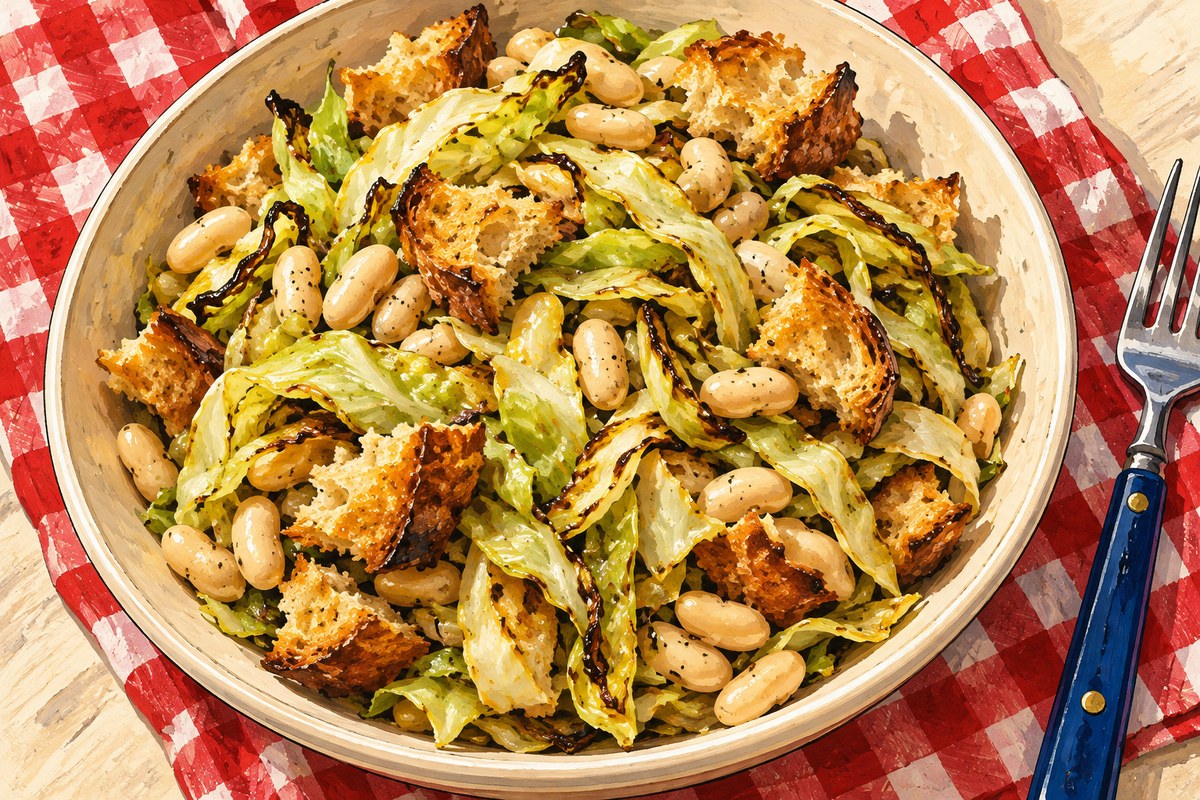
Cabbage should char in patches
Cut away the tough base and slice the remaining cabbage into wide ribbons. A little central rib is useful because it keeps some pieces substantial. Dry the cabbage well after washing. Water on the leaves turns the first few minutes in the skillet into steaming, and a huge heap prevents the hot metal from touching most of the vegetables. Work in two batches and leave each batch alone briefly before turning. The goal is a mixture of browned edges and still-crisp pale-green folds, not a uniformly soft vegetable.
Toast the bread before the vegetable
Bread is easier to brown in a clean pan than in one filled with cabbage juices. Tear it into irregular bite-size pieces so there are small crisp ridges rather than only smooth cubes. The bread should be dry enough to take up a little dressing later without turning to paste immediately. Sound stale bread is useful; mouldy bread is not. Toast the pieces first, move them to a plate and use the same skillet for the cabbage. This avoids keeping another tray or pan in use just for a small bread component.
Warm beans, late dressing
Drain the beans, then heat them gently with a measured spoonful of water. They should arrive warm in the bowl without a puddle of canning liquid. Whisk the dressing before the last cabbage batch is finished, so assembly takes only a minute. Toss the cabbage and beans first, then fold in most of the bread. Scatter the remaining pieces over the bowls. The slightly different bread textures make the salad more interesting, while dividing the entire bowl gives every portion beans as well as vegetables.
Ingredients
- 6 cups green cabbage cut into wide ribbons (400 g prepared)
- About 5 cups torn plain stale bread (180 g)
- 2 cans white beans, 15 oz/425 g each, drained and rinsed (480 g drained total)
- 3 tablespoons neutral or olive oil (45 ml), divided
- 2 tablespoons water (30 ml)
- 2 tablespoons cider vinegar (30 ml)
- 2 teaspoons prepared mustard (10 g)
- 1 teaspoon granulated sugar (4 g)
- 1/2 teaspoon fine salt (3 g)
- 1/4 teaspoon black pepper (0.5 g)
Set out
Large heavy skillet, Small saucepan with lid, Large salad bowl, Whisk or fork, Spatula, Knife and board
Allergens
Wheat. Check labels and substitutions.
Make it
- Dry the cabbage after washing. Heat 1 tablespoon/15 ml oil in the skillet over medium heat. Add the torn bread and cook for 6–8 minutes, turning, until crisp and golden. Transfer to a plate.
- Raise the skillet to medium-high. Add 1 1/2 teaspoons/7.5 ml oil and half the cabbage. Cook for 5–6 minutes, turning twice, until browned in places but still slightly crisp. Move to the salad bowl and repeat with another 7.5 ml oil and the remaining cabbage.
- Meanwhile put beans and water in the saucepan. Cover and heat gently for 4–5 minutes, stirring, until steaming hot. Drain any water left in the pan.
- Whisk remaining 1 tablespoon/15 ml oil with vinegar, mustard, sugar, salt and pepper. Add the hot beans to the cabbage and toss with the dressing. Fold in two-thirds of the bread, divide among four bowls and scatter the rest of the bread over them. Serve immediately.
One cabbage can serve several methods
Keep the remaining uncut cabbage wrapped in the refrigerator and plan a different use for it, such as a fine raw slaw. Repeating an ingredient does not require repeating the same texture or meal.
Ingredient labels
Mustard is present; check bread labels for milk, sesame or other added allergens.
A useful detail
The whole batch uses 45 ml oil: 15 ml for bread, 15 ml across the two cabbage batches and 15 ml in the dressing. Canned beans are newly opened in the base recipe; if using leftover cooked beans, observe their original storage window.
Another way
- Use the same drained weight of canned chickpeas instead of white beans; they will remain firmer in the salad.
- Replace 100 g of the cabbage with the same weight of thinly sliced carrots and cook them with the cabbage batches.
Keep it well
For the best texture, assemble only what will be eaten. Refrigerate leftover dressed cabbage and beans within 2 hours, or 1 hour above 90°F/32°C, in a shallow covered container at 40°F/4°C or below; use within 2 days. Keep unused toasted bread separate, cool and dry, and use the next day. If the beans were leftovers, their earlier cooking date sets the limit. Reheat cabbage and beans to 165°F/74°C if serving hot again, then add bread.