049 / 75 · A Little Meat or Fish
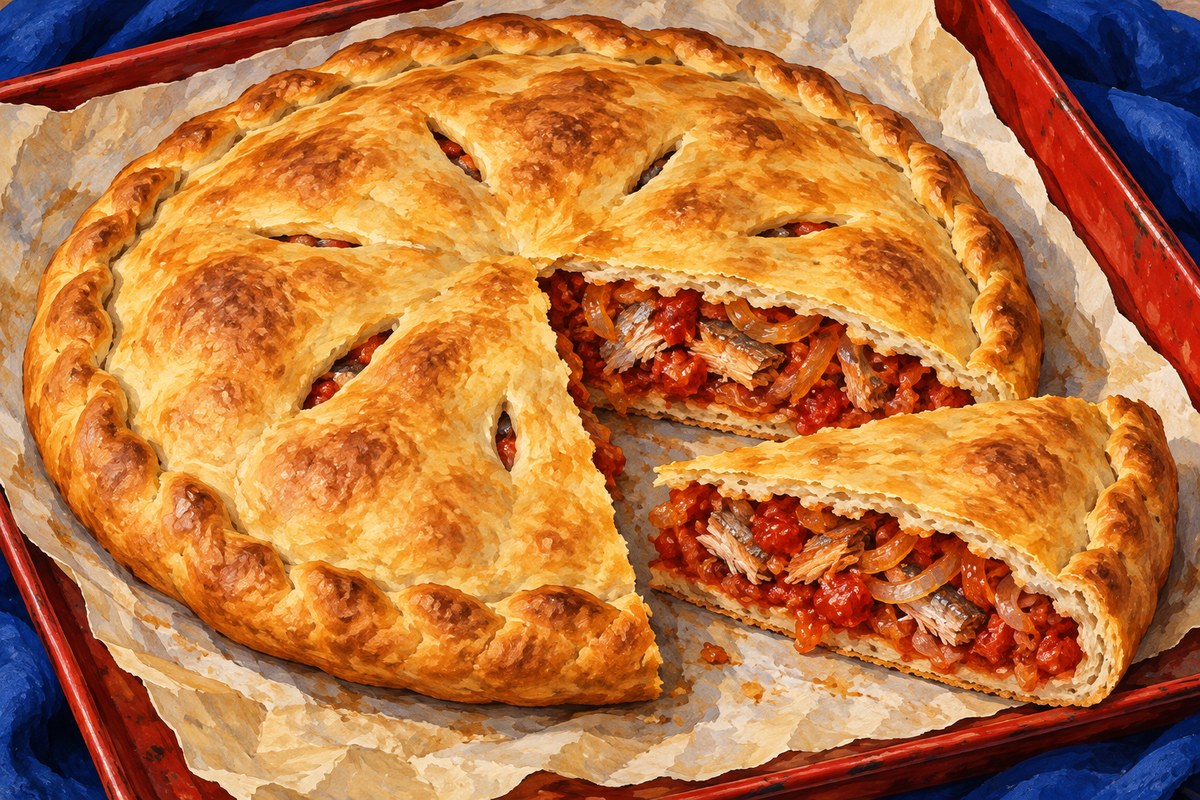
Sardine, Tomato and Onion-Stuffed Bread
1 round stuffed bread, cut into 4 generous wedges · Active 40 min · Total 2 hr 30 min
Print recipe · PDFA simple yeast dough encloses a cooked filling of sardines, tomato and onion. Reducing the tomato and cooling the filling are important: wet hot filling makes a thin bread envelope difficult to seal. The dough rises while the filling cooks and cools. Four substantial wedges make a useful meal from two small cans of fish and a modest amount of flour.
Use the rising time twice
Once the dough is mixed, cover it and let it rise until noticeably puffy. The room temperature affects how long this takes, so look at the dough as well as the clock. During that wait, soften the onion and reduce the tomato filling. Spread the cooked mixture on a plate to cool promptly. It should be cool enough to handle before the dough is rolled; warm filling softens the thin lower layer and can make it tear as the top is fitted.
A reduced filling is easier to enclose
Drain the sardines and break them into chunky flakes rather than stirring them into paste. Cook the tomato until a spoon drawn through the pan leaves a brief clear track. The dough contains its own moisture and does not need a puddle of tomato juice inside. Leave a clear border around the lower round, then press the two dough edges together firmly. A small steam slit prevents the center from ballooning unpredictably. Let the baked bread stand before cutting so the filling settles and does not run out over the board. Any small misshapen edges are simply part of a homemade loaf.
Ingredients
- 2 1/2 cups all-purpose flour (300 g)
- 1 teaspoon instant yeast (3 g)
- 1/2 teaspoon fine salt (3 g), divided
- 3/4 cup lukewarm water (180 ml), about 100°F/38°C
- 2 tablespoons olive or neutral oil (30 ml), divided
- 1 large onion (200 g), thinly sliced
- 1 can chopped tomatoes, 14 oz/400 g, with juice
- 2 cans sardines in water or oil, 3.75 oz/106 g each, drained (about 160 g drained total)
- 1/2 teaspoon dried oregano (0.5 g)
- 1/4 teaspoon black pepper (0.5 g)
Set out
Mixing bowl, Large skillet, Baking tray, Baking parchment, Rolling pin, Food thermometer
Allergens
Fish, Wheat. Check labels and substitutions.
Make it
- Mix flour, yeast and half the salt. Add lukewarm water and 1 tablespoon/15 ml oil. Knead for 6–8 minutes until smooth. Cover and let rise in a warm place for about 60–75 minutes, until puffy and roughly doubled.
- Meanwhile heat remaining oil in the skillet over medium-low heat. Cook onion for 8 minutes. Add tomatoes, oregano, remaining salt and pepper and simmer uncovered for 15–20 minutes, stirring, until thick. Fold in drained sardine flakes. Spread on a plate and cool for about 20 minutes; keep total room-temperature holding under 2 hours.
- Heat oven to 400°F/200°C and line the tray. Divide the risen dough in half. Roll each half to an 11-inch/28 cm round. Put one on the tray.
- Spread the cooled filling over the lower round, leaving a 3/4-inch/2 cm border. Dampen the border lightly with water, cover with the second dough round and press edges firmly together. Crimp, then cut three small steam slits in the top.
- Bake for 25–30 minutes until golden, the underside is baked and the filling reaches 165°F/74°C. Rest for 10 minutes, then cut into four wedges.
Drain before sizing the fish portion
Cans include water or oil. The filling uses the drained fish weight, so compare the actual packs available and measure what goes into the bread.
Ingredient labels
Check the sardine packing oil and other can ingredients for additional allergens.
A useful detail
The 135-minute total allows a normal 60–75 minute rise and overlaps filling preparation with it. A cold room can extend the rise. Very hot water can damage yeast, so use lukewarm water.
Another way
- Use 160 g drained canned mackerel instead of sardines, keeping the fish in flakes.
- Use canned crushed tomatoes at the same weight, reducing them until thick before filling the bread.
Keep it well
Cool wedges promptly in a single layer and refrigerate within 2 hours, or 1 hour above 90°F/32°C. Keep covered at 40°F/4°C or below for up to 3 days. Reheat to 165°F/74°C throughout. Freeze cooled wedges for up to 1 month and thaw in the refrigerator before reheating.