040 / 75 · A Vegetable-Led Table
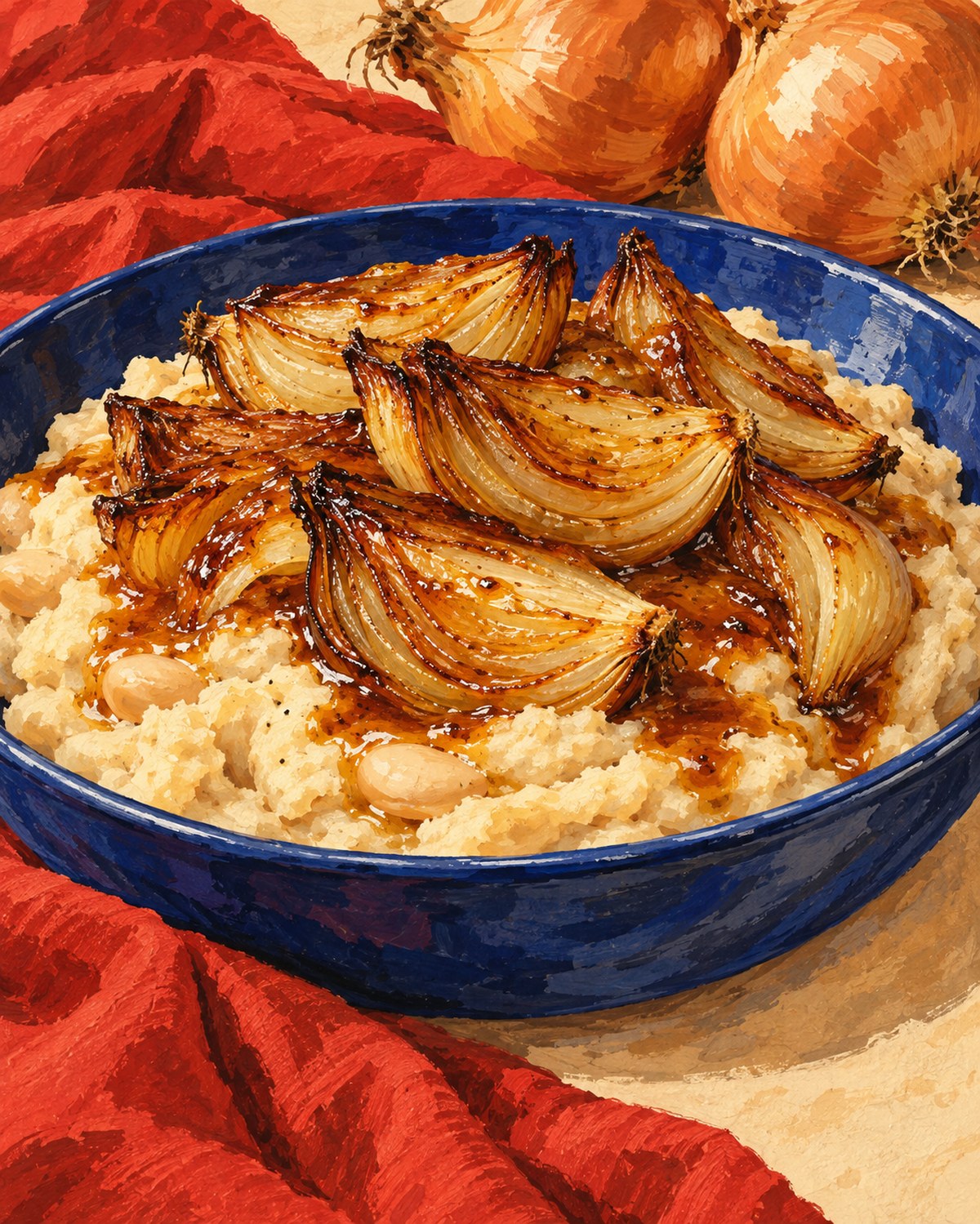
Sticky Roasted Onions with Butter Bean Mash
3 bowls, each with one-third of the sticky onions and warm bean mash · Active 20 min · Total 1 hr
Print recipe · PDFRoasted onion wedges turn sweet and sticky with a little vinegar and sugar, then settle onto a warm mash of canned butter beans. The onion is the main vegetable, so keep the wedges substantial and let their cut faces brown. The bean mash is made in a saucepan while the onions roast, with enough milk to make it soft without becoming soup.
Keep the wedges together
Peel the onions but leave a small piece of the root end joining each wedge. Cutting it away completely sends the layers in different directions as they roast. Arrange the wedges with a cut face down and spoon the vinegar mixture around them. The short covered stage softens the centers; uncovering lets the liquid reduce and the exposed edges color. Turn gently rather than stirring. The onions are ready when a knife passes through the thick inner layers and the remaining pan liquid lightly coats them. If the tray goes dry too early, add a tablespoon of water instead of letting the sugar burn.
A smooth enough mash
Drain the butter beans before heating them with milk. Mash with a fork or potato masher and stop when the texture suits you; a blender is unnecessary. Some bean skins will remain visible, which is normal. Keep the heat low after mashing because the mixture thickens quickly and can catch on the base. Spoon it into three shallow bowls before adding the onions, then share the reduced pan juices between them. This uses a whole familiar vegetable and a measured amount of canned beans rather than relying on an expensive centerpiece or a long list of finishing ingredients.
Ingredients
- 4 large onions (750 g peeled), cut into wedges with a little root attached
- 2 tablespoons neutral or olive oil (30 ml), for the onions
- 2 tablespoons cider vinegar (30 ml)
- 1 tablespoon granulated sugar (12 g)
- 1/4 cup water (60 ml)
- 1/2 teaspoon fine salt (3 g), divided
- 1/4 teaspoon black pepper (0.5 g)
- 2 cans butter beans, 15 oz/425 g each, drained and rinsed (480 g drained)
- 2 teaspoons neutral or olive oil (10 ml), for the mash
- 2 garlic cloves (6 g), finely chopped
- 3/4 cup milk (180 ml)
Set out
Small roasting dish, Foil, Medium saucepan, Potato masher or fork, Knife and board
Allergens
Milk. Check labels and substitutions.
Make it
- Heat oven to 400°F/200°C. Place onion wedges in the roasting dish. Mix the 30 ml onion oil, vinegar, sugar, water, half the salt and pepper and pour over them. Cover with foil.
- Roast covered for 15 minutes. Uncover, turn the wedges gently and roast for 25–30 minutes more, turning once, until tender with browned edges and sticky pan juices. Add a tablespoon of water if the dish dries before the onions soften.
- During the last 15 minutes of roasting, heat the mash oil in the saucepan over low heat. Cook garlic for 30 seconds, add drained beans, milk and remaining salt and simmer gently for 6–8 minutes.
- Mash the beans in the saucepan. Heat for another 2 minutes, stirring, until thick, soft and steaming hot. Divide among three bowls and add one-third of the onions and pan juices to each.
Choose onions by condition, not perfection
Firm ordinary onions are suitable. Cosmetic dry-skin differences do not matter after peeling; avoid soft, leaking or mouldy onions. Use the peeled weight to size the batch rather than buying unusually large display onions.
A useful detail
A snug roasting dish keeps the small amount of glaze around the onions. A huge bare tray lets the vinegar and sugar dry out before the centers soften.
Another way
- Use the same drained weight of canned white beans instead of butter beans; mash them a little longer because their skins may be firmer.
- Use ordinary white wine vinegar instead of cider vinegar at the same amount.
Keep it well
Cool onions and bean mash in separate shallow containers within 2 hours, or 1 hour above 90°F/32°C. Refrigerate covered at 40°F/4°C or below for up to 3 days. Reheat both to 165°F/74°C, adding a little water or milk to loosen the mash.