037 / 75 · A Vegetable-Led Table
Sweetcorn, Cabbage and Cheddar Savory Cobbler
4 servings, each with 2 small cheese biscuits and one-quarter of the vegetable filling · Active 25 min · Total 1 hr 5 min
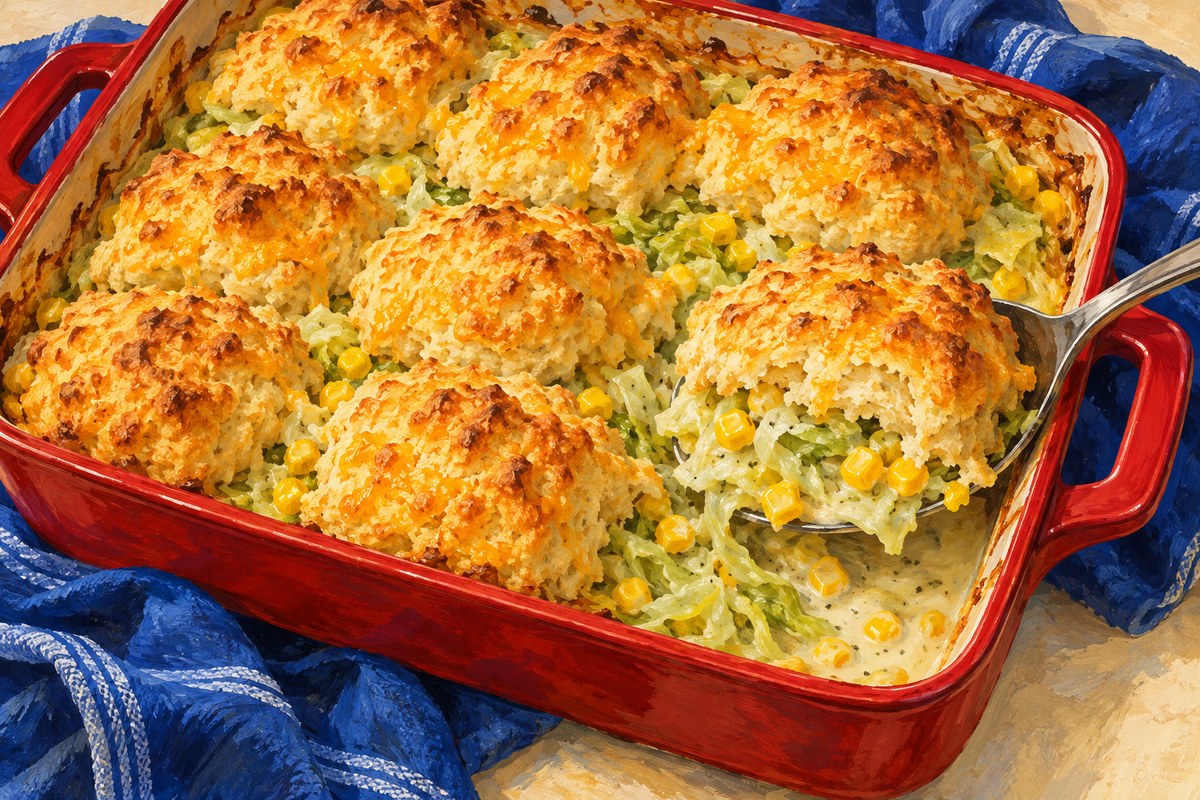
Print recipe · PDFCabbage and sweetcorn sit under small cheese-biscuit mounds in this savory cobbler. The filling is cooked before the topping goes on, so the oven can concentrate on baking the dough. Eight small mounds are easier to portion than one thick blanket of biscuit. Each serving gets two biscuits and a generous spooning of the creamy vegetables beneath.
Soften cabbage before it goes under cover
Raw cabbage loses a great deal of volume as it cooks. Putting it straight into a casserole under biscuit dough leaves the topping suspended over a wet, collapsing filling. Cook the shredded cabbage in the skillet first and stir until its bulk reduces. Then add flour and milk to create a sauce that lightly coats it. Sweetcorn adds texture without another chopping job. The vegetable mixture should be hot when the biscuits go on, helping their undersides start cooking promptly.
The biscuit dough should stay rough
Rub cold butter into the flour until small uneven pieces remain. Stir in milk and cheese just until the dry flour disappears. Vigorous mixing makes a tighter dough and does not improve the cobbler. Divide into eight mounds with a spoon, leaving narrow gaps for steam to escape. The mounds spread a little as they bake; they need not cover every visible piece of cabbage.
Check the bottom of a biscuit
A golden top is only one clue. Lift the edge of a middle biscuit with a spoon: its underside should be set, not a smear of raw dough. Check that the bubbling filling reaches 165°F/74°C as well. A short rest thickens the sauce enough to serve without flooding the plate.
Ingredients
- 1 tablespoon neutral oil (15 ml)
- 6 cups finely shredded cabbage (400 g)
- 1 3/4 cups frozen sweetcorn (250 g)
- 1/4 cup all-purpose flour (30 g), for the filling
- 2 cups milk (480 ml), divided: 360 ml filling and 120 ml topping
- 3/4 teaspoon fine salt (4.5 g), divided
- 1/4 teaspoon black pepper (0.5 g)
- 1 1/2 cups all-purpose flour (180 g), for the topping
- 2 teaspoons baking powder (8 g)
- 3 tablespoons cold butter (42 g), diced
- 3/4 cup grated cheddar (80 g)
Set out
Large skillet, 8-inch/20 cm square baking dish, about 2 quarts/2 liters, Mixing bowl, Fork, Food thermometer
Allergens
Milk, Wheat. Check labels and substitutions.
Make it
- Heat oven to 375°F/190°C. Heat oil in the skillet over medium heat. Cook cabbage for 8–10 minutes, stirring, until softened and reduced in volume.
- Add corn and the 30 g filling flour. Stir for 1 minute, then gradually add 360 ml milk, two-thirds of the salt and the pepper. Simmer for 4–5 minutes, until lightly thickened and the corn is hot. Transfer to the baking dish.
- Mix the 180 g topping flour, baking powder and remaining salt in the bowl. Rub in the cold butter with fingertips or a fork. Stir in cheddar and remaining 120 ml milk just until combined.
- Divide the dough into 8 rough mounds over the hot filling, leaving narrow gaps. Bake for 25–30 minutes, until the biscuits are golden and cooked underneath and the center of the filling reaches 165°F/74°C. Rest for 5 minutes; serve two biscuits with one-quarter of the filling per portion.
Use a modest cheese portion where it shows
The measured cheese is concentrated in the biscuit topping. There is no need to add another handful to the filling for the dish to have a clear cheese character.
A useful detail
Use a shallow dish rather than a deep narrow casserole. Small biscuits cook through more reliably, and the filling stays closer to the hot topping.
Another way
- Use the same weight of frozen peas instead of corn; heat them fully in the sauce before baking.
- Replace cheddar with the same weight of another firm cheese already open; avoid soft wet cheese in the biscuit dough.
Keep it well
Cool portions promptly in shallow containers within 2 hours, or 1 hour above 90°F/32°C. Refrigerate covered at 40°F/4°C or below for up to 3 days. Reheat to 165°F/74°C; loosely cover at first, then uncover briefly to help the biscuit surface dry.