023 / 75 · A Lunch Without Cooking
Beetroot and Cottage Cheese Flatbread Plates
2 substantial cold lunch plates · Active 20 min · Total 20 min
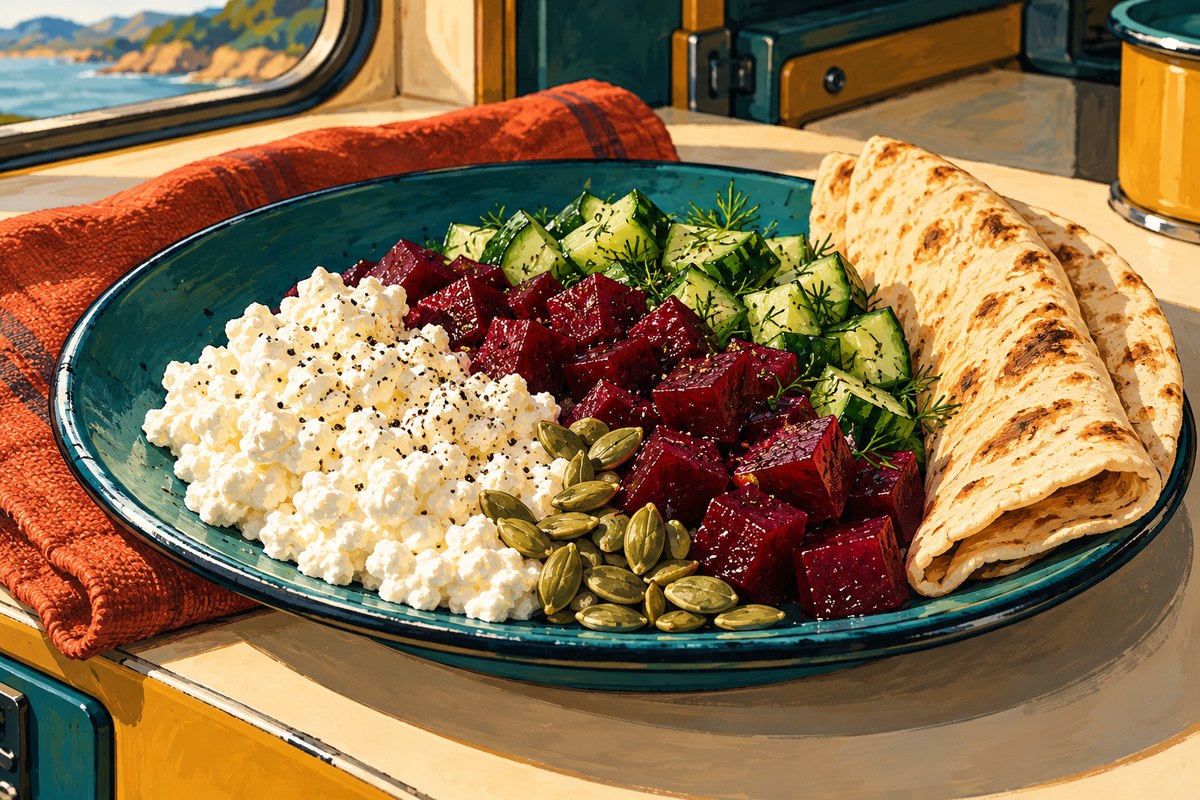
Print recipe · PDFCooked beetroot and cottage cheese make a colorful cold plate, with cucumber for crunch and a small handful of pumpkin seeds. Flatbread stays alongside for tearing and scooping, keeping the meal flexible on a tiny table. This recipe uses plain ready-cooked beetroot and bread labeled ready to eat, so it does not need a burner. Check those details at the shop rather than discovering at lunchtime that an ingredient requires cooking.
Plain beetroot keeps the dressing in balance
Use cooked beetroot without a strong pickling marinade. Drain and blot it before cutting, then keep it to one side of the plate if you want the cottage cheese to stay white. The dressing is deliberately small because beetroot and cucumber can both release juice. A spoonful of vinegar and oil is enough to carry the dill through the vegetables. Do not pour the vacuum pack’s liquid into the finished lunch.
Choose a useful cottage-cheese texture
Some cottage cheese has a loose milky dressing; other tubs are quite firm. Stir the container before measuring and use a clean spoon. If there is a large puddle, leave that excess behind rather than flooding the plate. The curds should remain visible. Check the package storage limit after opening and buy a tub size you can use safely. The recipe does not require blending, straining overnight or another appliance on the counter.
Tear the bread at the meal
An unfilled flatbread needs less protection than a soft wrap already loaded with beetroot and dairy. Keep it dry until eating and tear off pieces to scoop the vegetables and curds. Sprinkle seeds over only when you sit down so they retain their crisp texture. If the lunch is being packed, put cottage cheese and dressed vegetables in separate sealed tubs. Both are perishable even though one ingredient was cooked before you bought it; keep them properly chilled during the journey.
Ingredients
- 9 oz plain ready-cooked beetroot, drained, blotted and diced (250 g)
- 1/2 cucumber, diced (150 g)
- 1 tablespoon cider vinegar (15 ml)
- 2 teaspoons olive oil (10 ml)
- 1 tablespoon chopped dill (4 g)
- 1/4 teaspoon black pepper (0.5 g)
- 1 1/4 cups cottage cheese (300 g)
- 2 tablespoons pumpkin seeds (20 g)
- 2 plain flatbreads explicitly labeled ready to eat (140 g total)
Set out
Knife and board, Small mixing bowl, Two plates, Separate tubs if packing
Allergens
Milk, Wheat; check bread and seeds for other allergens. Check labels and substitutions.
Make it
- Drain and blot the plain cooked beetroot, then dice. Mix vinegar, oil, dill and pepper in the bowl. Fold in beetroot and cucumber gently.
- Divide cottage cheese between two plates, leaving space for the vegetables. Spoon half the beetroot mixture onto each plate, keeping it mostly beside the curds if desired.
- Scatter each with half the pumpkin seeds. Serve one ready-to-eat flatbread alongside each plate and tear it for scooping at the meal.
- For packing, keep cottage cheese and dressed vegetables in separate covered tubs, seeds in a dry small pot and bread in a separate wrapper. Refrigerate the perishable parts promptly.
Use two small containers rather than one tall jar
Separate shallow tubs fit many compact refrigerators better and keep the curds from turning entirely red before the meal.
A useful detail
No extra salt is specified because cottage cheese varies considerably. Taste your portion before adding any seasoning.
Another way
- Use chopped chives in place of dill at the same loose volume.
- Replace pumpkin seeds with sunflower seeds at the same weight, checking labels for additional allergens.
Keep it well
Keep the perishable components at 40°F/4°C or below and use within 2 days or either opened package’s shorter limit. Keep flatbread and seeds dry according to their labels. Carry cottage cheese and vegetables with two cold sources in an insulated bag. Discard perishables left beyond 2 hours at room temperature, or 1 hour above 90°F/32°C.