046 / 75 · Whole Cuts and Ground Meat
Pork Medallions with Apple Cabbage
2 plates, each with 3 pork medallions and half the cabbage, apple and potatoes · Active 40 min · Total 1 hr 10 min
Print recipe · PDFPork tenderloin cut into even medallions cooks quickly, so apple cabbage and boiled potatoes should be nearly ready before it reaches the skillet. A small amount of mustard and cider vinegar seasons the vegetables without needing a separate cream sauce. The important beginner habit is measuring the pork’s center temperature and giving the whole cut its rest, rather than judging safety from color alone.
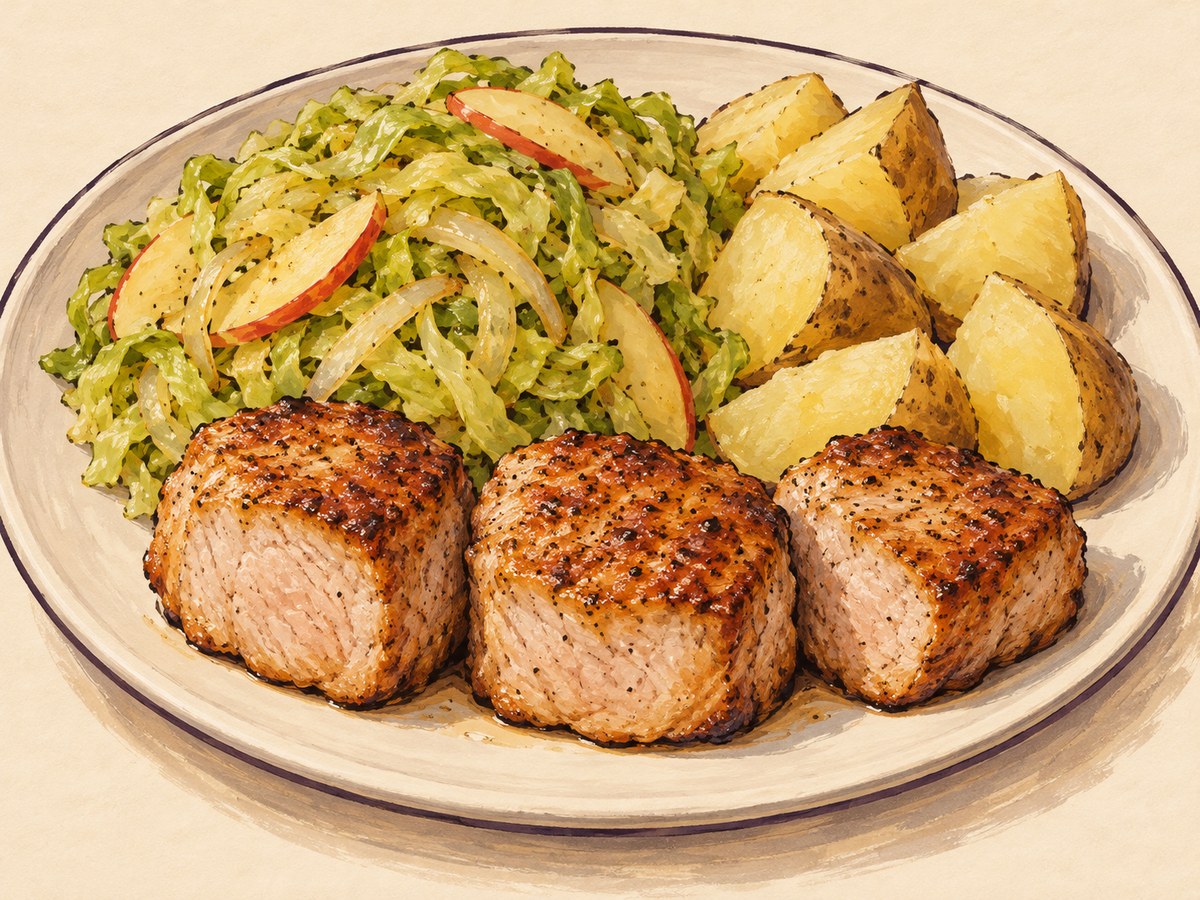
Make even pieces and work cleanly
Prepare the cabbage, onion, apple and potatoes before handling raw pork. Cut the tenderloin into six pieces of similar thickness rather than shaving thin ends off some while leaving another piece twice as deep. If an end is narrow, gently tuck it into a thicker medallion rather than pounding everything flat. Keep raw pork and its board away from the clean serving plate, and wash your hands and utensils after handling it. Tenderloin is the stated lean cut; a fatty shoulder slice is not an equivalent quick-cooking substitution.
Use the vegetable pan twice
Cook the cabbage mixture first and move it to a clean bowl, covered, for the brief pork stage. This clears enough skillet space to brown the medallions without steaming them among wet cabbage. Put the thermometer into the side of a thick medallion so its tip reaches the center without touching the metal pan. Once the whole-cut temperature is reached, transfer to a clean plate and leave the pork for at least three minutes. Do not use that rest as an excuse to leave the rest of the meal cooling for an hour. Divide all six pieces and the measured potato portion evenly; extra butter, gravy or a second serving of bread is outside this base estimate.
Ingredients
- 10 1/2 oz pork tenderloin, visible external fat and silverskin removed (300 g raw lean meat)
- About 2 1/2 cups finely shredded green cabbage (250 g)
- 1 small onion, thinly sliced (100 g)
- 1 apple with skin, cored and thinly sliced (150 g edible)
- 12 oz potatoes with skin, cut into 1-inch/2.5 cm pieces (350 g)
- About 4 cups water for potatoes (1 liter)
- 4 teaspoons olive oil (20 ml/about 18 g), divided
- 1/4 cup water for cabbage (60 ml)
- 2 teaspoons prepared yellow mustard (10 g)
- 2 teaspoons cider vinegar (10 ml/about 10 g)
- 1/2 teaspoon fine salt (3 g), divided
- 1/4 teaspoon black pepper (0.6 g), divided
Set out
30 cm/12-inch skillet, Saucepan with lid for potatoes, Colander, Clean covered bowl for cabbage, Separate board for raw pork or a thoroughly washed board, Knife, Kitchen scale, Measuring jug, Food thermometer, Clean resting plate, 2 serving plates
Allergens
Mustard; check prepared mustard ingredients for other allergens. Check labels and substitutions.
Make it
- Prepare the vegetables first. Put potatoes in the saucepan, cover with the measured water and add one-third of the salt. Bring to a boil and simmer for 15–20 minutes until easily pierced; drain and cover. Meanwhile cut pork into 6 even medallions about 1 inch (2.5 cm) thick, then wash raw-meat equipment and hands.
- Heat half the oil in the skillet over medium heat. Cook onion for 6–8 minutes. Add cabbage, apple, cabbage water and another third of the salt with half the pepper. Cover and cook for 10–12 minutes, stirring twice, until cabbage is tender and apple softens but keeps some shape. Stir in mustard and vinegar. Transfer to a clean covered bowl.
- Wipe excess moisture from the skillet carefully. Pat pork dry and season with remaining salt and pepper. Heat the remaining oil over medium-high heat. Add medallions in one layer and cook for about 3–4 minutes per side, adjusting heat to prevent scorching, until each thick center reaches at least 145°F/63°C. Check from the side with the thermometer.
- Transfer pork to a clean plate and rest for at least 3 minutes. Rewarm cabbage briefly in the skillet if needed. Serve 3 medallions per person with half the cabbage-apple mixture and potatoes.
A useful kitchen skill
Cook even whole-cut portions to a measured center temperature and rest them on a clean plate for at least three minutes.
A useful detail
The nutrition estimate uses raw lean-only tenderloin and the full oil amount. Potatoes and vegetables overlap, but the cabbage skillet is emptied before pork browning. The 70-minute total allows knife work, temperature checks and the required rest.
Another way
- Use 350 g peeled potatoes instead of skin-on potatoes, weighing after peeling and using the appropriate nutrition record.
- Replace the apple with 150 g cored pear; cook only until it softens and revise the estimate for the fruit.
Keep it well
Refrigerate promptly in shallow containers at 40°F/4°C or below within 2 hours, or 1 hour above 90°F/32°C. Use within 3 days. Reheat the needed pork, cabbage and potatoes to 165°F/74°C throughout. The pork may become firmer on reheating; add a spoonful of water and cover rather than frying repeatedly.