042 / 75 · Tofu, Eggs and Everyday Vegetarian Meals
Tempeh and Carrot Peanut Noodles
2 plates, each with half the noodles, tempeh, carrot and peanut sauce · Active 35 min · Total 1 hr
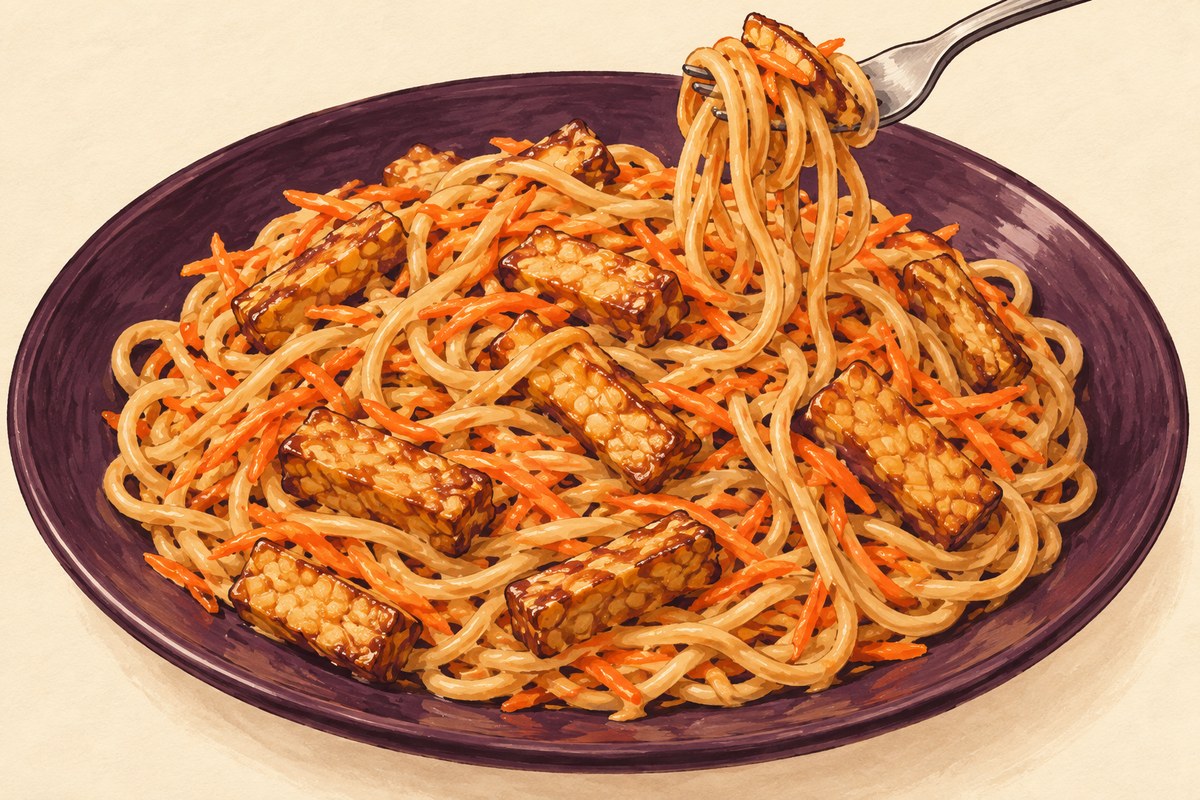
Print recipe · PDFTempeh and carrot turn plain noodles into a meal with a small amount of peanut sauce spread through every strand. The tempeh is steamed first, dried and browned separately; it is not treated as an uncooked garnish. Carrot joins the noodle water briefly and stays distinct. This is a good place to learn how measured water changes a nut-butter sauce from a paste into a coating.
Read the tempeh package first
Plain tempeh is a compact fermented soybean product, and brands can require different preparation. Check the pack before starting. The base method includes steaming and browning, but any longer cooking instruction on the product still applies. Cut even short batons so a thick piece does not lag behind the rest. After steaming, dry their surfaces with a clean towel. Oil in a pan browns the outside more readily when it is not first being asked to evaporate a layer of water.
Loosen, then season
Stir a little warm water into peanut butter gradually rather than pouring in everything and chasing lumps around the bowl. Add the remaining sauce ingredients once it is smooth. Lime gives a sharper finish than simply adding more soy sauce, which would also change the salt balance. Use unsalted smooth peanut butter for the stated base. Crunchy, sweetened or salted products are practical variations, but none is an invisible equivalent in the estimate.
Keep the final toss gentle
The carrot needs only the last two minutes of the noodle cooking. Drain both together and return them to the warm pot with the peanut mixture. Add the browned tempeh after the noodles have been coated, then lift and turn gently so the batons hold their shape. The dish is ready when the sauce clings without a puddle, not when it has been boiled dry. There are no separate whole peanuts, sesame seeds or lime wedges assumed in the meal. The nutrition record also leaves fiber unavailable where the official tempeh record does not supply it.
Ingredients
- 8 oz plain tempeh, cut into short 1/2-inch/1 cm batons (225 g as purchased)
- 5 1/3 oz dry plain spaghetti or similar wheat noodles (150 g)
- About 8 cups water for noodles (2 liters)
- 2 medium carrots, peeled and coarsely grated (150 g prepared)
- 2 teaspoons olive oil (10 ml/about 9 g)
- 2 tablespoons plus 2 teaspoons smooth unsalted peanut butter (40 g)
- 1 tablespoon ordinary soy sauce (15 ml/about 16 g)
- 4 teaspoons lime juice (20 ml/about 20 g)
- 1 tablespoon finely grated ginger (6 g)
- 1 small garlic clove, finely grated (3 g)
- 1/3 cup warm water for sauce (80 ml)
Set out
Saucepan with steamer insert and lid, Large saucepan for noodles, 28 cm/11-inch nonstick skillet, Colander, Mixing bowl, Clean towel, Tongs, Knife and board, Coarse grater, Kitchen scale, Measuring jug, Food thermometer, 2 plates
Allergens
Soy, Peanut, Wheat; some tempeh products also contain other grains. Check labels and substitutions.
Make it
- Read the tempeh cooking instructions. Bring water to a simmer under the steamer insert, add tempeh, cover and steam for 10 minutes, or longer if the package requires. Remove to a clean towel and pat dry.
- While it steams, mix peanut butter with a few spoonfuls of the warm sauce water until smooth, then whisk in the rest of that water, soy sauce, lime juice, ginger and garlic. Keep this sauce separate from the hot frying pan.
- Heat oil in the nonstick skillet over medium-high heat. Brown dried tempeh for 8–10 minutes, turning so the broad faces color and it is hot throughout. Follow any additional product cooking instructions.
- Meanwhile boil the noodle water in the large saucepan. Cook spaghetti to its packet timing, adding grated carrot for the final 2 minutes. Drain well and return both to the warm saucepan off the heat.
- Add the peanut sauce and lift the noodles with tongs until evenly coated. Fold in the hot tempeh gently and divide all contents between 2 plates. Serve promptly; add no raw-bean sprouts or unlisted toppings.
A useful kitchen skill
Add warm water gradually to nut butter and brown dried tempeh before coating the noodles; do not try to fry a wet peanut paste.
A useful detail
The estimate uses plain tempeh weighed as purchased before steaming, not the separate cooked-tempeh record. The SR source does not report its fiber, so full-recipe fiber is not estimated. Product cooking requirements may extend the 60-minute total.
Another way
- Use 40 g smooth unsalted almond butter instead of peanut butter; this introduces a tree-nut allergen and changes the estimate.
- Use 150 g dry rice noodles instead of wheat noodles, following their separate packet cooking or soaking instructions and timing the carrot in a separate brief simmer. Ordinary soy sauce still contains wheat unless replaced with a suitable labeled alternative.
Keep it well
Refrigerate promptly in shallow containers at 40°F/4°C or below within 2 hours, or 1 hour above 90°F/32°C. Use within 3 days. Add a splash of water and reheat the required portion to 165°F/74°C throughout, stirring the noodles. Peanut sauce thickens during chilling. Follow a shorter tempeh label limit if applicable.