019 / 75 · Skillet Chicken and Turkey
Chicken Thighs with Mustard Carrot Sauce
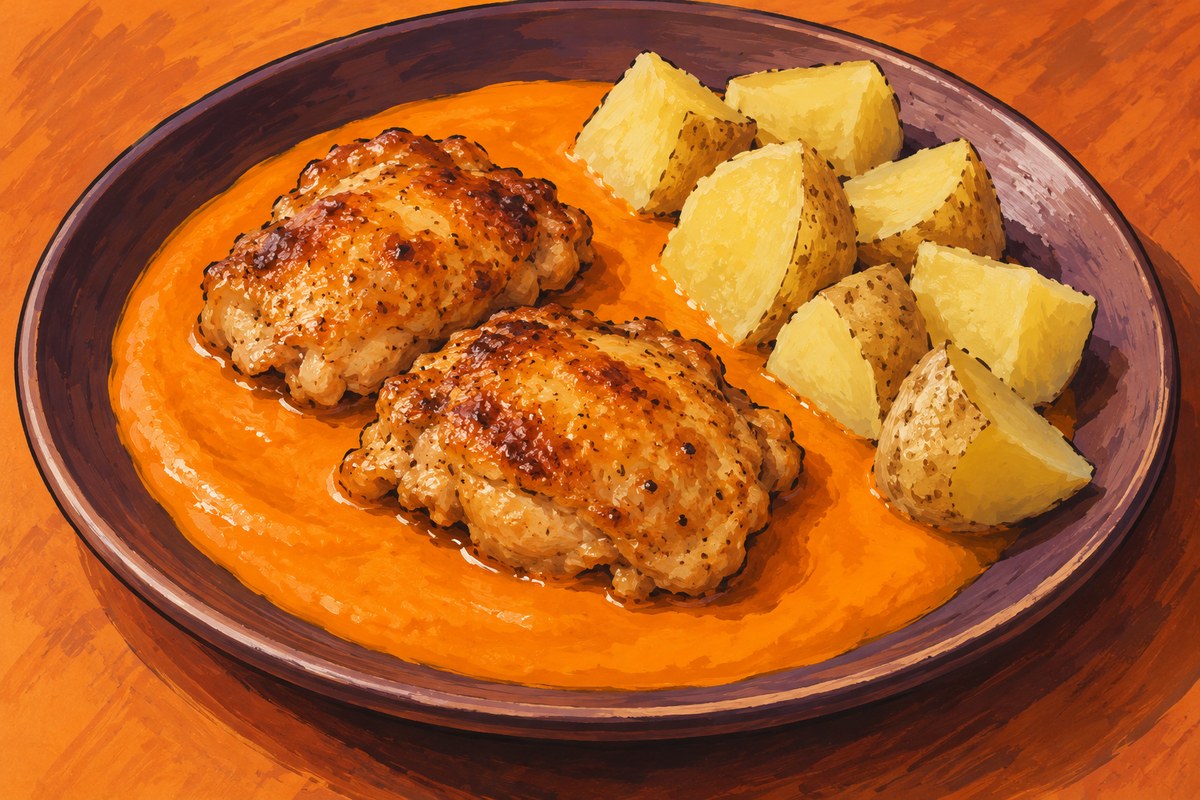
2 plates, each with half the chicken, smooth carrot-mustard sauce and potatoes · Active 25 min · Total 1 hr 15 min
Print recipe · PDFCarrots can become a sauce rather than a side pile. They simmer with onion and boneless chicken thighs, then blend with the cooking liquid and a measured spoonful of mustard. The result is a soft orange sauce with no cream required. Boiled potatoes complete the plate and give a beginner a straightforward way to practice judging tenderness while the chicken braises.
Brown, then turn the heat down
Boneless skinless thighs are flexible pieces with folds and uneven thickness. Open them out before browning so more surface touches the pan. A little color is useful; a dark crust that smells scorched will make the sauce bitter. After adding the water and vegetables, reduce the heat until the liquid trembles gently under the lid. A hard boil is unnecessary. Check the thickest part of each thigh for 165°F/74°C, moving the probe away from the pan base. The carrot pieces should be soft enough to crush with a fork before blending.
Blend safely and finish gently
Move the cooked meat to a clean plate while making the sauce. An immersion blender is convenient only if its head stays submerged; splashing hot carrot liquid is a burn risk. Take the pan off the heat before blending and use short pulses. If your pan is too shallow, transfer the vegetables and liquid to a tall heatproof blending jug first. Do not seal steaming liquid in an ordinary countertop blender. Stir in mustard and lemon after the carrots are smooth, then return the meat briefly to warm through. The sauce should coat a spoon but still spread around the potatoes. A small plain-water adjustment is better than adding an unmeasured amount of cream or oil and retaining the original estimate.
Ingredients
- 12 1/3 oz boneless skinless chicken thigh meat (350 g raw), opened flat
- 3 medium carrots, peeled and sliced 1 cm/3/8-inch thick (300 g prepared)
- 1 small onion, sliced (80 g)
- 1 garlic clove, chopped (3 g)
- 2 teaspoons olive oil (10 ml/about 9 g)
- 1 1/4 cups drinking water (300 ml), plus up to 60 ml to adjust sauce
- 1 tablespoon prepared yellow mustard (15 g)
- 2 teaspoons lemon juice (10 ml/about 10 g)
- 2 medium potatoes, scrubbed and cut into 3 cm/1 1/4-inch chunks (350 g, skin on)
- 4 cups drinking water (1 litre), for boiling and draining potatoes
- 1/4 teaspoon fine salt (1.5 g)
- 1/8 teaspoon black pepper (0.3 g)
Set out
Deep 26–28 cm/10–11-inch sauté pan with lid, 2-litre/2-quart saucepan, Sieve, Immersion blender and tall heatproof jug if needed, Tongs, Separate raw-poultry board and clean plate, Knife, Kitchen scale, Food thermometer
Allergens
Mustard; check prepared mustard for other allergens. Check labels and substitutions.
Make it
- Heat oil in the sauté pan over medium-high heat. Add opened chicken thighs and brown for 3–4 minutes per side. Season with salt and pepper. Use raw-poultry equipment separately and wash hands after handling.
- Add carrots, onion, garlic and 300 ml water. Bring to a simmer, cover and reduce heat. Cook gently for 25–35 minutes until carrots crush easily with a fork and every chicken piece reaches 165°F/74°C; add a little of the extra water if the pan gets dry.
- While the chicken simmers, put potatoes and their water in the saucepan. Bring to a boil and simmer for 15–20 minutes until a knife slips through the centers. Drain well and cover off the heat.
- Move chicken to a clean plate. Take the sauté pan off the heat and blend the carrot mixture until smooth, keeping an immersion-blender head submerged; use a tall heatproof jug if needed. Stir in mustard and lemon. Adjust with the remaining extra water only if the sauce is too thick to spoon.
- Return chicken to the sauce over low heat for 2–3 minutes until hot through. Divide chicken, sauce and potatoes equally between 2 plates.
A useful kitchen skill
Keep a hot immersion blender submerged and switch it off before lifting it. A tall jug can be safer than trying to blend a shallow layer in a wide pan.
A useful detail
The 75-minute total includes chopping, browning, gentle braising and blending; potatoes cook alongside the braise. Chicken must reach 165°F/74°C, and carrots must be fully soft before blending.
Another way
- Use 350 g skinless boneless chicken breast instead, checking it earlier and recalculating for breast; it can dry out during a long braise.
- Replace 100 g of the carrots with 100 g peeled parsnip, cooking until fully soft; the estimate changes.
Keep it well
Refrigerate chicken, sauce and potatoes promptly in shallow containers at 40°F/4°C or below, within 2 hours or 1 hour above 90°F/32°C. Use within 3 days. Reheat the needed portion gently to 165°F/74°C throughout, stirring the sauce and adding a small amount of drinking water if necessary.