011 / 75 · Cold Lunches and Simple Assemblies
Chicken and Apple Rye Sandwich
2 sandwiches, each made with 2 rye slices and half the chicken-apple filling · Active 20 min · Total 20 min
Print recipe · PDFA cold chicken sandwich starts with chicken that is already fully cooked and safely chilled. Thin slices are easier to bite through than large chunks, while crisp apple lightens the filling without making a sweet sandwich. The useful lesson here is managing moisture: dress the meat lightly, dry the lettuce and keep the cut apple away from the bread until assembly.
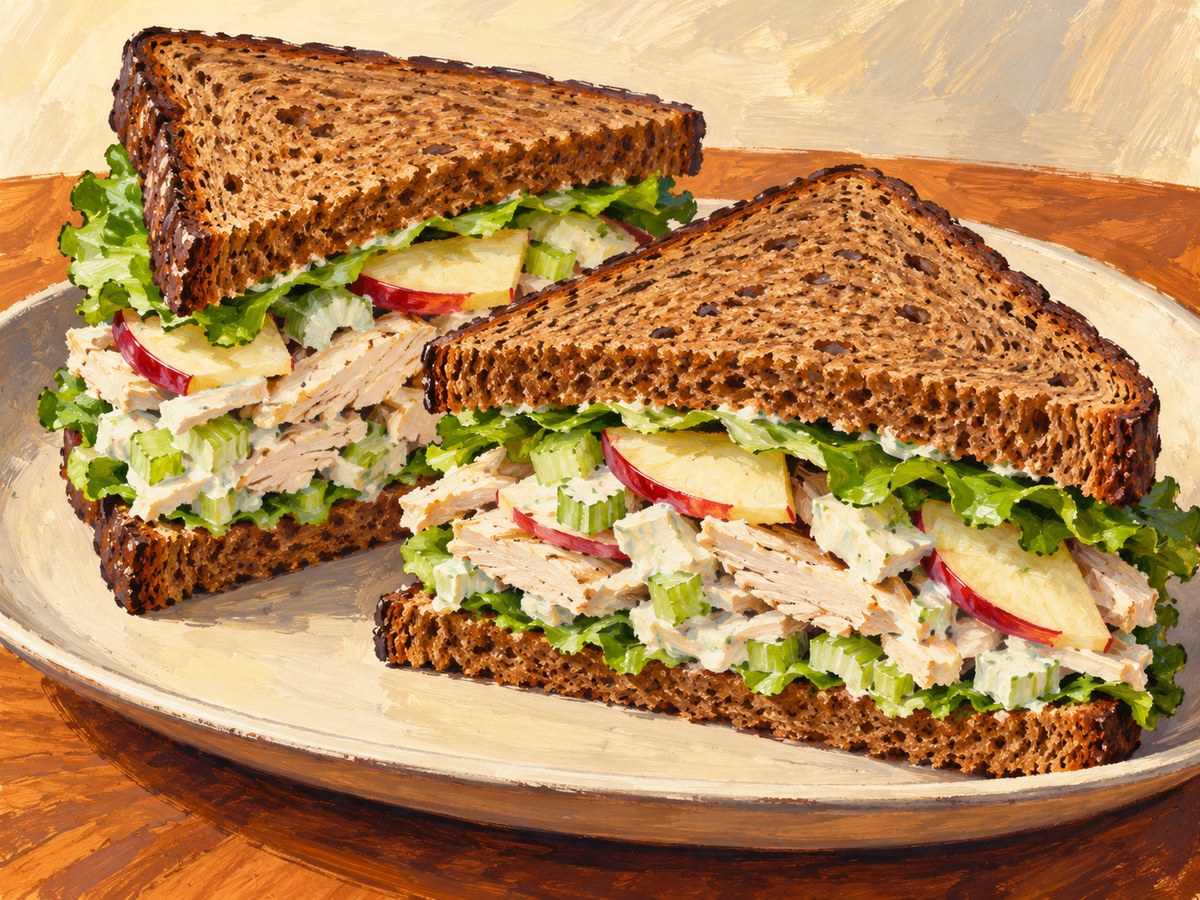
Cut for an easy bite
Set the cooked chicken on a clean board and look for the direction of its fibers. Slice across those lines into thin pieces rather than pulling off a thick strip that will drag out of the sandwich. This recipe weighs the meat after cooking and after removing skin and bones. A raw breast of the same weight does not have the same composition or make the stated portion. If you are cooking chicken specifically for lunch, do that separately, check 165°F/74°C and chill it promptly before beginning this cold method. Time spent cooking and cooling that chicken is outside the assembly time below.
Build a dry boundary
Pat the lettuce thoroughly dry; trapped wash water is as troublesome as a runny dressing. Put a leaf against each bread slice, then add the lightly dressed chicken, celery and apple between them. The yogurt mixture should coat the filling rather than collect in a puddle. Soft ordinary rye slices make a practical sandwich without requiring a specialty bread. For tomorrow’s lunch, carry the filling and bread separately and assemble at eating time. Lemon slows apple browning but does not preserve cooked poultry. A cold bag and ice packs still matter, and an older chicken portion keeps its original storage deadline.
Ingredients
- 4 slices soft rye bread (160 g total)
- Cooked roasted skinless chicken breast, thinly sliced (200 g; about 1 1/2 cups)
- 1 small apple, washed, cored and thinly sliced (100 g edible, skin on)
- 1 small celery stalk, finely sliced (40 g)
- 1/4 cup plain nonfat Greek yogurt (60 g)
- 2 teaspoons prepared yellow mustard (10 g)
- 2 teaspoons lemon juice (10 ml/about 10 g)
- 4 small green lettuce leaves, washed and thoroughly dried (30 g)
- 1/8 teaspoon black pepper (0.3 g)
Set out
Kitchen scale, Clean knife and board, Mixing bowl and spoon, Paper towel or clean cloth for lettuce, 2 plates or separate lunch containers, Refrigerator
Allergens
Milk, Wheat and rye (gluten), Mustard; check bread and mustard for additional allergens. Check labels and substitutions.
Make it
- Stir yogurt, mustard, lemon and pepper in the bowl. Add the cold sliced chicken and celery; turn until lightly coated. Slice the apple just before assembly.
- Place 2 bread slices on each plate. Line all 4 slices with dry lettuce. Divide the chicken mixture between 2 lined slices and arrange half the apple on each. Close with the remaining lined slices.
- Cut each sandwich in half if convenient and serve promptly, or keep the bread dry and filling cold in separate covered containers until assembly.
A useful kitchen skill
Notice the difference between a measured cooked-meat weight and a raw purchase weight. Keep a written original cook date on any portion reserved for later.
A useful detail
The 20-minute assembly time starts with fully cooked, refrigerated chicken. The estimate uses roasted breast meat only, not raw chicken, deli slices or meat with skin.
Another way
- Replace the apple with 100 g firm pear, cored and sliced; this changes the estimate.
- Use 200 g cooked roasted turkey breast in place of chicken and recalculate for that meat.
Keep it well
Keep chicken filling at 40°F/4°C or below and use within 2 days, never later than the original cooked-chicken deadline or the shorter dairy label. Assemble just before eating for the best bread texture. Refrigerate perishables within 2 hours, or 1 hour above 90°F/32°C. Transport in an insulated bag with two cold sources; refrigerate on arrival when possible.