008 / 75 · Breakfasts That Teach the Basics
Yogurt Flatbreads with Cumin Lentil Dip
4 small flatbreads and lentil dip; 2 breads with half the dip per person · Active 35 min · Total 1 hr
Print recipe · PDFYogurt flatbread dough is a manageable first bread project because it needs no yeast or proving stage. A short rest makes it easier to shape while red lentils simmer into a dip. The two components use different textures: the dough stays soft but holds together, and the lentils should become smooth enough to mash with a spoon. Start the lentils first, then work at the counter beside the simmering pan.
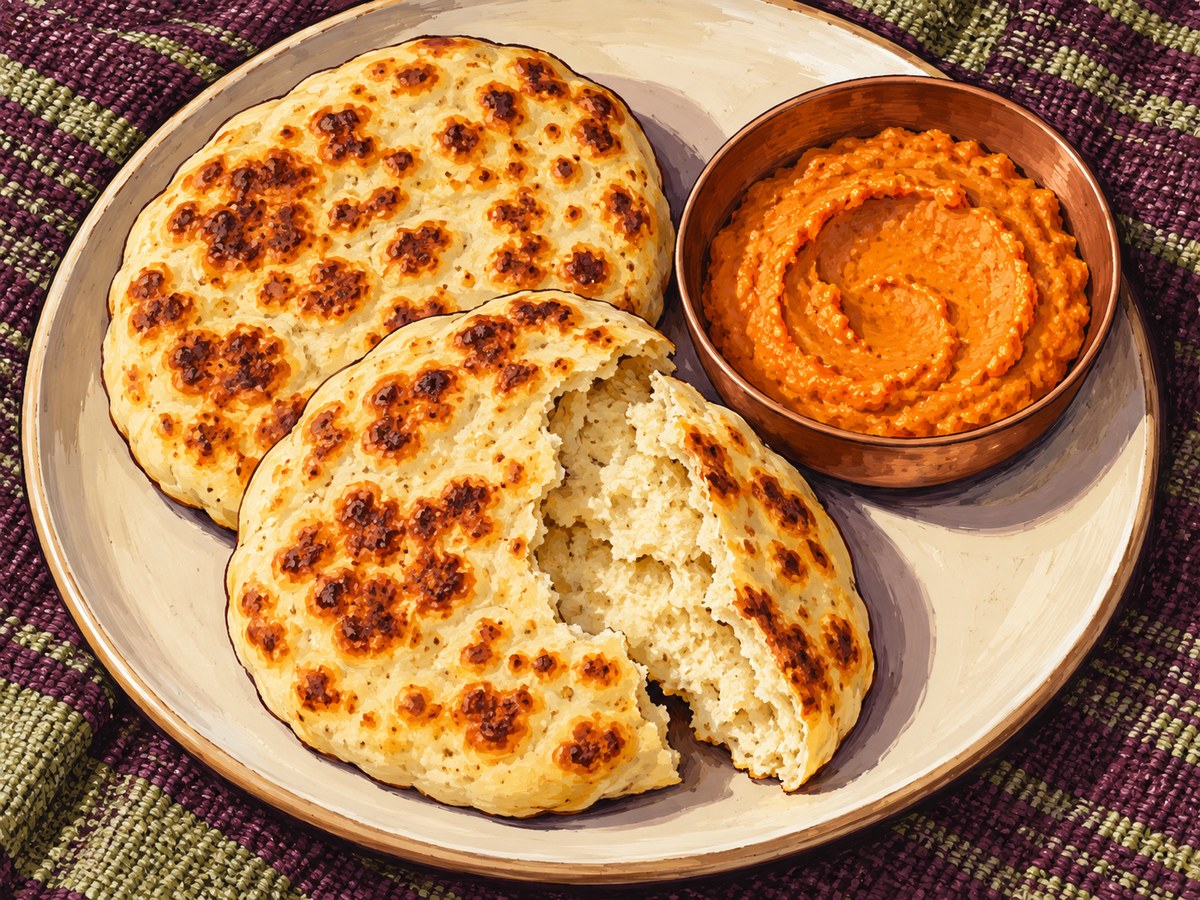
A soft dough does not need a smooth performance
Mix yogurt into flour with a spoon, then use your hand for only a few folds in the bowl. The dough can feel slightly tacky. Dusting it with a large unmeasured amount of flour would change both the texture and the estimate, so use a small reserved portion of the listed flour for the counter. The ten-minute rest is useful work time for the lentils, not a sign that yeast is rising. Divide into four pieces before shaping; small rounds are easier to turn and more likely to cook through than one large uneven bread.
Watch the lentils near the end
Red lentils break down as they soften. They can also thicken suddenly once much of their water has been absorbed. Stir the bottom of the pan regularly and lower the heat if bubbles spit. The dip is ready when the grains mash easily, with no hard centers. Lemon and oil go in after the cooking stage. Keep the flatbread pan over medium heat rather than trying to make dark spots instantly on high heat. A bread can look browned outside while a thick center remains wet and doughy. Split one and look for a set interior before serving the batch.
Ingredients
- About 1 cup plus 1 tablespoon all-purpose flour (130 g), reserve 10 g for shaping
- 7 tablespoons plain nonfat Greek yogurt (100 g)
- 1 teaspoon double-acting baking powder (4 g)
- 1/3 teaspoon fine salt (2 g), use 1 g in dough and 1 g in dip
- 1/2 cup dry red lentils, rinsed (100 g)
- 1 1/2 cups drinking water (350 ml), plus up to 60 ml if needed for lentils
- 1/2 teaspoon ground cumin (1 g)
- 1 small garlic clove, peeled and minced (3 g)
- 1 tablespoon olive oil (15 ml/about 13.5 g)
- 1 tablespoon plus 1 teaspoon lemon juice (20 ml/about 20 g)
Set out
Stovetop with 2 burners, Small saucepan with lid, Mixing bowl and spoon, 12-in/30-cm heavy skillet with a flat cooking base at least 10 in/25 cm across, Clean counter or board, Rolling pin or clean fingertips, Spatula, Sieve, Small serving bowl, Clean plate to cover resting dough
Allergens
Wheat, Milk, Lentils; check spice and yogurt labels. Check labels and substitutions.
Make it
- Put lentils, 350 ml water, cumin and garlic in the saucepan. Bring to a boil, then cover loosely and simmer 18–25 minutes, stirring near the end, until lentils are very soft. Add from the measured 60 ml allowance if they dry before softening.
- Meanwhile, mix 120 g flour, baking powder and 1 g salt in the bowl. Fold in yogurt and bring together with a few gentle folds. Cover with a clean plate and rest 10 minutes. Use the reserved 10 g flour to shape 4 equal rounds about 5 in/12 cm wide and 1/4 in/5 mm thick.
- Heat the dry skillet over medium heat. If its flat cooking base is at least 10 in/25 cm across, cook 2 flatbreads at a time, without overlap, for 2–3 minutes per side, lowering heat if they scorch, before cooking the second pair. With a smaller pan, cook one at a time and allow an additional 8–12 minutes. They should have browned spots and set centers with no wet dough; split one to check and return any undercooked bread to the pan.
- Mash cooked lentils with the spoon and stir in olive oil, lemon and remaining 1 g salt. If very loose, simmer uncovered briefly while stirring; the dip should mound softly. Serve half the dip with 2 flatbreads per person.
A beginner skill to practice
Practice dividing a dough by weight before rolling. Equal pieces help the pan timing mean the same thing for each bread.
A useful detail
The 60-minute total allows gentle first-time shaping, 10 minutes dough resting, a full lentil simmer and 2 pan batches in the stated larger skillet. Cooking one bread at a time adds 8–12 minutes. The dough does not contain yeast. The stated flour includes the shaping dust rather than an extra uncounted handful.
Another way
- Use 100 g plain 2% yogurt instead of Greek yogurt only with care:its thinner texture may require a little less yogurt at first. A changed amount needs a new estimate.
- For a different dip, replace cumin with 1 g mild paprika; keep the full lentil cooking stage.
Keep it well
Refrigerate cooled bread and shallow dip separately within 2 hours, or 1 hour above 90°F/32°C, at 40°F/4°C or below. Use within 2 days. Reheat dip to 165°F/74°C, stirring with a spoonful of water if needed. Bread can be eaten cold or reheated thoroughly; do not keep mixed dough at room temperature for another day.