006 / 75 · Breakfasts That Teach the Basics
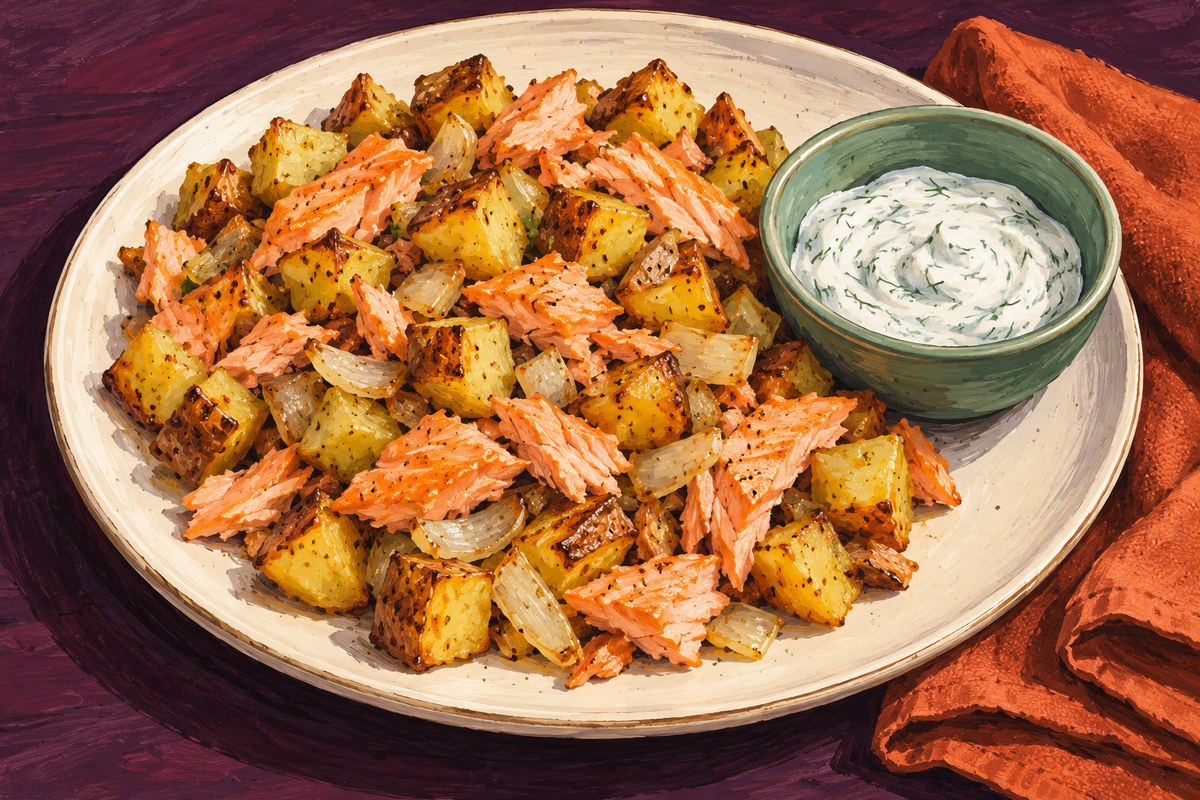
Salmon and Potato Breakfast Hash with Dill Yogurt
2 hash plates, each with half the salmon, potatoes and dill yogurt · Active 25 min · Total 55 min
Print recipe · PDFCanned salmon turns a potato hash into a meal without requiring a beginner to judge a raw fish fillet. The potatoes still need proper cooking: a short simmer softens their centers, then the skillet gives them color. Keep the fish in flakes rather than stirring it constantly into mash. A small spoonful of cool dill yogurt adds a different texture beside the hot pan.
Give the potatoes their first stage in water
Choose sound potatoes of similar texture, scrub them and leave their skins on. Cut small even cubes before they go into cold water. Starting them together helps the centers cook at a similar pace. After the simmer, drain thoroughly and let steam escape for a few minutes. Wet potatoes cool the skillet and resist browning. They do not need to become a perfectly crisp restaurant hash; some browned surfaces and fully tender centers are a useful goal for a first attempt.
Look through the salmon before adding it
Open the cans into a clean bowl and drain, then remove skin and any bone pieces you do not want to eat. Weigh the edible fish after this step. Some canned salmon contains soft edible bones, but inspect it even when the label sounds reassuring. Break the meat into broad flakes with a fork. Add those flakes only after the potatoes have browned, and fold rather than beat the mixture. Keep the yogurt sauce separate from the skillet so it stays thick and cool. The listed two portions include all of the potato and salmon; there is no missing bread or unlisted side to add to the estimate.
Ingredients
- About 2 medium potatoes, scrubbed and cut in 1/2-in/1.3-cm cubes (400 g prepared, skin on)
- 4 cups drinking water (1 L), for parboiling; discard after cooking
- 7 oz drained canned pink salmon without skin or bones (200 g edible fish), from plain cans as needed
- 1 small onion, peeled and chopped (80 g)
- 1 tablespoon olive oil (15 ml/about 13.5 g)
- 1/2 cup plain nonfat Greek yogurt (120 g)
- 1 tablespoon lemon juice (15 ml/about 15 g)
- 2 tablespoons chopped fresh dill (5 g)
- 1/4 teaspoon fine salt (1.5 g), divided
- 1/8 teaspoon black pepper (0.3 g)
Set out
Stovetop with 2 burners, Saucepan of at least 2 qt/1.9 L, Colander, 12-in/30-cm skillet, Clean bowl and fork for salmon, Small bowl for sauce, Knife and board, Wide spatula, Thin-probe food thermometer
Allergens
Fish, Milk. Check labels and substitutions.
Make it
- Put potato cubes in the saucepan with water to cover. Bring to a boil, then simmer 6–8 minutes until a knife enters with slight resistance. Drain and let steam escape 3 minutes. Meanwhile, inspect and weigh the drained salmon.
- Stir yogurt, lemon, dill and half the salt in the small bowl. Keep it refrigerated until serving. Heat oil in the skillet over medium heat. Cook onion 4 minutes, then add potatoes, remaining salt and pepper in a fairly even layer. Cook 8–10 minutes, turning occasionally, until centers are fully tender and some edges are golden.
- Fold in the salmon. Cook 3–5 minutes, turning gently, until the mixture is hot throughout and reaches 165°F/74°C in several places. Divide all the hash between 2 plates and serve each with half the cold dill yogurt.
A beginner skill to practice
Practice drying a boiled ingredient before browning it. The few minutes in the colander help more than repeatedly turning damp potato cubes.
A useful detail
The 55-minute total includes draining fish and potatoes and a full browning stage. The starting fish is commercially canned, ready-to-eat salmon, not raw salmon. If a can has more than 200 g drained fish, keep the surplus refrigerated immediately rather than adding it unnoticed to the calculated batch.
Another way
- Use 200 g drained canned tuna instead of salmon; the flavor and nutrient values change.
- Use 5 g chopped fresh parsley instead of dill if that is what you have.
Keep it well
Refrigerate hash and yogurt separately in shallow containers within 2 hours, or 1 hour above 90°F/32°C, at 40°F/4°C or below. Use within 2 days or an earlier ingredient deadline. Reheat hash to 165°F/74°C and keep the sauce cold. Promptly refrigerate any surplus opened fish and use according to its label.