MODERN KITCHENS · 100 / 100
Early Jenne-jeno food-resource context · Inland Niger Delta, Mali · c. 250 BCE–500 CE
Evidence: historically informed adaptation. The historical evidence and modern cooking choices are distinguished below.
Rice, fish and cattle form a distinctive ancient delta resource story. Early Jenne-jeno research describes that complex. Research on African rice adds chronological and identification context. Neither preserves this steak plate.
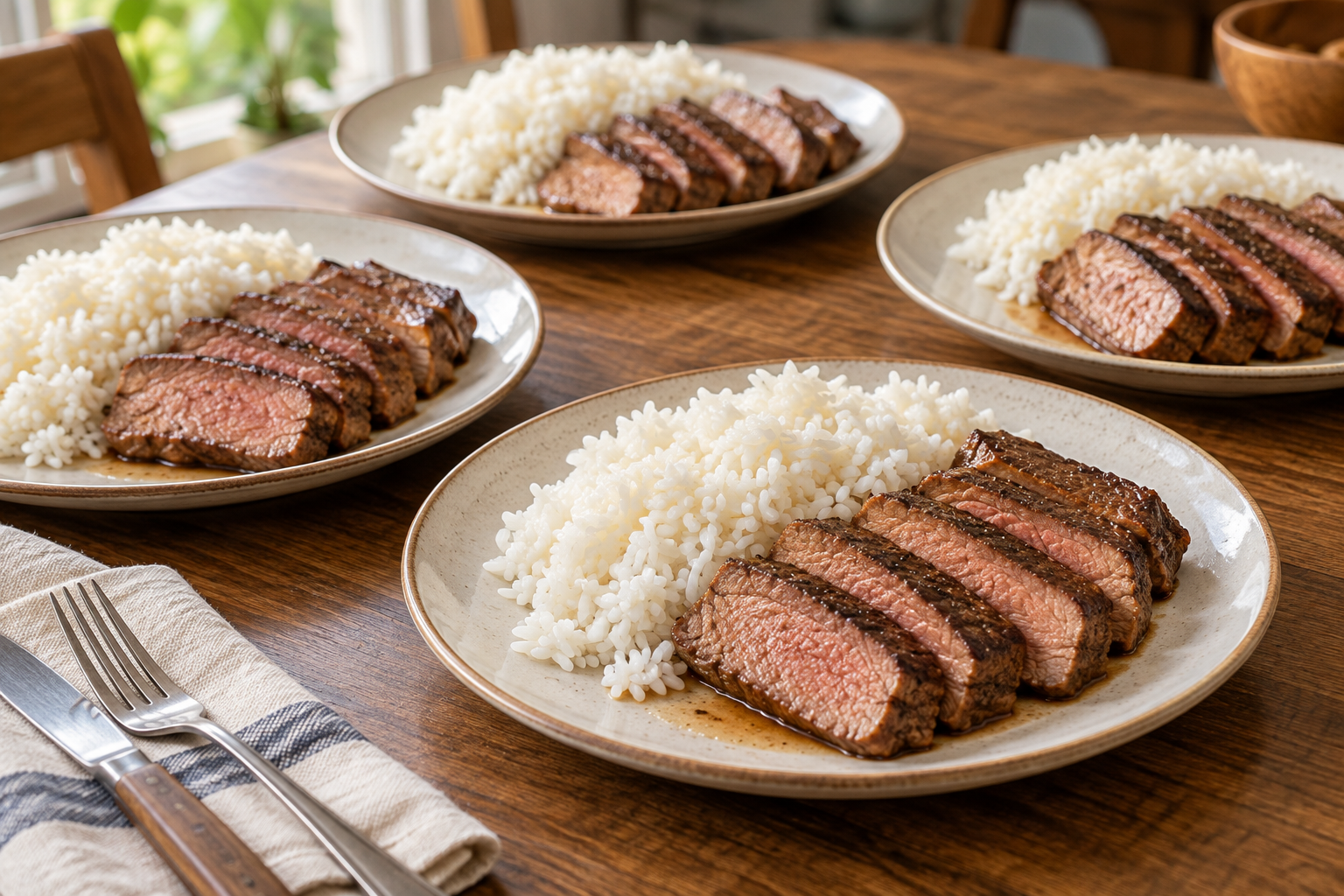
We pan-sear a commercial beef steak and serve slices over ordinary Asian rice. The rice species change is explicit because African rice is less readily available in many supermarkets. The selected beef cut, quick dry-heat cooking, oil and measured salt are also modern choices. The archaeological source does not establish how a particular household cooked its cattle or whether these ingredients were paired in this form.
Cook the rice while preparing the steak. A well-heated skillet browns the surface; a thermometer in the thickest part checks the interior. Resting the meat before slicing retains more juice and supplies the required safe rest after the minimum whole-cut temperature. Cut across the muscle grain so the slices are easier to chew.
Serve modest meat portions with separate rice grains, spooning the pan juices over them. This preparation has a different identity from a long beef-and-grain stew: a whole steak is seared, rested and sliced while the grain cooks separately. The sources anchor an important regional economy; the accessible shopping list and practical timing turn that theme into a modern dinner with the limits of reconstruction kept visible.
Pan-seared beef with plain rice
Serves 4 · Preparation 15 min · Cooking 25 min · 5 minutes rice rest, overlapping with 5–7 minutes steak rest
A modern adaptation for home cooking. Times are approximate.
Ingredients
- 600 g boneless beef sirloin steak, about 2.5 cm thick
- 220 g ordinary white long-grain Asian rice
- 400 ml water for rice
- 20 ml neutral oil, divided
- 4 g salt, divided
Method
- Cook rice with measured water and 2 g salt, covered on low heat 12–15 minutes or according to packet. Rest covered 5 minutes.
- Pat steak dry and season with remaining salt. Heat 15 ml oil in a heavy skillet over medium-high heat.
- Sear steak 3–5 minutes per side, reducing heat if necessary, until thickest center reaches at least 63°C. Thickness and stove heat affect timing; use the thermometer.
- Rest at least 3 minutes, preferably 5–7. Slice across the grain.
- Fluff rice with remaining oil. Divide rice and sliced beef among four plates and spoon pan juices over meat.
Substitutions and adjustments
- Use labeled African rice if available and follow its packet water and time; our ordinary rice is an explicit substitute.
- For more thoroughly cooked beef, continue to your preferred higher temperature; avoid using color alone as the safety check.
Historical choices: Early delta rice and cattle are documented; Asian rice, sirloin choice and this seared-steak service are modern.
Troubleshooting: Tough slices may be cut with the grain; turn the steak and slice across visible muscle lines.
Storage and reheating: Cool rice within 1 hour, refrigerate the separate components up to 1 day and reheat once to 74°C.
Kitchen note: Whole-cut beef must reach 63°C and rest at least 3 minutes. Cool rice promptly and keep both components at 4°C or colder.
Sources and further reading
- McIntosh and McIntosh, Initial perspectives on Inland Niger Delta subsistence. Primary abstract inspected via cached full text: rice, fish and cattle supported at early Jenne-jeno; no rice bake or seared-beef recipe.
- Murray, Searching for the origins of African rice domestication. Article and chronology figures inspected: Dia grains and uncertainty identifying naked wild/domestic rice; ordinary Asian rice is a declared modern substitute.
Browse Ancient Recipes for Modern Kitchens · More creative work at Incoprea