MODERN KITCHENS · 099 / 100
Nok plant-processing context · Central Nigeria, West Africa · c. 1500–100 BCE
Evidence: historically informed adaptation. The historical evidence and modern cooking choices are distinguished below.
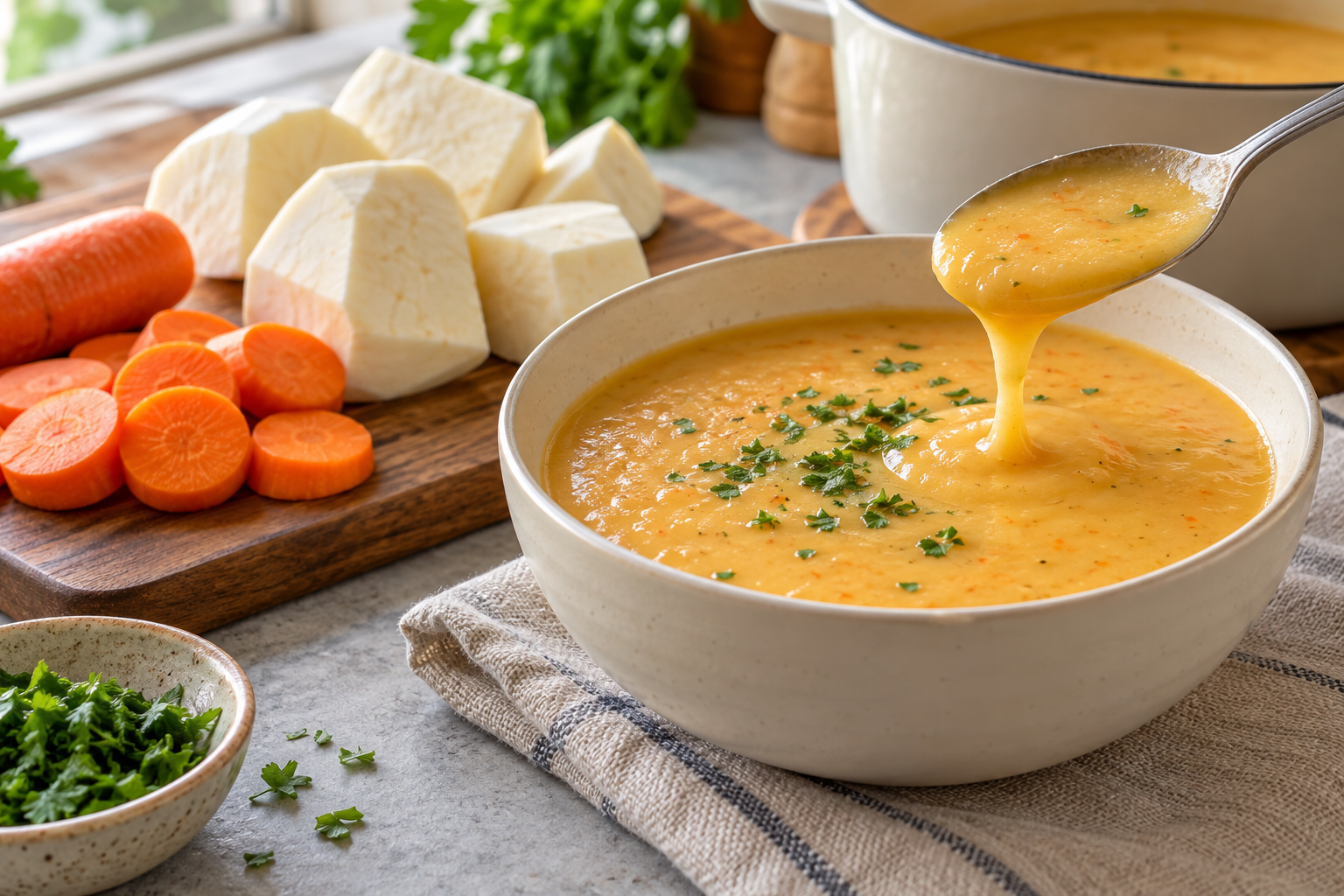
Some ancient plant foods leave chemical clues instead of recognizable seeds. Research on Nok pottery considers underground storage organs, possibly yams, among potential inputs. Regional starch research illustrates further opportunities and limits in identifying processed plants.
The uncertainty matters. The Nok chemical evidence does not securely identify a particular yam species, exclude every nonfood input, or reveal this soup. We use only commercially sold edible cultivated yam. Carrot, oil and our blended format are modern choices. Sweet potato is an easy supermarket substitute where edible yam is unavailable, but it changes the plant and remains named as a substitution.
Peel the commercial yam and cut it into small even pieces. Boil thoroughly until every piece is tender before blending; this is not a guide to identifying or detoxifying wild tubers. The carrot supplies mild sweetness and color. Add water gradually after blending until the soup pours from a ladle without becoming thin and watery.
Serve as a smooth warming lunch or starter. Its preparation differs from roasted tuber chunks because moist cooking and blending turn the starch into the soup's body. The sources inspired a chapter about how easily underground foods escape ordinary archaeological recovery. The chosen cultivated plant, vegetable combination, exact measures and controlled cooking are present-day decisions. A practical recipe accompanies the evidence while preserving, rather than concealing, the unresolved identification.
Cultivated-yam and carrot soup
Serves 4 · Preparation 20 min · Cooking 35 min
A modern adaptation for home cooking. Times are approximate.
Ingredients
- 650 g commercial edible cultivated yam, peeled and 2 cm cubes; or sweet potato
- 250 g carrot, sliced
- 15 ml neutral oil
- 1.1 litres water
- 4 g salt
- 5 g fresh parsley, chopped, optional modern garnish
- 0.5 g ground black pepper, optional modern seasoning
Method
- Use yam sold as edible food. Peel and rinse it; never substitute unidentified wild tubers.
- Put yam and carrot in a saucepan with water and salt. Bring to a full boil, then simmer 25–30 minutes until every piece is completely tender.
- Add oil. Blend carefully with a handheld blender, or mash thoroughly for a rustic soup.
- Add hot water to make a pourable soup and heat through before serving. Add optional parsley and pepper at serving.
Substitutions and adjustments
- Commercial sweet potato is an easy substitute but changes the plant and makes a sweeter, more orange soup.
- Do not use wild yam, unknown roots or a home detoxification procedure.
Historical choices: Nok pottery suggests underground-plant processing, possibly yam; species, carrot pairing and this soup are not established by the evidence.
Troubleshooting: A gluey soup can be thinned gently with hot water. Tough pieces need longer boiling before blending.
Storage and reheating: Refrigerate up to 3 days or freeze 2 months. Reheat to 74°C.
Kitchen note: Use only commercial edible cultivated tubers and cook fully. Do not forage or reproduce uncertain historical detoxification.
Sources and further reading
- Dunne et al., Making the invisible visible: plants in West African cuisine. Primary manuscript inspected, especiallypp.27–30: underground storage organs possibly yam; alternative bark and nonculinary inputs considered, species and this soup are not identified.
- Cagnato et al., Early Iron Age starch grains in Western Central Africa. Primary paper inspected: Early Iron Age Nachtigal, Cameroon, context and microbotanical identification limits; only its ancient component is used as regional comparison, not the later Modern Period samples or an exact Nok recipe.
Browse Ancient Recipes for Modern Kitchens · More creative work at Incoprea