MODERN KITCHENS · 098 / 100
Aksumite teff and mixed-cereal context · Northern Ethiopian highlands · c. 300–650 CE
Evidence: historically informed adaptation. The historical evidence and modern cooking choices are distinguished below.
Teff's tiny seeds make an important historical connection. Excavation research at Beta Samati identifies teff among its plant remains. Regional agricultural research provides wider context. Neither source preserves a mushroom gravy.
This is a modern use of commercial teff flour as a thickener. Supermarket mushrooms, onion and oil are our culinary choices, and their combination with teff is not presented as an ancient Aksumite preparation. Nor do we use the grain's antiquity to claim that today's injera or any other named food had the same recipe in this period. The crop and the sauce have different evidentiary status.
Brown the mushrooms before making the thickener so their moisture does not leave a pale watery sauce. Sprinkle flour over the cooked vegetables and stir briefly in oil, then add water gradually. A gentle simmer cooks the flour and brings the gravy together. It should coat the back of a spoon but still pour readily.
Serve over cooked vegetables, potatoes or a plain grain as a modern accompaniment. Its role is a sauce rather than another flour bread or grain cake, giving teff a different function in the collection. Oat flour is an easy supermarket substitute where teff is unavailable, and that change remains explicit. The ancient crop evidence inspired the ingredient choice; the roux-like method, mushroom flavor, proportions and serving suggestions are contemporary.
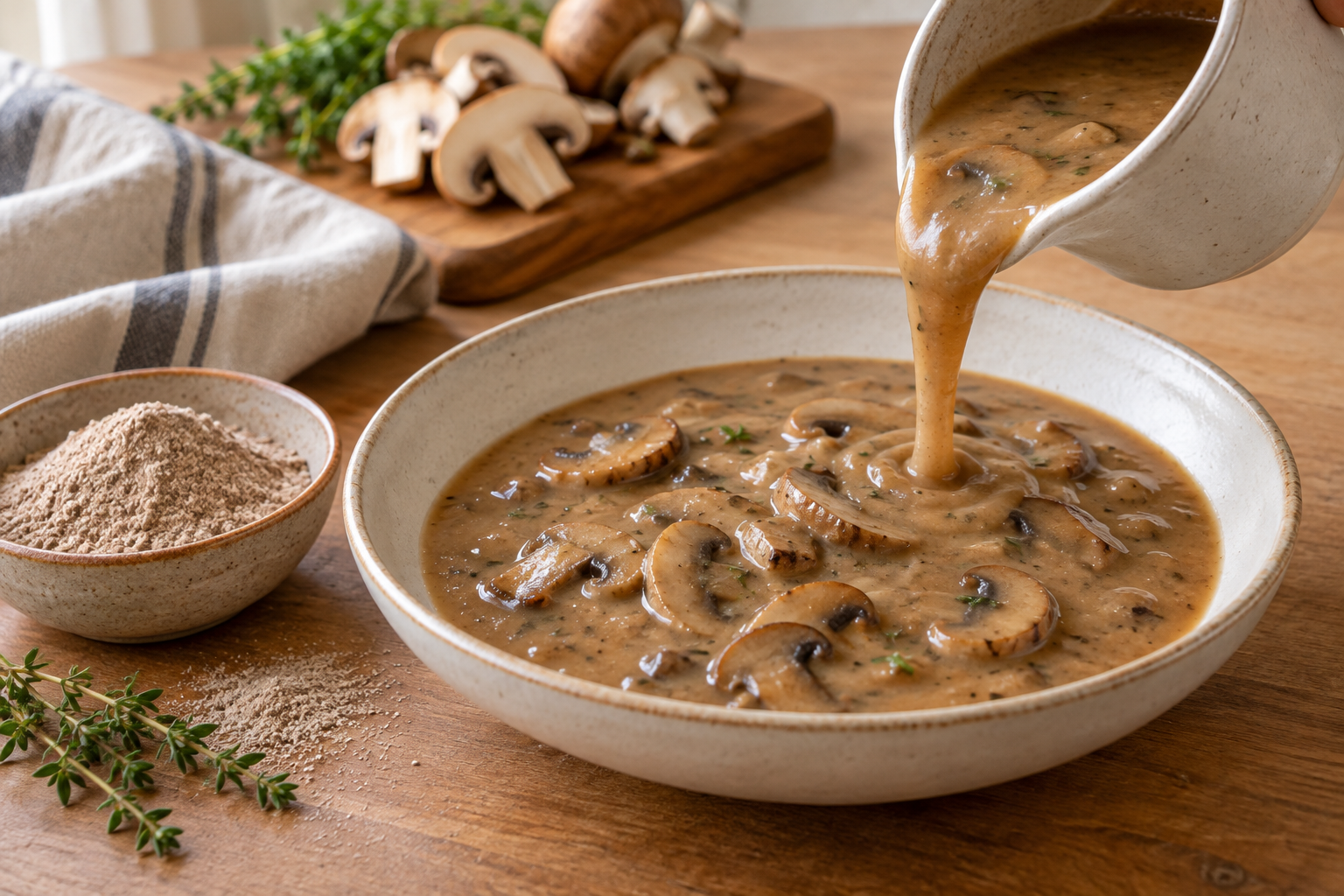
Teff-thickened mushroom gravy
Serves 6 · Preparation 15 min · Cooking 25 min
A modern adaptation for home cooking. Times are approximate.
Ingredients
- 35 g teff flour; or plain oat flour as an explicit substitute
- 250 g brown mushrooms, finely sliced
- 100 g onion, finely diced
- 25 ml neutral oil
- 550 ml water or low-salt vegetable stock
- 3 g salt, adjusted for stock
- 1 g dried thyme, optional modern seasoning
- 0.5 g ground black pepper, optional modern seasoning
Method
- Heat oil in a saucepan over medium-high heat. Brown mushrooms 6–8 minutes.
- Add onion and soften 4 minutes. Lower heat, sprinkle teff flour over vegetables and stir 1 minute.
- Add water gradually, stirring steadily to prevent lumps. Bring to a gentle simmer.
- Cook 8–10 minutes, stirring, until flour is fully cooked and gravy coats a spoon. Add salt and thin with water if needed. Add optional thyme and pepper during the final simmer.
Substitutions and adjustments
- Plain oat flour is an accessible substitute, changing the regional grain.
- Use white button mushrooms; only commercial edible varieties are intended.
Historical choices: Aksumite teff is documented; mushroom pairing and this pourable flour-thickened gravy are modern.
Troubleshooting: Lumps can be whisked out or blended briefly. Very thick gravy needs hot water by tablespoons.
Storage and reheating: Refrigerate up to 3 days or freeze 1 month. Reheat to 74°C while stirring.
Kitchen note: Cook flour completely. Use commercially identified mushrooms and refrigerate the finished sauce promptly.
Sources and further reading
- Harrower et al., Beta Samati: an Aksumite town. Full primary article inspected, archaeobotany paragraph names teff, wheat and barley; no pilaf or gravy formula.
- Ruiz-Giralt et al., Aksumite sorghum and finger-millet cultivation. Primary full article inspected: regional cereal, teff and lentil context, 50 BCE–700 CE; models and microremains do not establish exact recipes.
Browse Ancient Recipes for Modern Kitchens · More creative work at Incoprea